Rhyming Worksheets for Ages 3-7
14 filtered results
-
From - To
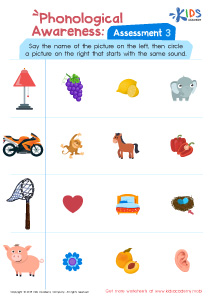
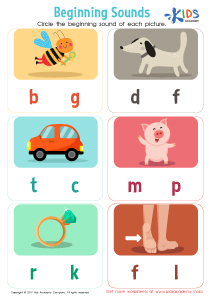
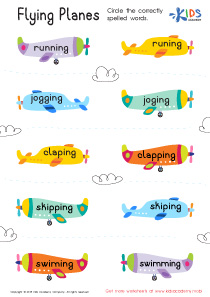
Discover our engaging Rhyming Worksheets designed for children ages 3-7! These colorful and interactive printables help young learners develop essential phonemic awareness skills while enhancing their vocabulary. Each worksheet features fun exercises that encourage children to identify, complete, and create rhymes, fostering creativity and linguistic understanding. Our carefully crafted activities support early literacy development, making learning enjoyable and effective. Perfect for both classroom and home use, these worksheets are an excellent resource for teachers and parents looking to spark a love for language in their little ones. Explore our collection today and watch your child excel in their reading journey through rhymes!
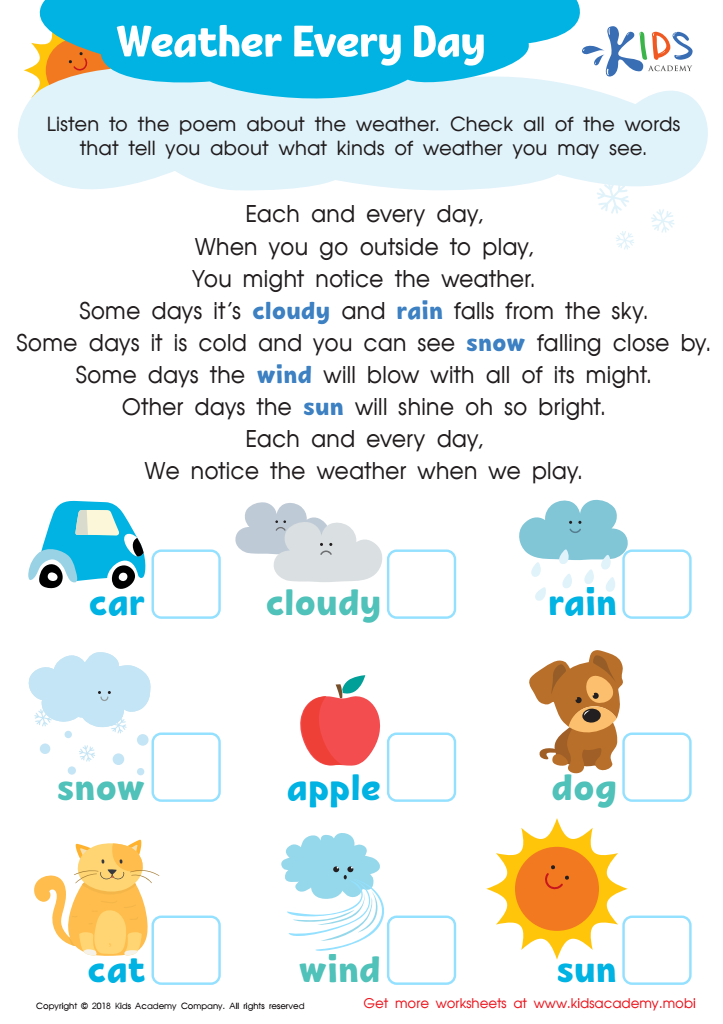
Weather Every Day Worksheet
 Assign to My Students
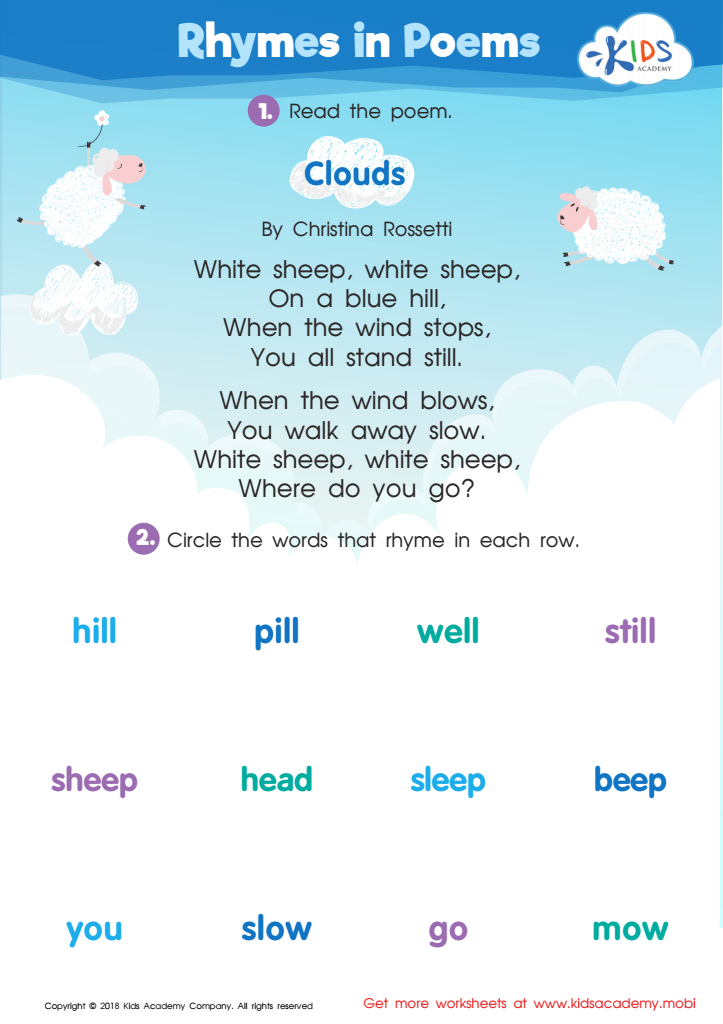
Rhymes in Poems Worksheet
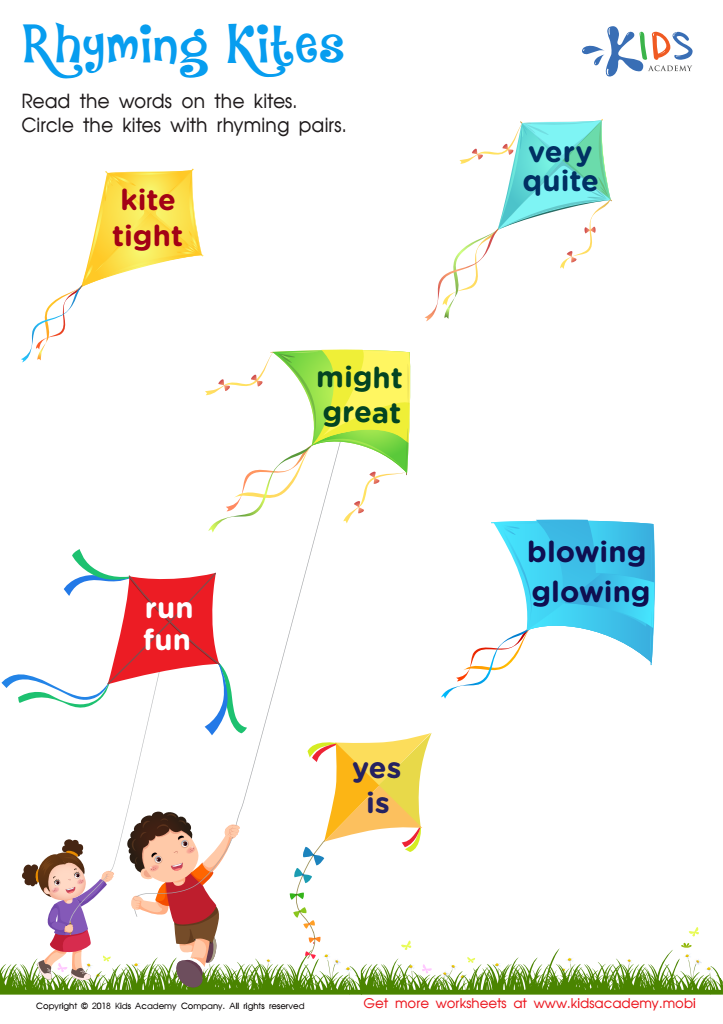
Rhyming Kites Worksheet
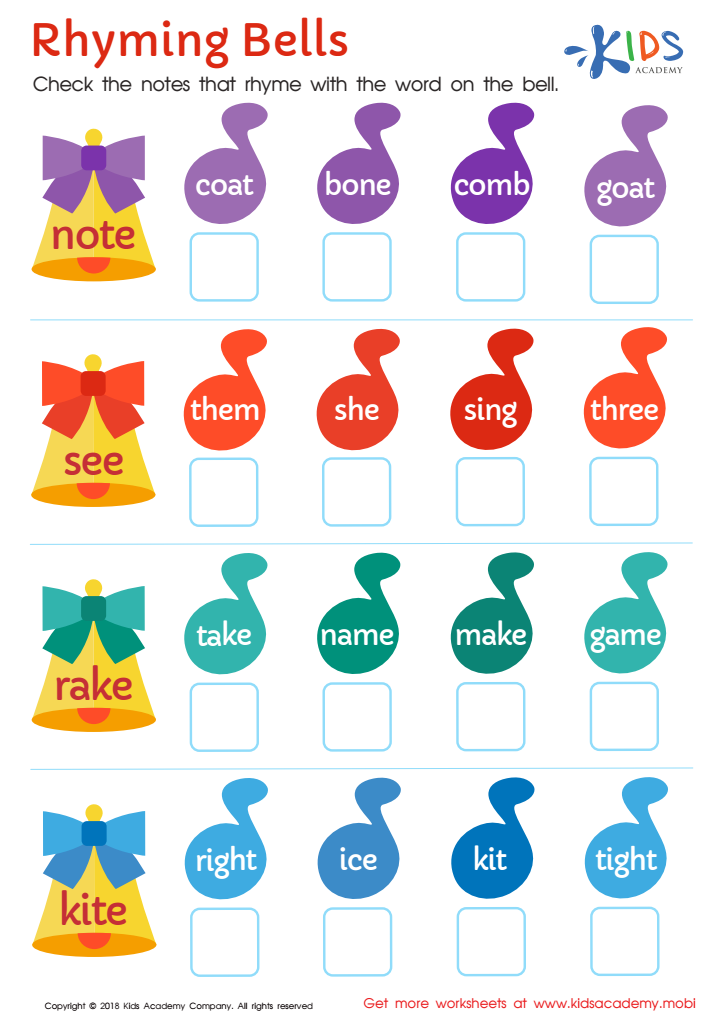
Rhyming Bells Worksheet
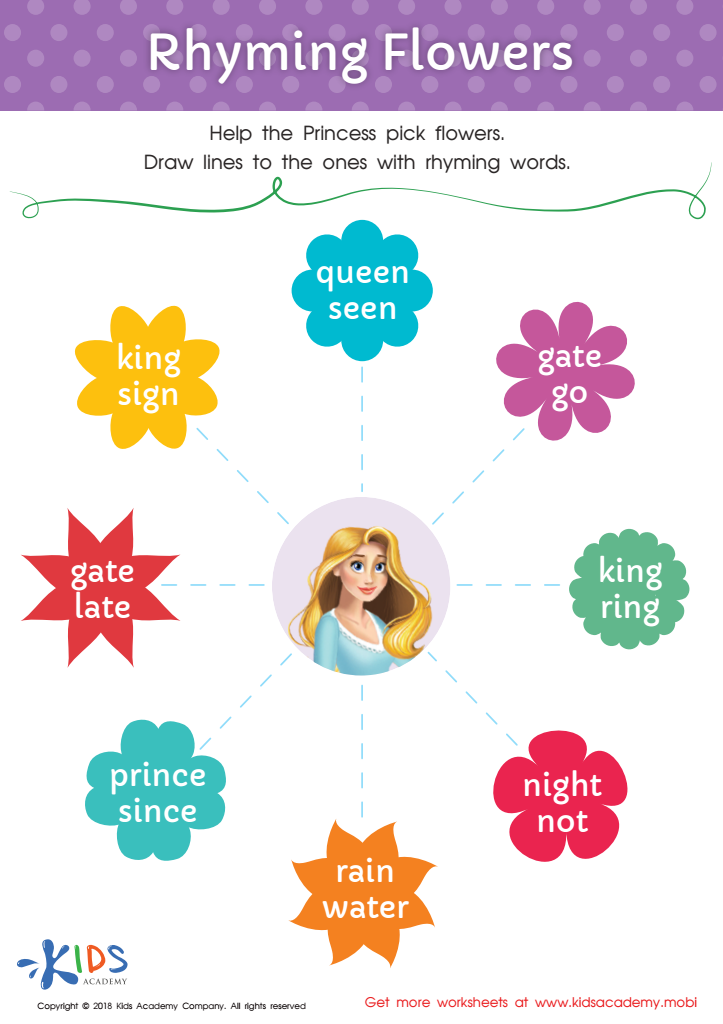
Rhyming Flowers Worksheet
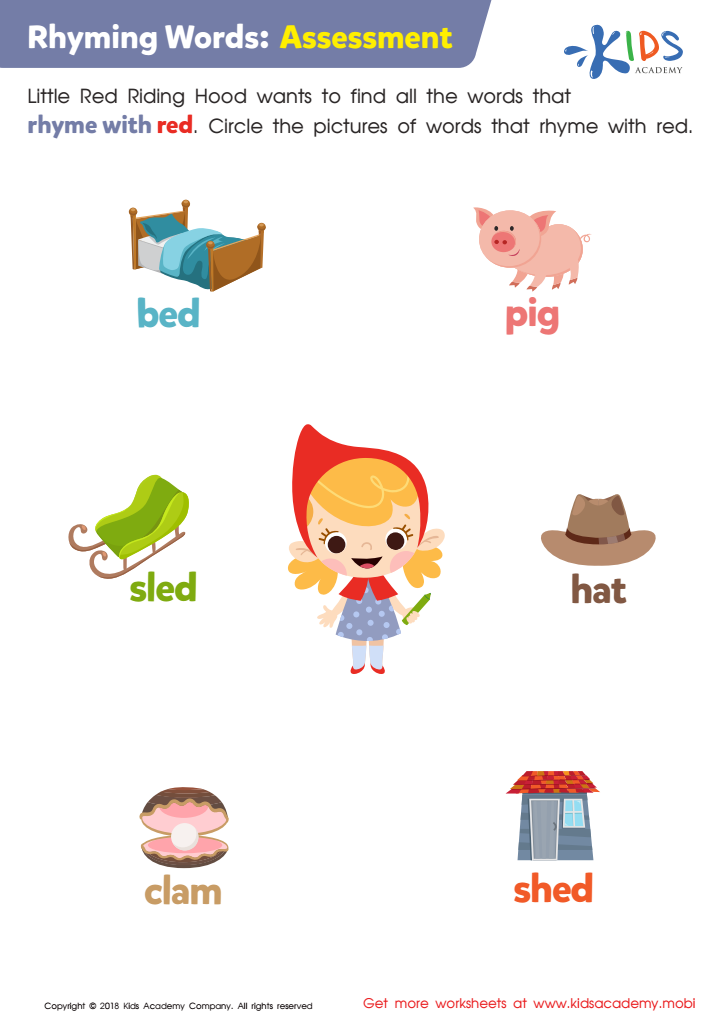
Rhyming Words: Assessment Worksheet
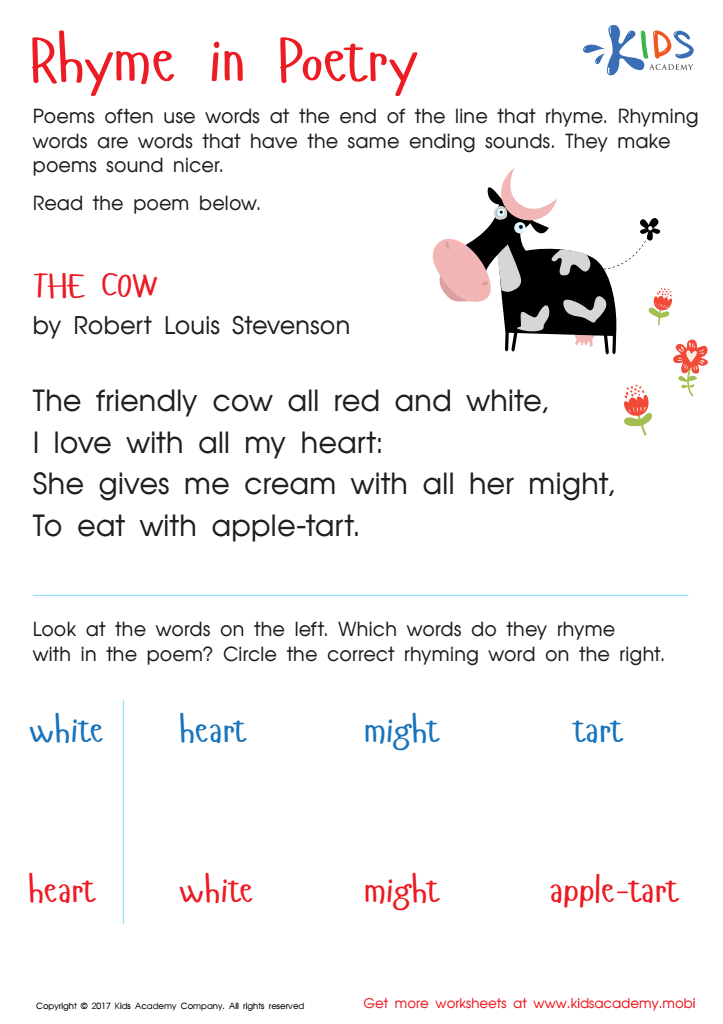
Rhyme In Poetry Worksheet

First Words: Picture Rhymes Worksheet
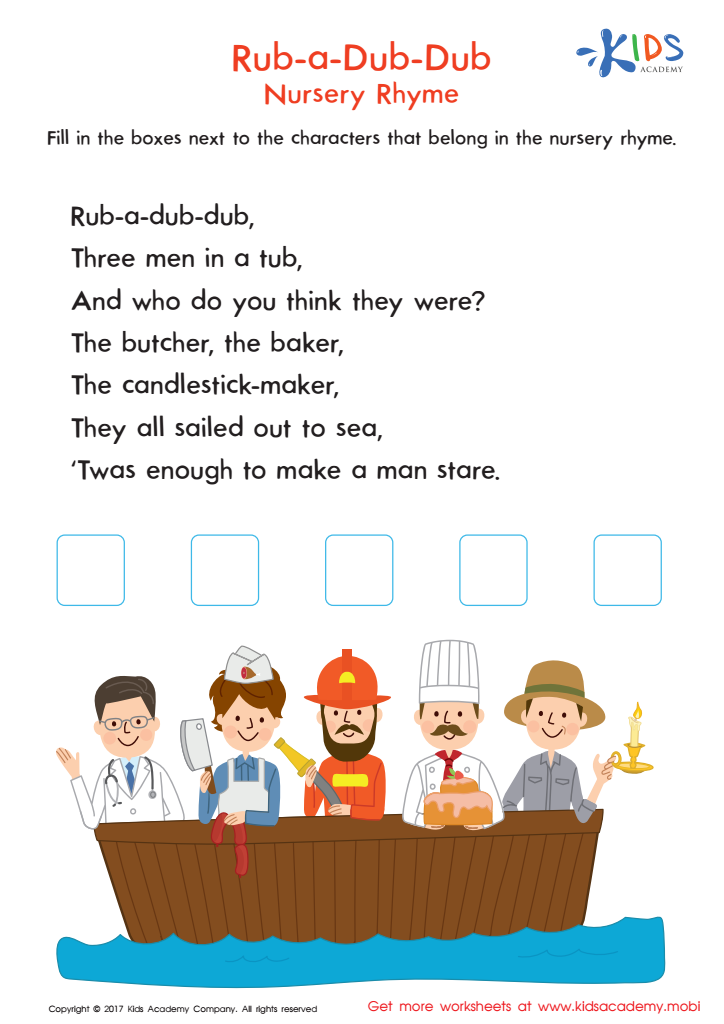
Rub a Dub Dub Printable
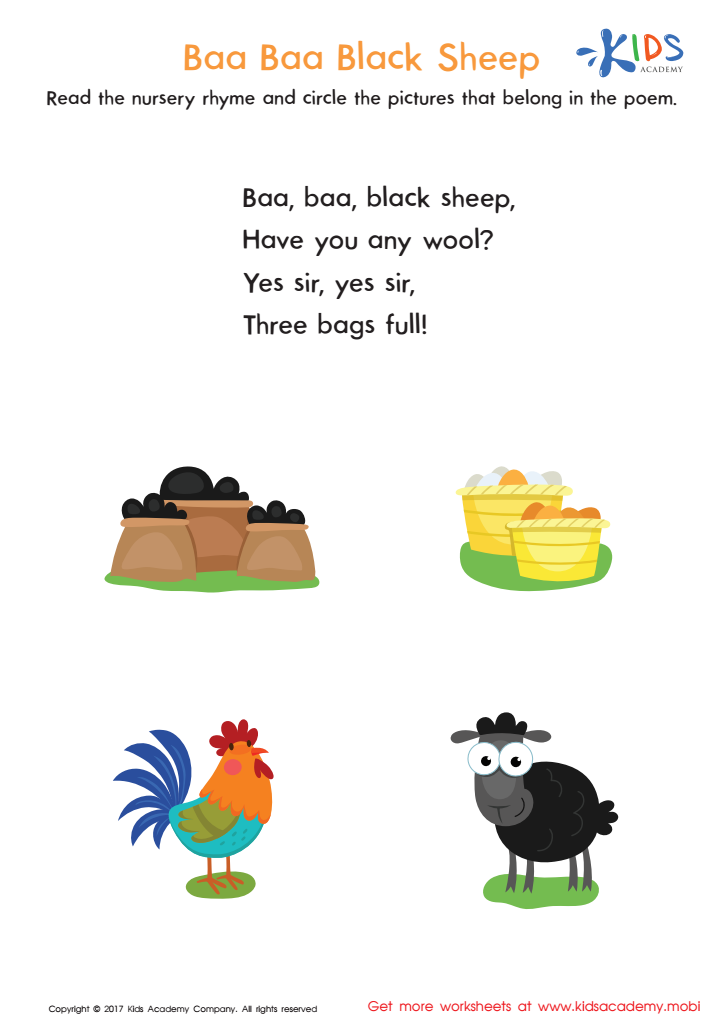
Baa Baa Black Sheep Printable
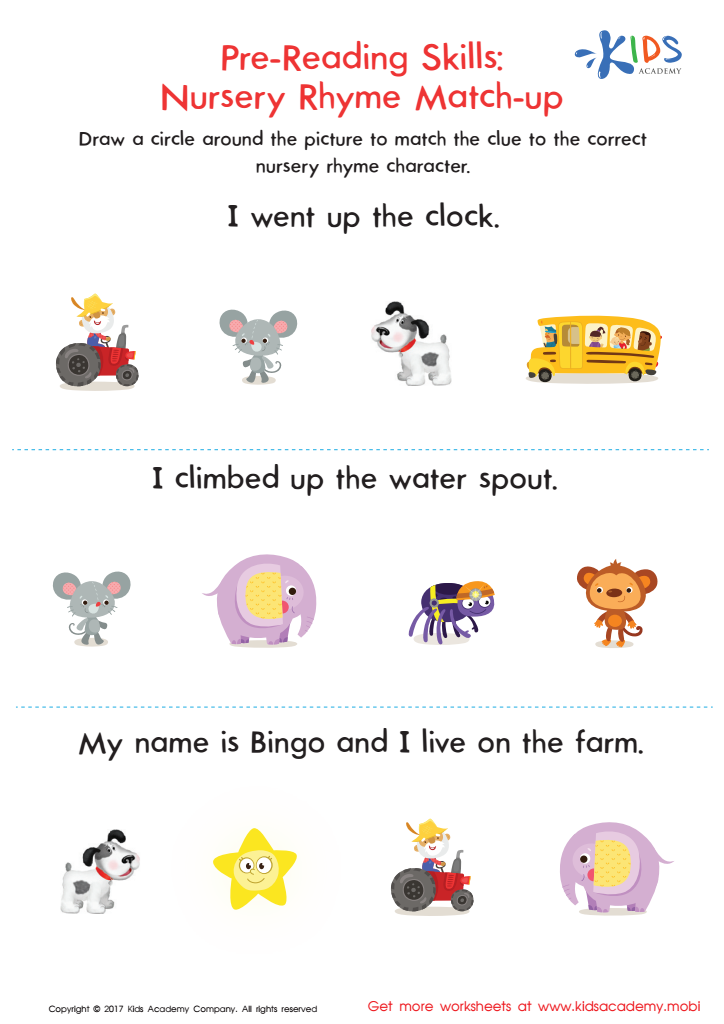
Nursery Rhyme Match–Up Worksheet
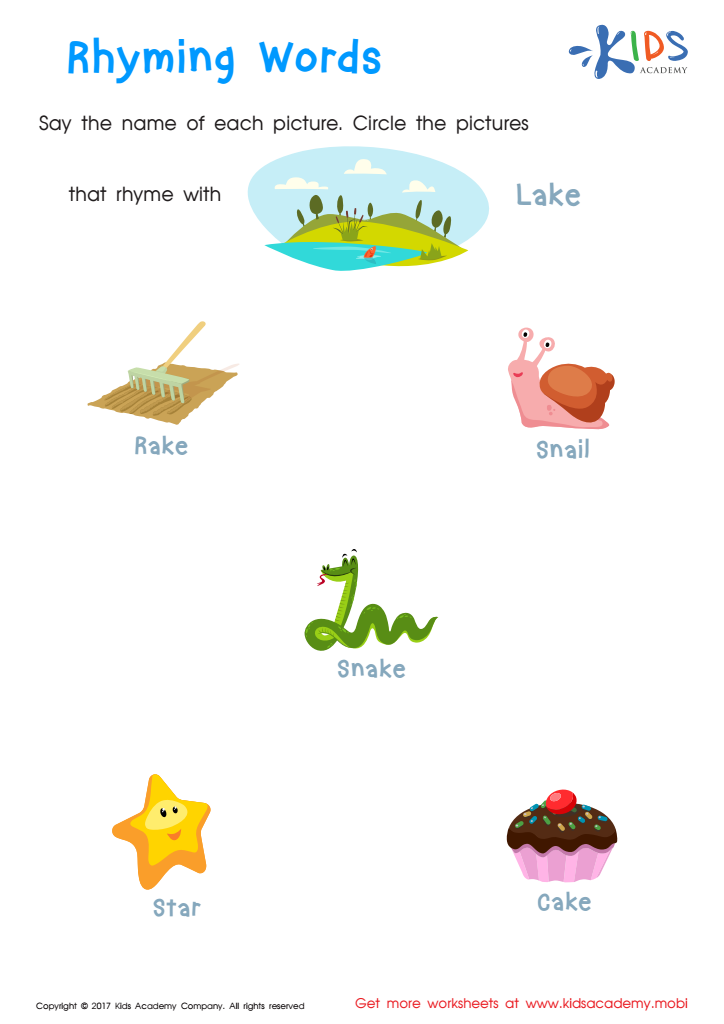
Rhyming Words Rhyming Worksheet
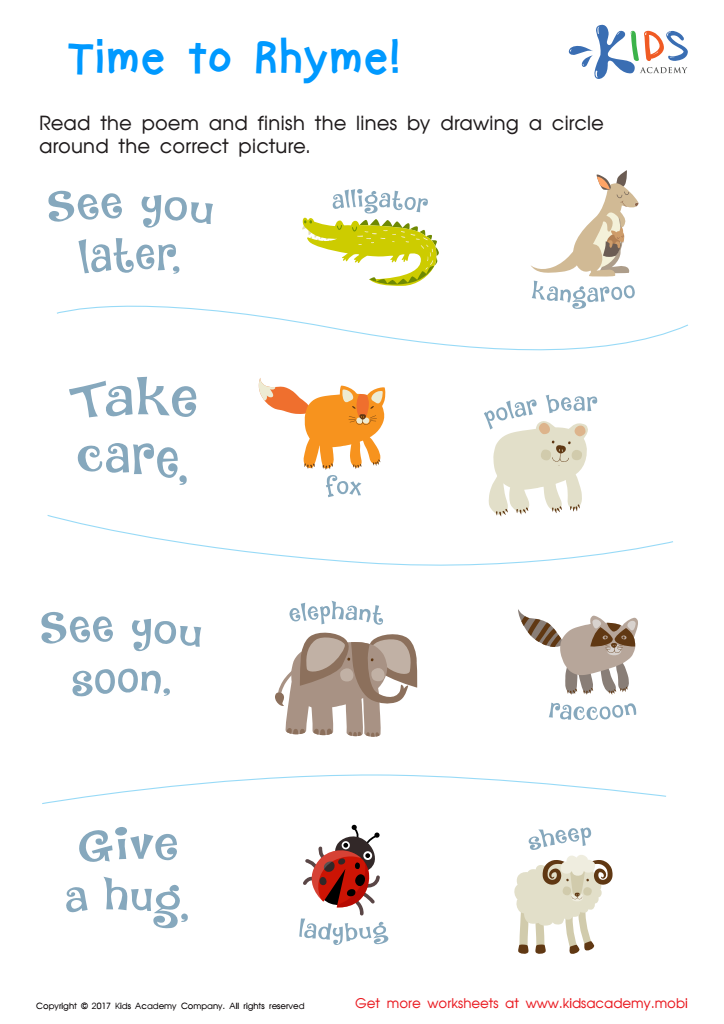
Time to Rhyme Rhyming Worksheet
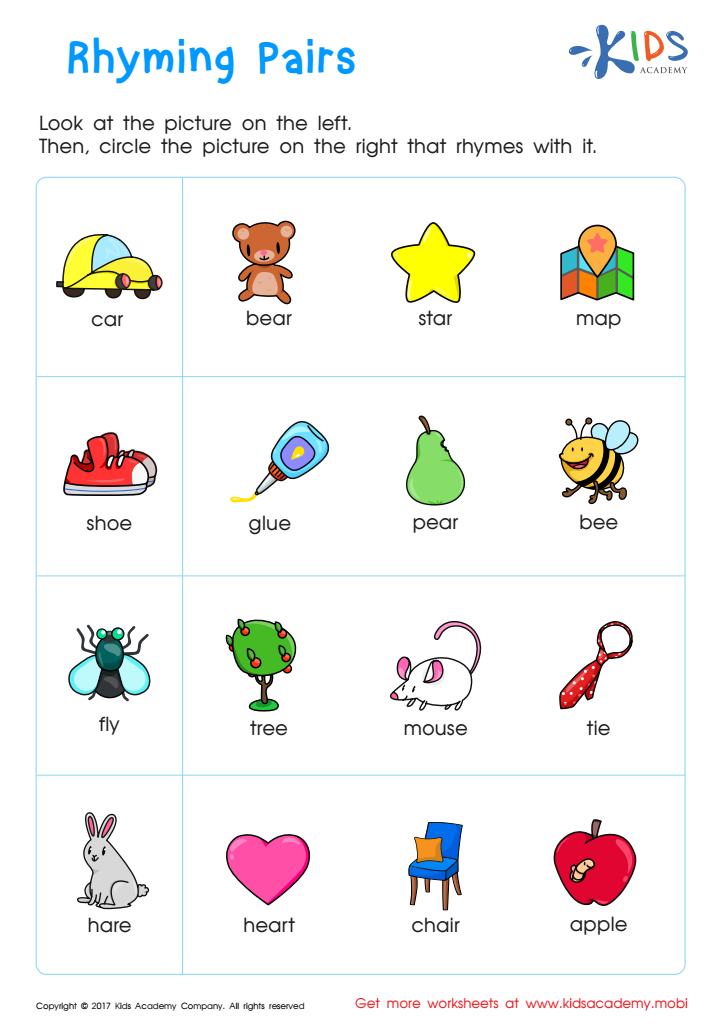








Rhyming plays a crucial role in early childhood development, particularly for children aged 3 to 7. Parents and teachers should prioritize rhyming activities as they promote phonemic awareness, which is essential for reading skills. By exposing children to rhyming words, they learn to identify sounds and the patterns that form language, making it easier for them to decode words when they start reading.
Moreover, rhyming enhances vocabulary and language development. When children engage with rhymes, they encounter new words in a memorable context, which helps them build a richer vocabulary. This exposure also boosts their comprehension skills, as they learn to understand and enjoy the rhythmic flow and meaning of language.
Additionally, rhyming fosters listening skills and memory retention. Recalling and reciting rhymes enhance auditory discrimination—a key component of literacy. Beyond academics, engaging with rhymes encourages creativity and expressive language, allowing children to experiment with sounds and build confidence.
Lastly, rhyming can make learning a fun and interactive experience. Storytime filled with songs, chants, and rhymes can bring families together and create positive associations with learning. Overall, incorporating rhyming in daily activities supports cognitive, linguistic, and social-emotional development, setting a strong foundation for lifelong learning.