Upper & Lowercase Letters Worksheets for Ages 3-7 - Page 3
50 filtered results
-
From - To
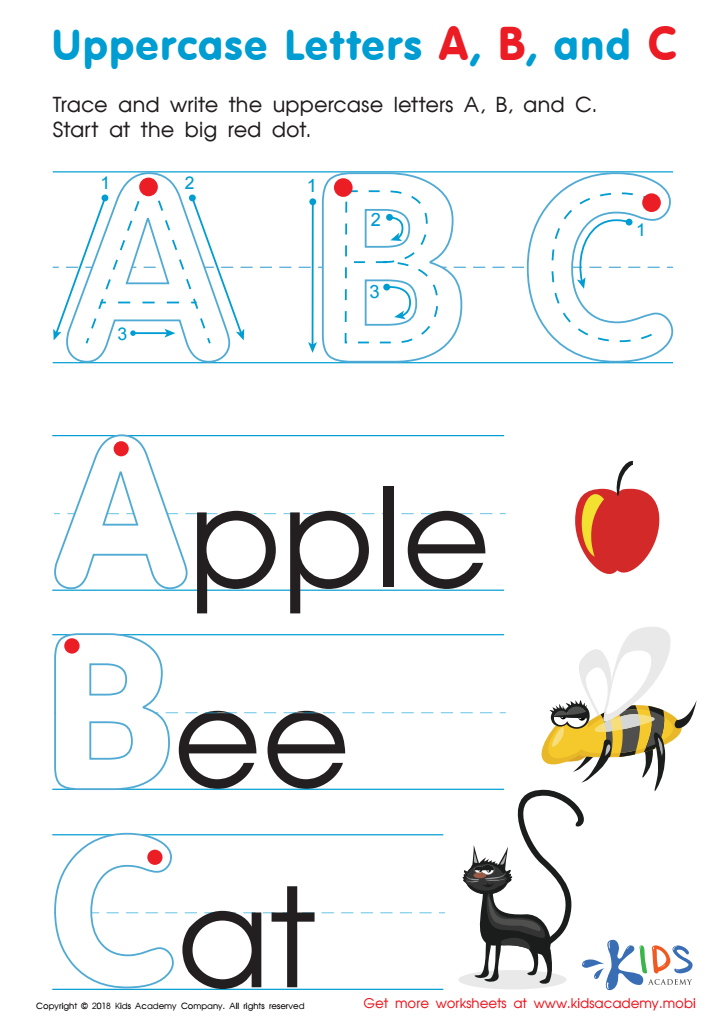
Uppercase Letters A, B, and C Worksheet
 Assign to My Students

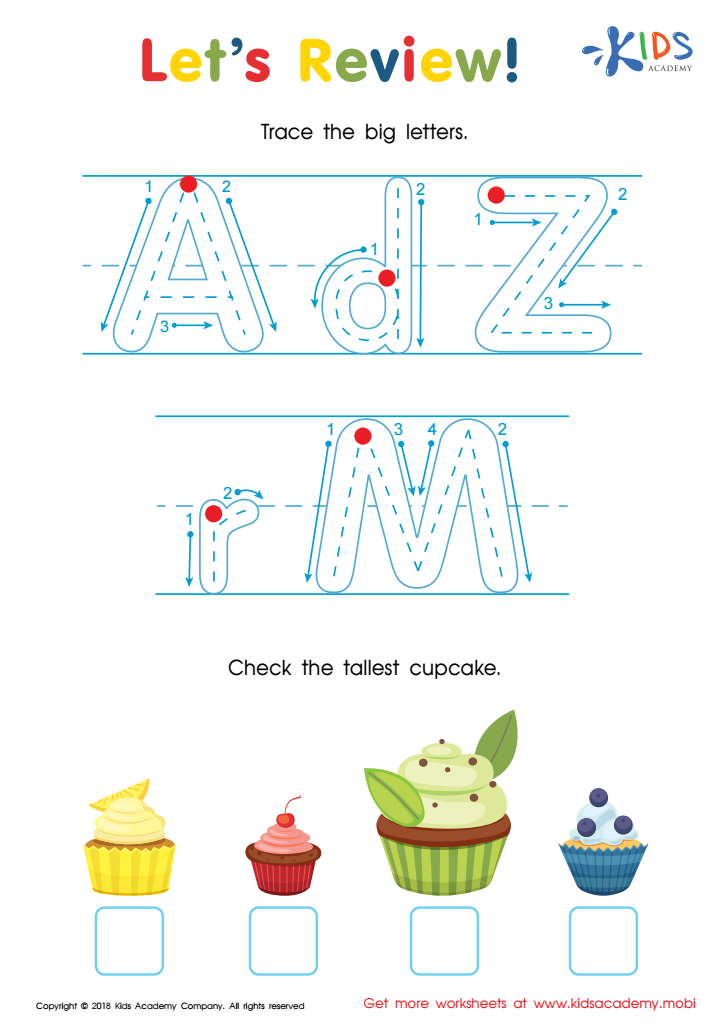
Let's Review! Big Letters Worksheet






Understanding uppercase and lowercase letters is crucial for children aged 3-7 as it forms the foundation for their literacy development. Early exposure to both forms of letters helps children recognize and differentiate between them, which is essential for reading and writing.
First, using uppercase letters at the beginning of sentences and for proper nouns can boost a child’s understanding of grammar and sentence structure. This knowledge is fundamental for developing coherent writing skills as they progress in their education. Additionally, lowercase letters are more frequently used in everyday written language, so familiarity with these forms can enhance a child's reading fluency.
Incorporating activities that involve identifying and using both letter forms can make learning fun and engaging. Creative exercises, like letter tracing or storybooks featuring vibrant illustrations with varying letter cases, can capture a child’s interest and make the learning process interactive.
Moreover, recognizing the significance of both uppercase and lowercase letters helps children build confidence as they begin to write. An understanding of letter forms also aids in mastering phonics, contributing to their overall literacy proficiency. Parents and teachers who emphasize this aspect of reading and writing lay a vital groundwork for children’s future academic success.







