Filters

52 filtered results

Clear all filters
Favorites
With answer key
Interactive

52 filtered results

Difficulty Level

Grade


Check out this FREE Trial Lesson on Animals for age 3-7!

Animal Habitats

Favorites
With answer key
Interactive
  • 3-7
  • Interactive
  • Animals
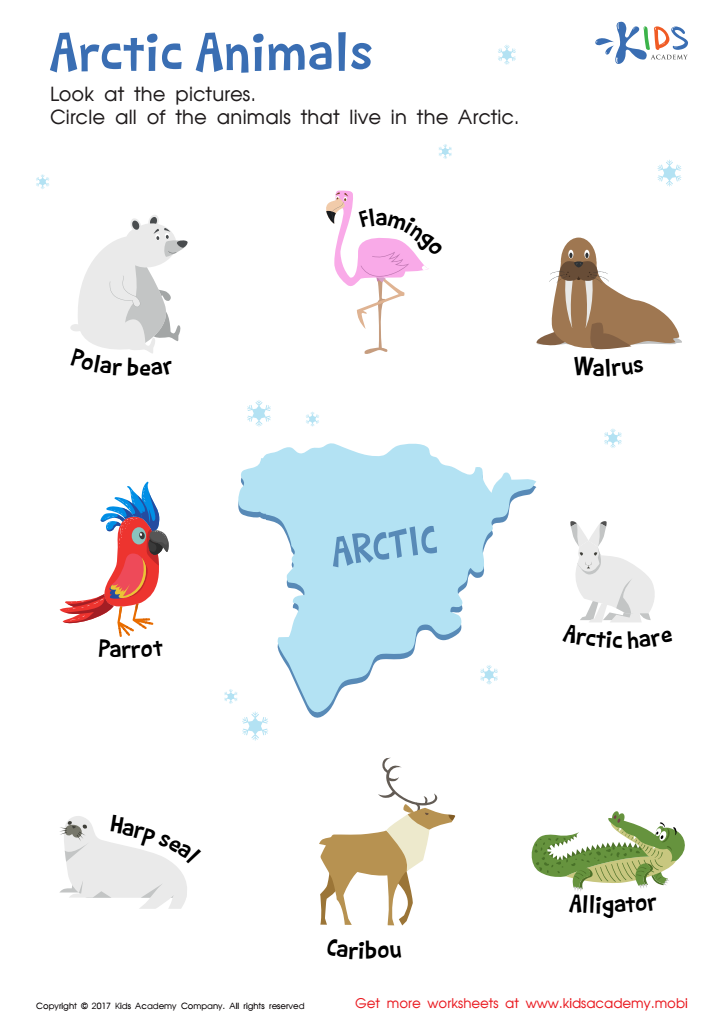
Arctic Animals Worksheet

Arctic Animals Worksheet

Kids love animals and this worksheet is a great way to teach them where they live. It reinforces classification skills and introduces new animals, like the Arctic hare. Use it to discuss the Arctic climate and how these animals live, then ask your child where other animals live to keep the conversation going.
Arctic Animals Worksheet
Worksheet
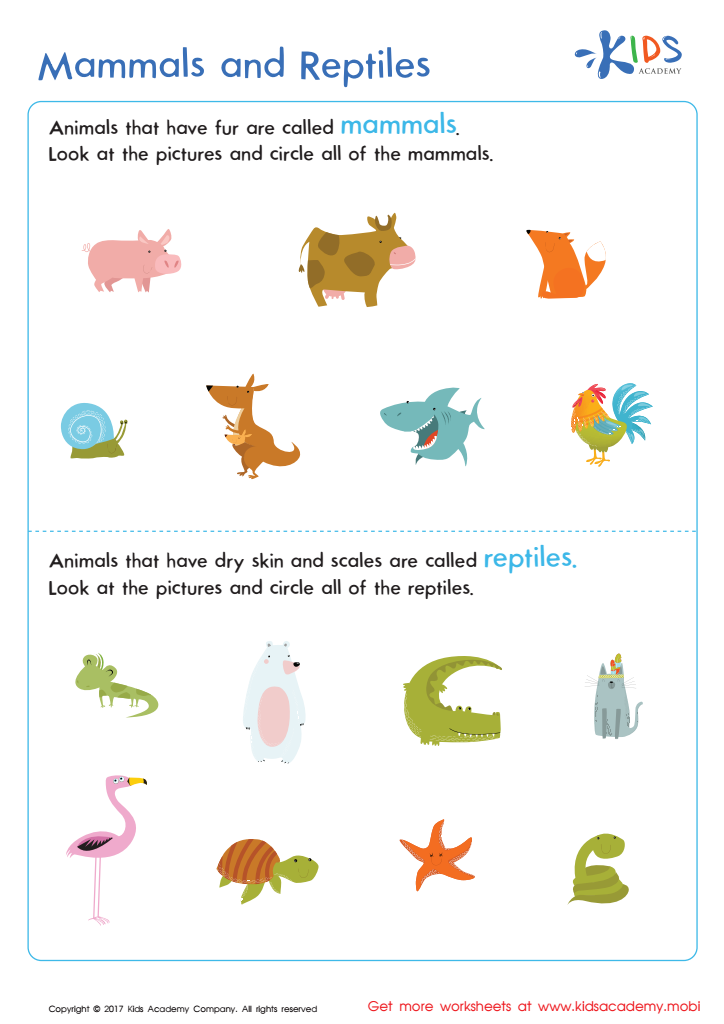
Mammals and Reptiles Worksheet

Mammals and Reptiles Worksheet

Challenge your child to identify mammals and reptiles with this worksheet. It's a great way to help them recognize the differences between these two types of animals.
Mammals and Reptiles Worksheet
Worksheet
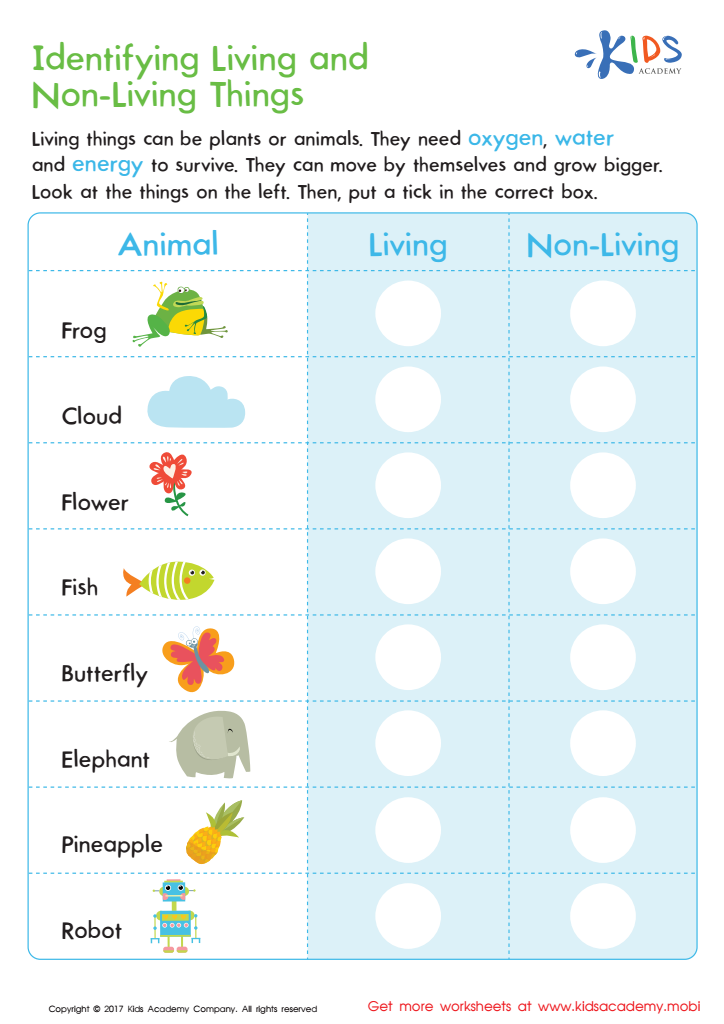
Living and Non-living Worksheet

Identifying Living or Non–living Worksheet
Help your child learn to sort and categorize in a new way! Teach them to classify things as living or non-living using this worksheet. It's the perfect way to build their scientific understanding, and to have some learning fun! Print this worksheet and watch them discover the world of science!
Identifying Living or Non–living Worksheet
Worksheet
Where Animals Live PDF Worksheet

Where Animals Live Worksheet

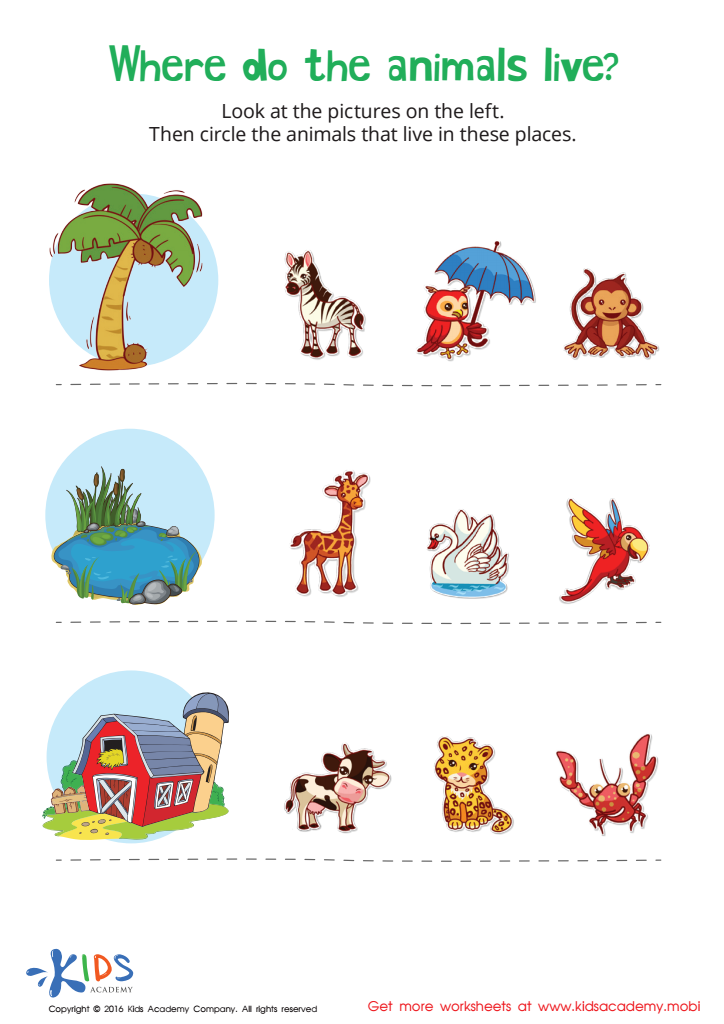
Teaching early reading and math skills is important, but don't forget about science. With the Where Animals Live PDF worksheet, kids can identify their favorite animals and the environments they live in. Ask them what type of environment the animals like and introduce them to geography. It's great for logical reasoning and classification skills. Your kid will practice with their favorite animals and love the trip to the zoo afterwards!
Where Animals Live Worksheet
Worksheet


... 2 3

Animals captivate young children, making them an excellent tool for teaching vital life lessons and fostering development. At ages 3-7, children are at a critical stage for developing empathy, responsibility, and curiosity. Interacting with animals teaches kids to understand and respect other living beings, fostering empathy. Caring for a pet instills responsibility, as kids learn to feed, clean, and look after their animal friends, developing a sense of duty and routine.

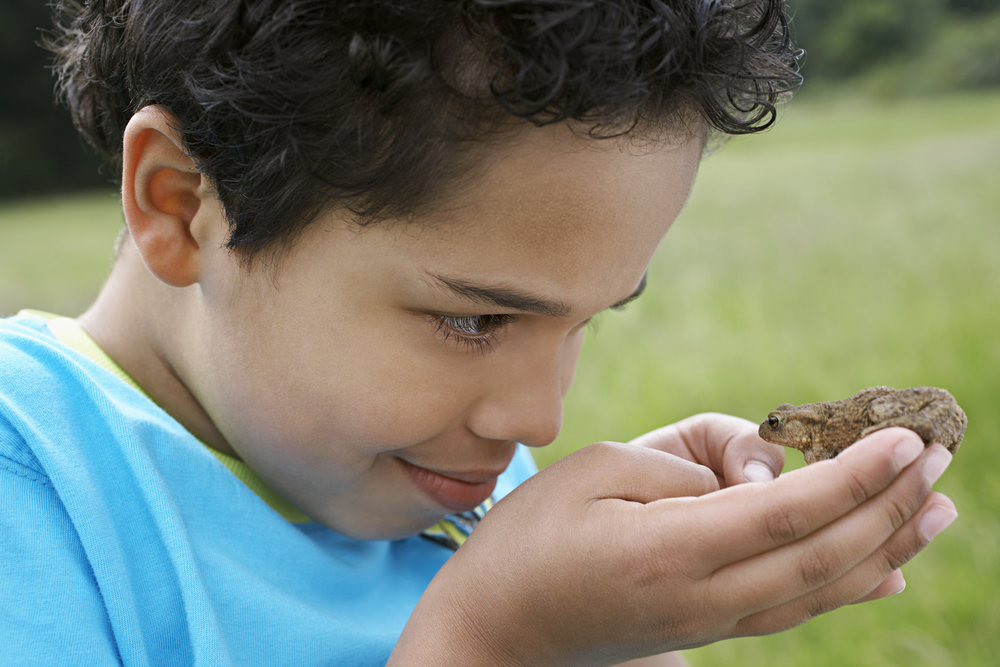
Animals also stimulate observation skills and curiosity. By watching animals' behaviors, asking questions, and learning fun facts, children develop a love for exploration and science. Books, videos, and real-life interactions with animals can significantly enhance vocabulary and communication skills, as kids naturally want to talk about their discoveries.

Moreover, animals can provide comfort and emotional support. The companionship of a dog, cat, or even a fish can help reduce stress, anxiety, and loneliness in children, creating a positive emotional environment. Animals offer endless opportunities for learning and growing, making them invaluable in early childhood development. Parents and teachers who incorporate animals into learning activities foster an enriched, compassionate, and inquisitive environment for children, setting the groundwork for their lifelong emotional and intellectual growth.