Missing Letters Worksheets for Ages 4-6
6 filtered results
-
From - To
Uncover the Alphabet Adventure: Missing Letters Worksheets for Ages 4-6
Dive into a world of alphabetical discovery with our captivating Missing Letters worksheets, specially designed for young learners aged 4-6. These engaging worksheets are tailored to develop your child's letter recognition and alphabetic sequencing skills, setting a strong foundation for their reading journey. Each page invites your little one into a vibrant learning experience, filled with a variety of puzzles and themes, ensuring the mastering of the ABCs is not only educational but also incredibly fun. Perfect for preschoolers and kindergarteners, our worksheets are crafted to ignite a love for learning one letter at a time. Let the adventure begin!
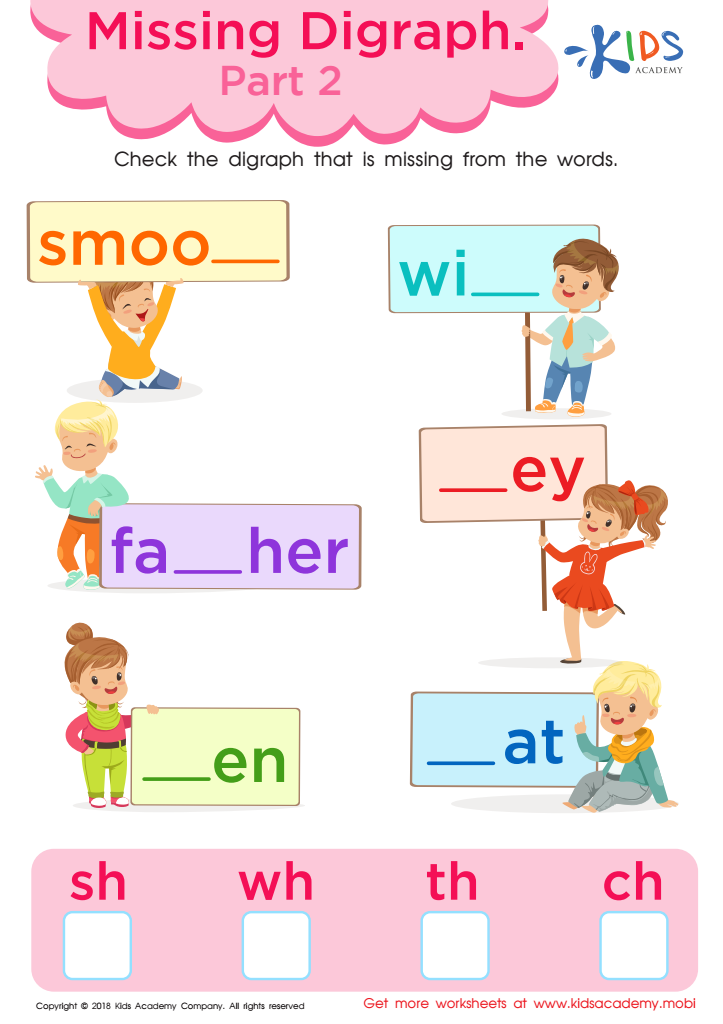
Missing Digraph: Part 2 Worksheet
 Assign to My Students
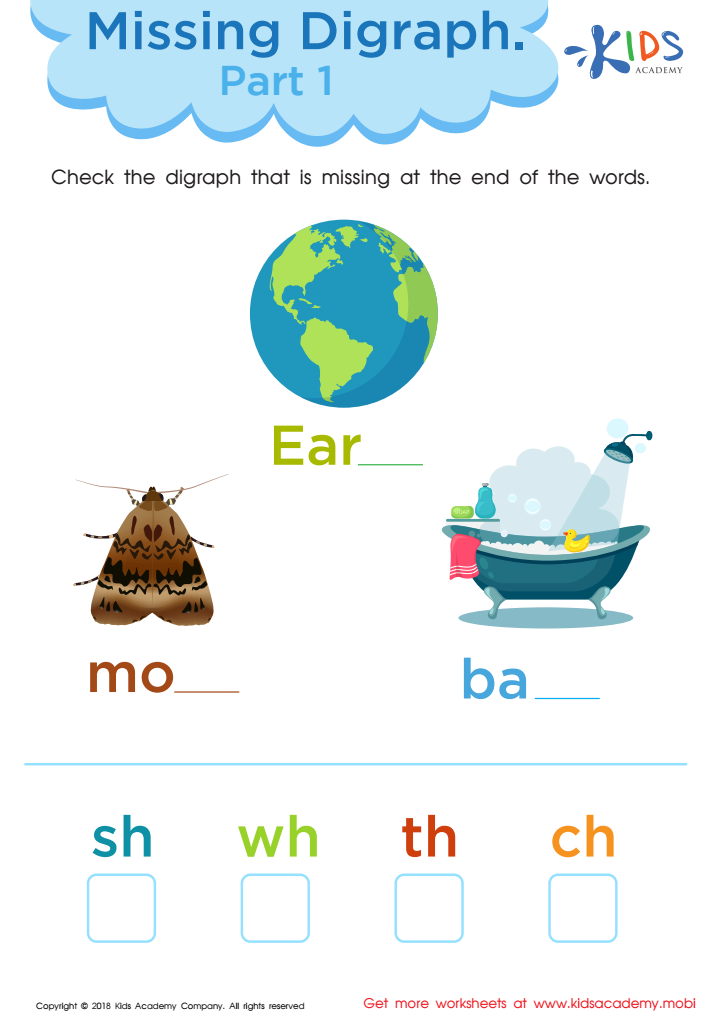
Missing Digraph: Part 1 Worksheet
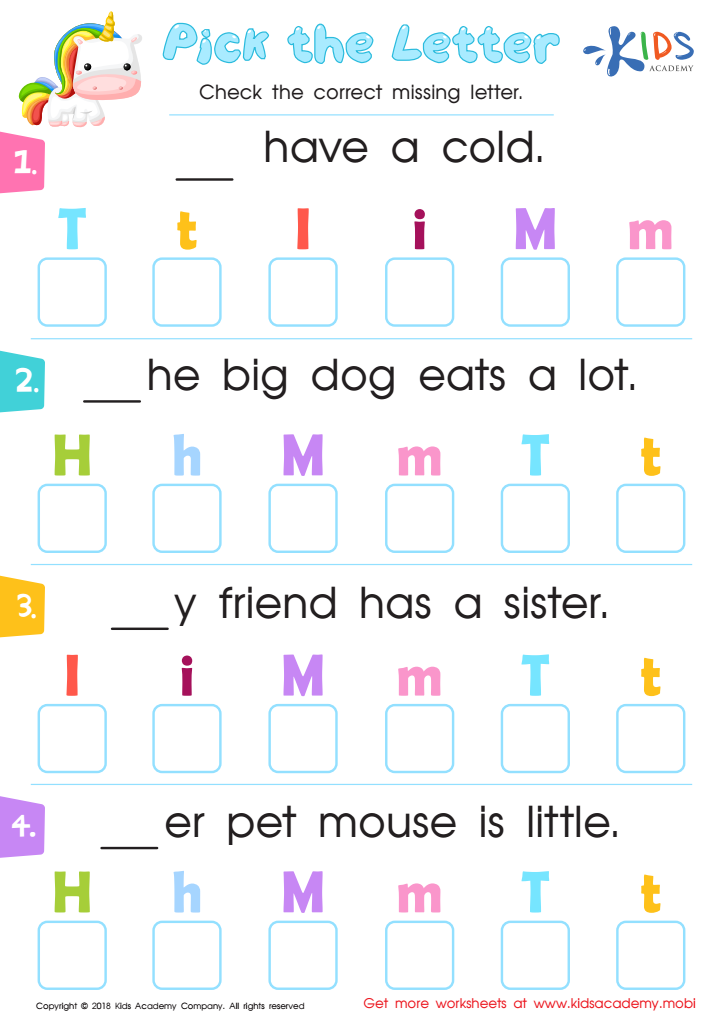
Pick the Letter Worksheet
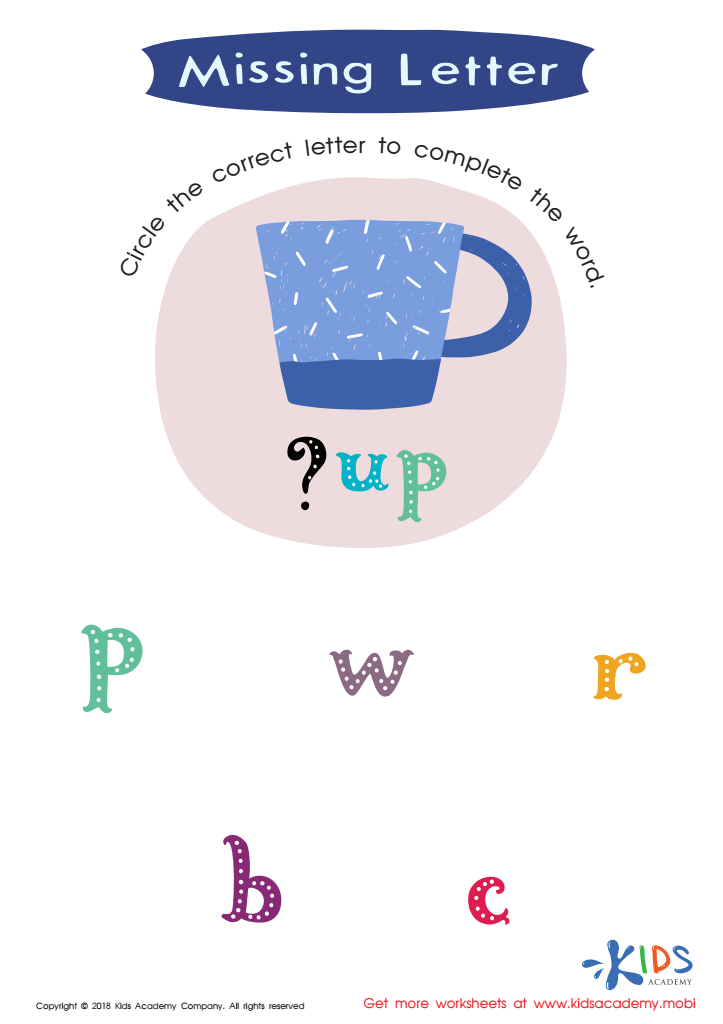
Missing Letter Worksheet
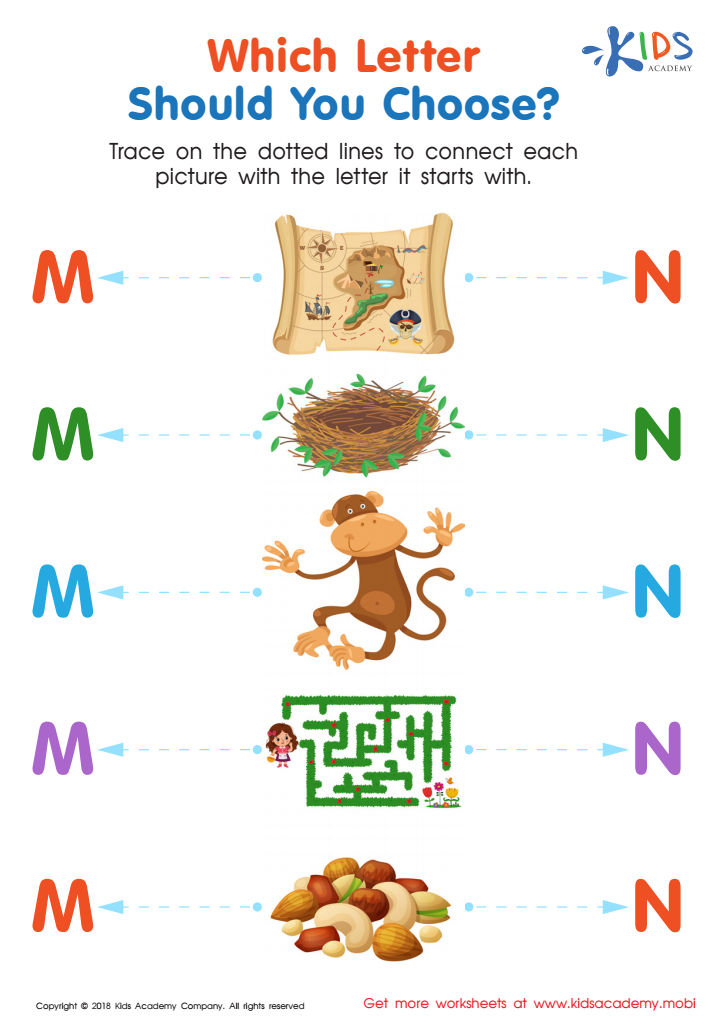
Which Letter Should you Choose? Worksheet
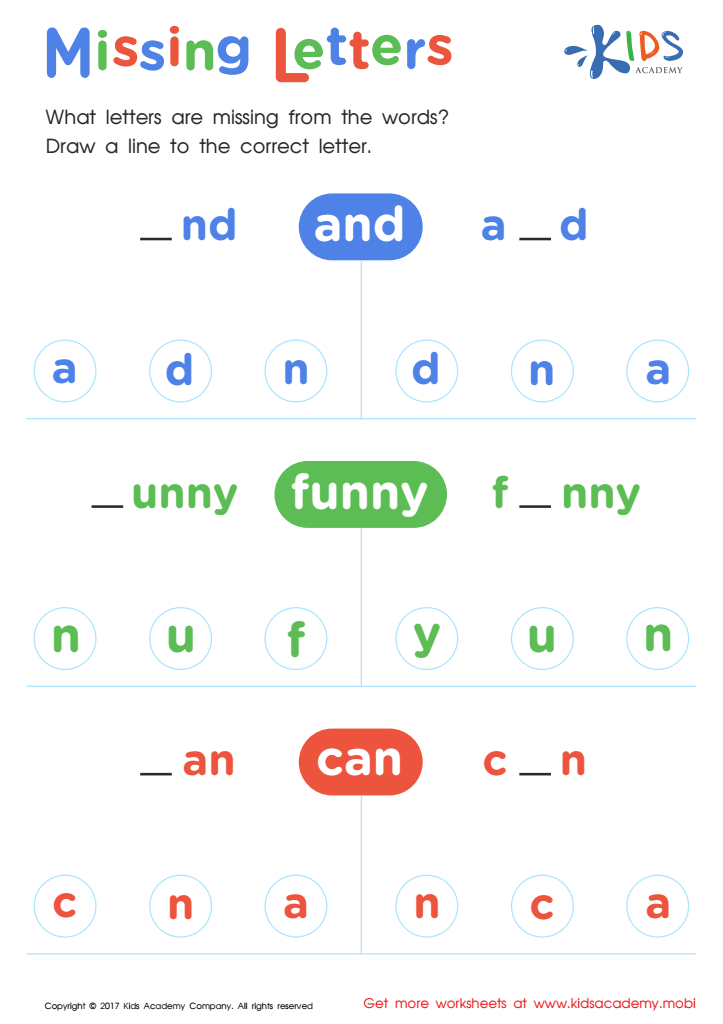
Missing Letters Worksheet



Worksheets on Missing Letters are an invaluable tool for children ages 4-6, designed to support their early literacy and cognitive development. These worksheets serve a dual purpose: they not only enhance letter recognition skills but also improve spelling and vocabulary. For children in this critical age group, recognizing missing letters in words helps cement the foundation of their reading abilities, preparing them for more complex literacy tasks ahead.
The use of Missing Letters worksheets for Ages 4-6 is particularly useful because it turns learning into an engaging activity. Children are naturally curious and eager to solve puzzles; these worksheets tap into that enthusiasm by challenging them to identify the missing pieces in words. This not only keeps them engaged but also boosts their confidence as they successfully complete each task.
Moreover, working with Missing Letters allows children to practice their alphabet out of sequence, which is crucial for developing a deeper understanding of how letters form words. This methodical approach to learning ensures that young learners can recognize letters in various contexts, an essential skill for reading fluency.
In essence, Missing Letters worksheets for Ages 4-6 are not just about learning letters; they're about building the foundational skills for lifelong literacy. Through these activities, children gain a stronger grasp of the alphabet, enhance their problem-solving abilities, and take significant strides in their journey to becoming proficient readers.







