Silent Vowels Worksheets for Ages 4-6
3 filtered results
-
From - To
Discover our engaging Silent Vowels Worksheets designed specifically for children ages 4-6! These interactive resources help young learners grasp the concept of silent vowels in a fun and effective way. With colorful illustrations and captivating activities, kids will enjoy identifying silent vowels within words and enhancing their phonics skills. Our worksheets are perfect for both classroom use and at-home learning, providing a solid foundation for early literacy. Support your child's educational journey as they develop crucial reading skills while having fun with our well-crafted exercises. Explore the world of silent vowels and watch your little ones shine in their reading abilities!
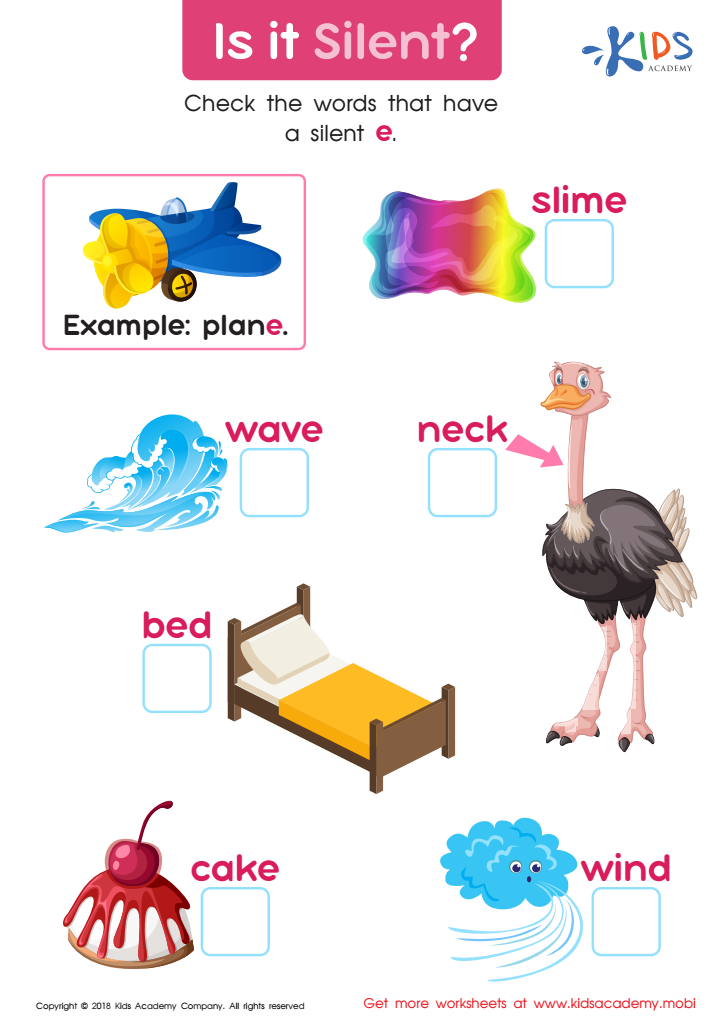
Is It Silent? Worksheet
 Assign to My Students
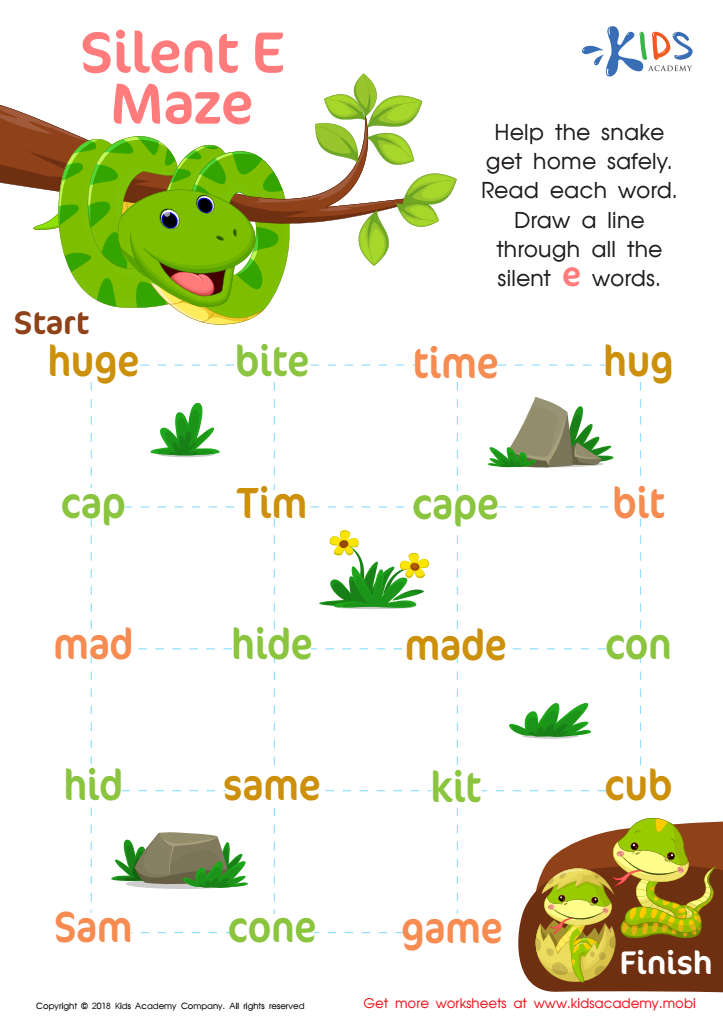
Silent E Maze Worksheet
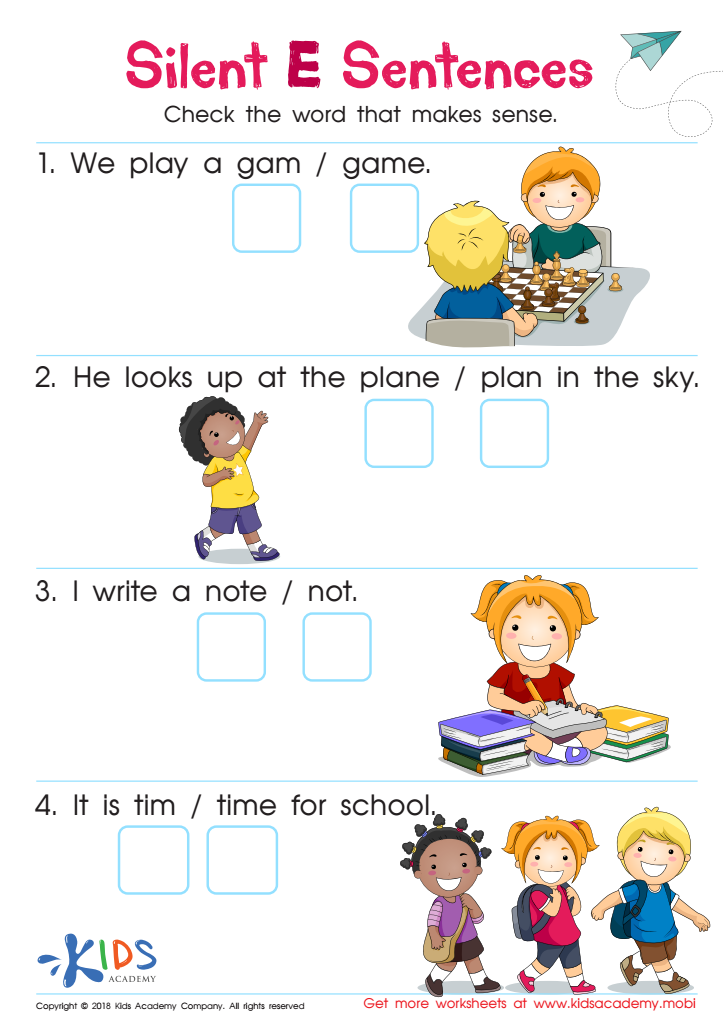
Silent E Sentences Worksheet


Silent vowels play a crucial role in early literacy development for children aged 4-6. Understanding silent vowels helps young learners enhance their phonemic awareness, a fundamental skill that underpins reading and writing. When children grasp the concept of silent vowels—such as the 'e' in “cake” or the 'u' in “guess”—they begin to recognize patterns in language that enhance their decoding skills. This knowledge enables them to read more fluently, as they can predict sounds and meanings of words more effectively.
Moreover, silent vowels contribute to a child's spelling proficiency. As students learn to identify silent letters, they are less likely to make common spelling errors associated with phonetic pronunciation. This awareness also expands their vocabulary as they become familiar with a broader range of words.
Encouraging discussions about silent vowels in a fun and engaging manner helps instill a love for language. Parents and teachers can incorporate games, storytelling, and rhymes that highlight the concept, making learning enjoyable. Ultimately, understanding silent vowels lays a strong foundation for future literacy skills, empowering children to explore reading and writing with confidence and creativity as they continue their educational journey.