Time Worksheets for Ages 4-7 - Page 2
25 filtered results
-
From - To
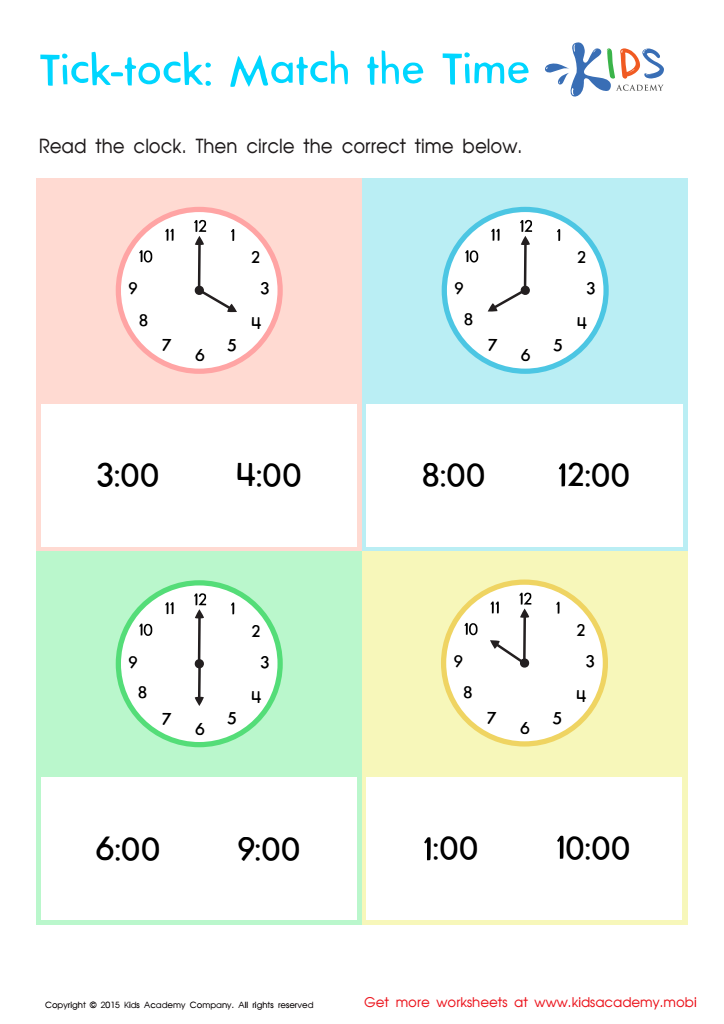
Telling The Time Worksheet: Part 4
 Assign to My Students








Time is a critical concept for children aged 4-7, a developmental stage where they begin to understand and organize their daily lives. Recognizing time helps children develop a sense of routine, fostering independence and responsibility. When parents and teachers prioritize teaching time, they enable children to grasp essential life skills, such as managing activities, understanding sequences (like first, next, last), and cultivating patience.
Additionally, mastery of time-related concepts supports cognitive development. It prepares children for more complex mathematical tasks, as it involves counting, comparing, and recognizing patterns. Understanding time also boosts verbal and communication skills, as children learn to express when things happen—improving their storytelling abilities.
Furthermore, routines surrounding time, like a consistent schedule, contribute to a sense of stability and security. Children thrive in environments where they know what to expect, leading to improved behavior and emotional well-being. Ultimately, instilling a solid understanding of time equips children with key skills that facilitate academic success and harmonious interactions in everyday life, making it essential for both parents and teachers to emphasize this learning during early childhood.








