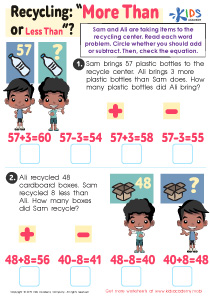
Numbers up to 100 Worksheets for Ages 4-9 - Page 3
50 filtered results
-
From - To
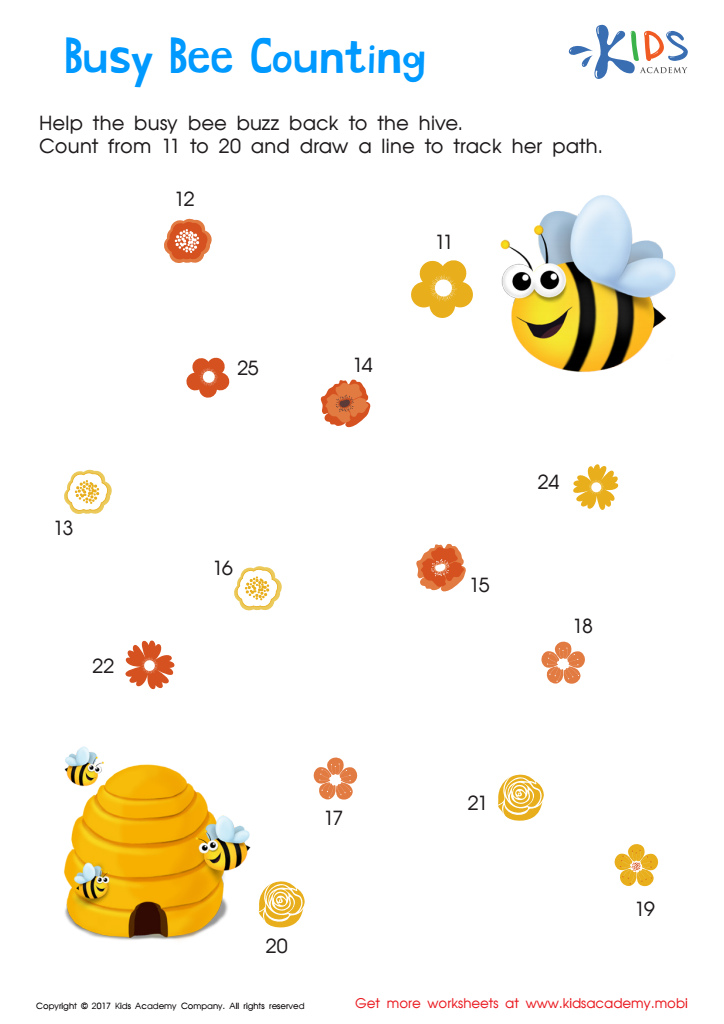
Ordering 11–20: Busy Bee Counting Worksheet
 Assign to My Students
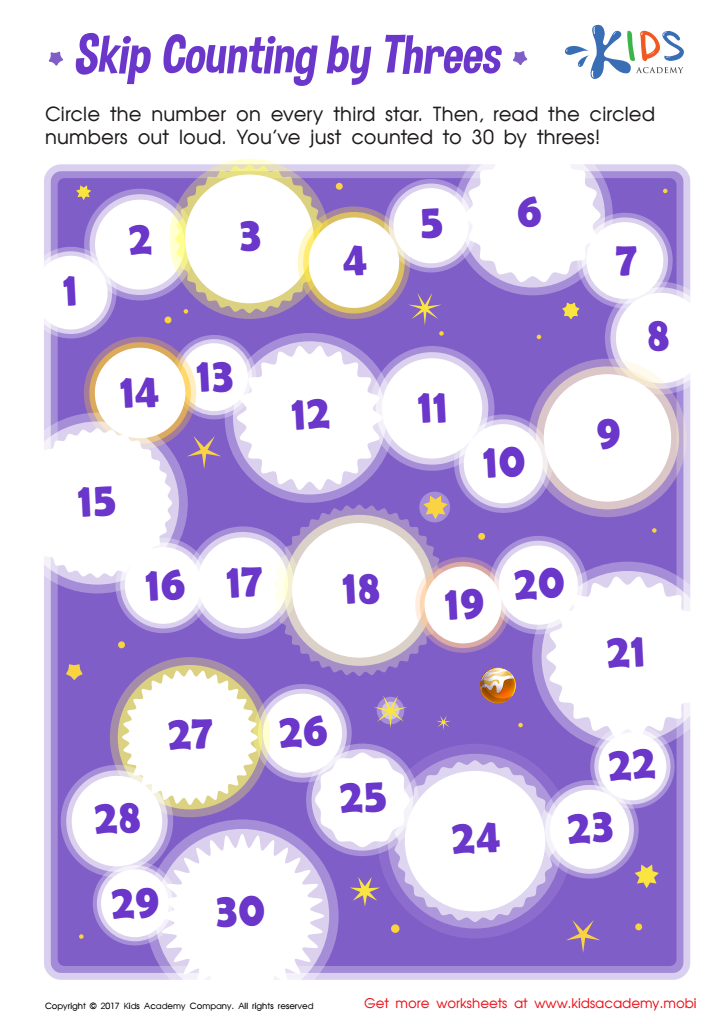
Skip Counting By Three Printable








Understanding numbers up to 100 is crucial for children aged 4-9 as it forms the foundational building blocks for their mathematical skills and overall cognitive development. At this age, children are naturally curious and eager to learn, making it the perfect time to introduce them to essential number concepts. Mastery of numbers helps kids recognize patterns, develop problem-solving strategies, and enhances their ability to make logical connections.
Furthermore, counting and number recognition are integral early literacy skills. They help children understand statistics in the world around them, such as in everyday situations like shopping or sharing, promoting practical life skills. Engaging with numbers also fosters critical thinking and boosts self-confidence as children achieve milestones in their learning journey.
Moreover, knowledge of numbers sets the groundwork for future subjects like addition, subtraction, and even early geometry. Parents and teachers play a vital role in guiding and supporting children through interactive and engaging activities, enhancing their retention and understanding. Ultimately, fostering numeracy skills in young learners not only enriches their academic journey but also prepares them for a world that increasingly relies on numerical literacy.