Time Worksheets for Ages 4-9 - Page 2
25 filtered results
-
From - To
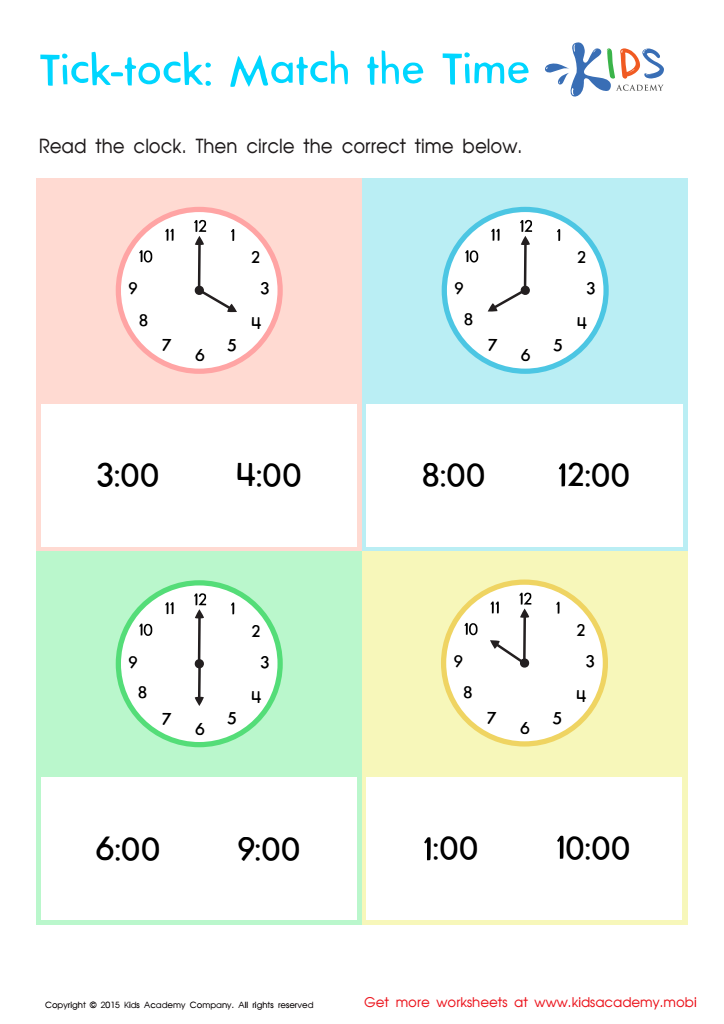
Telling The Time Worksheet: Part 4
 Assign to My Students







Understanding time is essential for children aged 4-9, as it lays the foundation for their overall cognitive development and daily functioning. At this age, children are beginning to grasp abstract concepts, and learning about time helps them develop critical thinking and problem-solving skills. By introducing concepts such as hours, minutes, and the sequence of events, parents and teachers help children establish routines, manage their time effectively, and foster responsibility.
Moreover, time concepts promote independence. When children understand schedules, they can better prepare for school, activities, and playtime. This autonomy boosts their confidence and ability to plan for future tasks.
Additionally, time awareness plays a significant role in social interactions. It helps children negotiate playdates, understand classroom transitions, and respect others’ time. Encouraging discussions about time nurtures language development, enriching their vocabulary and communication skills.
Overall, fostering an understanding of time equips children with essential life skills that will serve them well as they grow. Parents and teachers play a crucial role in guiding this learning, creating engaging activities that emphasize the importance of time in a fun and relatable manner, ultimately supporting children’s educational and personal growth.








