Community Worksheets for Ages 4-9 - Page 2
30 filtered results
-
From - To
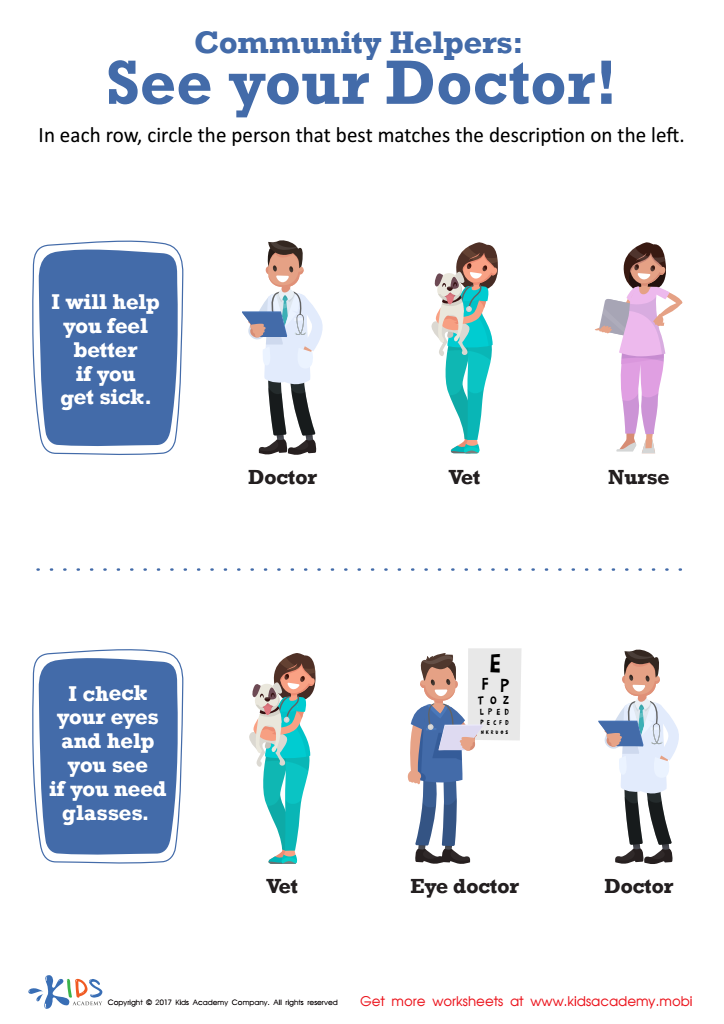
See Your Doctor (Part 1) Printable
 Assign to My Students


Playground Worksheet

Grocery Store Worksheet

Fireman Worksheet





.jpg)



Parents and teachers should care deeply about community for children ages 4-9 because it plays a pivotal role in their social, emotional, and cognitive development. At this young age, children are naturally curious and eager to explore their surroundings. A strong sense of community provides them with safety, support, and belonging, fostering their ability to form healthy relationships with others.
In communities where collaboration is valued, children learn important life skills such as cooperation, empathy, and conflict resolution. These skills are essential for their future interactions, both in and out of the classroom. Engaging with a diverse community exposes children to different perspectives and values, enhancing their cultural awareness and teaching them to respect and appreciate differences among individuals.
Additionally, a supportive community encourages parental involvement, which plays a significant role in student success. When parents participate in community events, they model positive social behavior and enhance learning opportunities. Teachers who prioritize community engagement can create inclusive classrooms that prepare students not just for academic challenges, but for lifelong social engagement.
Overall, nurturing a sense of community enriches the developmental experience for children, creating a foundation for happy, well-adjusted individuals who contribute positively to society.