Physical Science Worksheets for Ages 4-9
3 filtered results
-
From - To
Introduce your young learners to the fascinating world of physical science with our engaging worksheets, designed for ages 4-9. At Kids Academy, we provide a rich assortment of printable materials that ignite curiosity and foster understanding of fundamental concepts such as gravity, magnetism, and simple machines. Whether your child is exploring states of matter or discovering forces in motion, our worksheets offer interactive and age-appropriate fun while reinforcing essential STEM skills. Created by educators, these resources inspire excitement for science through hands-on activities, colorful illustrations, and easy-to-follow instructions. Spark a love for learning and scientific discovery today!
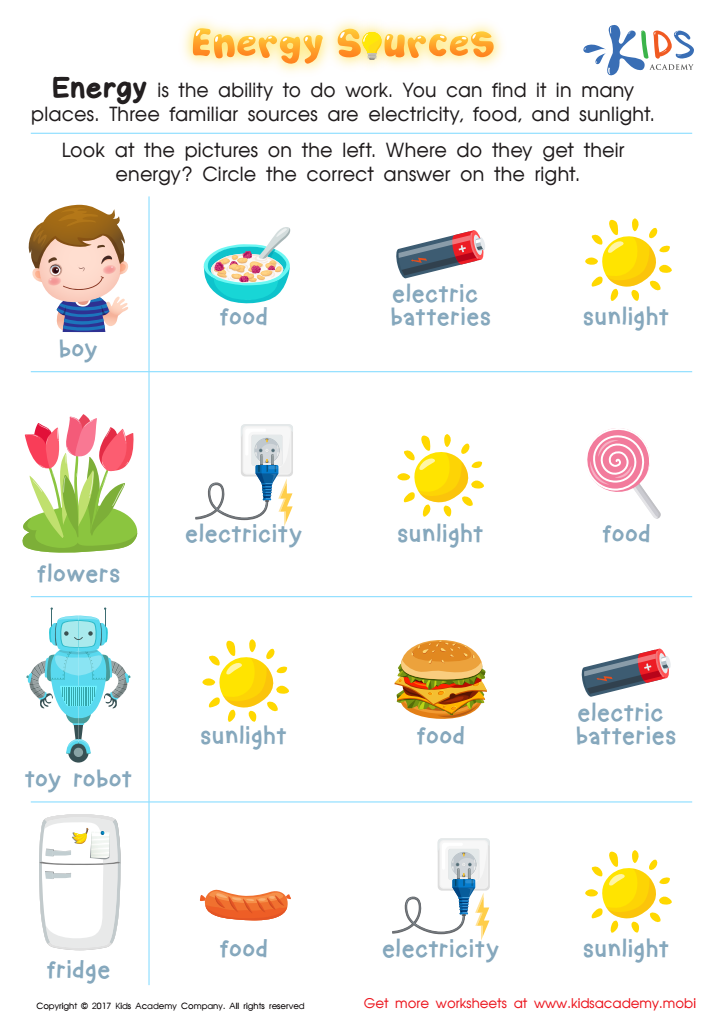
Energy Sources Printable
 Assign to My Students
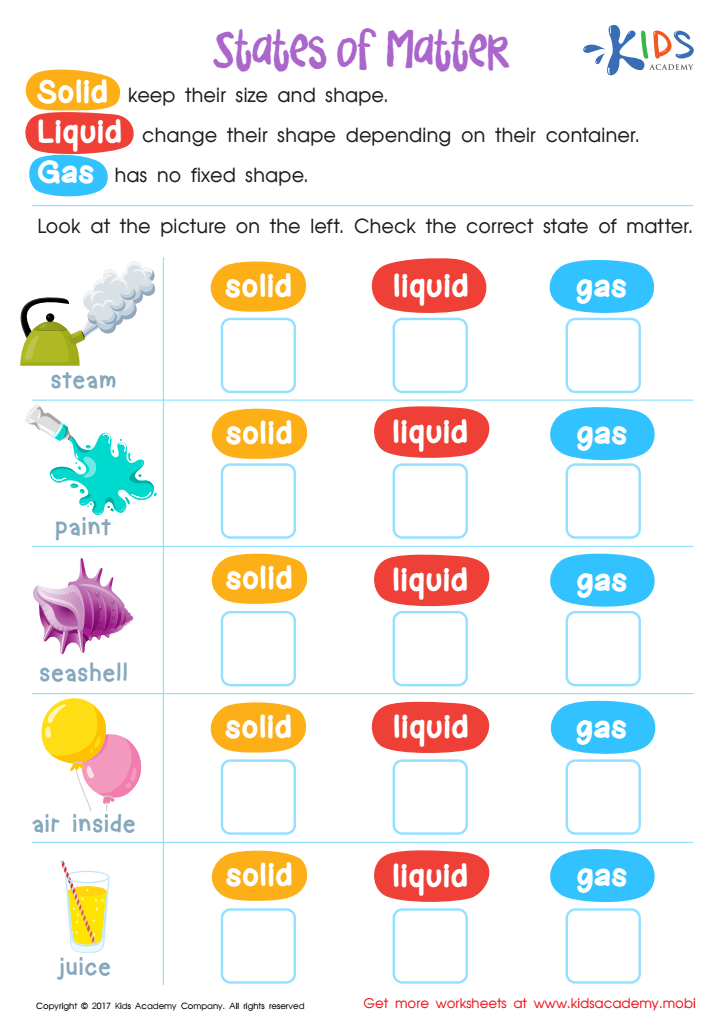
Physical Science: States of Matter Worksheet
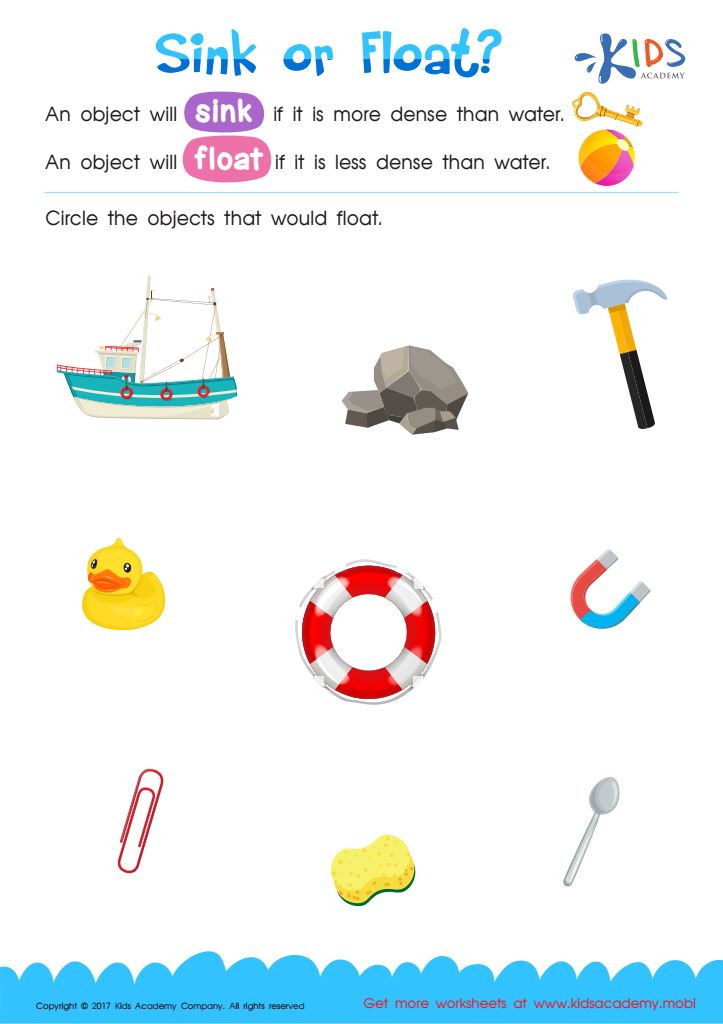
Sink or Float Printable








Introducing physical science concepts to children ages 4-9 is vital for nurturing their natural curiosity and building a foundation for lifelong learning. At this stage, kids are exceptionally curious and eager to explore the world around them. Physical science, which includes ideas about matter, energy, forces, and simple machines, offers a gateway to understanding everyday phenomena. When parents and teachers engage children in basic experiments and observations, they help develop critical thinking and problem-solving skills early on.
For instance, simple activities like figuring out why objects sink or float, how shadows are formed, or what makes things move can significantly boost a child's analytical abilities and ignite a passion for discovery. Beyond intellectual benefits, hands-on experiments make learning tangible and fun, keeping young minds engaged and preventing potential boredom or frustration.
Additionally, understanding basic physical science principles lays the groundwork for future academic success in a wide range of subjects, from further science education to mathematics and technology. By fostering an early appreciation and understanding of physical science, parents and teachers ensure children build confidence in their ability to comprehend and interact with the world. This creates a path not just for academic growth, but for a more profound, lifelong appreciation of how the world works.