Syllable identification Writing Worksheets for Ages 4-9
5 filtered results
-
From - To
Introduce your child to the world of syllable identification with our engaging writing worksheets designed for ages 4-9. These activities help young learners break down words into manageable parts, enhancing their reading, spelling, and pronunciation skills. Our worksheets feature a variety of fun exercises, including clapping, coloring, and writing, to make learning syllables interactive and enjoyable. Promote early literacy and boost your child's phonemic awareness with our expertly crafted resources. Perfect for both classroom and home use, our worksheets provide the foundation for confident and successful readers and writers. Explore our collection today and watch your child thrive!
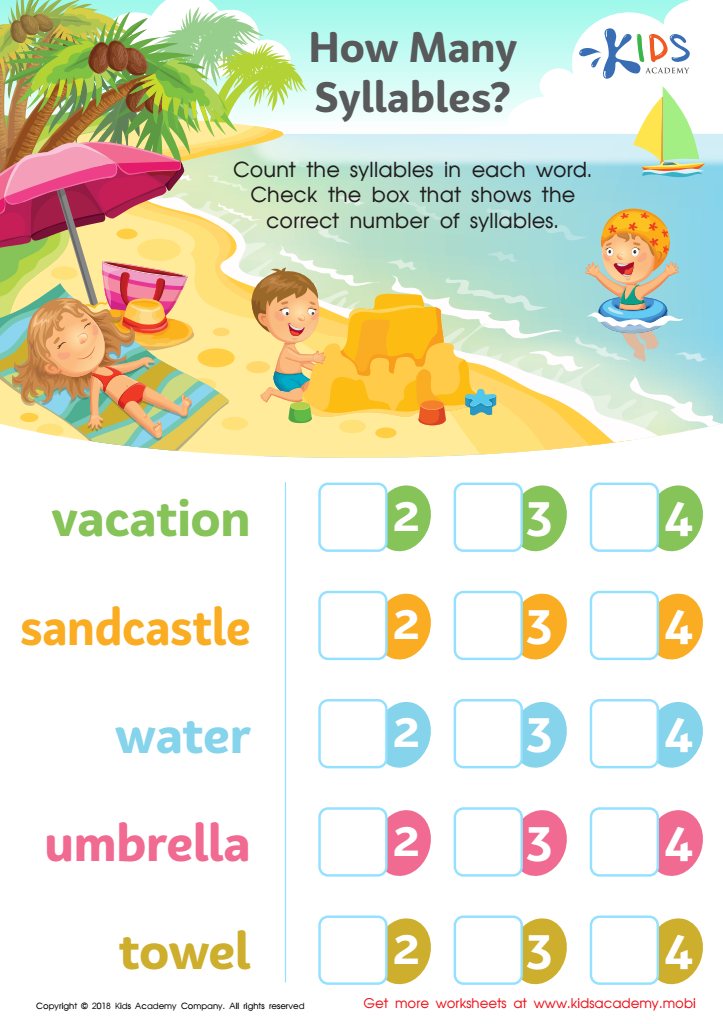
How Many Syllables Worksheet
 Assign to My Students
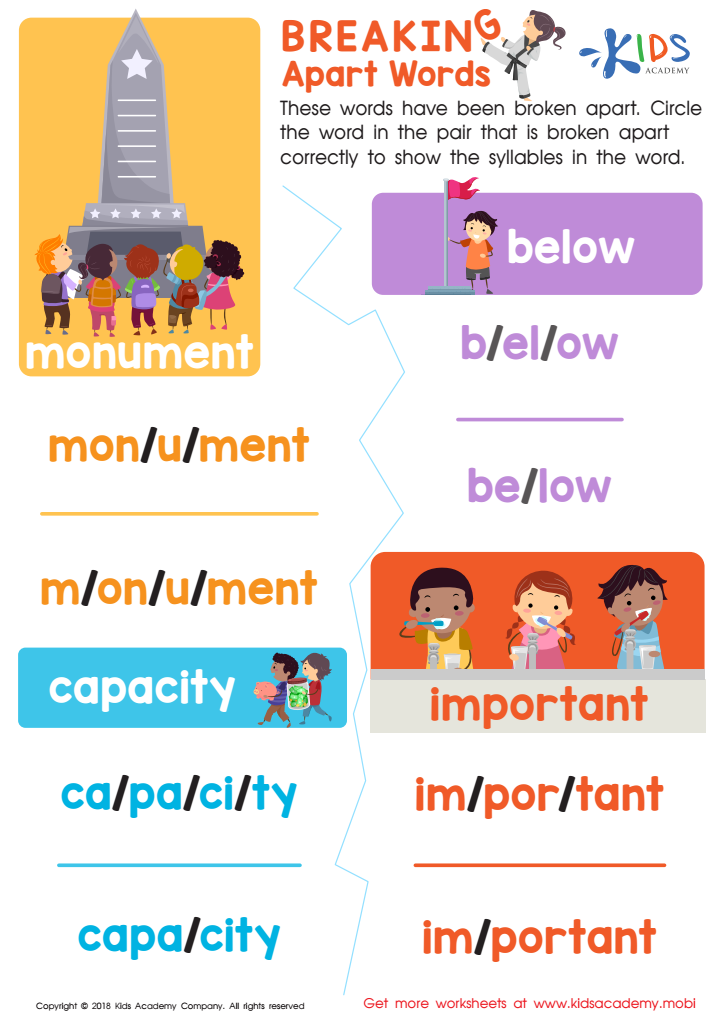
Breaking Apart Words Worksheet
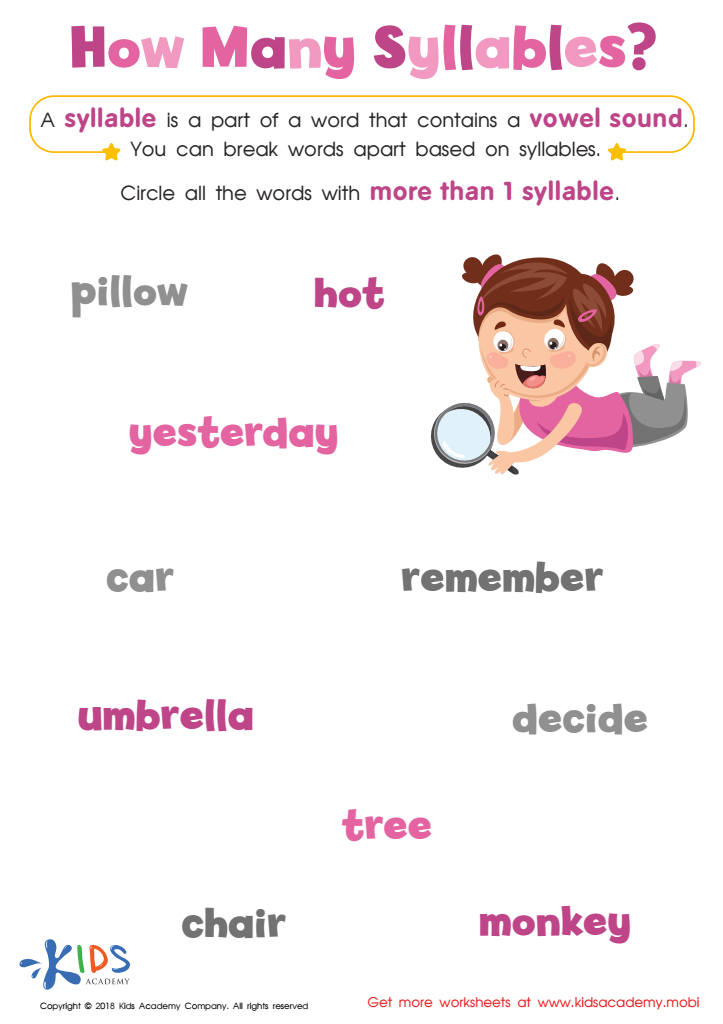
Reading: How Many Syllables Worksheet
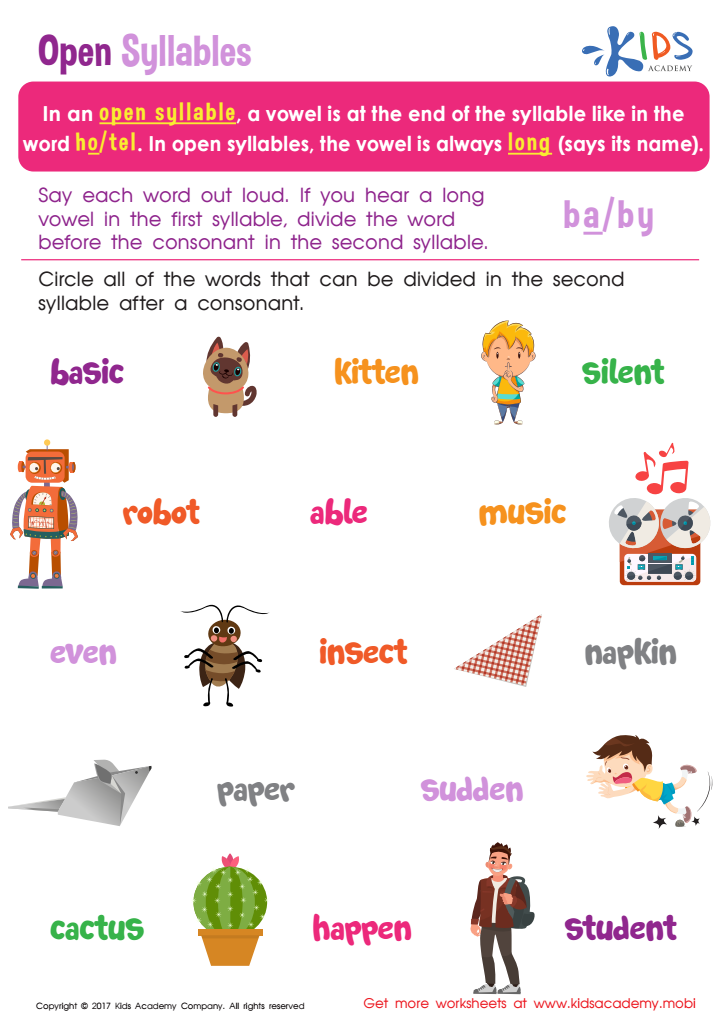
Open Syllable Printable Worksheet
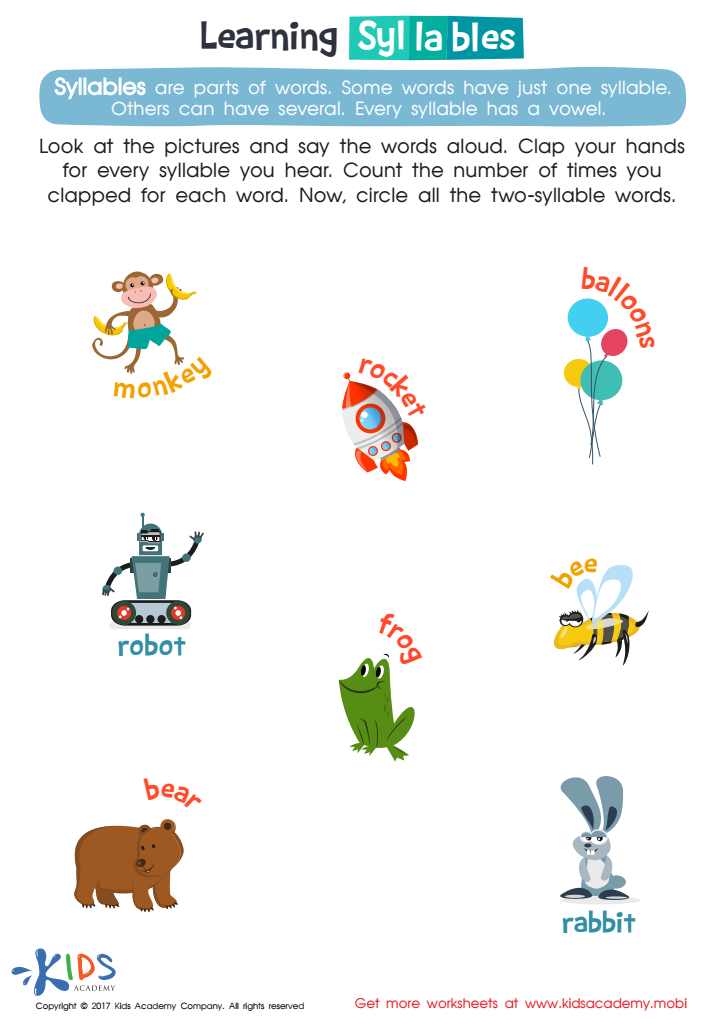
Learning Syllables Word Structure Worksheet





Syllable identification is crucial for children aged 4-9 because it forms the foundation of phonological awareness, which is essential for reading and writing proficiency. At this pivotal stage, children are developing key language and literacy skills, and understanding syllables helps them break down words into manageable parts. This segmentation aids in decoding new words during reading and supports accurate spelling in writing.
Furthermore, recognizing syllables enhances a child's ability to identify patterns within words, which is instrumental in understanding complex language structures. For example, knowing how to break a word like “butterfly” into "but-ter-fly" not only boosts word recognition but also enriches their vocabulary as they learn similar word families and patterns.
On a cognitive level, syllable identification fosters memory and auditory processing skills, essential for following spoken instructions and engaging in effective communication. Early difficulties in these areas can lead to struggles with literacy later on, which can affect school performance and self-esteem. Thus, parents and teachers should prioritize syllable identification to ensure children build a solid linguistic foundation, paving the way for lifelong literacy and learning success. Encouraging fun, multisensory activities around syllable counting and segmentation can make this fundamental skill accessible and engaging for young learners.








