Enhancing observational skills Worksheets for Ages 5-6
3 filtered results
-
From - To
Unlock your child's potential with our "Enhancing Observational Skills Worksheets for Ages 5-6" at Kids Academy. Designed for young learners, these fun and educational printables foster keen observation and critical thinking. As children engage in matching, spotting differences, and decoding visual cues, they develop essential skills for academic success. Perfect for parents and teachers, our worksheets make learning enjoyable and effective. By integrating vibrant illustrations and interactive activities, these resources guide children in honing their attention to detail, ultimately preparing them for more complex subjects. Start your child's learning journey and watch curiosity and awareness flourish!
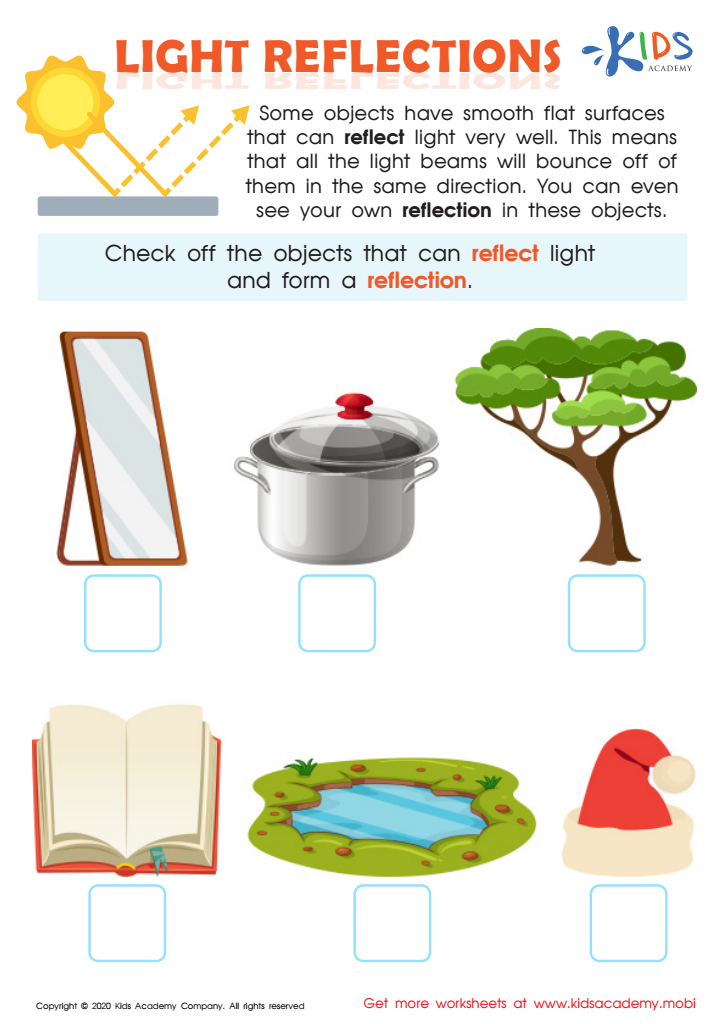
Light Reflections Worksheet
 Assign to My Students
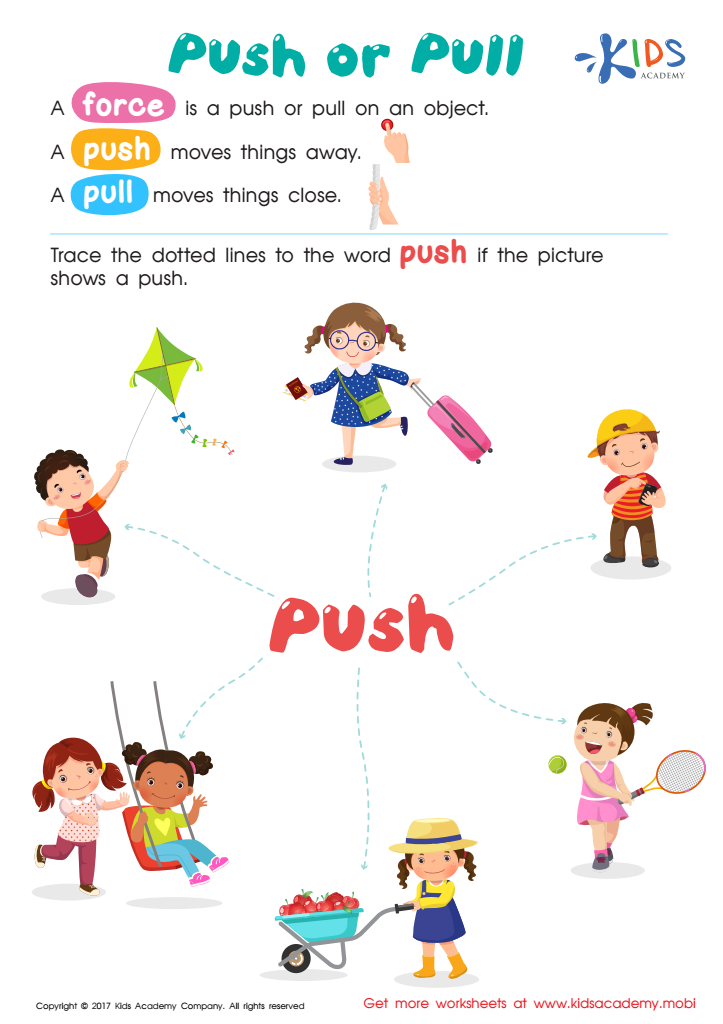
Push or Pull Worksheet
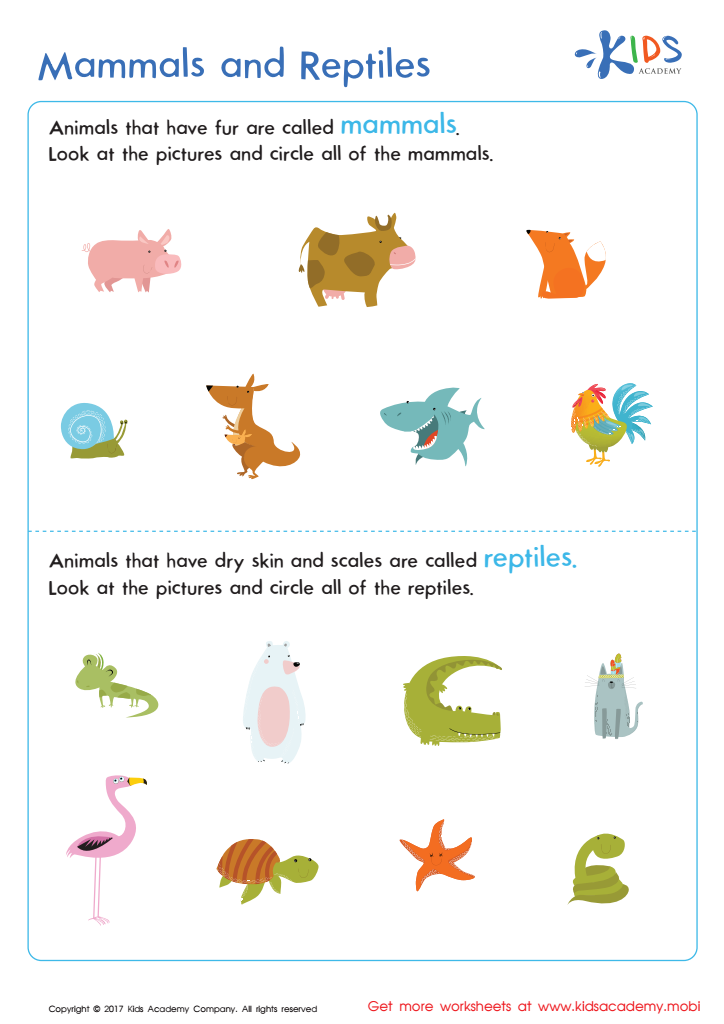
Mammals and Reptiles Worksheet







Enhancing observational skills in children aged 5-6 is a crucial component of their early learning that parents and teachers should prioritize. At this developmental stage, children are naturally curious and develop foundational skills that impact their future learning. Cultivating their ability to notice details in their surroundings sharpens their focus and attention, which are essential for academic success.
Observational skills help children understand and interpret the world around them. For example, recognizing patterns enhances their math abilities, while observing nature nurtures a scientific mindset. In language arts, these skills enable children to improve their reading comprehension and descriptive writing. Furthermore, strong observational skills foster creativity by enabling children to see possibilities and come up with innovative solutions or theories.
In social situations, keen observation helps children read social cues, understand emotions, and develop empathy—skills essential for creating positive interpersonal relationships. Activities that promote these abilities, such as nature walks, interactive storytelling, and art projects, can be both engaging and educational.
By investing in children’s observational skills, parents and teachers equip them with the tools necessary for critical thinking, effective communication, and lifelong learning. Enhancing these skills lays a solid educational foundation, making every learning opportunity insightful and impactful.








