Vowels and Consonants Worksheets for Ages 5-7 - Page 2
28 filtered results
-
From - To
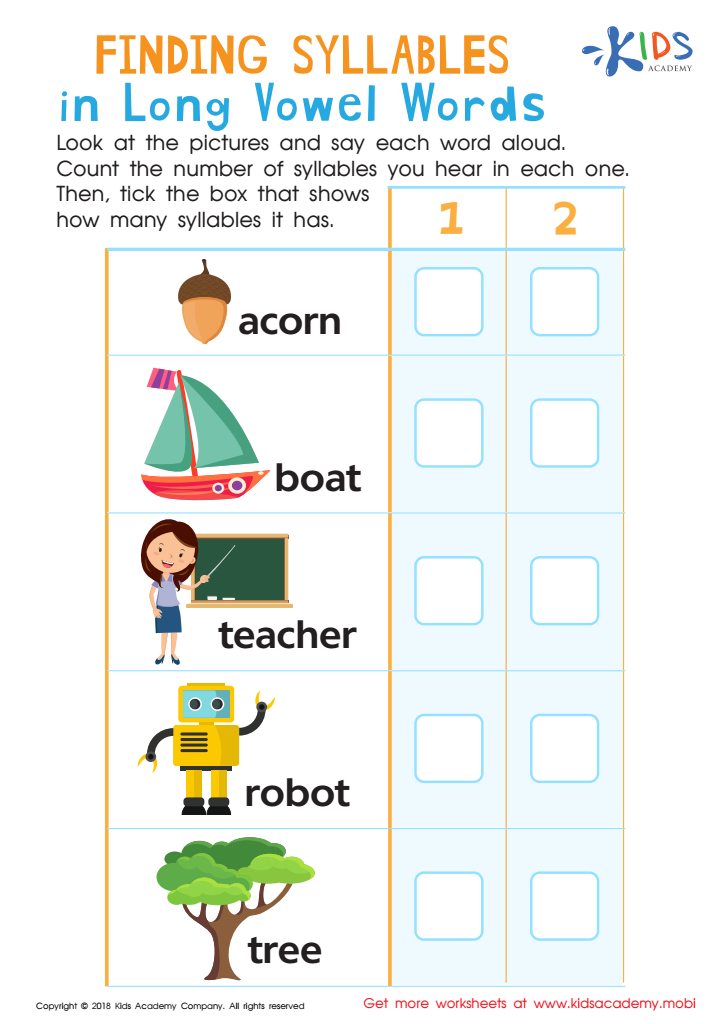
Finding Syllables in Long Vowel Words Worksheet
 Assign to My Students
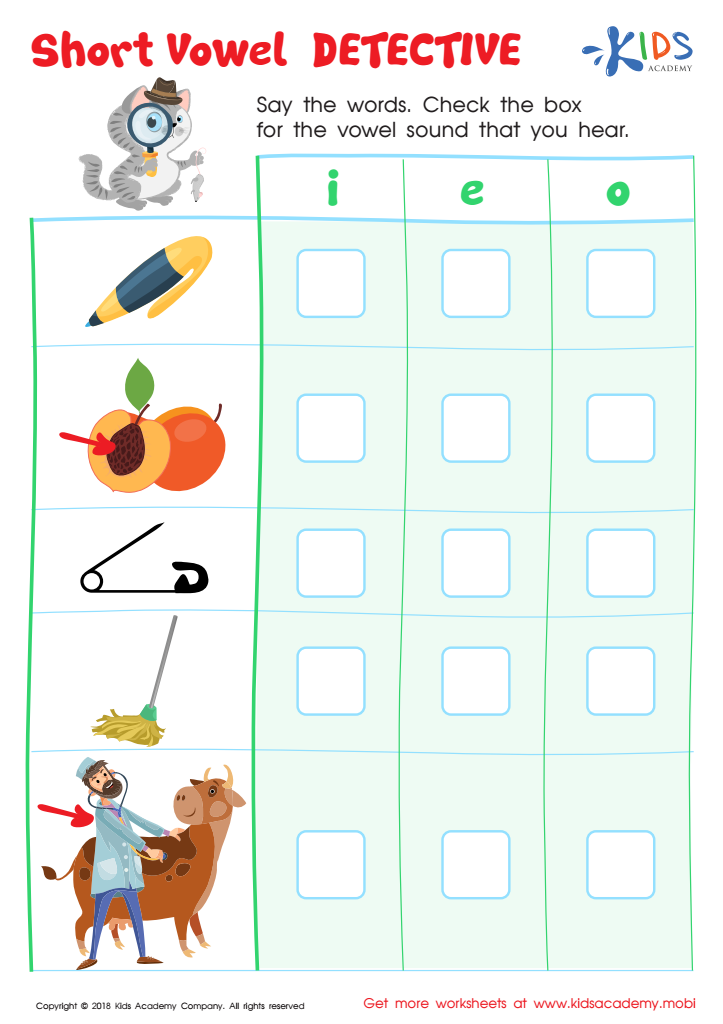
Short Vowel Detective Worksheet
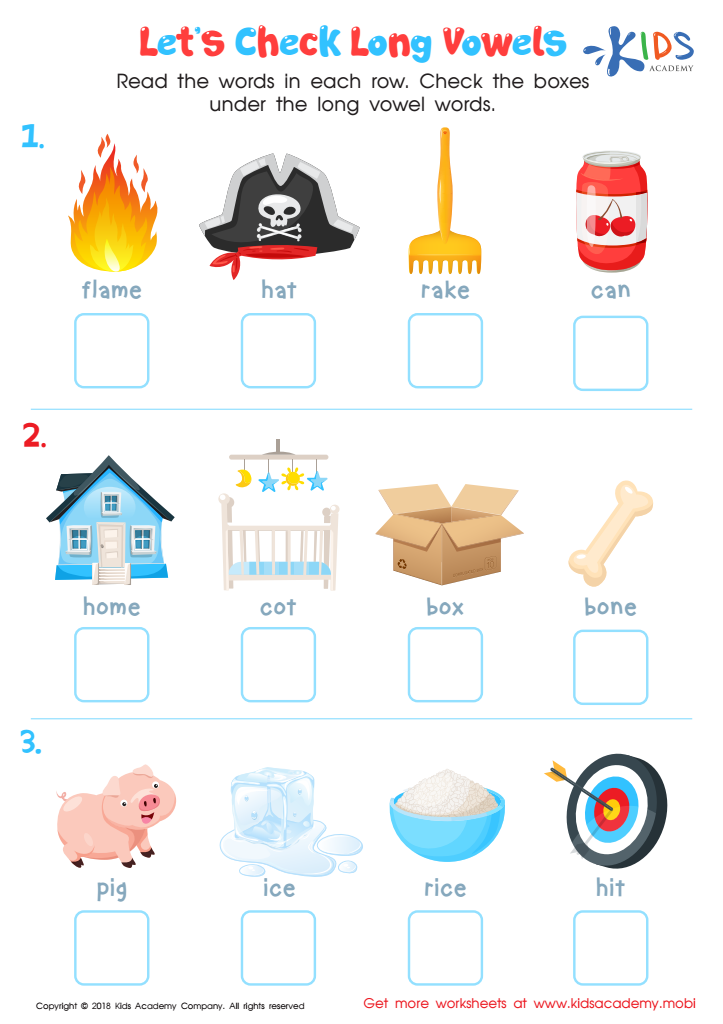
Let's Check Long Vowels: Assessment Worksheet
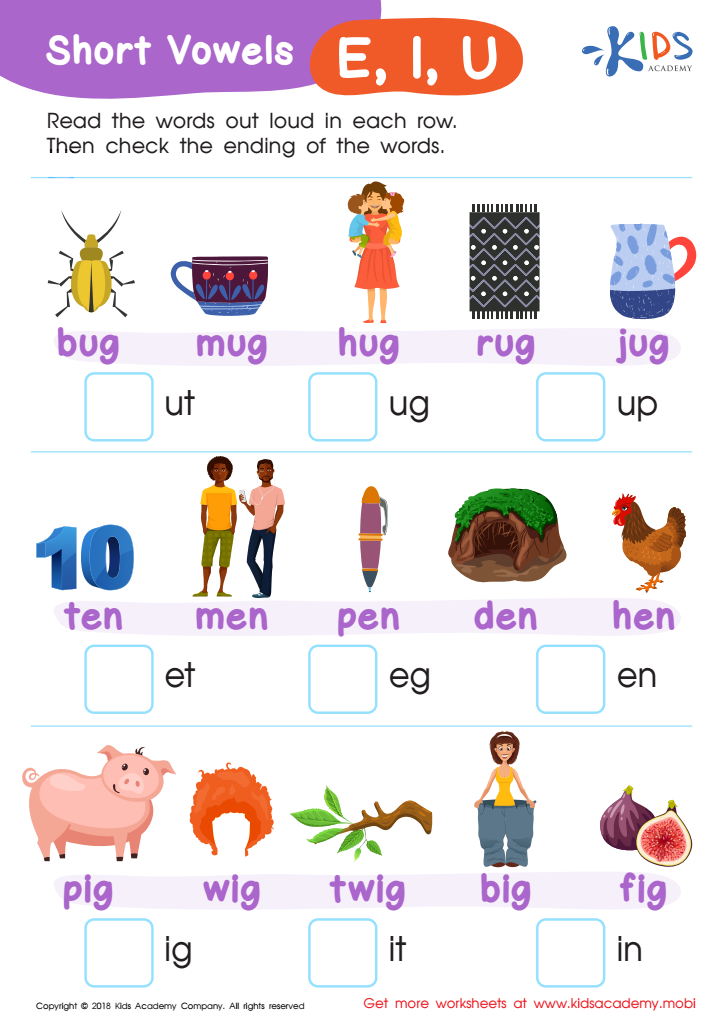
Short Vowels /e/, /i/, and /u/ Worksheet



Vowels and consonants are foundational elements of language and literacy, making them crucial for children aged 5-7 to comprehend and master. During these formative years, children typically start to read and write. Understanding the difference between vowels (A, E, I, O, U) and consonants is essential as it aids in phonemic awareness—the ability to hear, identify, and manipulate sounds in words.
When children recognize vowels and consonants, they can decode new words more easily and develop spelling skills. This lays the groundwork for fluent reading, which enhances comprehension and communication skills. Moreover, a strong grasp of these phonetic components boosts confidence in young learners, encouraging participation in reading activities.
Parents and teachers play a vital role in fostering this understanding through engaging activities like games, songs, and phonics exercises. Encouraging children to explore letters and sounds in a fun, supportive environment not only sharpens their literacy skills but also ignites a lifelong love for reading. Ultimately, a solid foundation in vowels and consonants significantly contributes to a child’s academic success and love of language, which are critical as they advance into higher levels of education.







