Cognitive Development Worksheets for Ages 5-7 - Page 3
136 filtered results
Difficulty Level
Grade
Age
-
From - To
Subject
Activity
Standards
Favorites
With answer key
Interactive
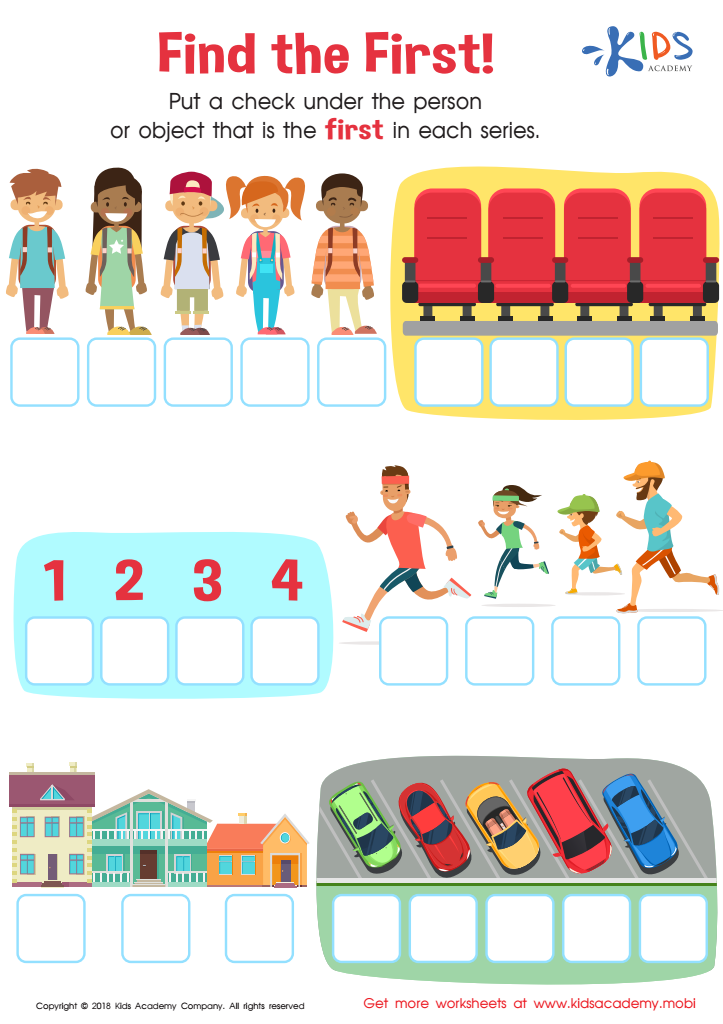
Find the First! Worksheet
Have your young students discuss what it means to be first in line, row, or a race. This free worksheet helps clarify their understanding of "first". View each group of people/objects and choose the first one. Follow up with hands-on activities like lining up students/toys or acting out a sequence of movements. Students can tell what happened first. Enjoy this printout for a fun math lesson!
 Assign to My Students
Find the First! Worksheet
Worksheet
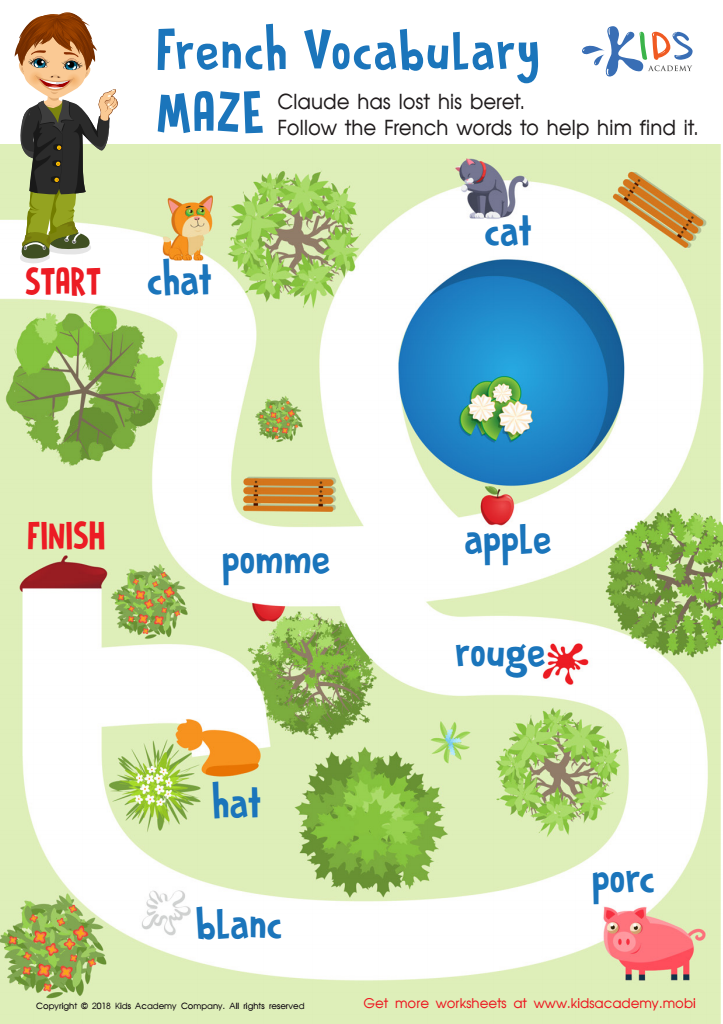
French Vocabulary Maze Worksheet
Kids can learn they're part of a global community with this fun maze worksheet. Claude needs help finding his beret, and by using the pictures children will develop their fine-motor skills. They don't even know they're learning new language words, they're just helping a friend!
French Vocabulary Maze Worksheet
Worksheet
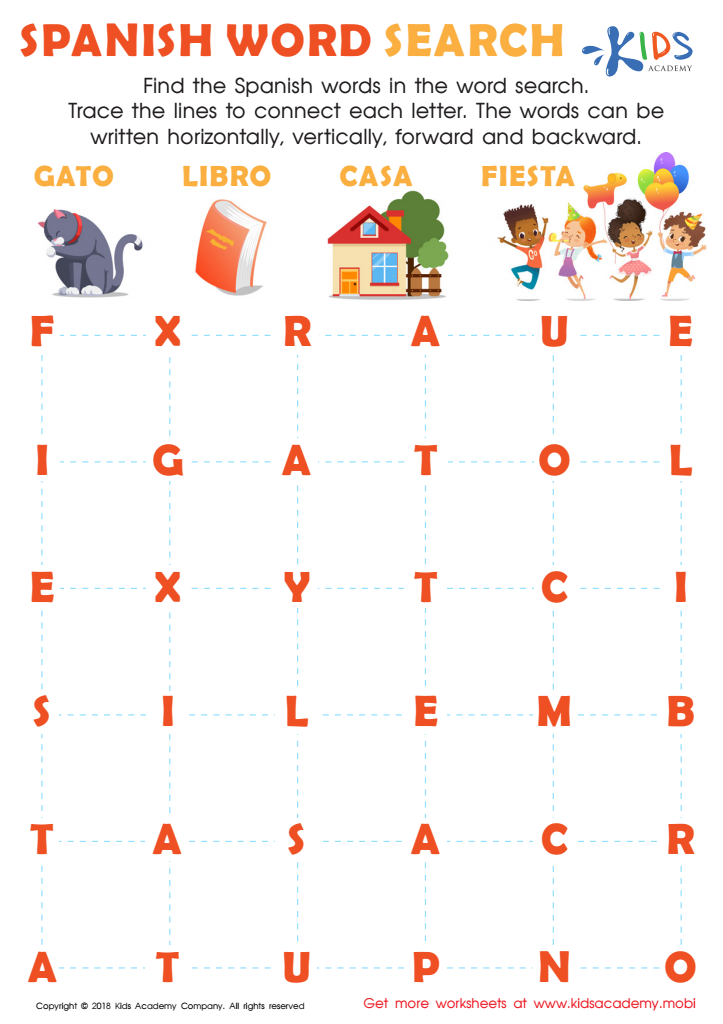
Spanish Word Search Worksheet
This free worksheet encourages students to learn Spanish words while developing visual, fine motor, and hand-eye coordination skills. Through colorful pictures and traceable lines, the task of finding words such as gato, libro, casa, and fiesta is disguised as a fun and engaging way to explore new cultures.
Spanish Word Search Worksheet
Worksheet
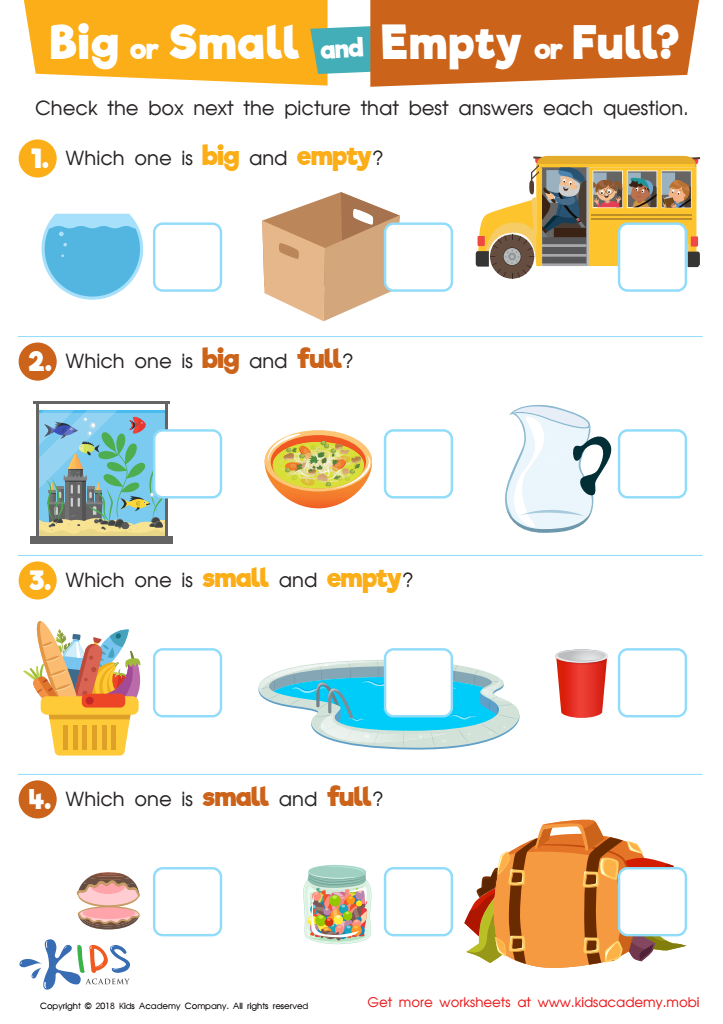
Big or Small and Empty or Full? Worksheet
Early learners can develop their math skills by using this Worksheet with fun, familiar pictures. It reinforces concepts like big/small and empty/full, helping them to differentiate and identify objects that meet those definitions.
Big or Small and Empty or Full? Worksheet
Worksheet
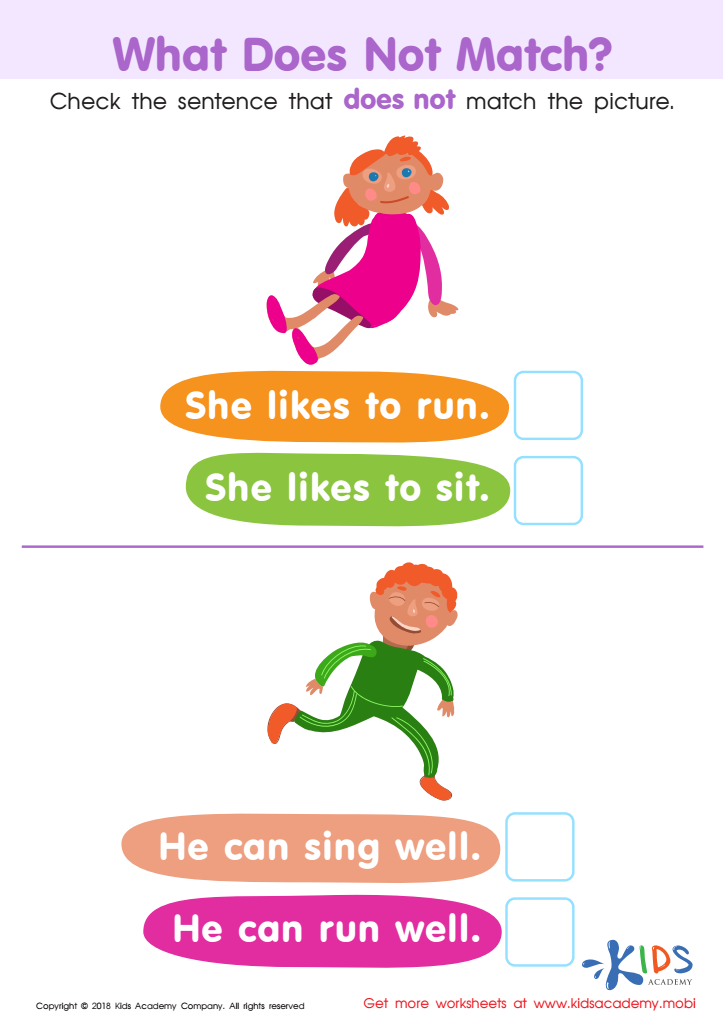
What Does Not Match? Worksheet
Emerging readers need to practice using visual cues and repetitive text. This colorful PDF provides them with an opportunity to look at pictures, use discrimination and discern which phrase does not match. It also enables them to gain familiarity with high-frequency words to aid decoding longer sentences.
What Does Not Match? Worksheet
Worksheet
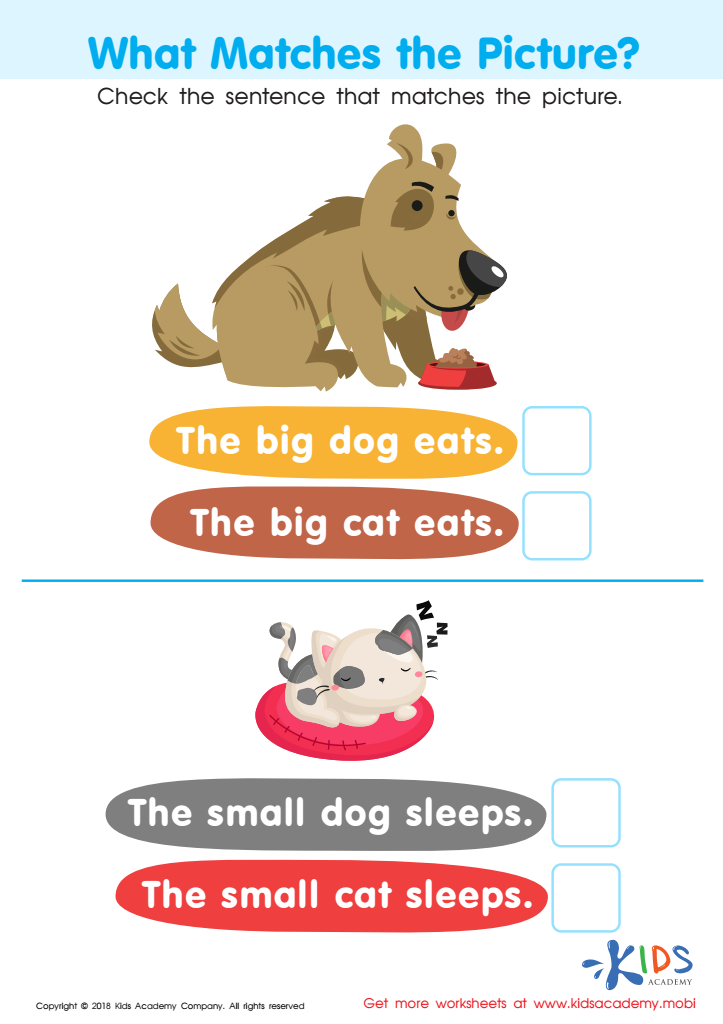
What Matches the Picture? Worksheet
Emerging readers can use pictures of cute pets and phrase repetition to match sentences to pics, building skills while having fun! It's a great way to bolster vocab and confidence, motivating them to keep reading.
What Matches the Picture? Worksheet
Worksheet
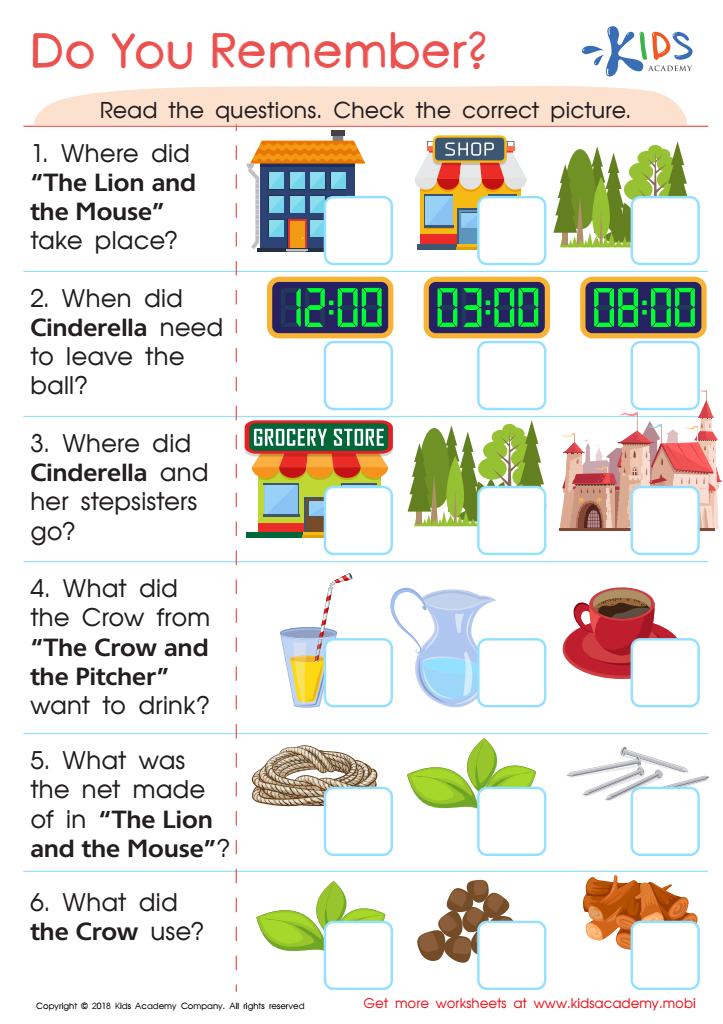
Do You Remember? Worksheet
Read "Cinderella", "The Crow and the Pitcher" and "The Lion and the Mouse" to your child. Discuss the plot and characters, and how their choices shape the story. Use this worksheet to check their comprehension and memory. Read the questions and have them select the correct picture answer.
Do You Remember? Worksheet
Worksheet
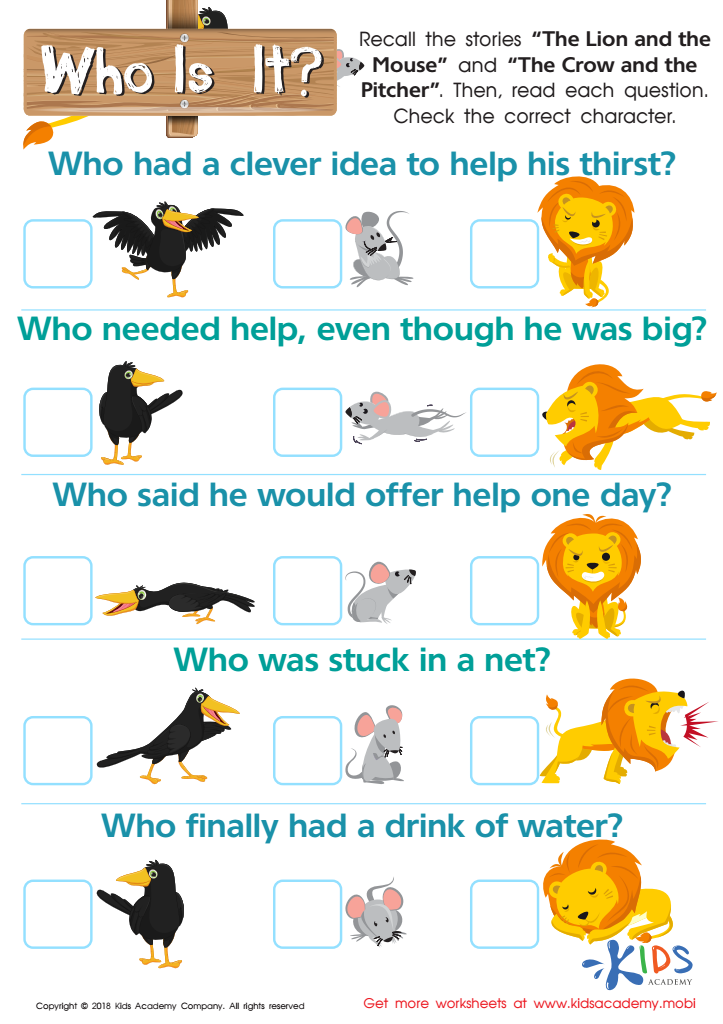
Who Is It? Worksheet
This worksheet helps students recall details from The Crow and the Pitcher and The Lion and the Mouse stories. Students will answer questions about the characters' actions. Use it to assess their understanding of both stories, as this is a key comprehension skill.
Who Is It? Worksheet
Worksheet
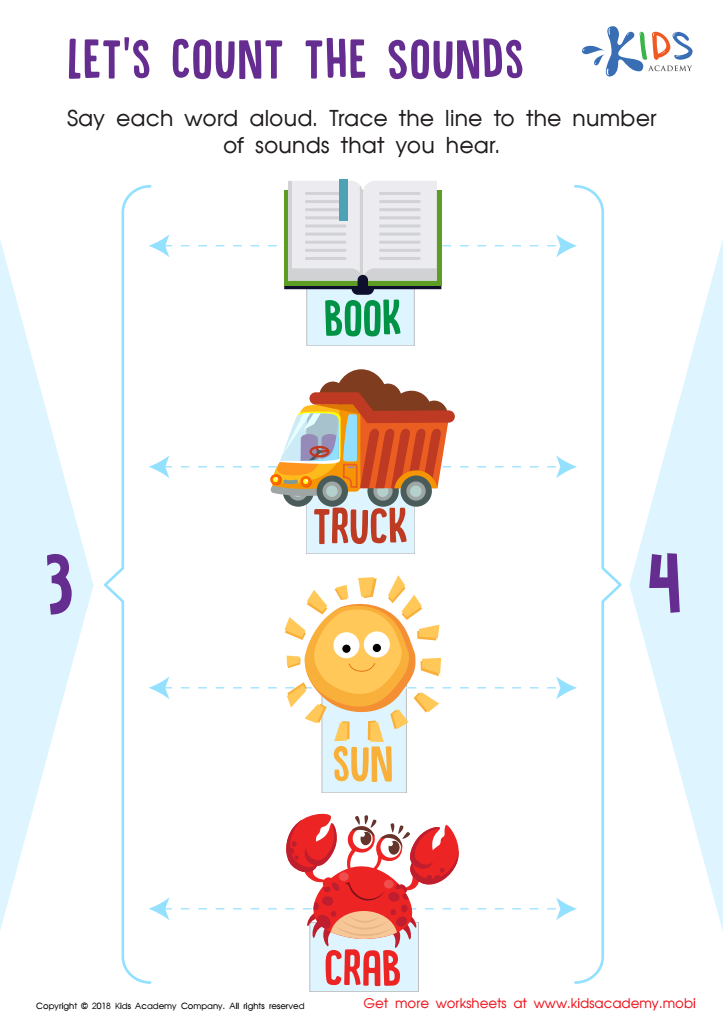
Let's Count the Sounds Worksheet
This bright and cheery traceable worksheet encourages children to practice auditory discrimination and phonological awareness. Using picture clues, they read each word and trace the line that represents the number of sounds heard. This builds decoding skills and helps them become successful readers.
Let's Count the Sounds Worksheet
Worksheet
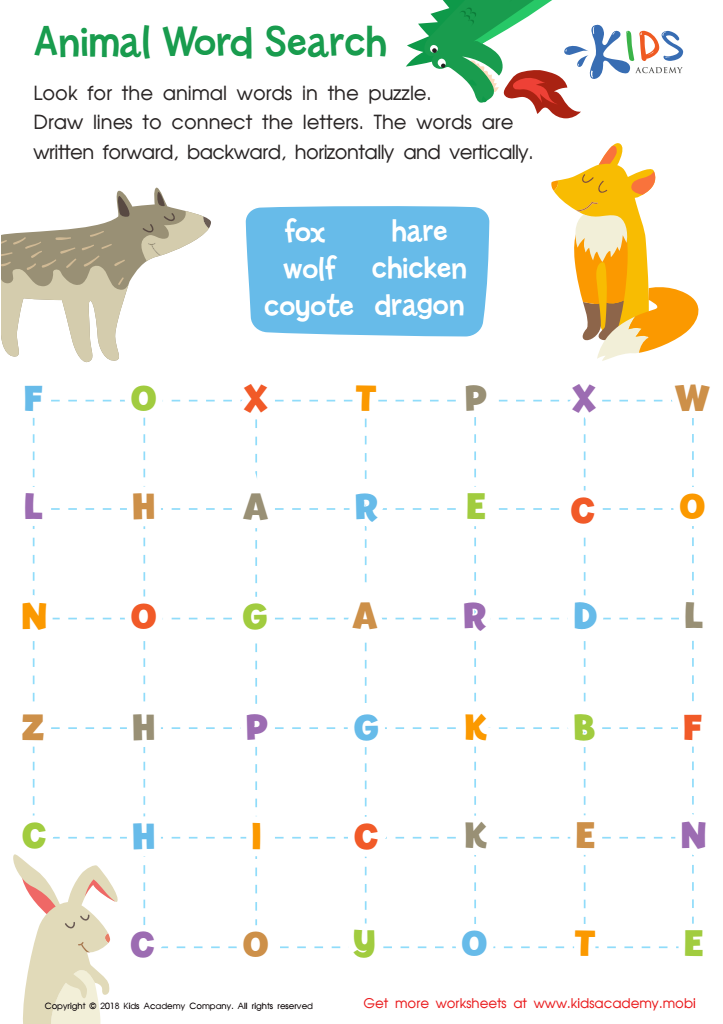
Animal Word Search Worksheet
Students can have fun and strengthen spelling and vocabulary skills with this word search worksheet. Search for animal words and circle the letters in the puzzle. Words can be found forwards, backwards, horizontally or vertically, providing a great challenge to foster critical thinking skills. An enriching activity for all ages!
Animal Word Search Worksheet
Worksheet
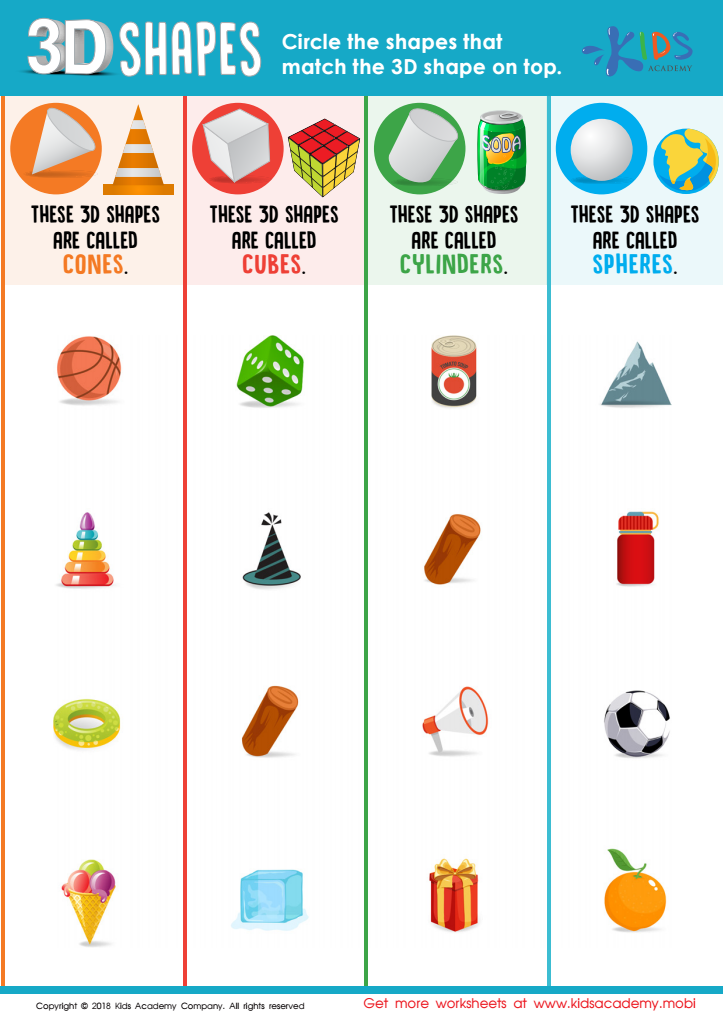
3D Shapes Worksheet
It's time to identify 3D shapes! This worksheet helps kids find and name shapes like cones, cylinders, cubes, and spheres using pictures of everyday objects. Let's explore 3D shapes in the real world!
3D Shapes Worksheet
Worksheet
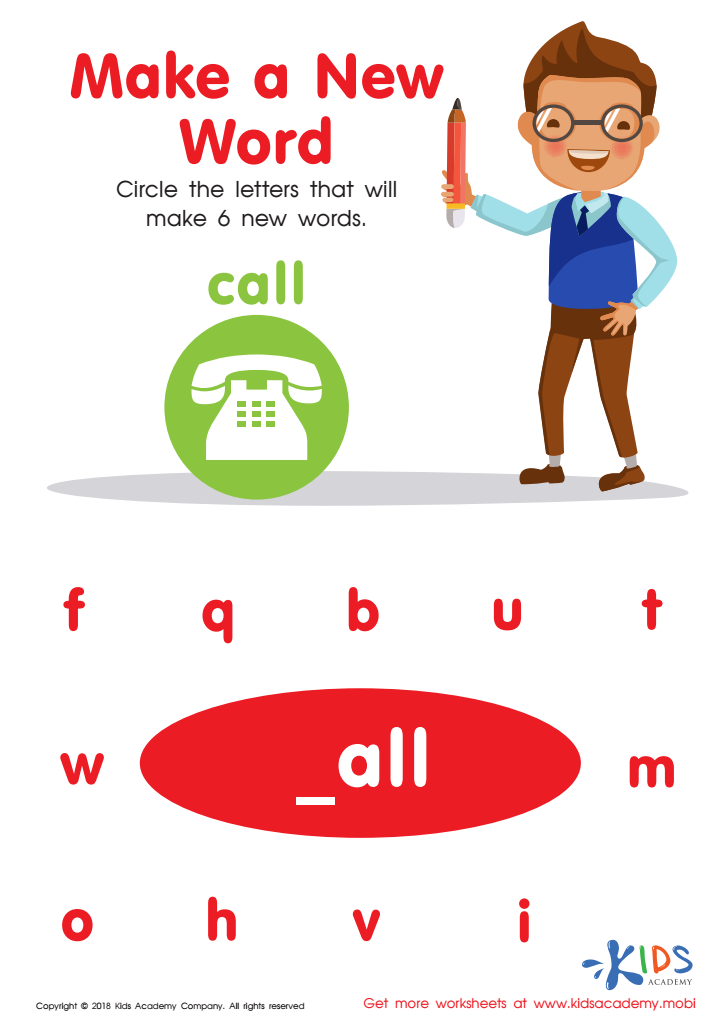
Make a New Word Worksheet
Young readers and writers can enhance their skills with this fun PDF worksheet. They'll trace letters to create new words and feel like super readers and writers after finding six words. They'll also practice building words with the "all" word family.
Make a New Word Worksheet
Worksheet
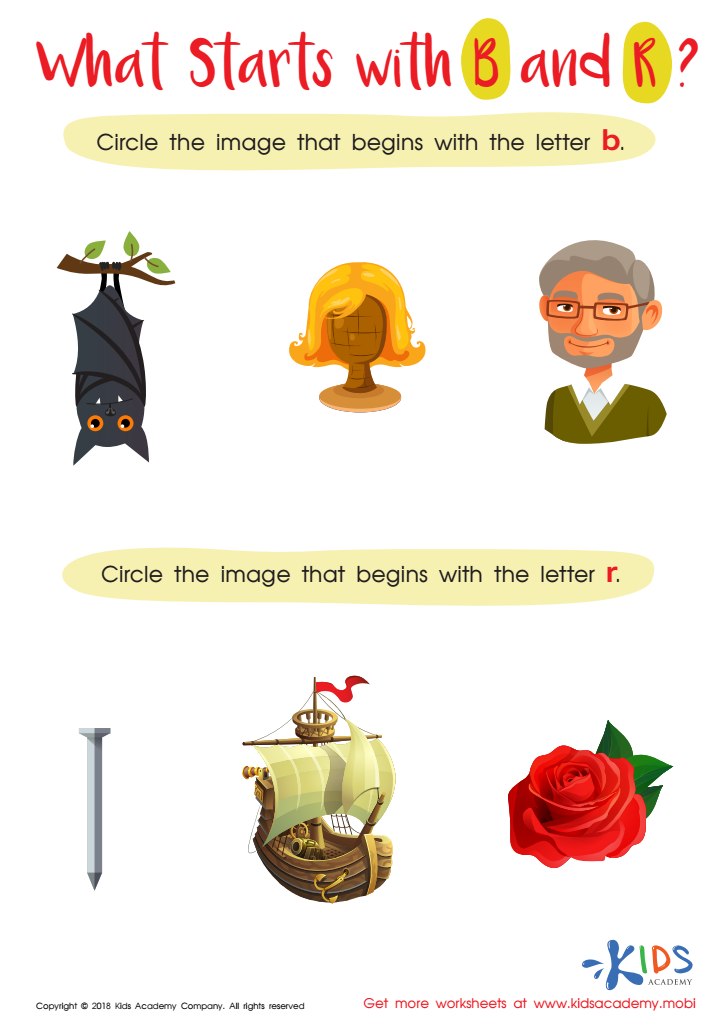
What Starts with B and R? Worksheet
Download this worksheet to help young readers practice visual and motor skills! They'll enjoy matching pictures with "B" and "R" letters while tracing the images. Bright and colorful, this engaging activity will help kids differentiate between words and have fun doing it.
What Starts with B and R? Worksheet
Worksheet
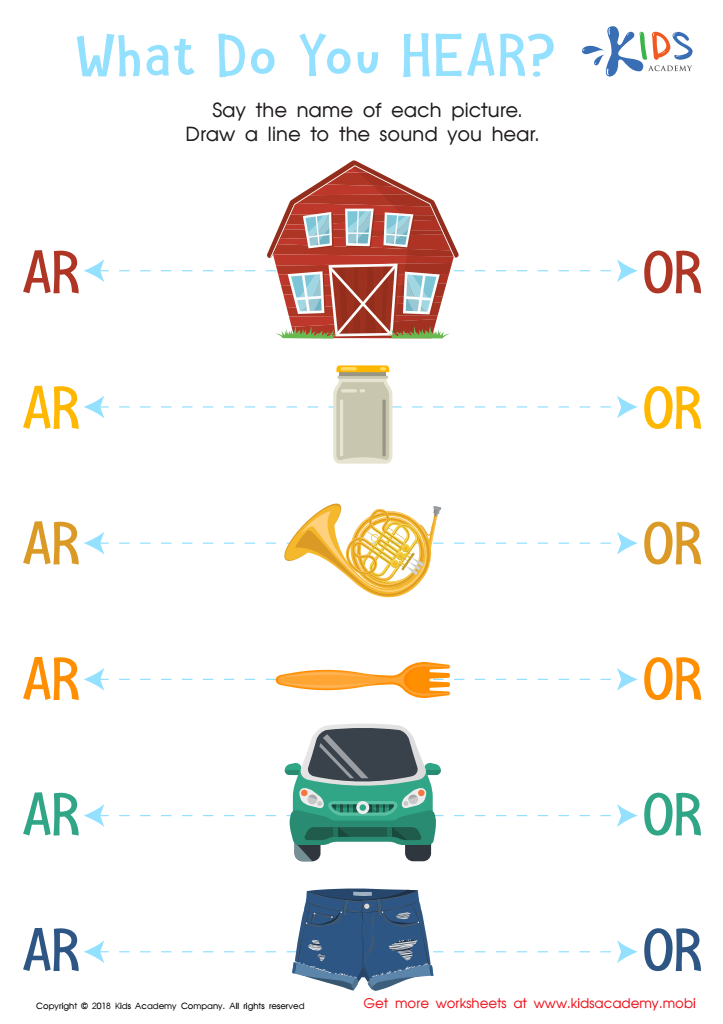
What do you hear Worksheet
Kids can practice distinguishing between r-controlled vowel teams /ar/ and /or/ with this worksheet. The pictures help identify the words and the sounds heard. Tracing a line to the correct sound supports fine motor skills development.
What do you hear Worksheet
Worksheet
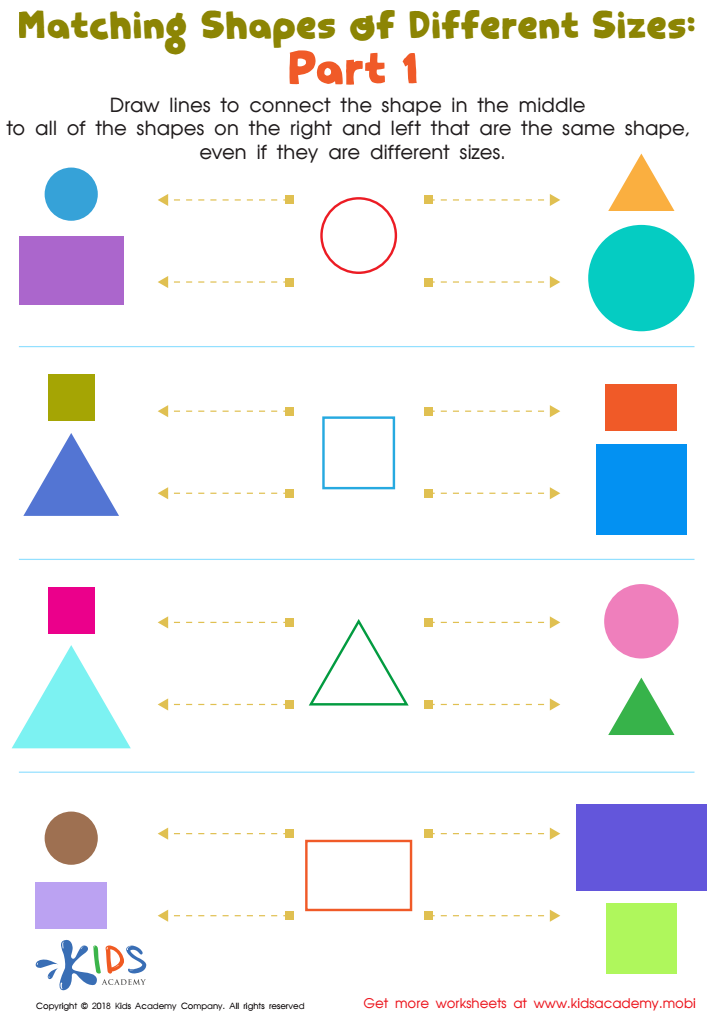
Geometry: part 1 Worksheet
Test your student's shape knowledge with this beginner-level geometry worksheet. This fun, challenging printable PDF will sharpen spacial recognition skills as they match shapes of different sizes. Get started now!
Geometry: part 1 Worksheet
Worksheet
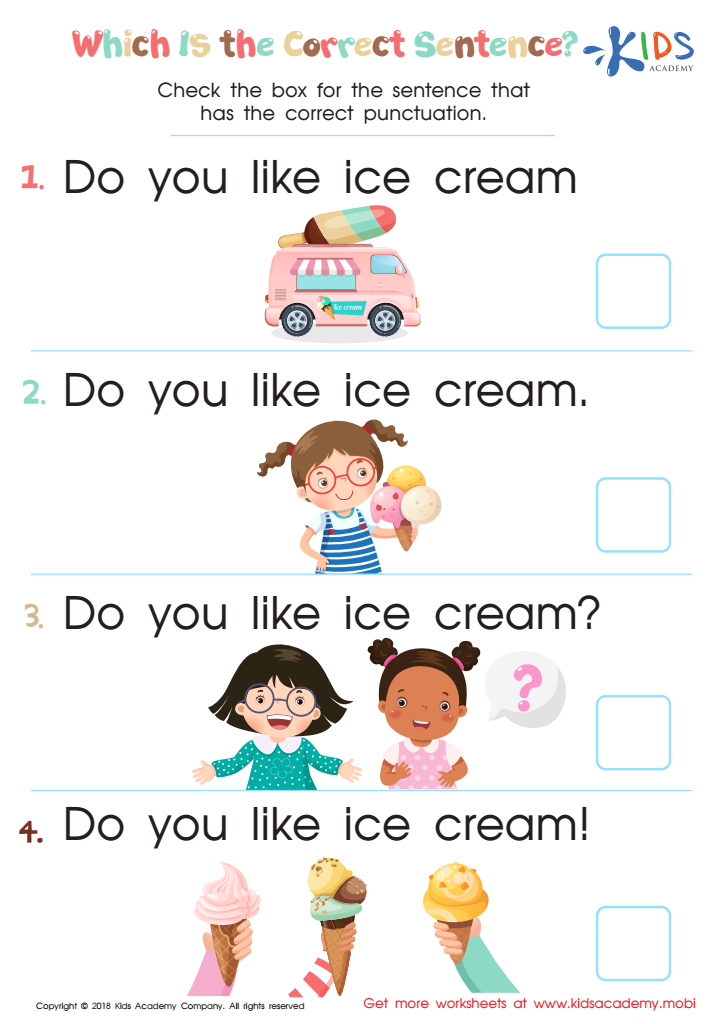
Which is the Correct Sentence? Worksheet
Punctuation is crucial in sentence formation. If your kid still doesn't grasp it, bigger hurdles await when writing sentences. Get them to read simple sentences, then ask if they know the right punctuation. Assist them in selecting the sentence that has the accurate punctuation.
Which is the Correct Sentence? Worksheet
Worksheet
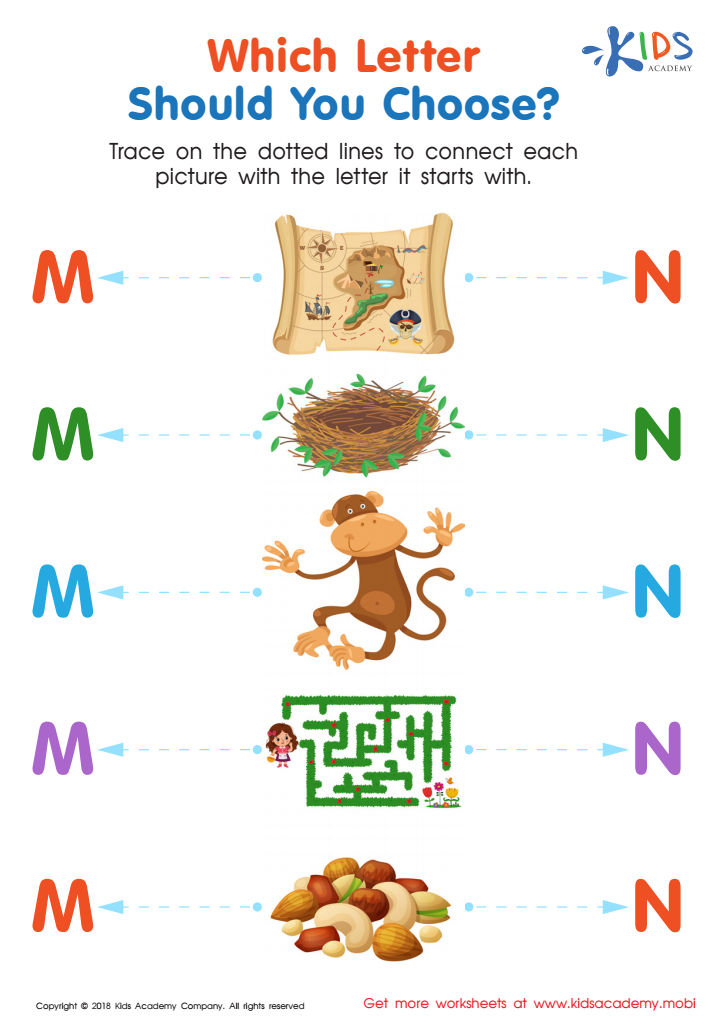
Which Letter Should you Choose? Worksheet
Trace the dotted lines to connect images with their first letter: "n" or "m." Challenge your child to name each picture, then identify the first letter and trace to the right letter! Five images in total.
Which Letter Should you Choose? Worksheet
Worksheet
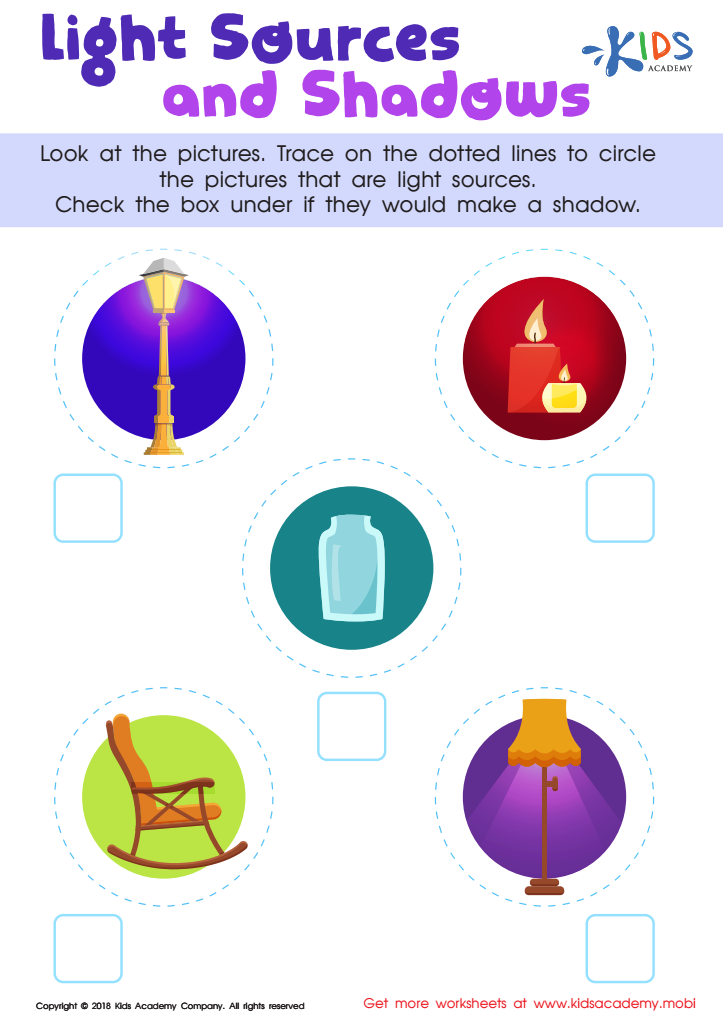
Light Sources and Shadows Worksheet
During the day, the sun radiates bright light. At night, when it's time for bed, the sun sets and darkness takes over. To light our way, we use other sources of light. With your students, trace the dotted lines around the pictures of light sources and check the boxes under the objects that will cast shadows.
Light Sources and Shadows Worksheet
Worksheet
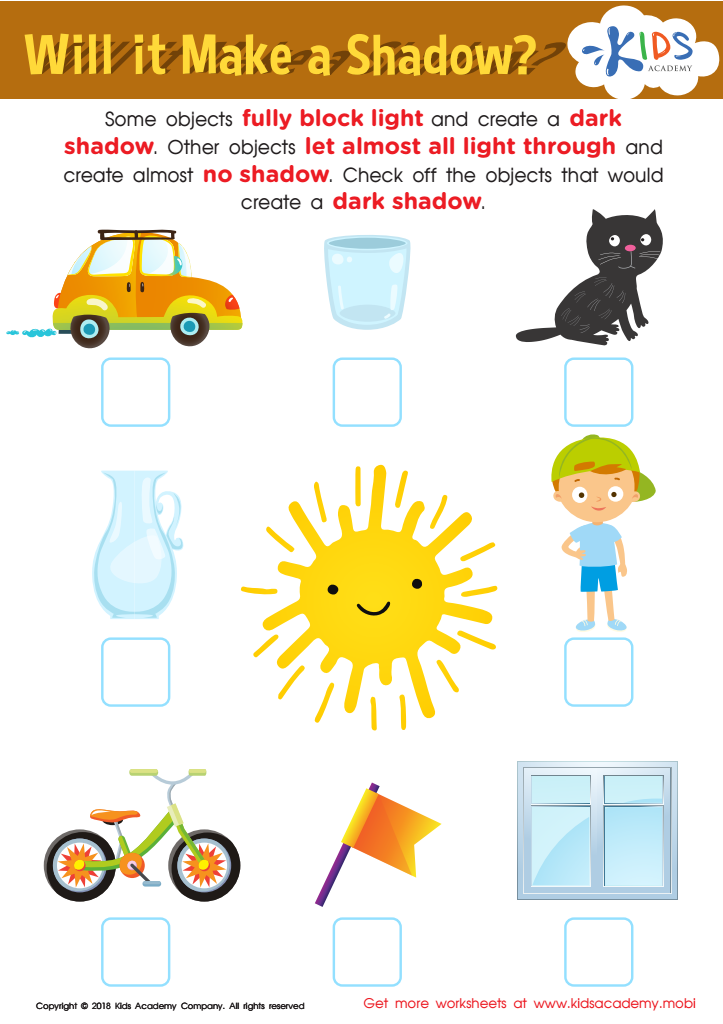
Will It Make a Shadow? Worksheet
Teach your students about shadows with this printout. Ask them to check off the boxes next to the pictures that create a shadow. Explain that some objects block light, forming a shadow, while others don't and thus don't create a shadow. Your students are likely already familiar with their own shadow.
Will It Make a Shadow? Worksheet
Worksheet
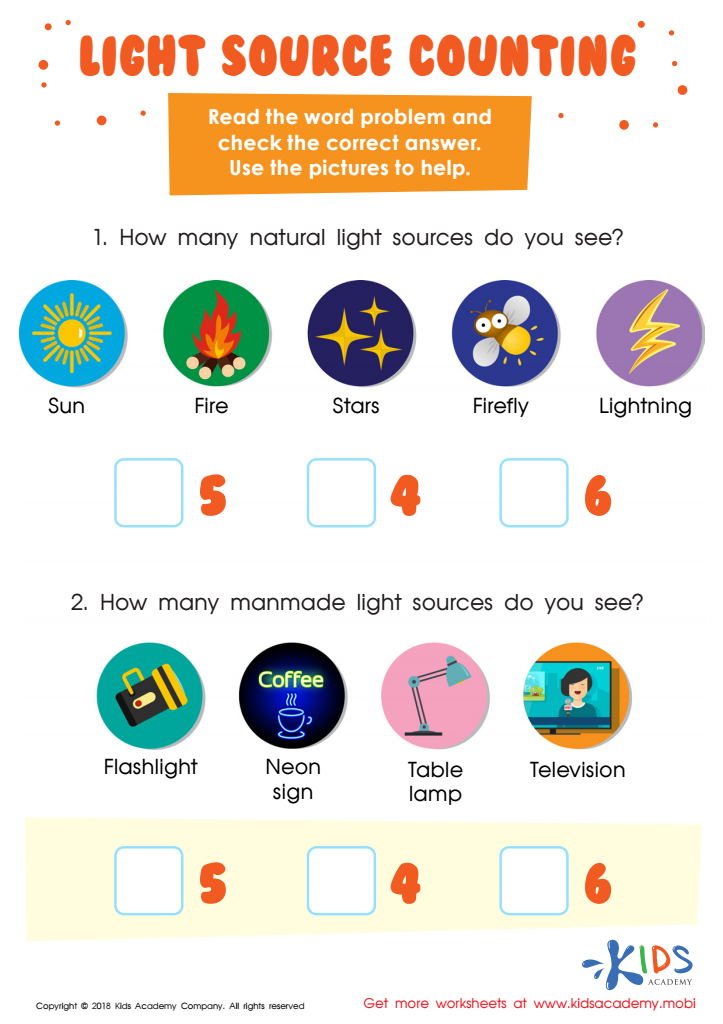
Light Source Counting Worksheet
Help your students properly understand and interpret word problems with this worksheet. Read each problem aloud and have them check the correct answers. Pictures are included to aid in problem-solving. If they're still struggling, be sure to provide guidance and support.
Light Source Counting Worksheet
Worksheet
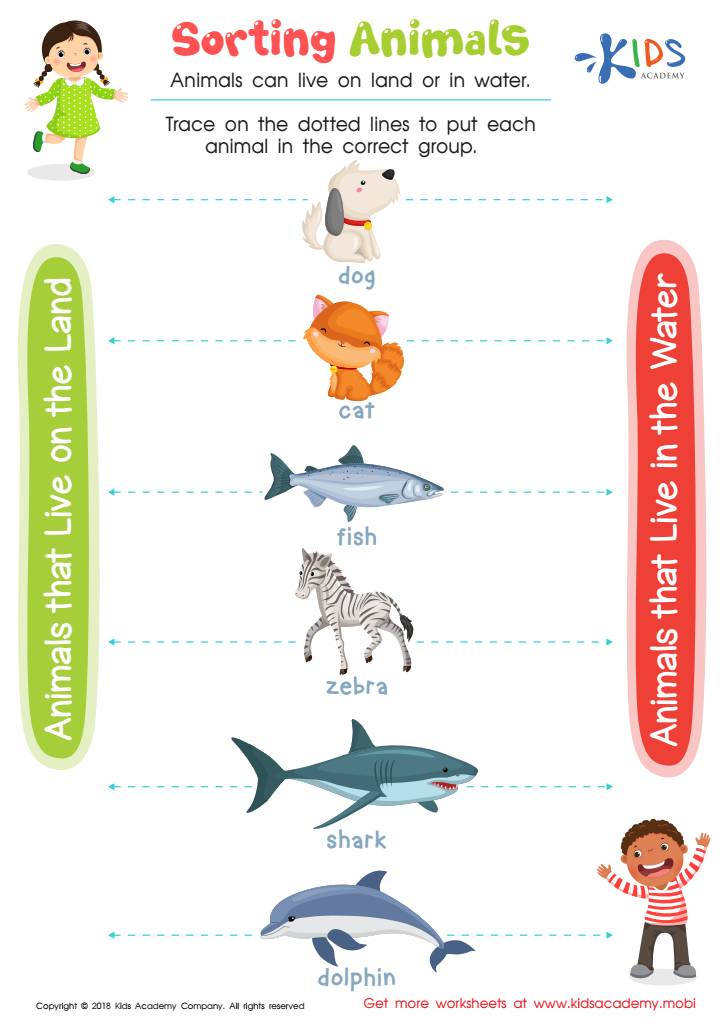
Sorting Animals Worksheet
Your kids will love this free, interactive worksheet! With image clues, they can read and trace the animal names, and then sort them into groups of land or water animals. It's an enjoyable way to boost their critical thinking, fine motor and prior knowledge skills.
Sorting Animals Worksheet
Worksheet
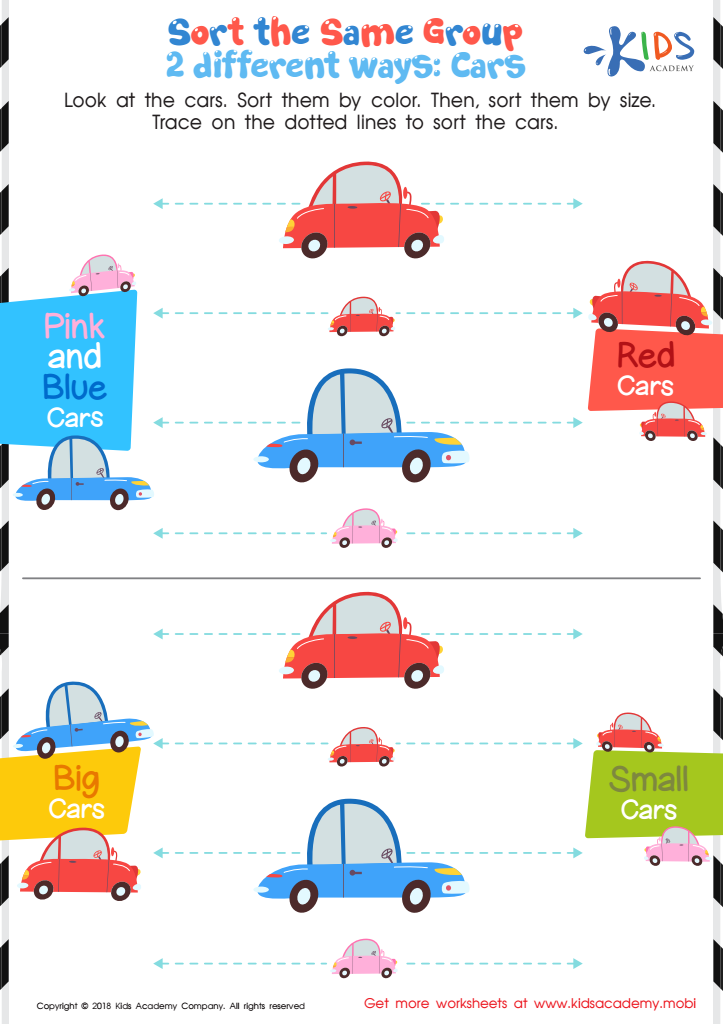
Sort the Same Group 2 Different Ways: Cars Worksheet
Look at the pictures with your child. Can they identify the objects? Ask them to sort the cars first by color and then size. Assist them to trace the dotted lines to sort the cars by color and size. This worksheet lets you easily assess your child's color and size organization skills.
Sort the Same Group 2 Different Ways: Cars Worksheet
Worksheet
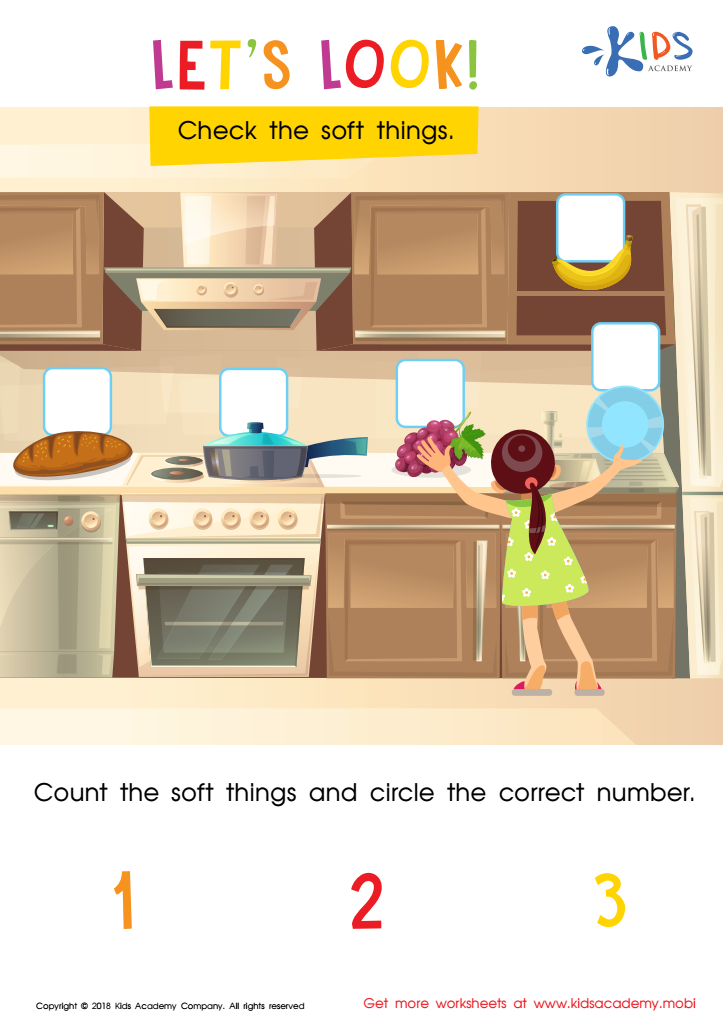
Let's Look! Assessment Worksheet
Have your child look at the picture in the printout and name the objects. Ask which ones are soft and hard and have them count the soft objects and circle the number. This worksheet will engage your child's thinking and teach them about texture.
Let's Look! Assessment Worksheet
Worksheet
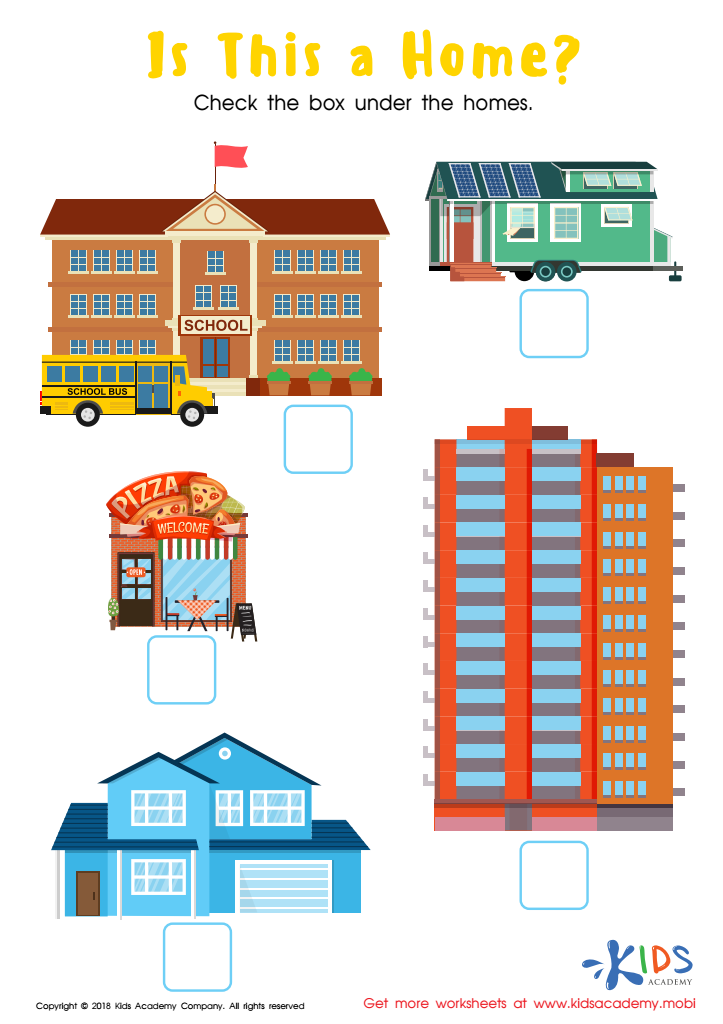
Is this a Home? Worksheet
Ask your child what the building you live in is called. Is it a home, restaurant or hospital? Then look at the pictures in the worksheet and ask them to identify which are homes - even if they don't look like yours. Check the box next to the homes in the pictures.
Is this a Home? Worksheet
Worksheet
Join Kids Academy for Free
Who is primarily going to use this learning content?