Time Worksheets for Ages 5-7 - Page 2
25 filtered results
-
From - To
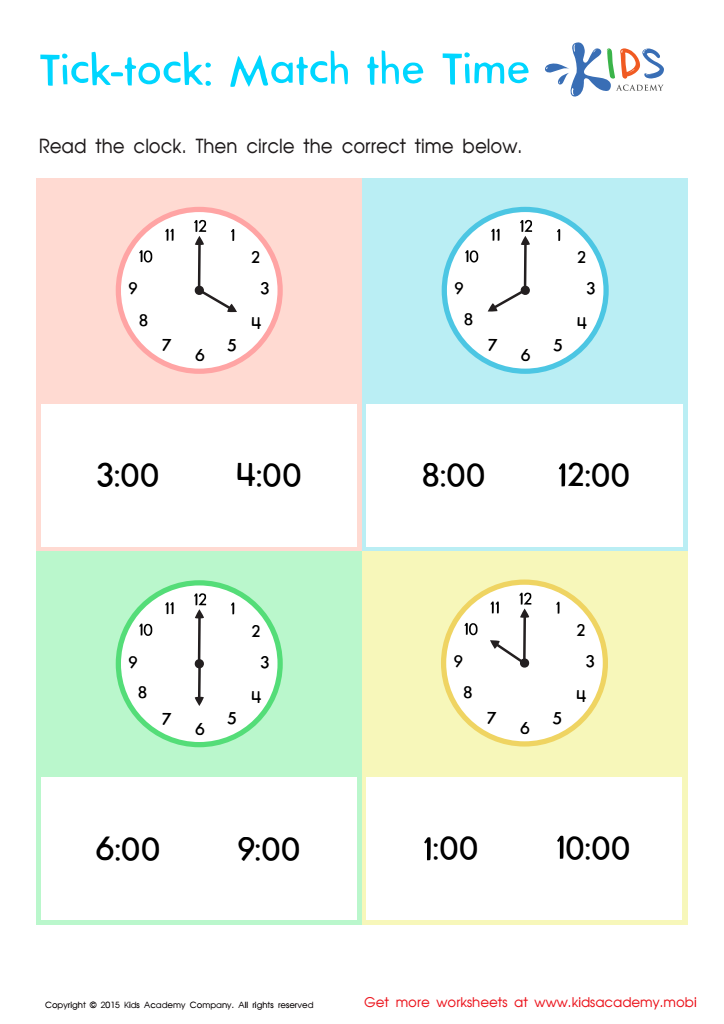
Telling The Time Worksheet: Part 4
 Assign to My Students







Teaching the concept of time to children aged 5-7 is critical for their cognitive development and daily functioning. At this age, children not only begin to establish routines but also develop a sense of responsibility and independence. Understanding time helps them schedule activities, manage playdates, and complete homework, which fosters autonomy.
Moreover, grasping the idea of time can enhance their problem-solving skills. As they learn how to tell time and differentiate between hours, minutes, and seconds, they engage in mathematical thinking, crucial for future academic success. This foundational skill supports their ability to comprehend sequences and create hierarchies, which are essential in reading comprehension and following instructions.
Additionally, awareness of time can significantly impact social interactions. Knowing when it is appropriate to start or end activities helps children navigate social norms and develop patience, which are vital for building friendships.
Lastly, parents and teachers play a vital role in nurturing this understanding through everyday activities. By integrating lessons about time into games and daily routines, they can make learning enjoyable and impactful. In essence, investing time in teaching time is essential for nurturing well-rounded, responsible, and socially aware children.








