Cultural awareness Geography Worksheets for Ages 5-7
7 filtered results
-
From - To
Cultural!Awareness Geography Worksheets for Ages 5-7 help young learners explore the richness of diverse cultures and communities. Tailored for curious minds, these engaging worksheets introduce basic concepts of geography while highlighting global traditions, languages, and customs. Perfect for kindergarten and early elementary students, these activities promote diversity, empathy, and respect. Through puzzles, coloring activities, and interactive exercises, children enhance their understanding of the world and the people who inhabit it. Make cultural awareness fun and educational with these thoughtfully designed resources that support comprehensive social studies learning. Ideal for classroom or home use.
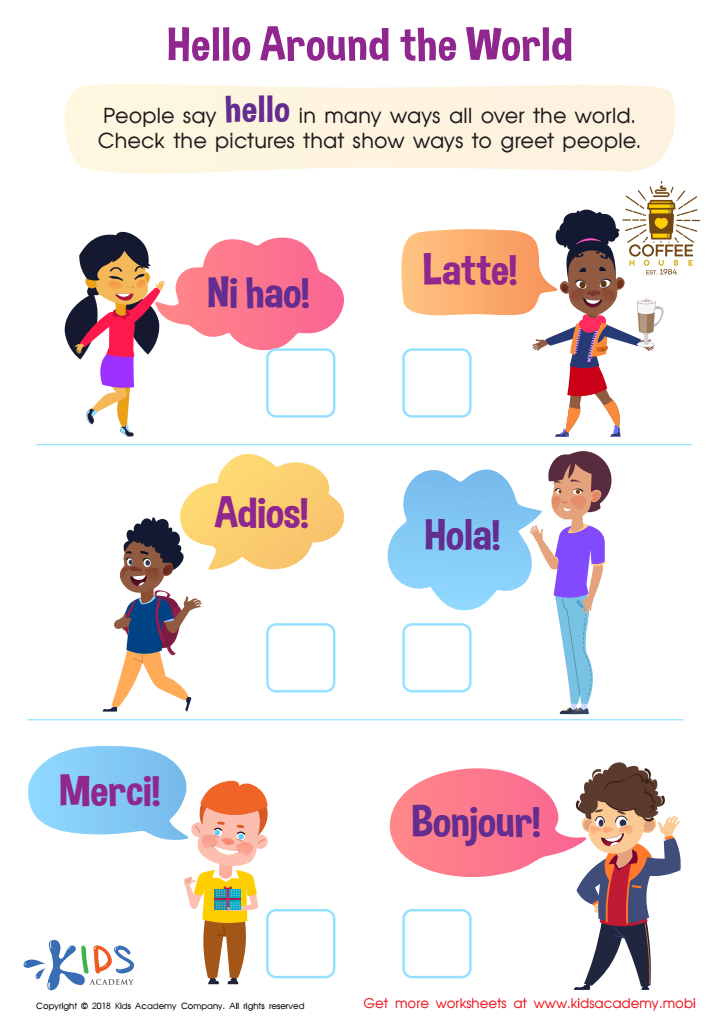
Hello Around the World Worksheet
 Assign to My Students
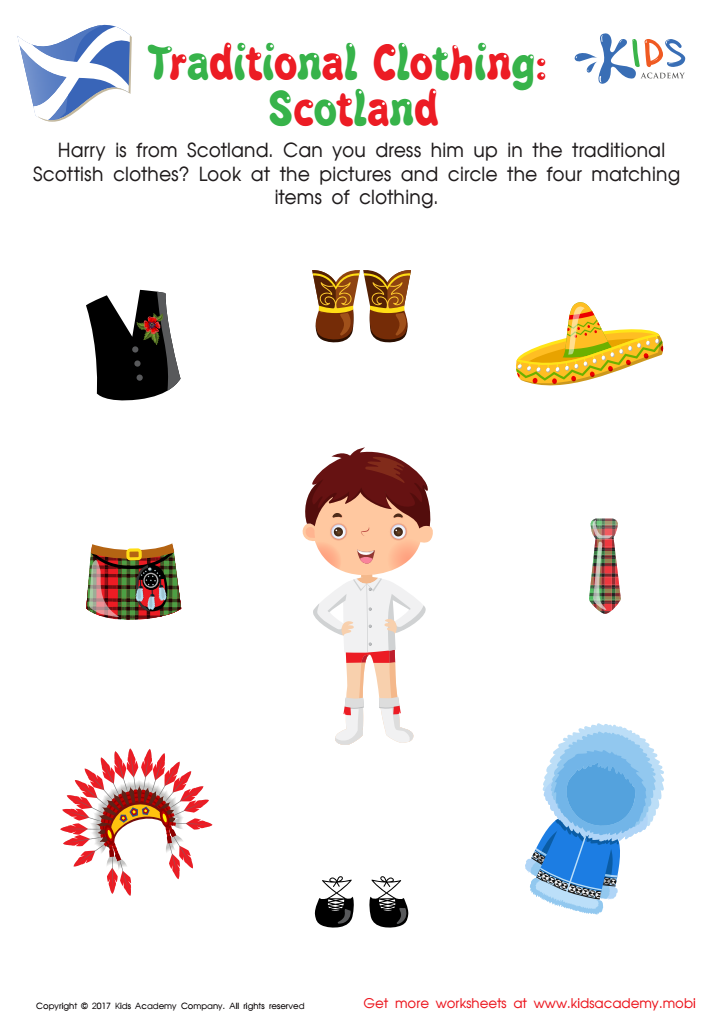
Traditional Clothing in Scotland Worksheet
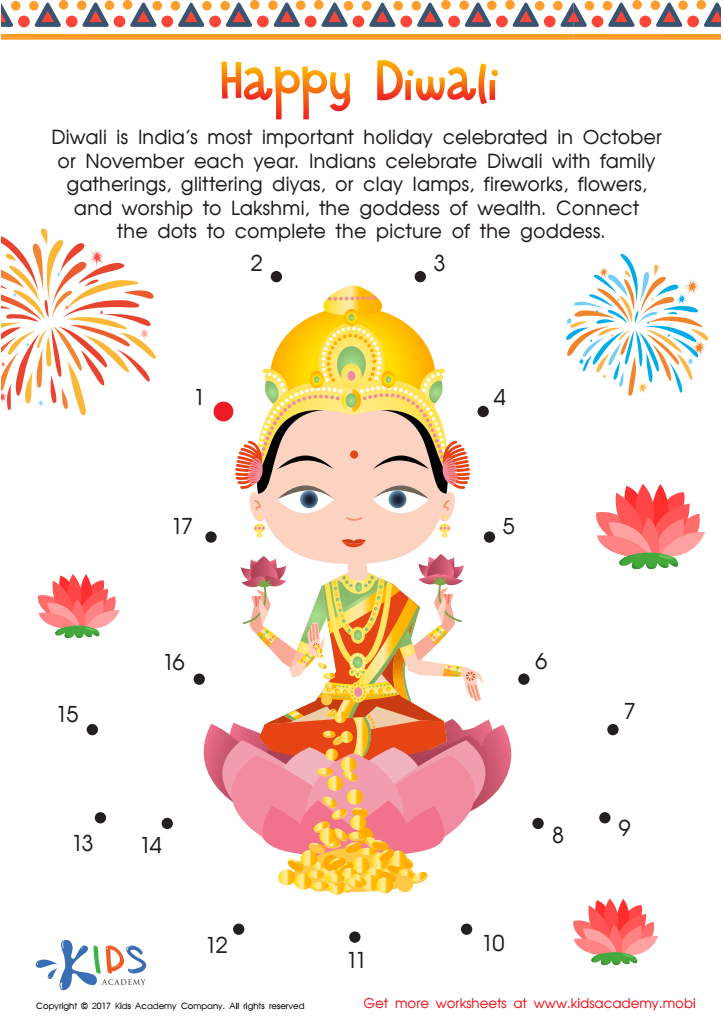
Happy Diwali Printable
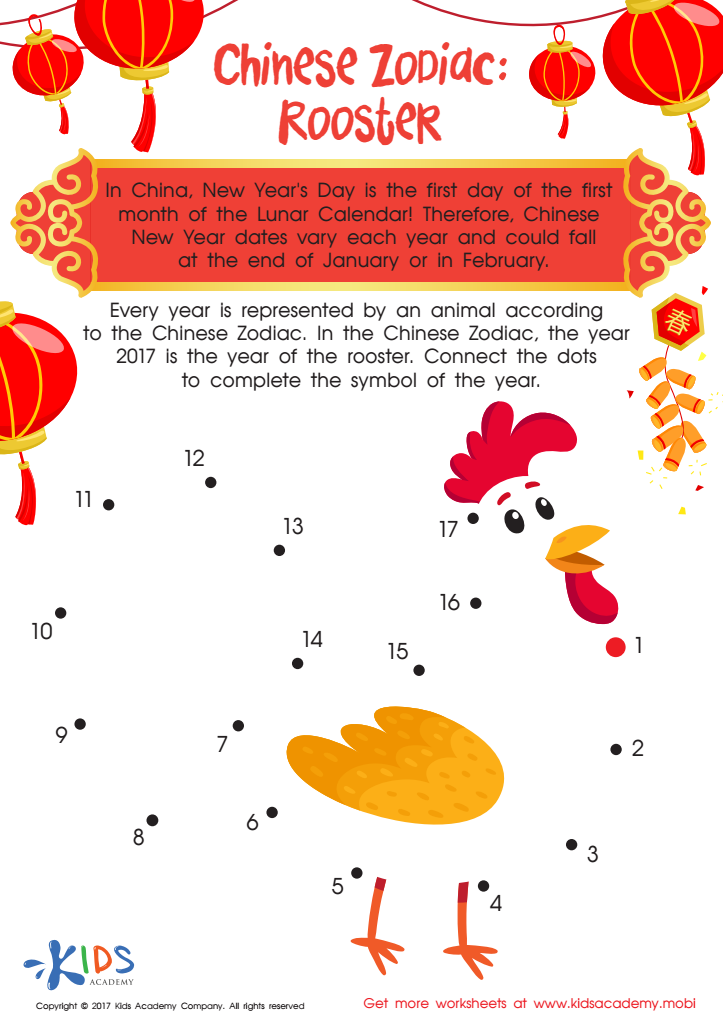
Chinese Zodiac Printable
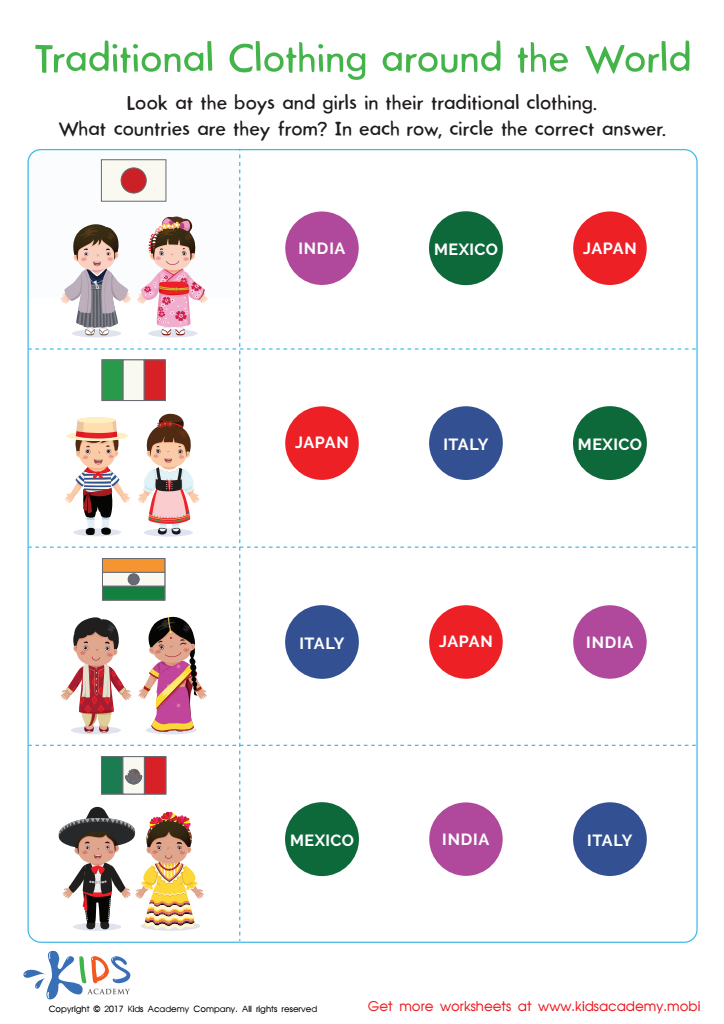
Traditional Clothing Worksheet
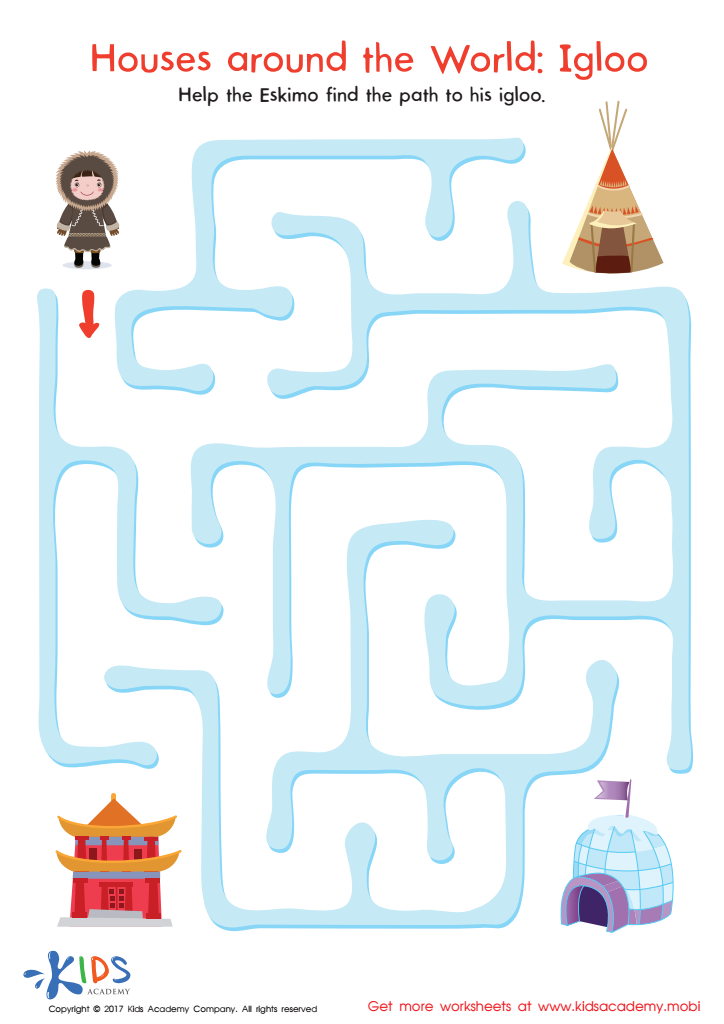
Houses Around the World: Igloo Printable
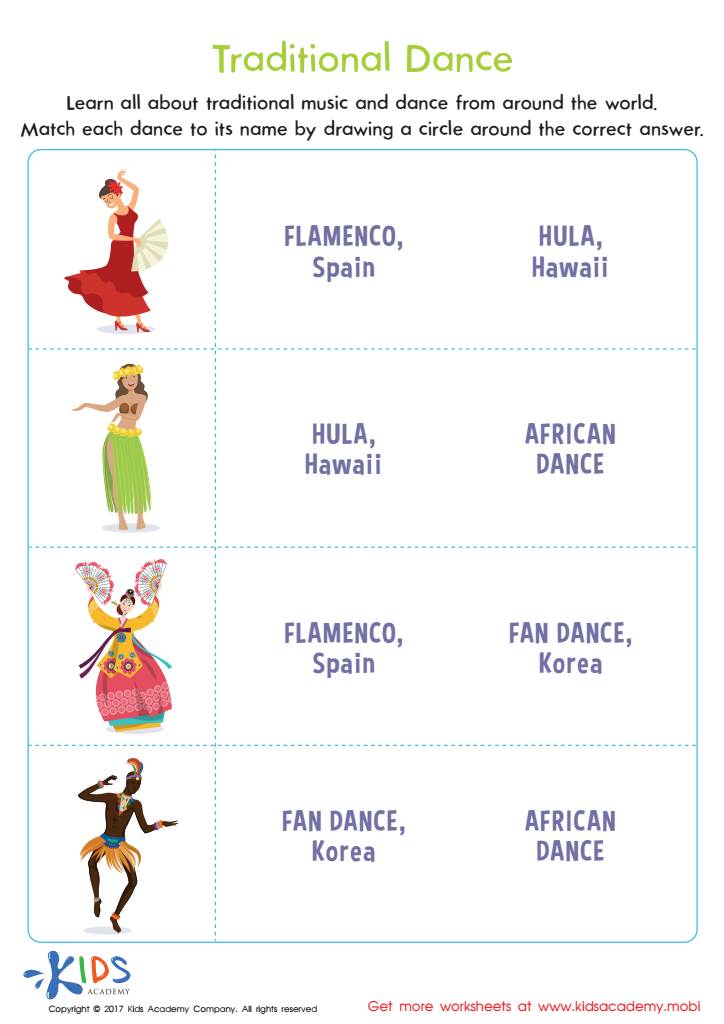
Traditional Dance Printable



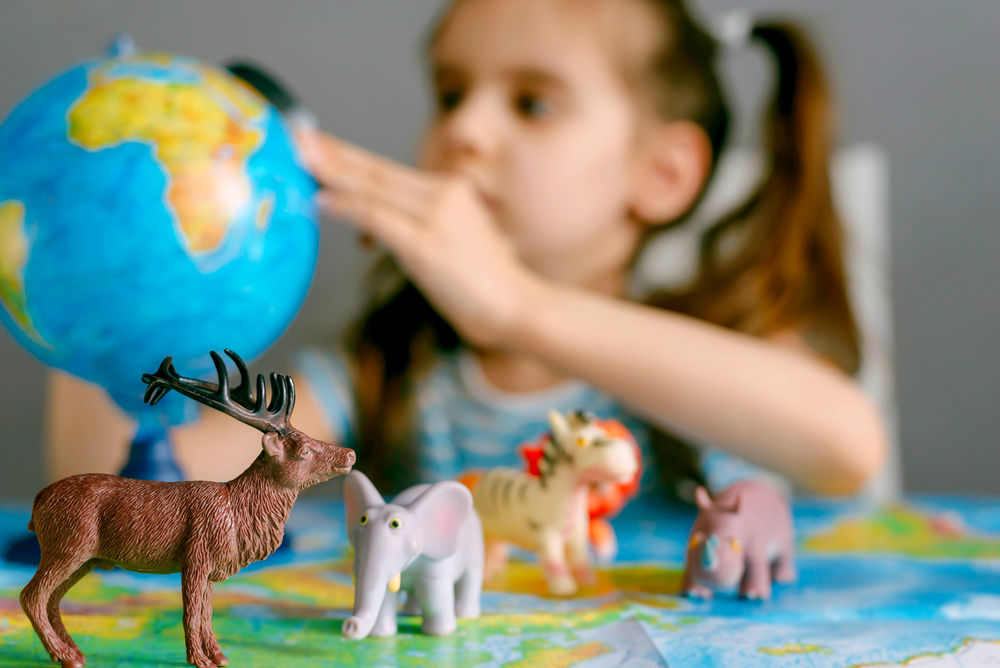



Cultural awareness and geography are crucial elements for young children, ages 5-7, to start learning for several reasons. Firstly, fostering cultural awareness at an early age helps children appreciate diversity and recognize the value of different traditions, languages, and lifestyles. As children learn about various cultures around the world, they develop empathy, respect, and open-mindedness. This foundation is essential in our increasingly globalized society, where understanding and valuing diversity plays a critical role in fostering harmony and reducing prejudice.
Geography adds another layer to this understanding by helping children comprehend the physical spaces where these cultures exist. It enables them to learn about different countries, climates, and landscapes, nurturing curiosity and a sense of adventure. Early geographical education also aids cognitive development by enhancing their spatial thinking and problem-solving skills. Knowing where different countries are located and a bit about the people who live there makes the world seem more vast and cohesive at the same time.
Together, cultural awareness and geography educate children about the interconnectedness of the world. This knowledge lays the groundwork for them to become well-rounded, informed, and empathetic individuals. Parents and teachers play key roles in introducing these concepts through stories, activities, and interactive lessons, sparking a lifelong interest in the world around them.