Time Worksheets for Ages 5-8 - Page 2
25 filtered results
-
From - To
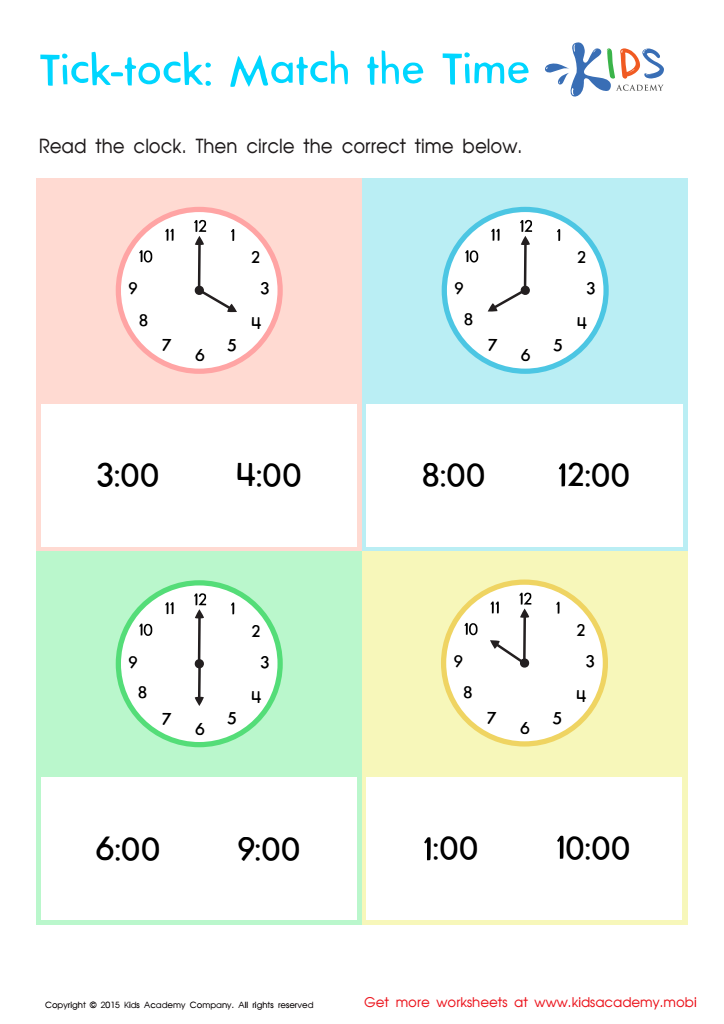
Telling The Time Worksheet: Part 4
 Assign to My Students








Understanding time is a fundamental skill that significantly impacts children's daily lives and long-term development. For children aged 5-8, learning about time helps them establish routines, manage schedules, and develop self-discipline. When parents or teachers prioritize this concept, children gain essential tools for coordinating activities, such as school, playdates, and chores, fostering their independence.
Moreover, grasping the concept of time enhances cognitive development. As children learn to read clocks and recognize daily schedules, they develop critical thinking, problem-solving skills, and an understanding of sequences. It also encourages a sense of responsibility; when children can comprehend time, they become more mindful of punctuality and commitments.
Socially and emotionally, learning about time helps children understand the concepts of waiting and patience, which are crucial for fostering good relationships with peers. Lastly, incorporating time education into daily activities can transform mundane learning into engaging experiences through fun games and storytelling, making it a key focus for teachers and parents alike. Overall, investing in children's understanding of time is essential for nurturing well-rounded individuals who can navigate the complexities of everyday life effectively.








