Graphs Worksheets for Ages 5-9 - Page 2
27 filtered results
-
From - To
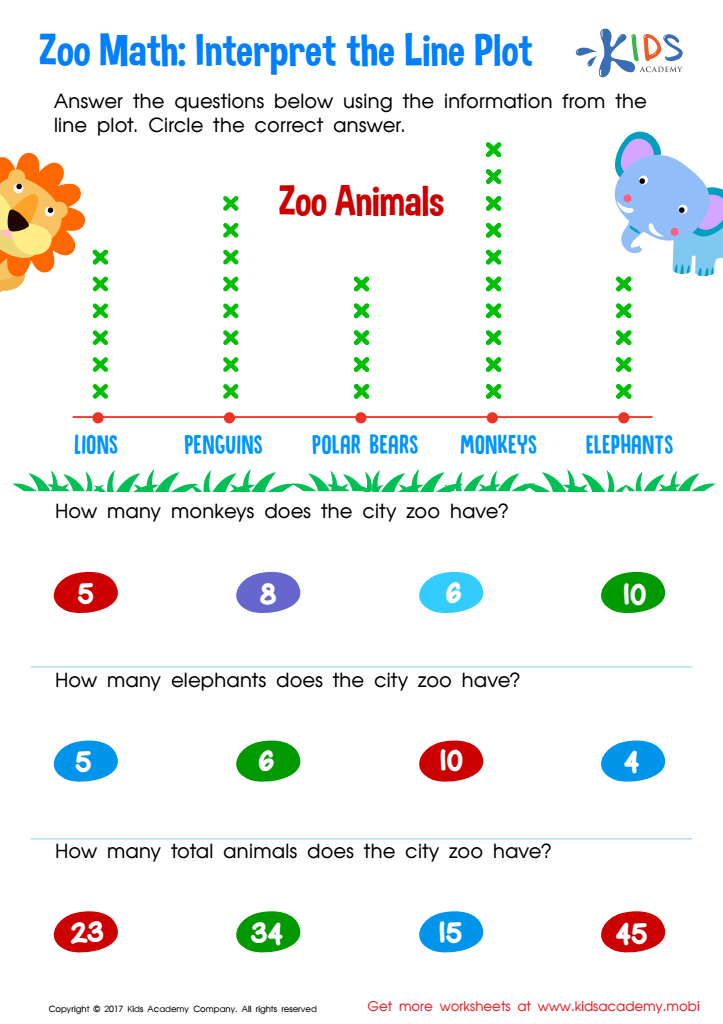
Interpret Line Plot Worksheet
 Assign to My Students
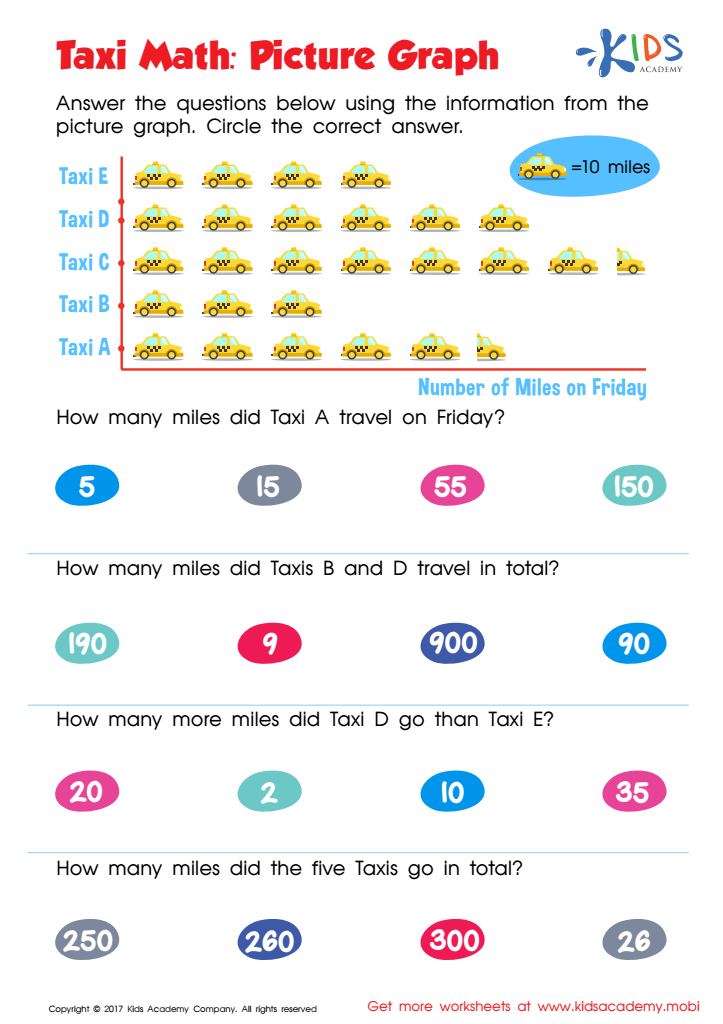
Taxi Math Worksheet
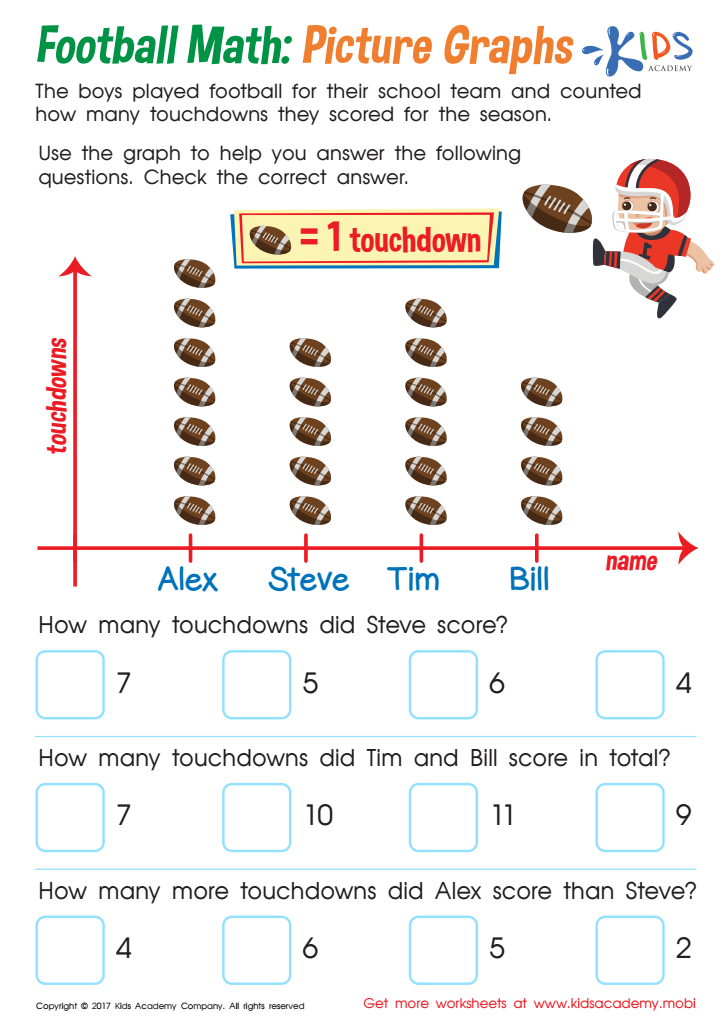
Football Math Worksheet








Graphs are an essential tool for children aged 5-9, as they help develop critical thinking, mathematical skills, and data literacy. Introducing graphs at a young age allows children to visualize and interpret information, making complex concepts more accessible. For parents and teachers, encouraging graph literacy fosters an early appreciation for math, steering children away from math anxiety and promoting confident problem-solving skills.
Graphs also support cross-curricular learning, linking math to subjects like science, social studies, and art. For example, children can use graphs to track weather patterns, conduct surveys about favorite activities, or analyze data in a science project. This interdisciplinary approach not only enhances engagement but also nurtures curiosity about the world around them.
Moreover, teaching children to create and interpret graphs equips them with essential communication skills, as they learn to express their findings visually. Collaboratively discussing and presenting graph-related information encourages teamwork and enhances social skills.
By incorporating graph-related activities into learning, parents and teachers empower children to make sense of data. Ultimately, instilling graph literacy in young learners lays a foundation for advanced mathematical thinking, helping them navigate an increasingly data-driven world.








