Time Worksheets for Ages 5-9 - Page 2
25 filtered results
-
From - To
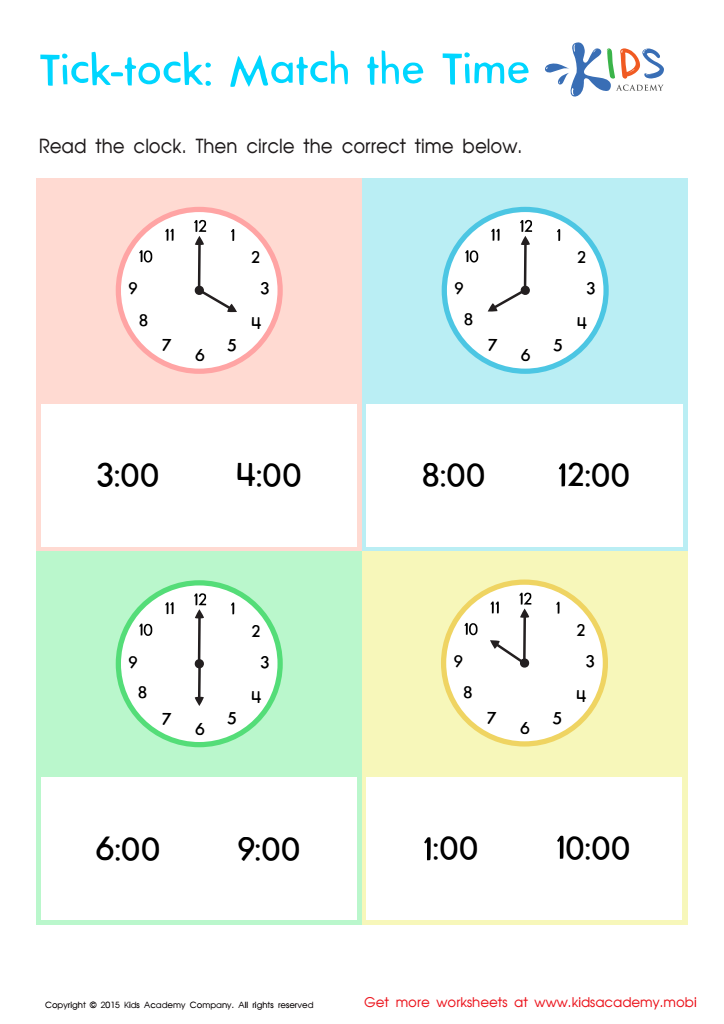
Telling The Time Worksheet: Part 4
 Assign to My Students


%20(1).jpg)




Understanding time is a fundamental skill for children aged 5-9, as it lays the groundwork for their daily routines, school schedules, and future learning. Teachers and parents should prioritize time education because it significantly influences children’s independence and responsibility. At this developmental stage, children begin to transition from a more fluid perception of time to a structured understanding of hours, minutes, and the concept of sequences and patterns.
Learning about time helps improve organization skills. Children learn to anticipate events, manage their schedules, and understand the importance of punctuality. This understanding fosters responsibility and accountability, preparing them for more complex tasks in later stages of education and life.
Additionally, time aids in enhancing mathematical and problem-solving skills. Recognizing patterns in daily activities teaches them how to apply logical thinking in other subjects.
Finally, teaching children about time encourages emotional growth as they learn to regulate their behaviors. Not only do they understand when it's time to play or study, but they also develop patience and anticipation, crucial social-emotional skills for interacting with peers. By emphasizing time education, parents and teachers ensure that children are equipped with essential life skills that contribute to their overall development.








