Arrays Worksheets for Ages 6-7
13 filtered results
-
From - To
Welcome to our "Arrays Worksheets for Ages 6-7" webpage! Here, we provide a variety of engaging and interactive worksheets designed to help young learners understand arrays and their foundational role in mathematics. Perfect for children aged 6-7, these worksheets enhance skills such as multiplication, addition, and visual representation of numbers. Each activity encourages critical thinking and problem-solving through hands-on exercises and colorful illustrations. Educators and parents can use these resources to reinforce learning at home or in the classroom. Explore our collection now to make learning fun and effective, while building essential math concepts in early learners!
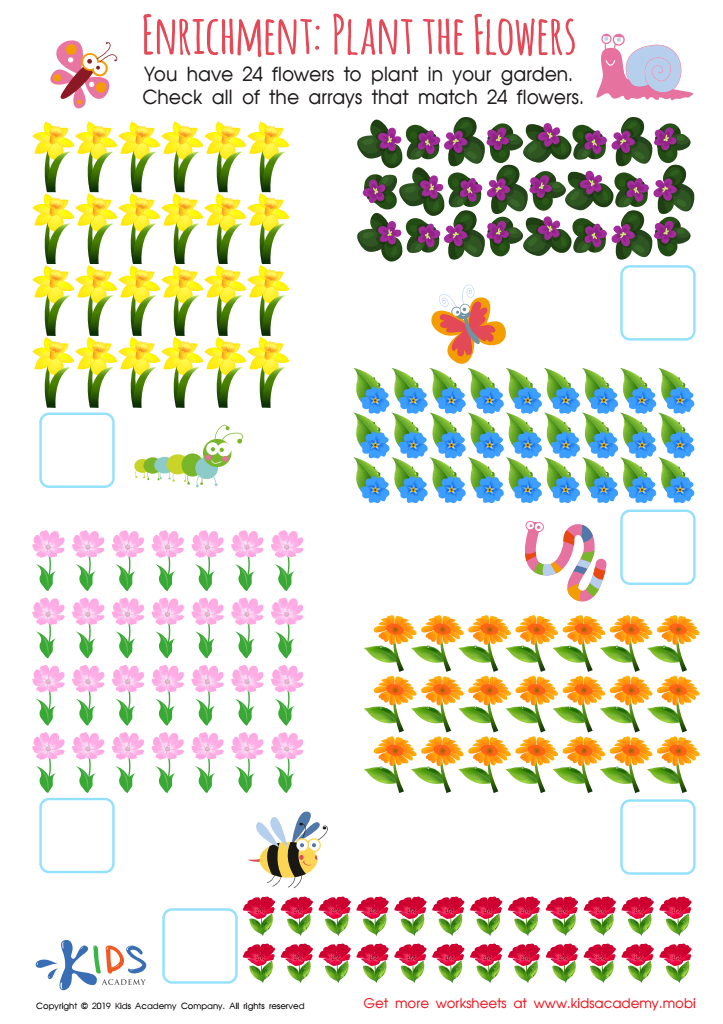
Enrichment: Plant the Flowers Worksheet
 Assign to My Students
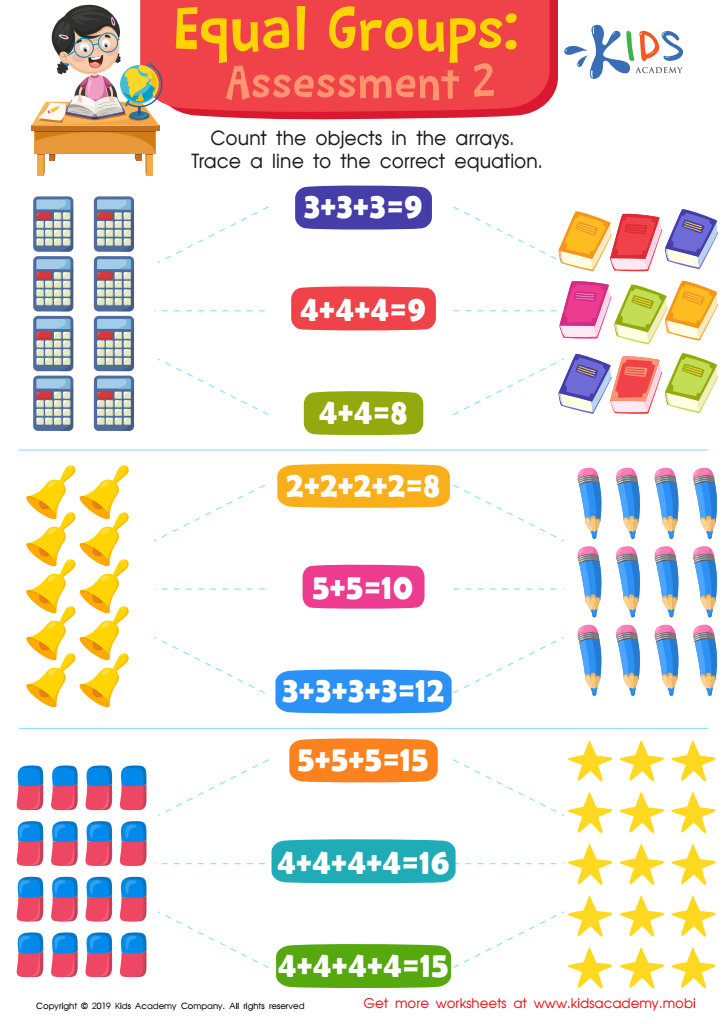
Equal Groups: Assessment 2 Worksheet
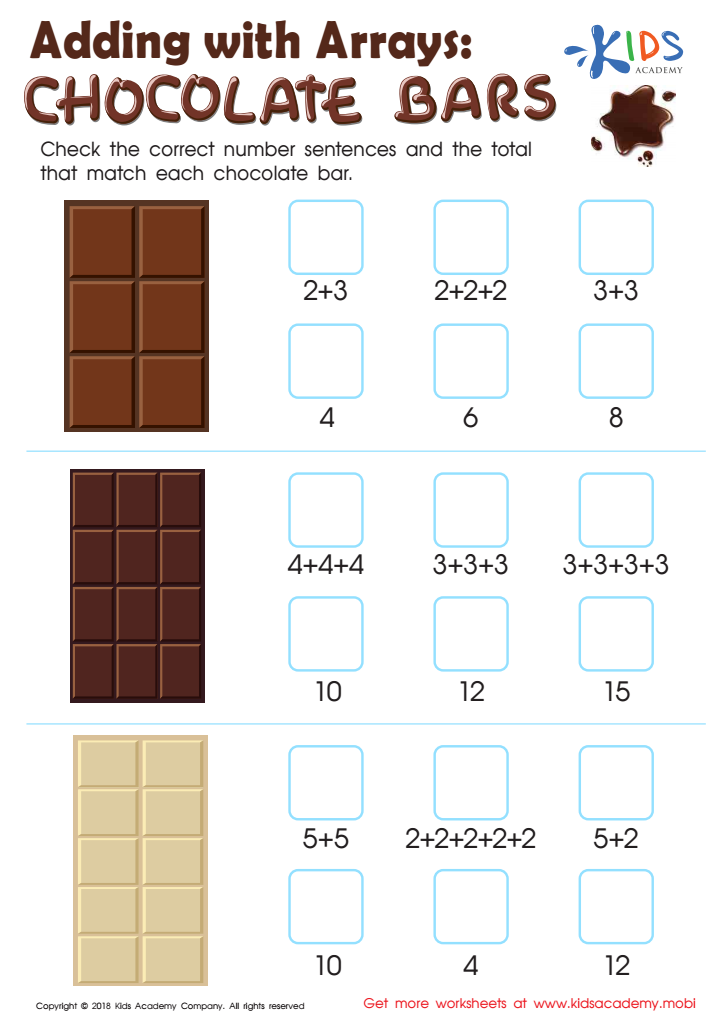
Adding with Arrays: Chocolate Bars Worksheet
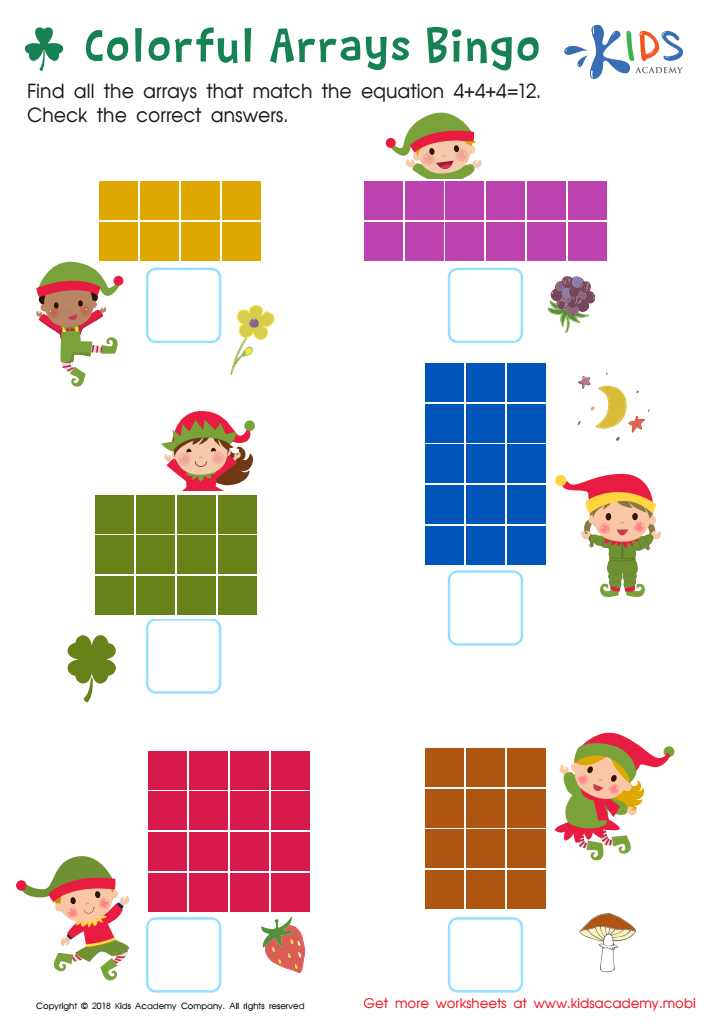
Colorful Arrays Bingo Worksheet
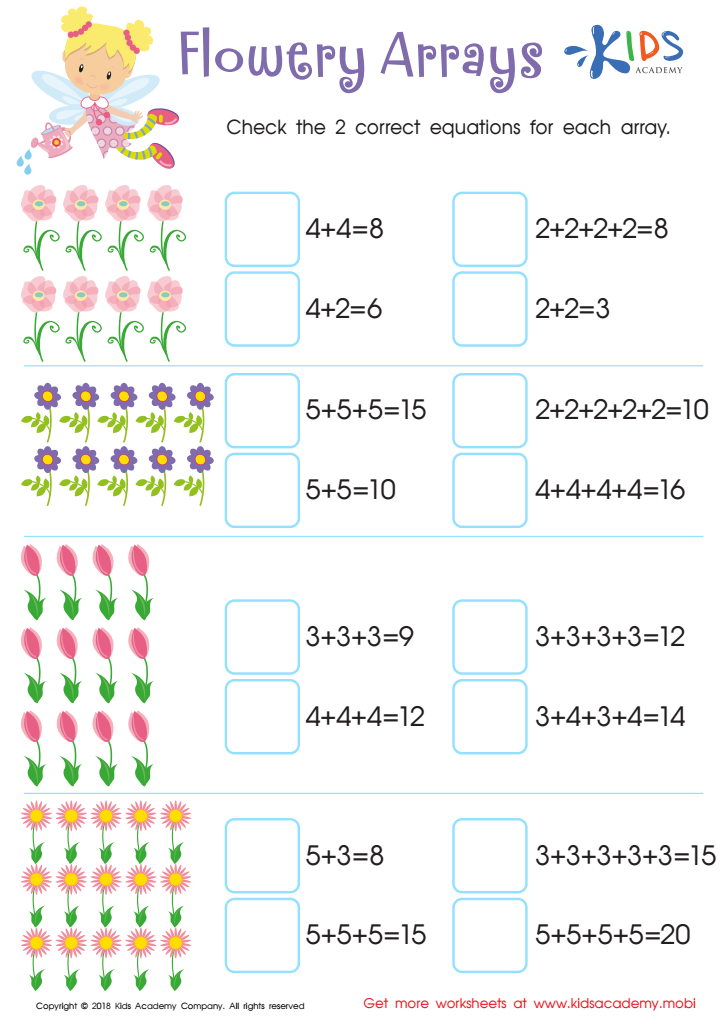
Flowery Arrays Worksheet
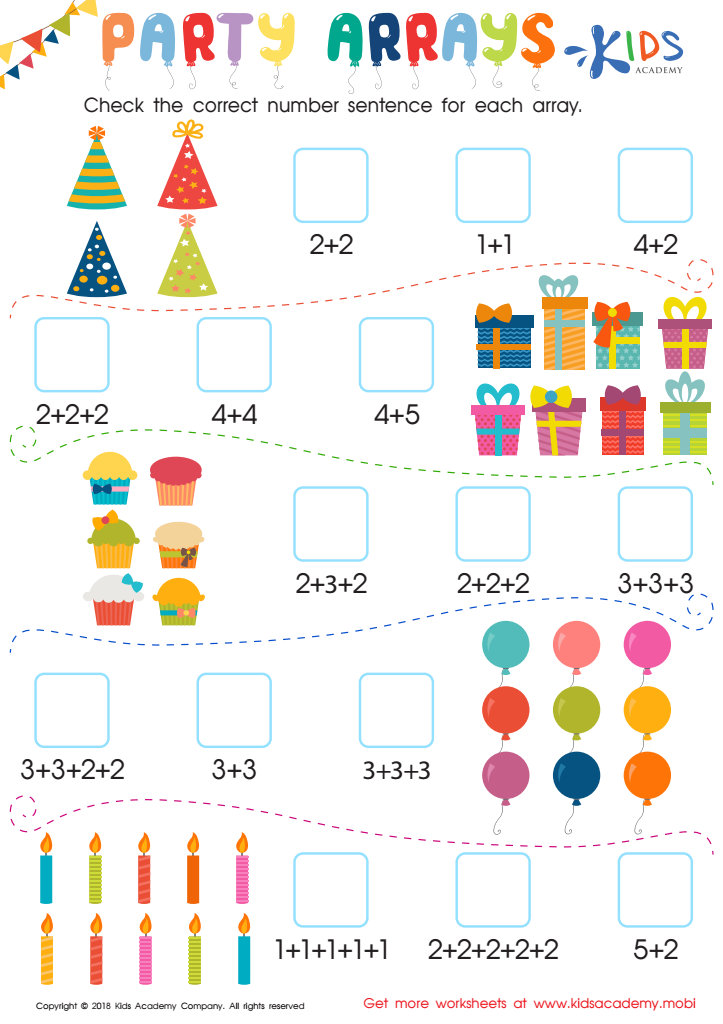
Party Arrays Worksheet
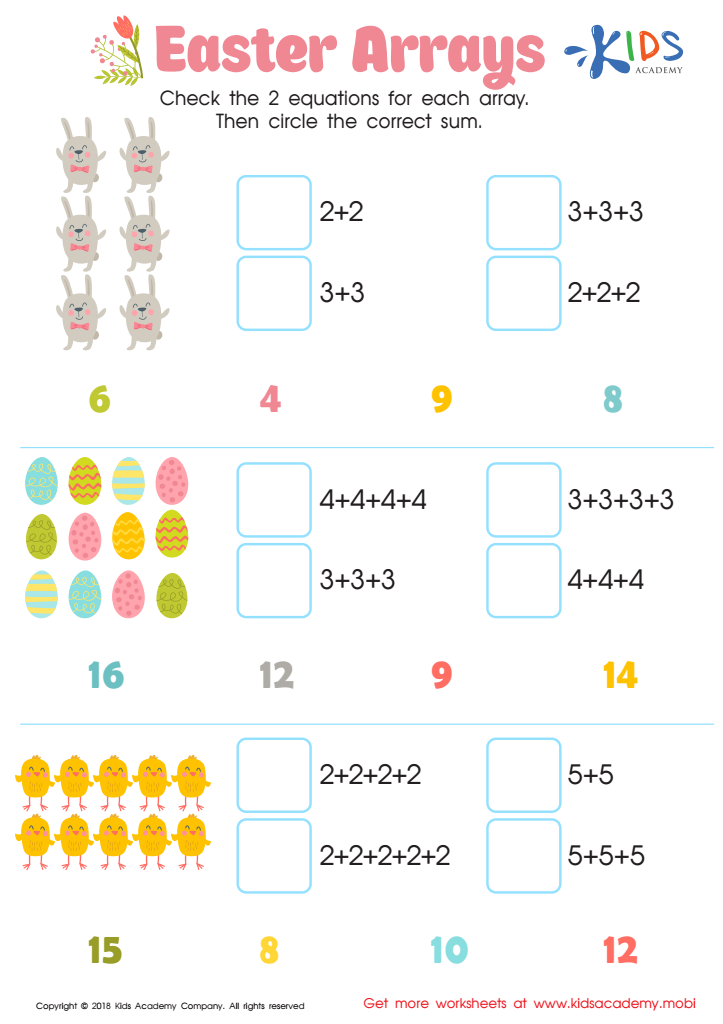
Easter Arrays Worksheet
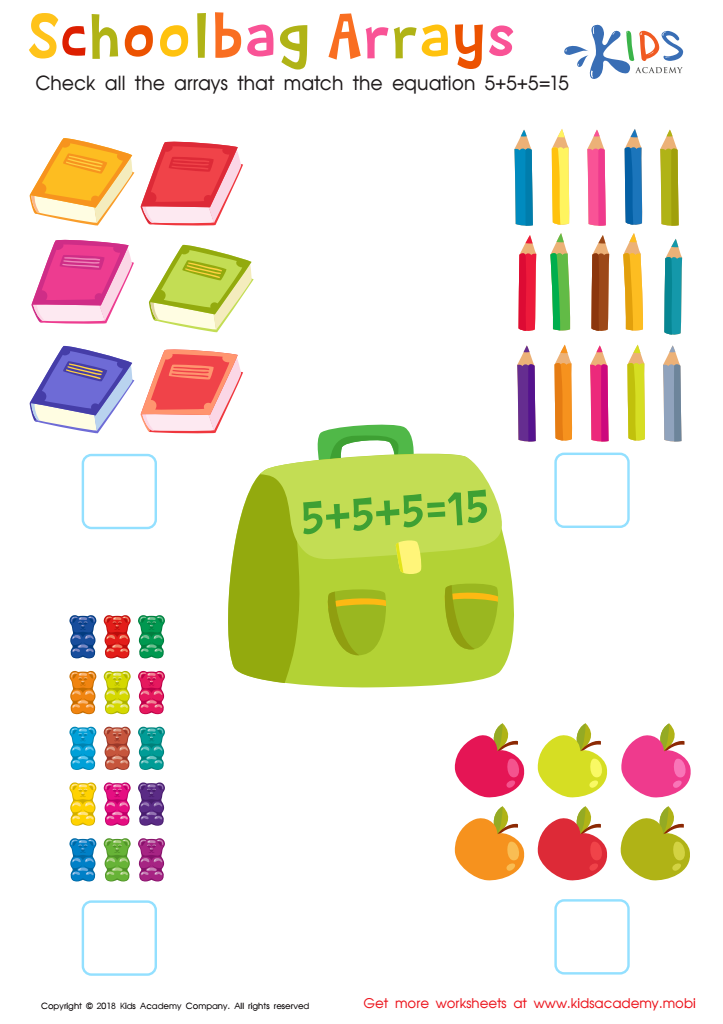
Schoolbag Arrays Worksheet
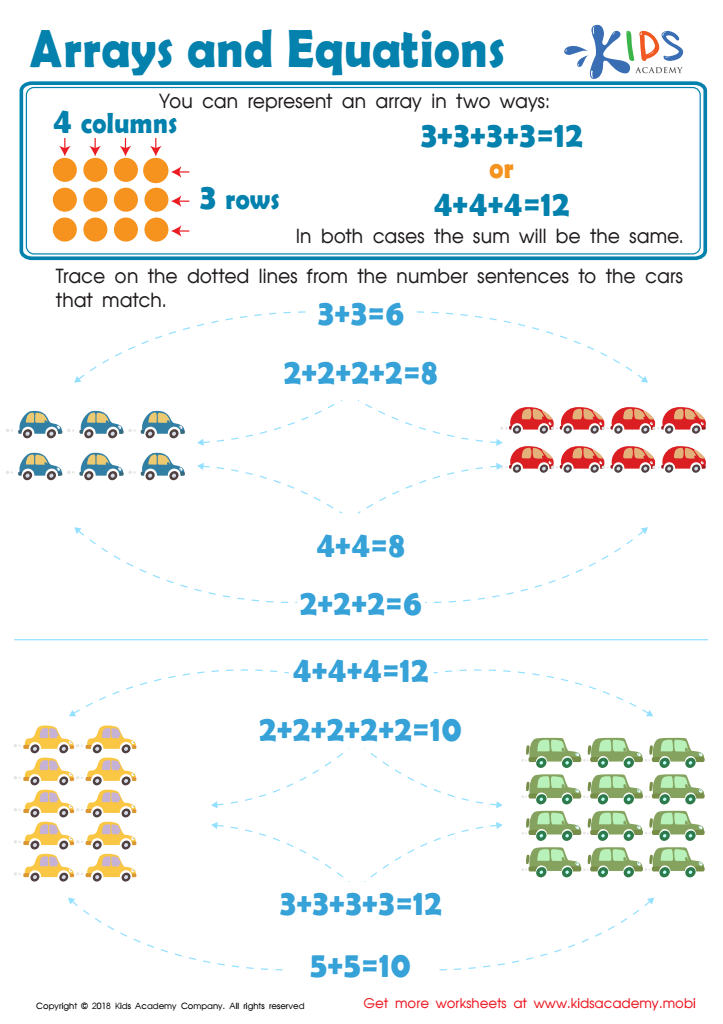
Arrays and Equations Worksheet
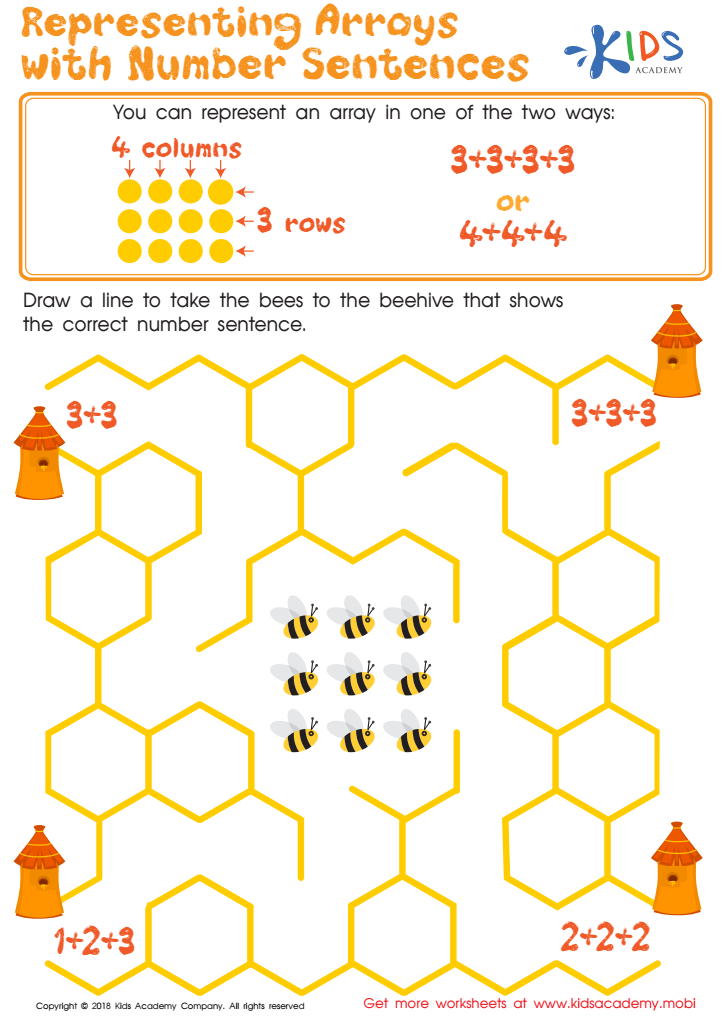
Representing Arrays with Number Sentences Worksheet
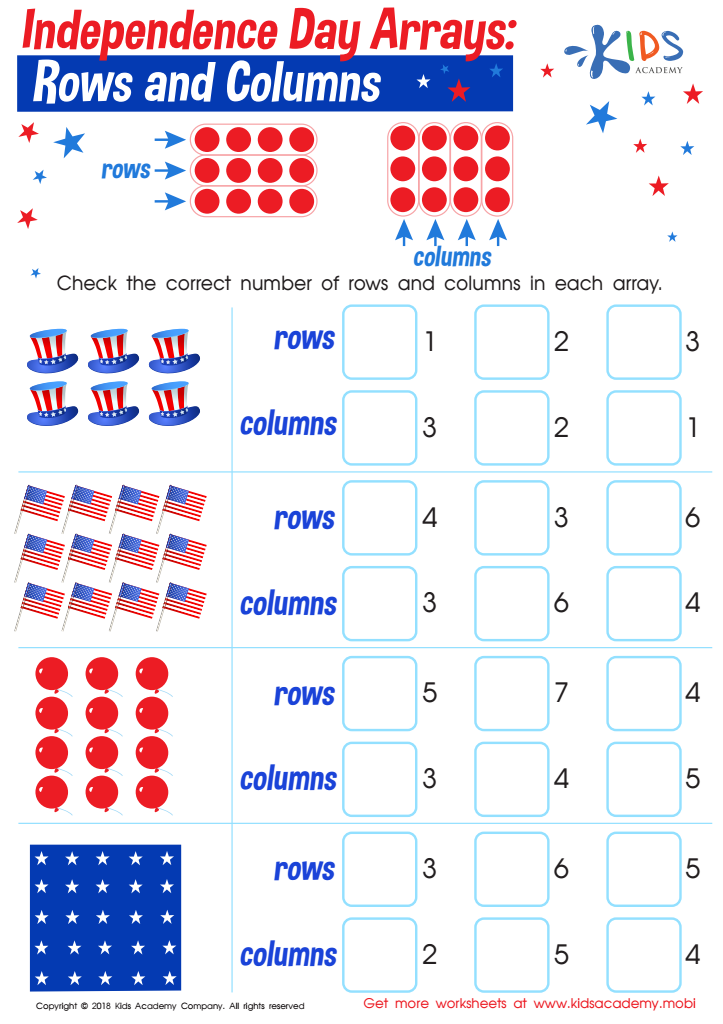
Independence Day Arrays: Rows and Columns Worksheet
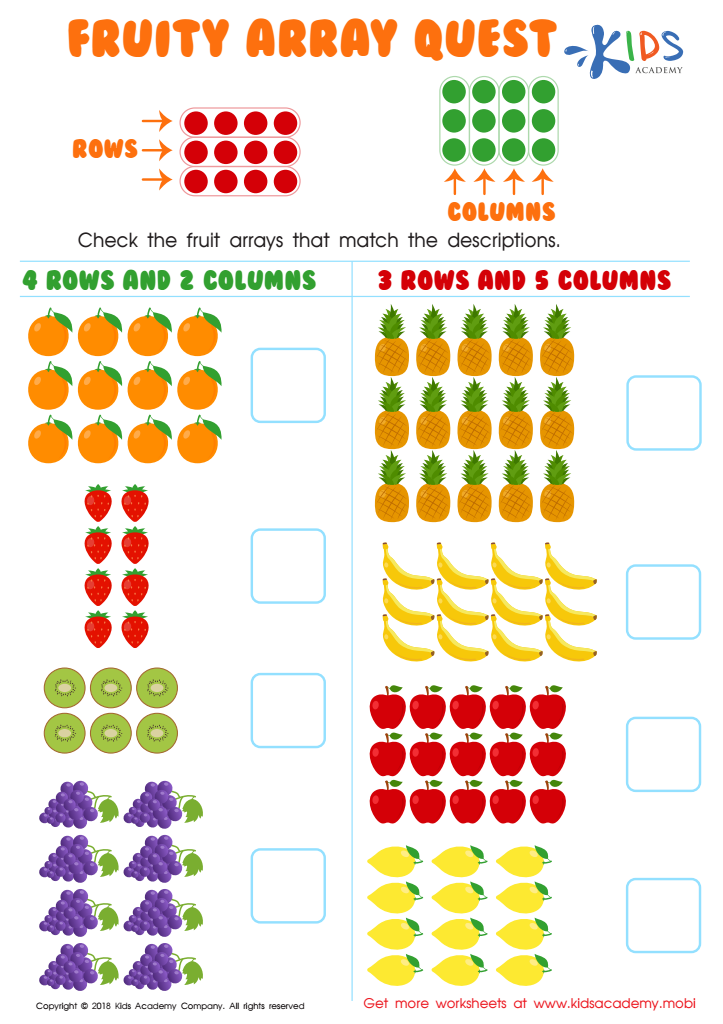
Fruity Array Quest Worksheet
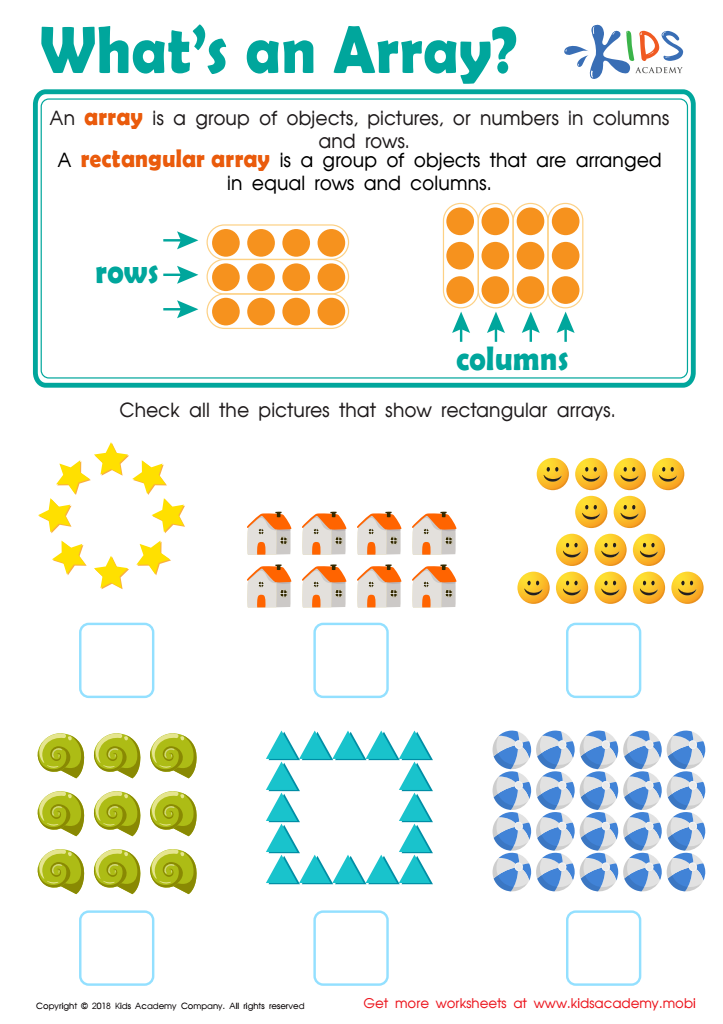
What's an Array? Worksheet








Parents and teachers should care about arrays for children ages 6-7 because they lay an important foundation for mathematical understanding and problem-solving skills. Arrays, which are arrangements of objects, numbers, or symbols in rows and columns, represent a visual and tangible way for young learners to grasp basic math concepts, such as addition, multiplication, and even division.
By using arrays, children can easily recognize patterns and relationships in numbers, facilitating their ability to manipulate quantities. For instance, an array of 2 rows and 3 columns visually shows how 2 multiplied by 3 equals 6, making abstract concepts more concrete. This active engagement not only nurtures critical thinking but also builds confidence in dealing with numbers.
Furthermore, arrays can enhance organizational skills, as they encourage students to sort and categorize information. Through games, hands-on activities, and real-world applications, educators can make learning enjoyable and relatable. This early exposure fuels a positive attitude toward math, fostering a lifelong love of learning.
In summary, understanding arrays empowers young learners, equipping them with essential skills that will support their ongoing education. Parents and teachers play an integral role in reinforcing these concepts, thereby providing their children with strong foundational literacy in mathematics.








