Financial literacy Money Worksheets for Ages 6-7
3 filtered results
-
From - To
Empower your 6-7-year-olds with essential financial literacy through our engaging Money Worksheets! Carefully crafted for first graders, these printable activities are designed to build foundational skills in counting money and understanding its value. Our worksheets use fun exercises to teach coin identification, addition of small amounts, and real-world spending scenarios. By integrating playful graphics and hands-on tasks, we make learning about money both educational and enjoyable. Perfect for boosting early math skills and introducing basic financial concepts, our worksheets will help set the stage for responsible money management in your child's future.
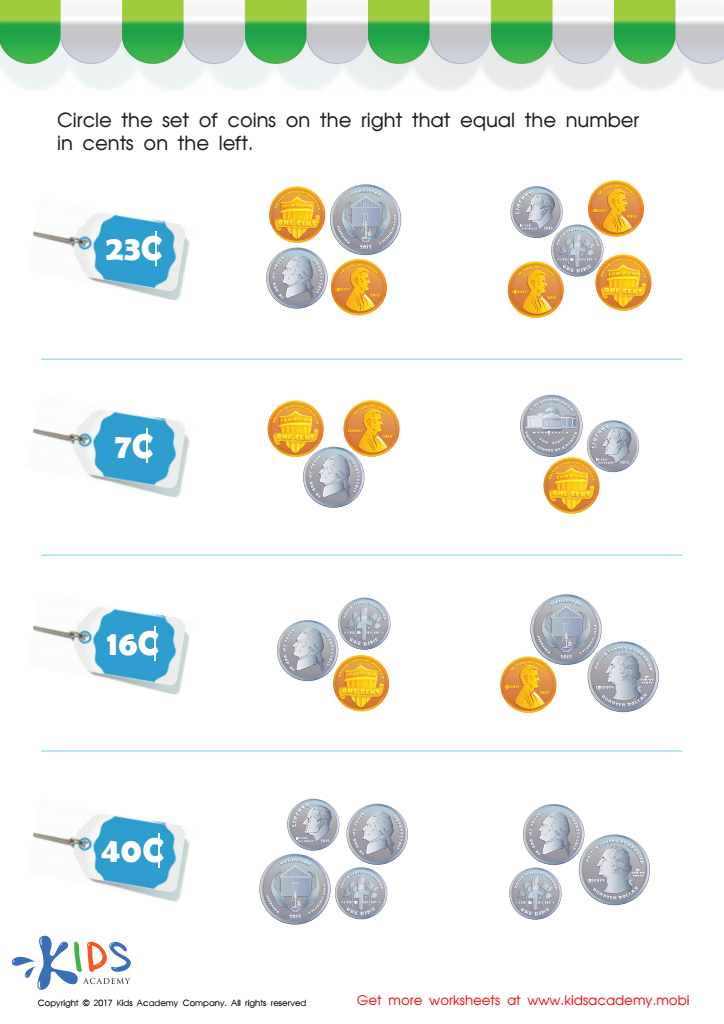
Picking the Coins You Need Money Worksheet
 Assign to My Students
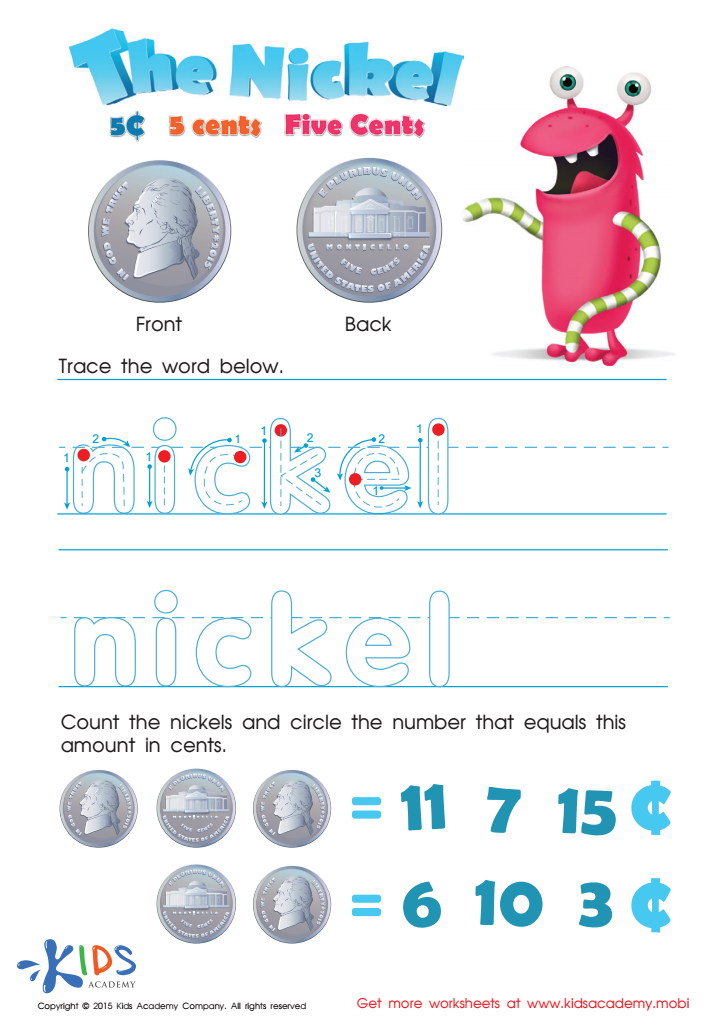
Five Cents or the Nickel Money Worksheet
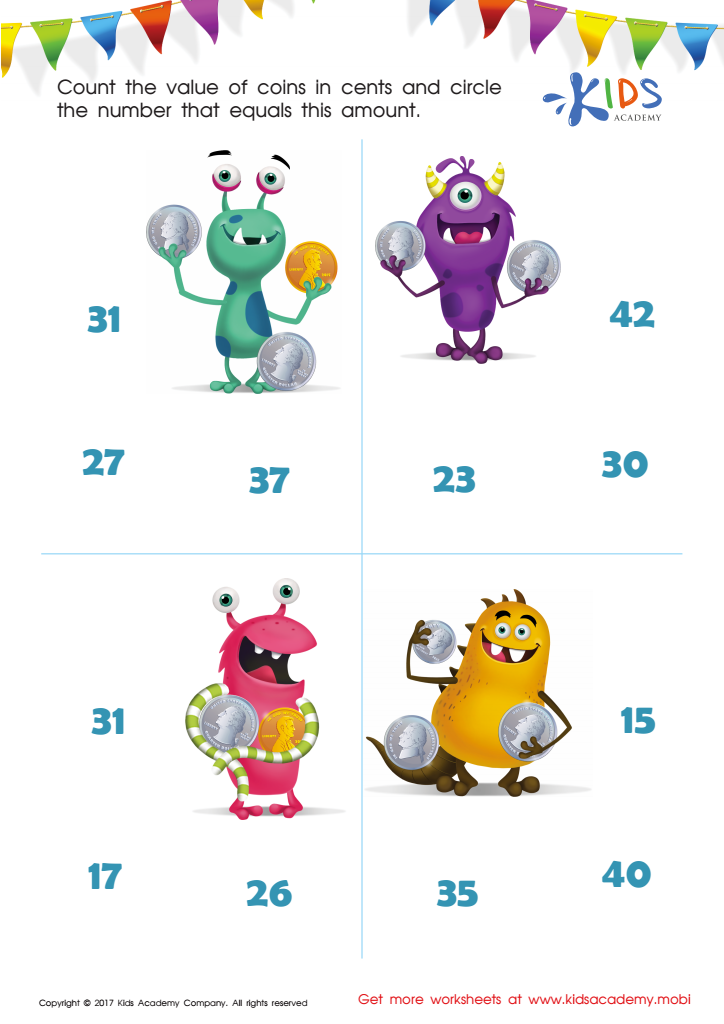
How Many Coins Money Worksheet








Financial literacy is a crucial life skill, and starting early is essential. Parents and teachers should care about financial literacy for children ages 6-7 because these formative years are when basic attitudes and habits around money begin to take shape. Teaching children about money at this age helps them understand the value of money and the importance of saving, spending wisely, and considering future needs.
When children learn financial concepts early, they become equipped to make better financial decisions later in life. For instance, understanding the basics of saving helps them prioritize needs over wants. Simple activities like saving pocket money in a piggy bank or discussing the cost of toys can teach children about budgeting and goal setting. This early education sets the foundation for more complex financial concepts as they grow older.
Moreover, financial literacy promotes responsibility and independence. When children learn the significance of earning and spending money, they develop a sense of accountability. This empowerment can boost their confidence and make them more prepared for future financial responsibilities, reducing the likelihood of financial mismanagement and debt in adulthood.
In summary, fostering financial literacy in young children equips them with essential skills for lifelong financial health and responsibility, setting a solid groundwork for prudent financial behavior.








