Letter I Worksheets for Ages 6-8
4 filtered results
Difficulty Level
Grade
Age
-
From - To
Subject
Activity
Standards
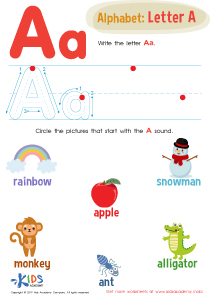
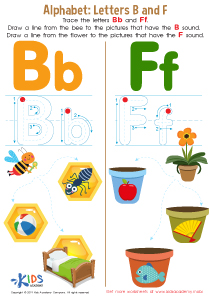
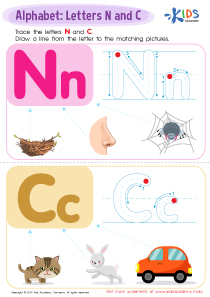
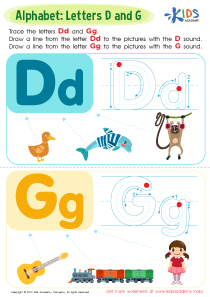
Enhance your child's alphabet skills with our engaging "Letter I Worksheets for Ages 6-8" at Kids Academy. Perfectly designed for young learners in early grades, these printable worksheets make learning the alphabet a fun and interactive experience. From tracing and writing exercises to coloring sheets and identifying objects beginning with the letter I, each activity supports literacy development while boosting confidence. Ideal for both classroom and home use, our worksheets are a valuable resource for parents and teachers eager to cultivate a love for reading and writing. Explore now and give your child a head start on their educational journey!
Favorites
With answer key
Interactive
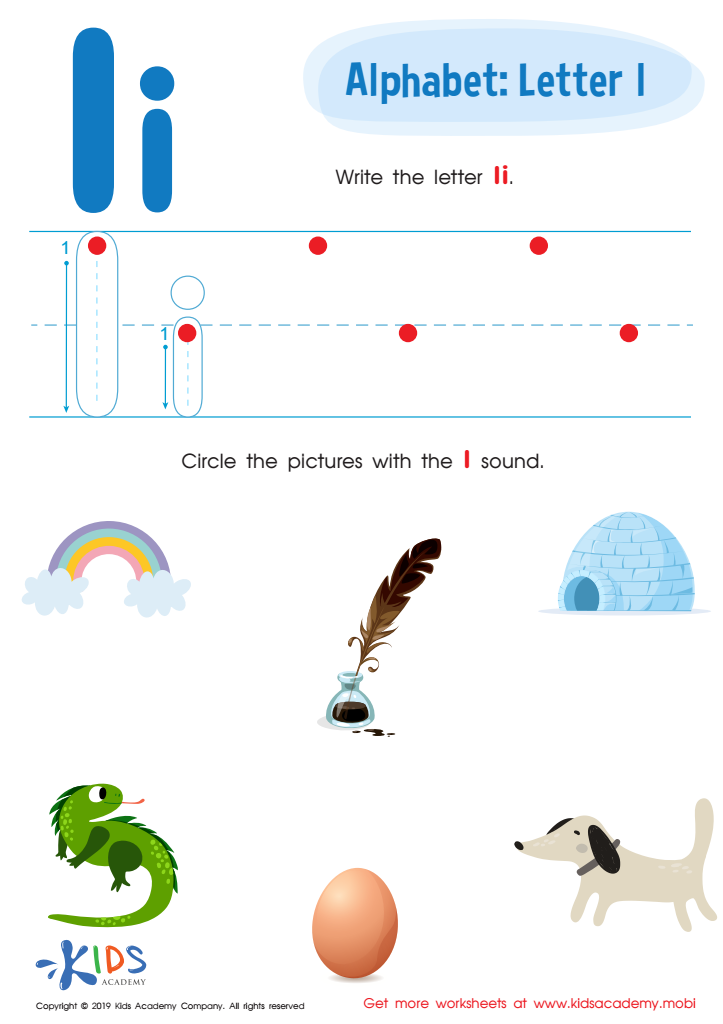
Letter I Tracing Worksheet
Kids can hone tracing, writing and identifying skills for the letter 'I' with this worksheet. Whether visual or reading/writing learners, every child can benefit from the tasks - tracing, writing and circling objects beginning with 'I'. This free sheet will soon get preschoolers confident with the 'I' letter!
 Assign to My Students
Letter I Tracing Worksheet
Worksheet
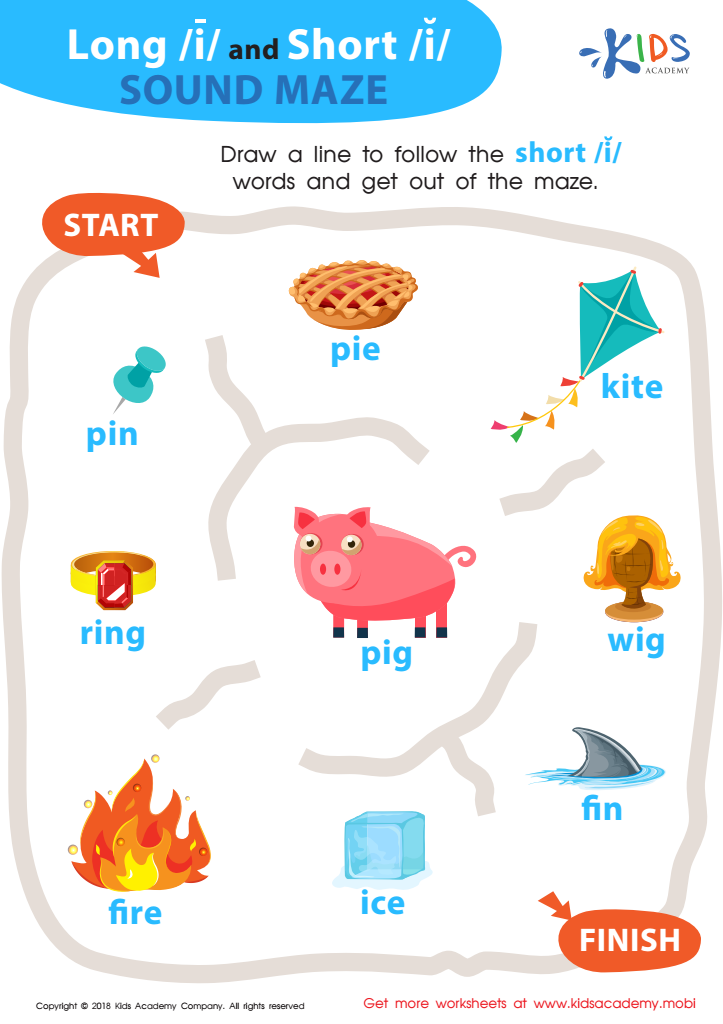
Reading: Long I and Short I Sound Maze Worksheet
Question your students if the worksheet is entertaining. They may respond negatively! Nonetheless, this activity will bring satisfaction while learning the distinction between a long and short I sound. Students read the words in the maze and only follow the words with the short I sound to finish the exercise. Grasping the difference between long and short vowels is demanding, but this worksheet helps students understand this reading skill.
Reading: Long I and Short I Sound Maze Worksheet
Worksheet
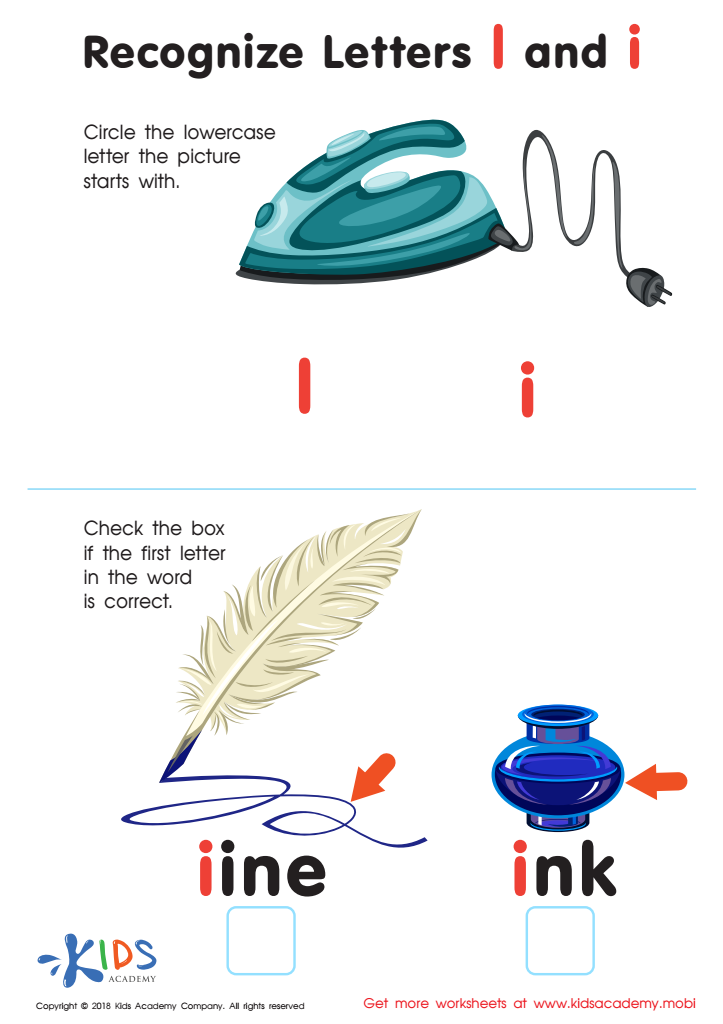
Recognize Letters l and i Worksheet
Help your child become familiar with uppercase and lowercase letters. Have them look at the pictures in the worksheet and circle the lowercase letter the picture starts with. For example: which one is the lowercase "i", the capital "I" or the small "i"?
Recognize Letters l and i Worksheet
Worksheet
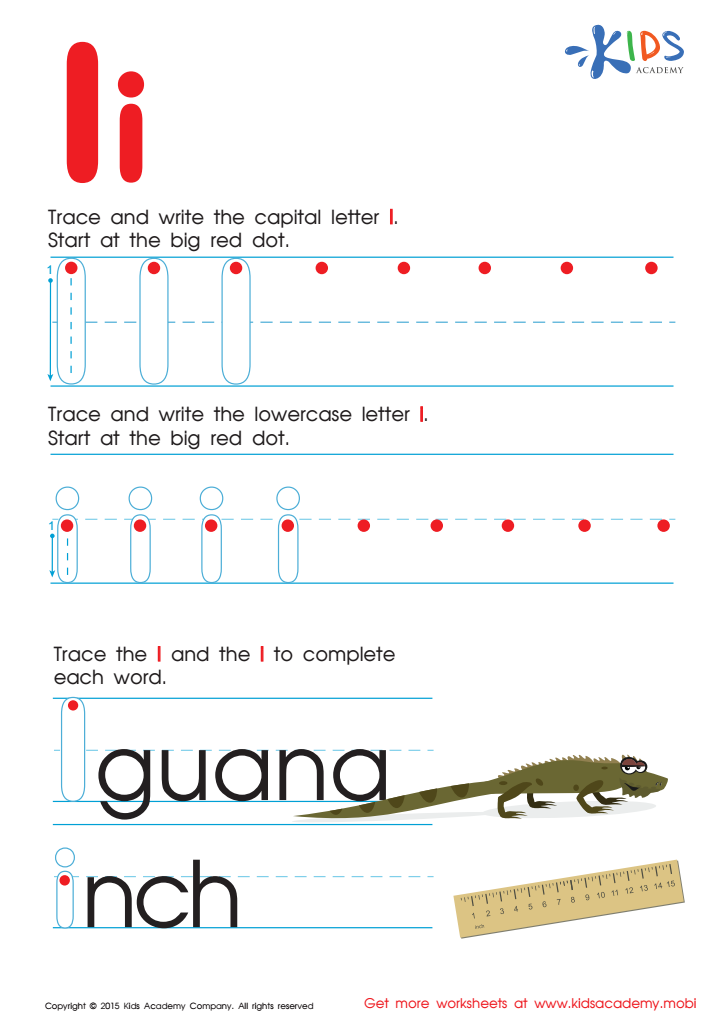
Letter I Tracing Page
Trace and write "I" uppercase and lowercase. An iguana's tail looks like the uppercase "I" and the lowercase "i" is as small as an inch. Make learning fun with Kids Academy worksheets.
Letter I Tracing Page
Worksheet
Join Kids Academy for Free
Who is primarily going to use this learning content?







The letter 'I' is foundational in early literacy for children ages 6-8 because of its recurring presence in the English language. During these formative years, children are developing crucial reading and writing skills, and understanding the letter 'I' plays a significant part in this process.
First, 'I' is a common vowel, featuring in many simple words that are part of early vocabulary: "it," "in," "is," and even "I" as a pronoun. Additionally, 'I' appears in many sight words—words that children are encouraged to recognize instantly by sight for reading fluency. Mastery of these often-used words boosts confidence and helps young readers tackle more complex texts.
Secondly, phonemic awareness is a prime focus at this age, and 'I' offers various sounds such as the short 'i' in "sit" or the long 'i' in "kite." Understanding these variations aids children in decoding and encoding words, crucial for effective communication.
Lastly, learning about the letter 'I' supports spelling and writing skills. Children will begin seeing patterns like 'igh' in "light" or 'it' in "kite," supporting their grasp on word structure. By giving attention to the letter 'I,' parents and teachers lay a solid groundwork for successful literacy development in children.