Phonics practice Phonics Worksheets for Ages 6-8
17 filtered results
-
From - To
Unlock your child's reading potential with our tailored Phonics Practice Worksheets for ages 6-8! These carefully designed sheets help young learners master essential phonics skills by gradually introducing fun and engaging activities. With a primary focus on sound-letter recognition, blending, and segmenting, our worksheets provide a strong foundation for confident reading and writing. Ideal for both classroom settings and at-home practice, these resources ensure kids stay motivated while sharpening their literacy skills. Spark a love for reading and set the stage for academic success by integrating our expertly crafted phonics practice into your daily learning routine!
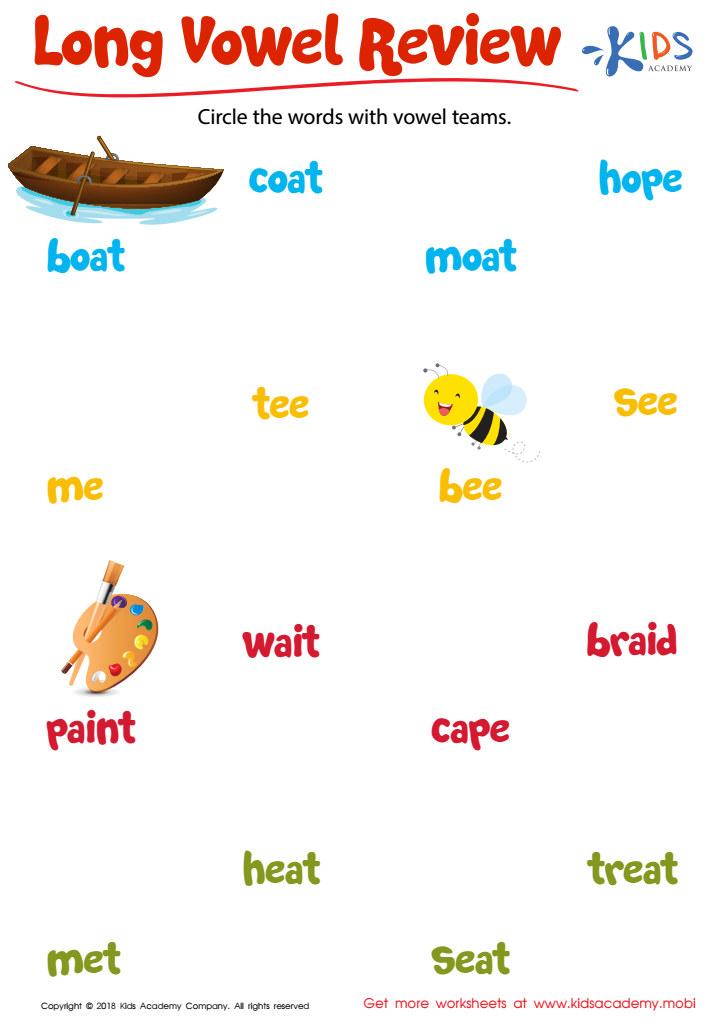
Long Vowel Review Worksheet
 Assign to My Students
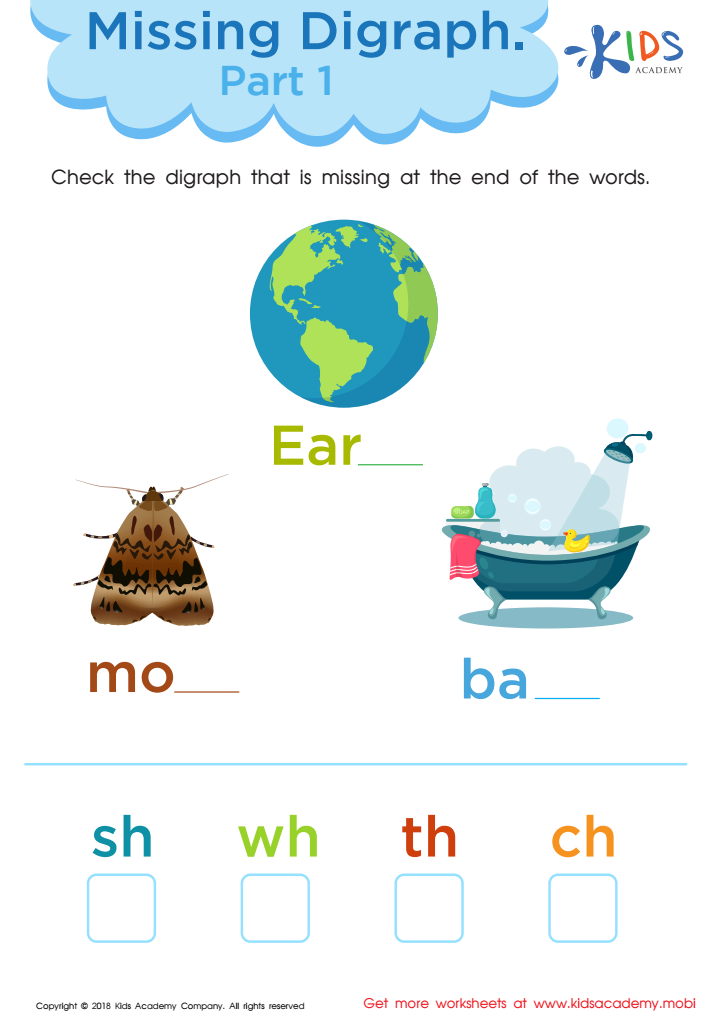
Missing Digraph: Part 1 Worksheet
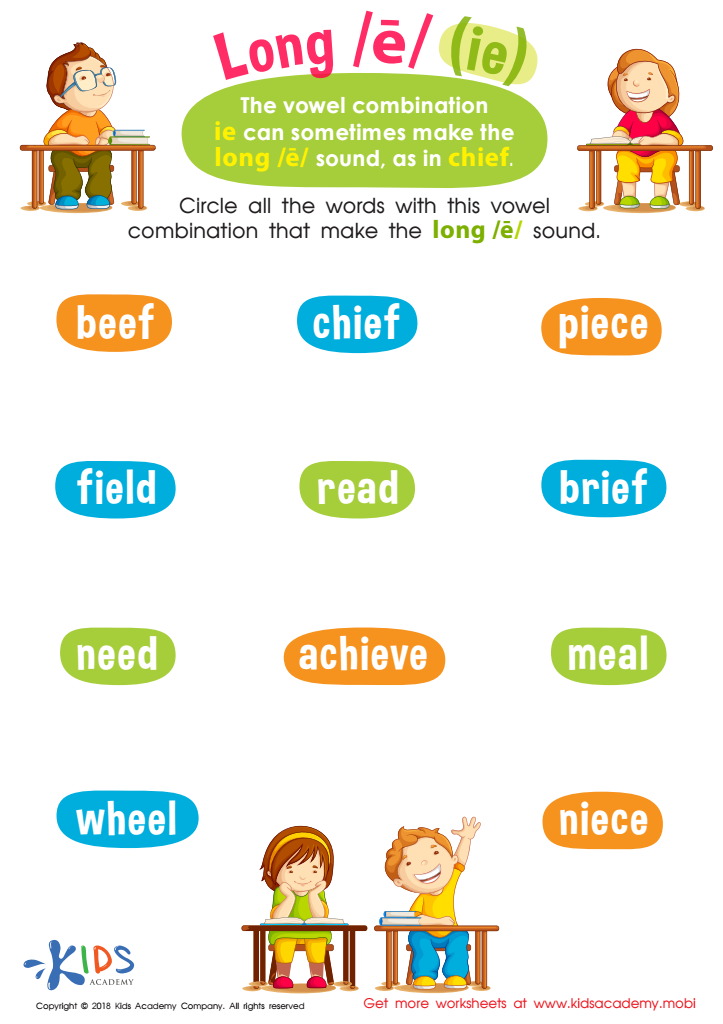
Reading: Long E and IE Worksheet
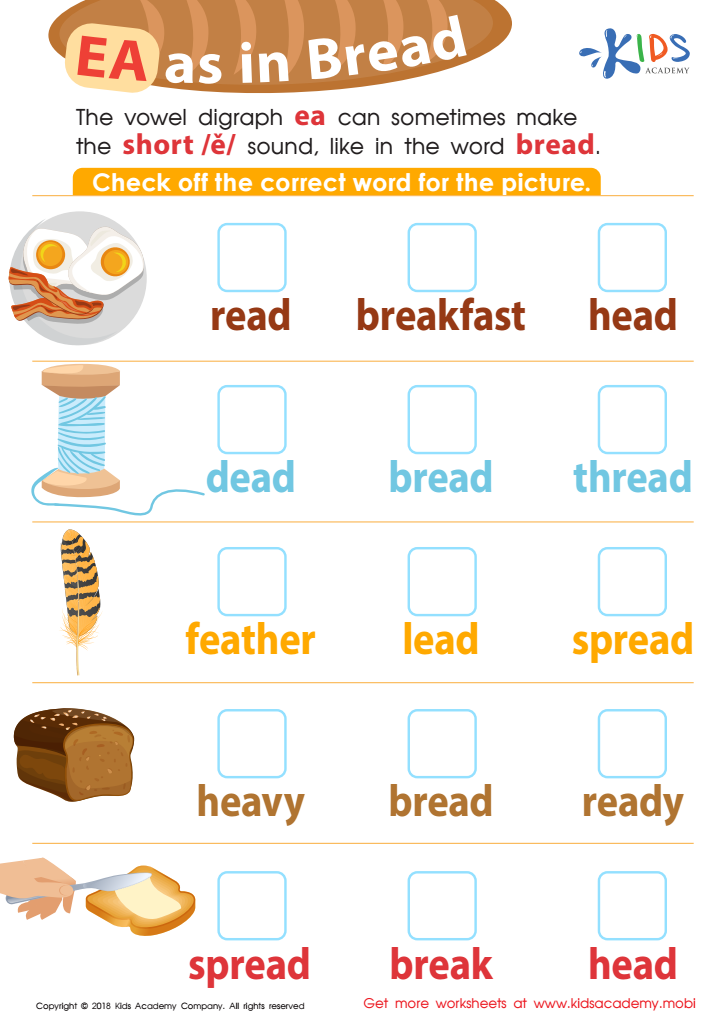
Reading: EA as in Bread Worksheet
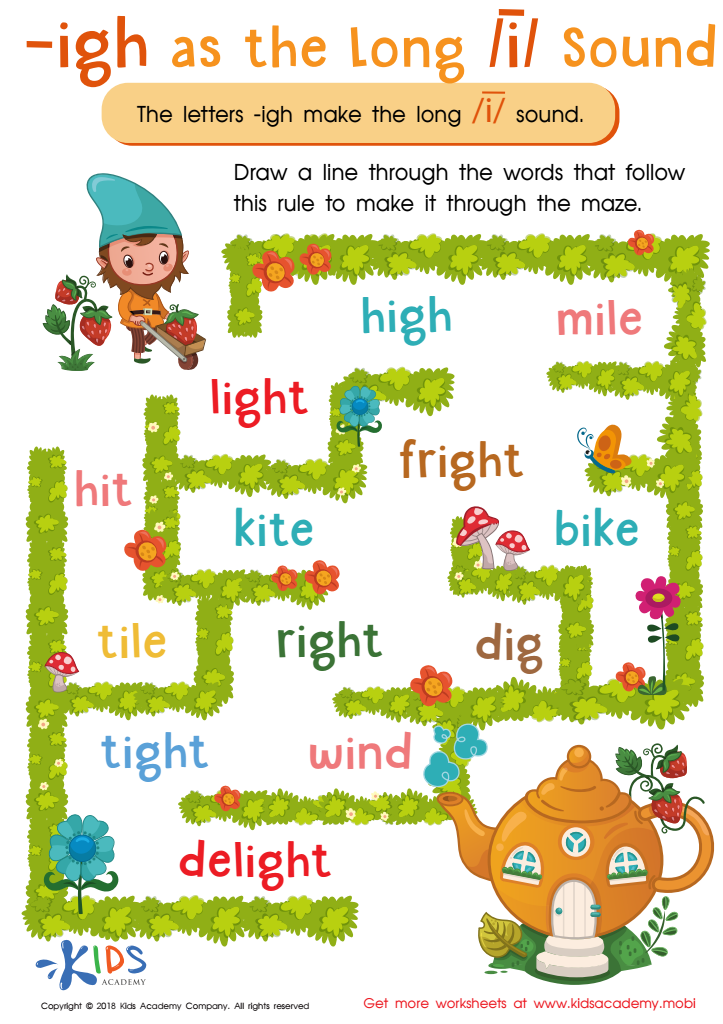
Reading: IGH as Long I Worksheet
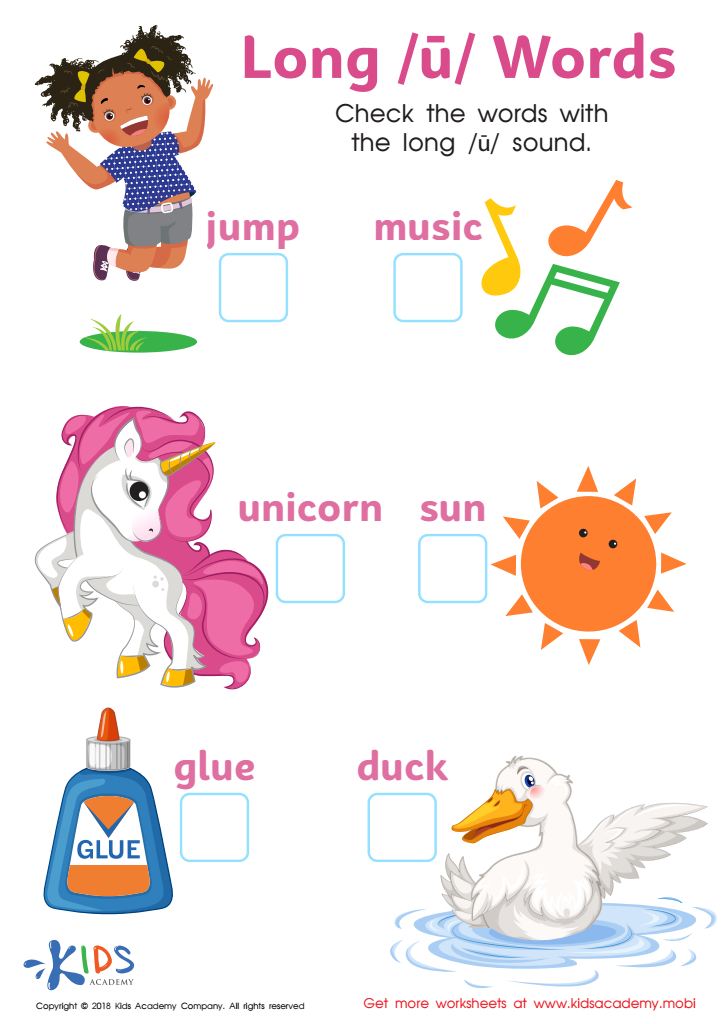
Long U Words Reading Worksheet
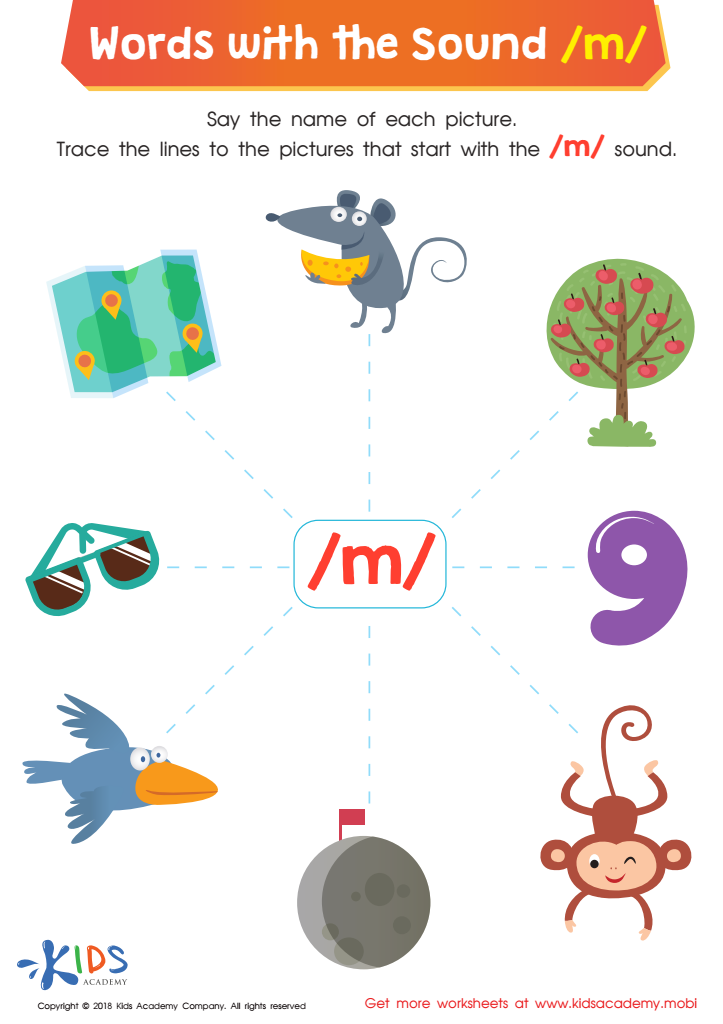
Words with Sound M Reading Worksheet
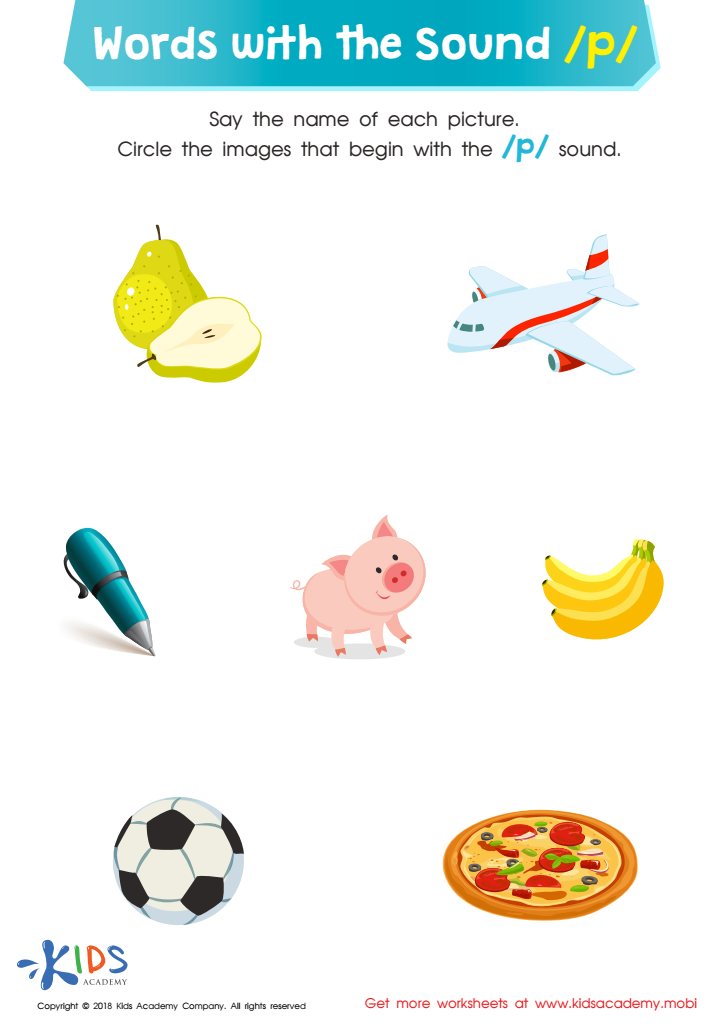
Words with sound p Reading Worksheet
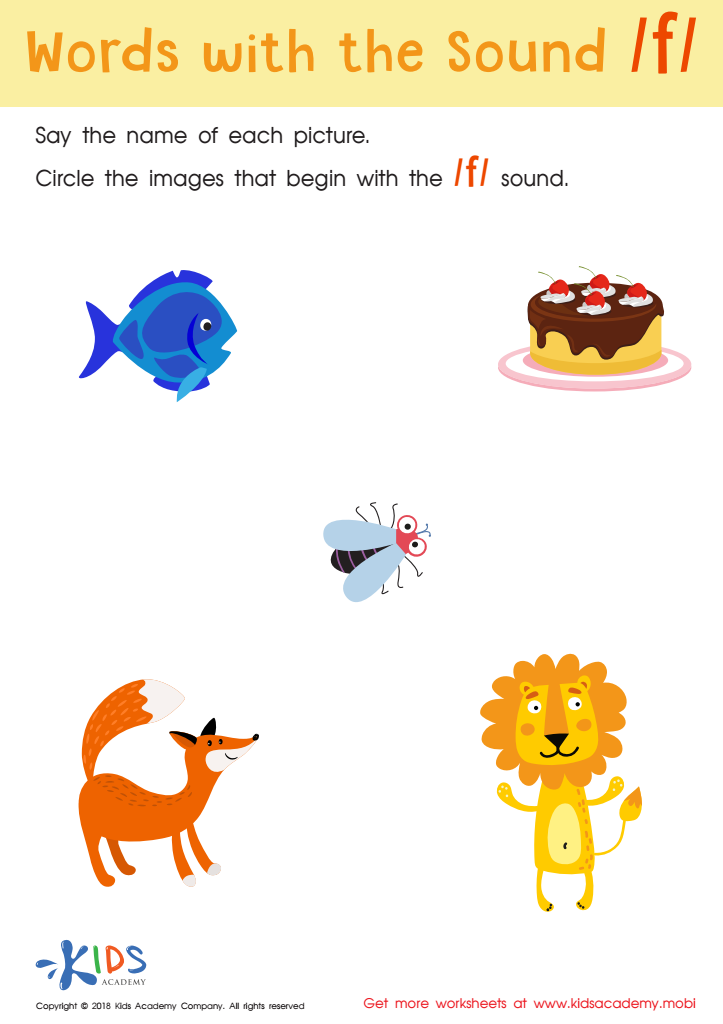
Words with sound f Reading Worksheet
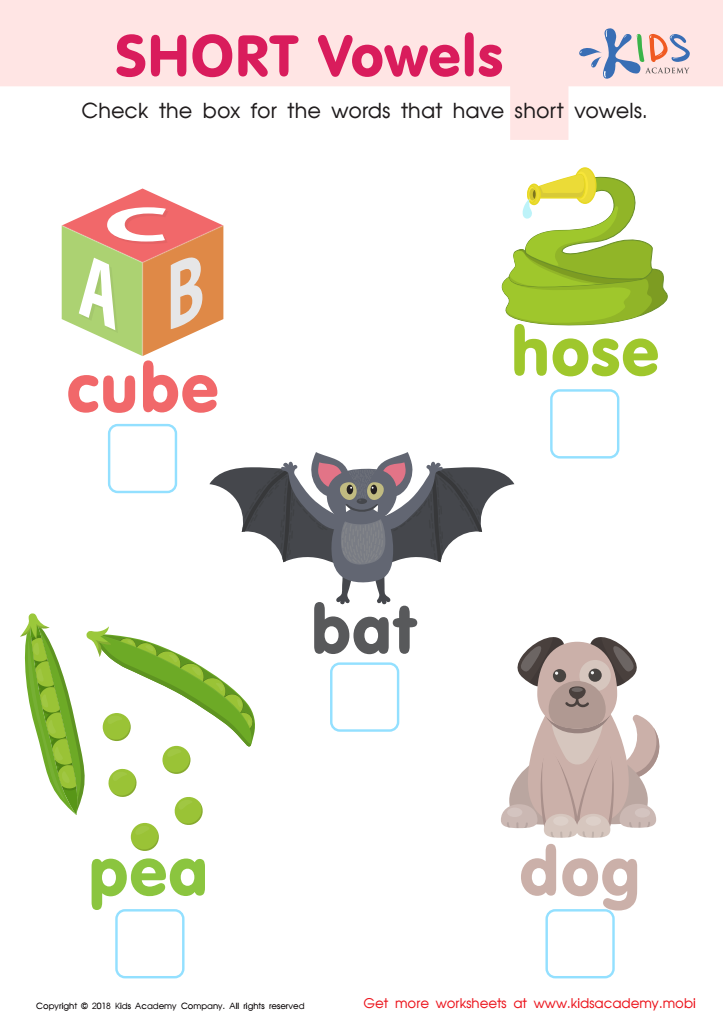
short vowels Worksheet
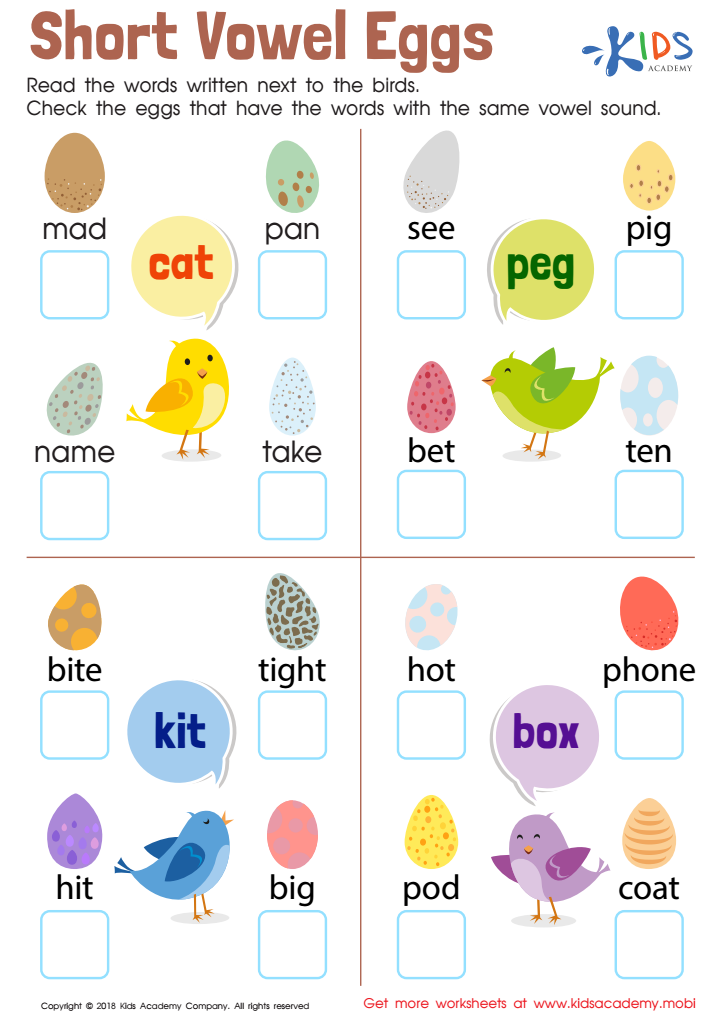
Short Vowel Eggs Worksheet
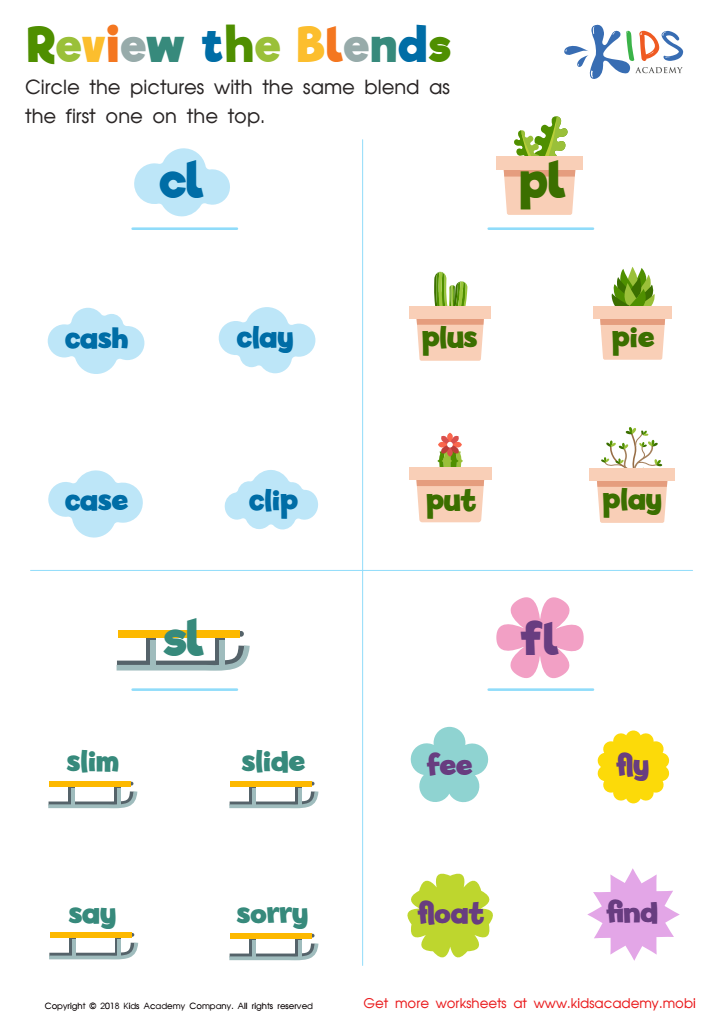
Review the Blends Worksheet
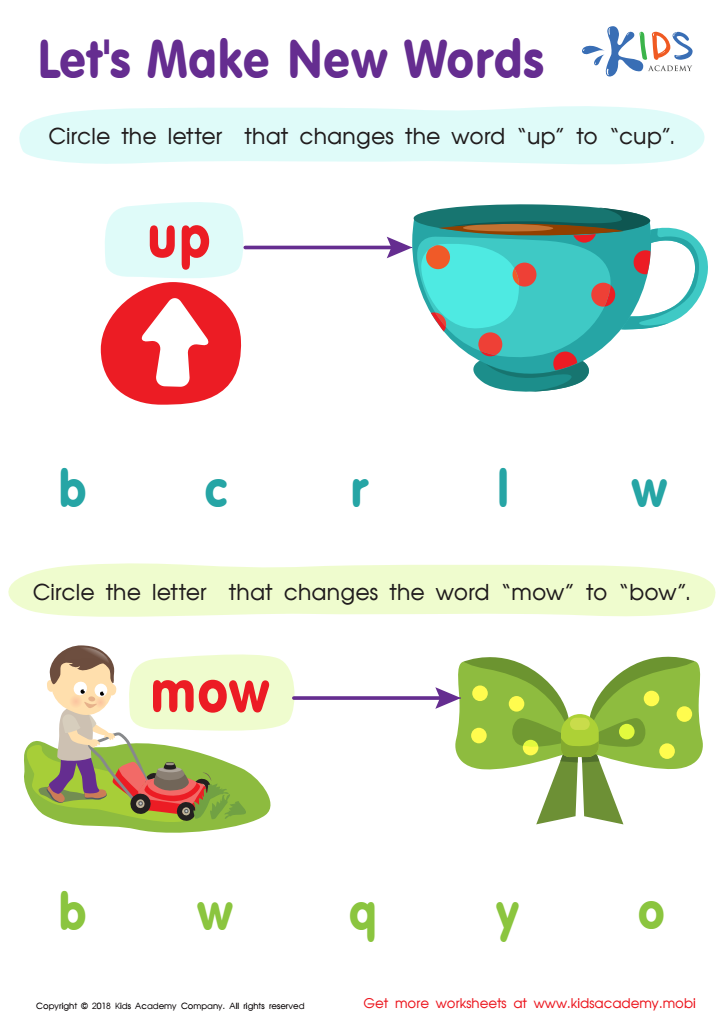
Let's Make New Words Worksheet
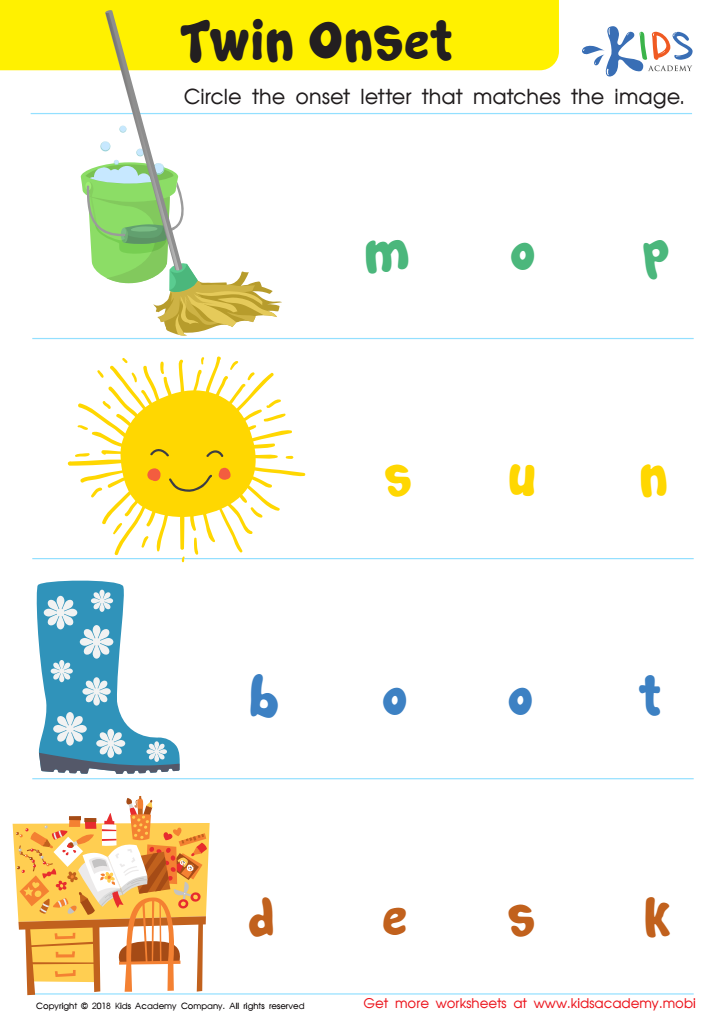
Twin Onset Worksheet
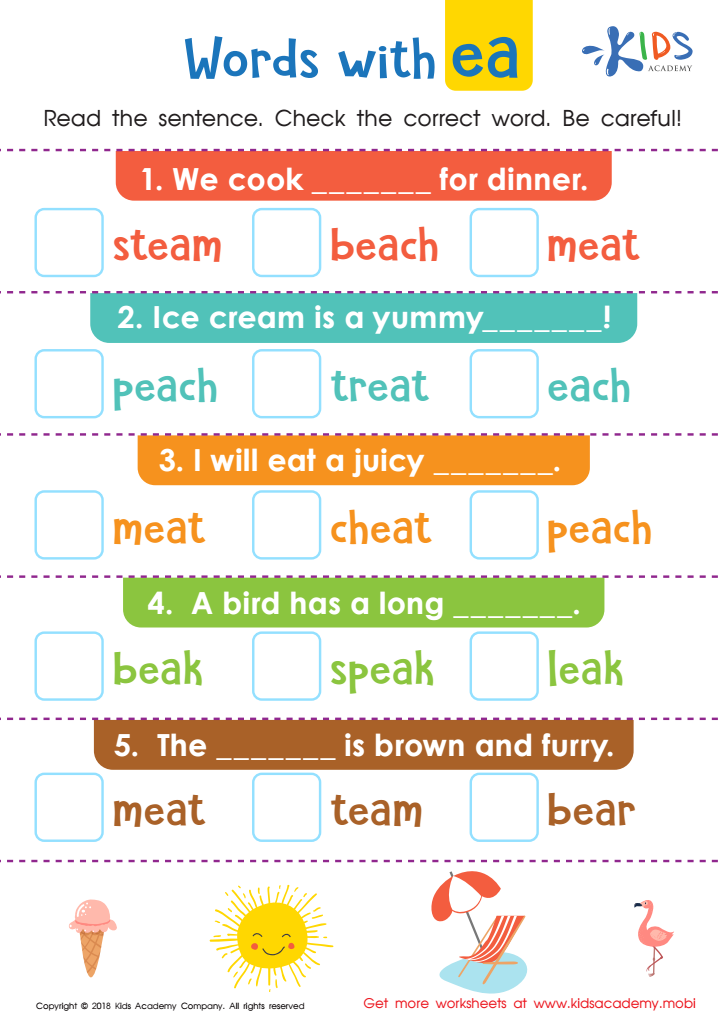
Words with ea Worksheet
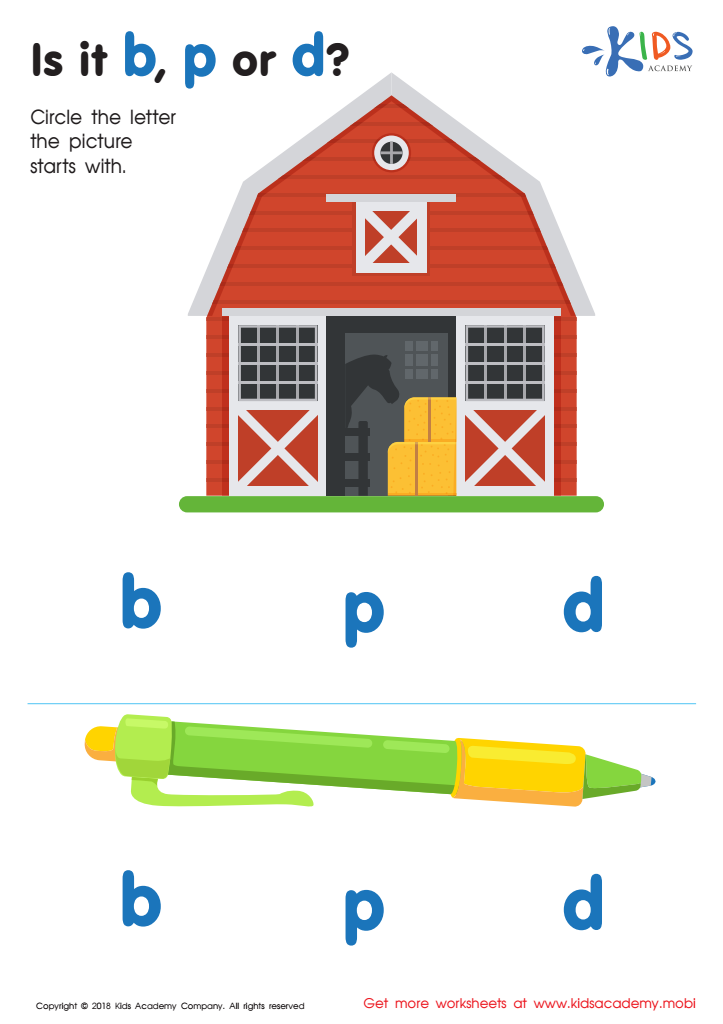
Is it b, p or d? Worksheet
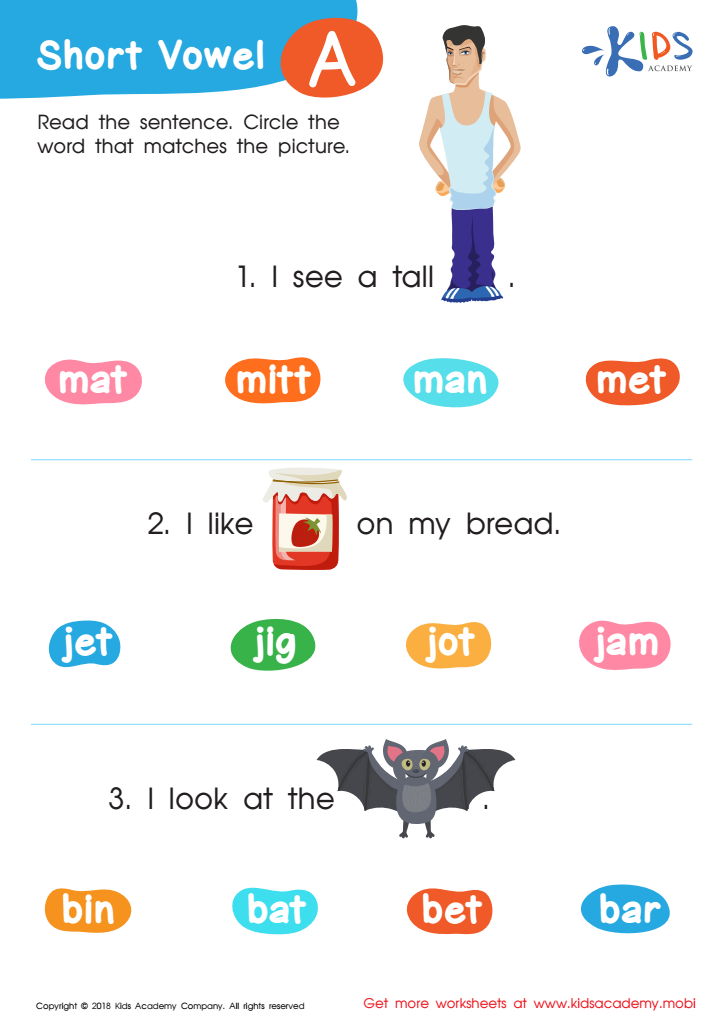
Short Vowel /a/ Worksheet








Phonics practice is crucial for children aged 6-8 because it lays the foundation for reading and literacy skills, which are vital for their academic and future success. At this age, children are typically in the early stages of learning to read, and phonics provides them with the tools to decode words by understanding the relationship between letters and sounds. This understanding is essential for developing fluency in reading, which in turn influences comprehension, vocabulary, and overall communication skills.
For parents and teachers, emphasizing phonics practice ensures that children can approach reading with confidence. When children grasp phonetic principles, they can independently decipher new words, leading to a more enjoyable and less frustrating reading experience. This autonomy encourages a love for reading, fostering a positive attitude towards learning overall.
Additionally, strong phonics skills support spelling and writing abilities. As children recognize sound patterns and letter combinations, they become better equipped to spell accurately and express their ideas clearly in writing. Research has consistently shown that early competence in reading through phonics is linked to later academic achievement.
In summary, phonics practice from ages 6-8 is not merely about learning to read but involves cultivating essential linguistic capabilities that underpin lifelong learning and cognitive development. Hence, it’s pivotal for both parents and teachers to prioritize and actively support phonics education during these formative years.







