Vowels and Consonants Worksheets for Ages 6-9 - Page 2
29 filtered results
-
From - To
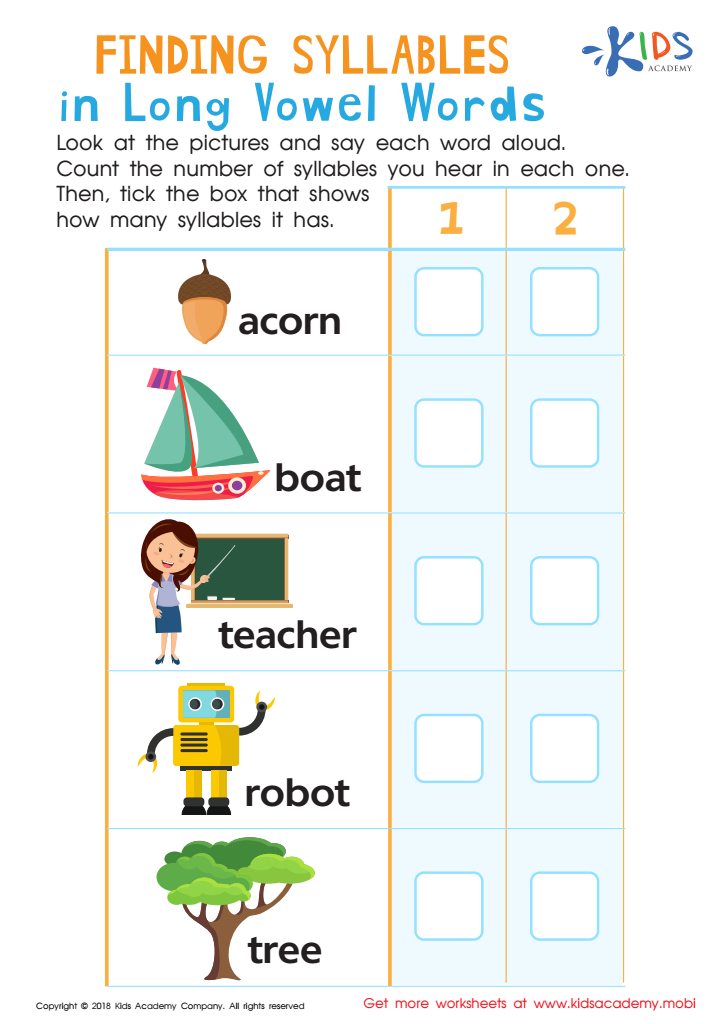
Finding Syllables in Long Vowel Words Worksheet
 Assign to My Students
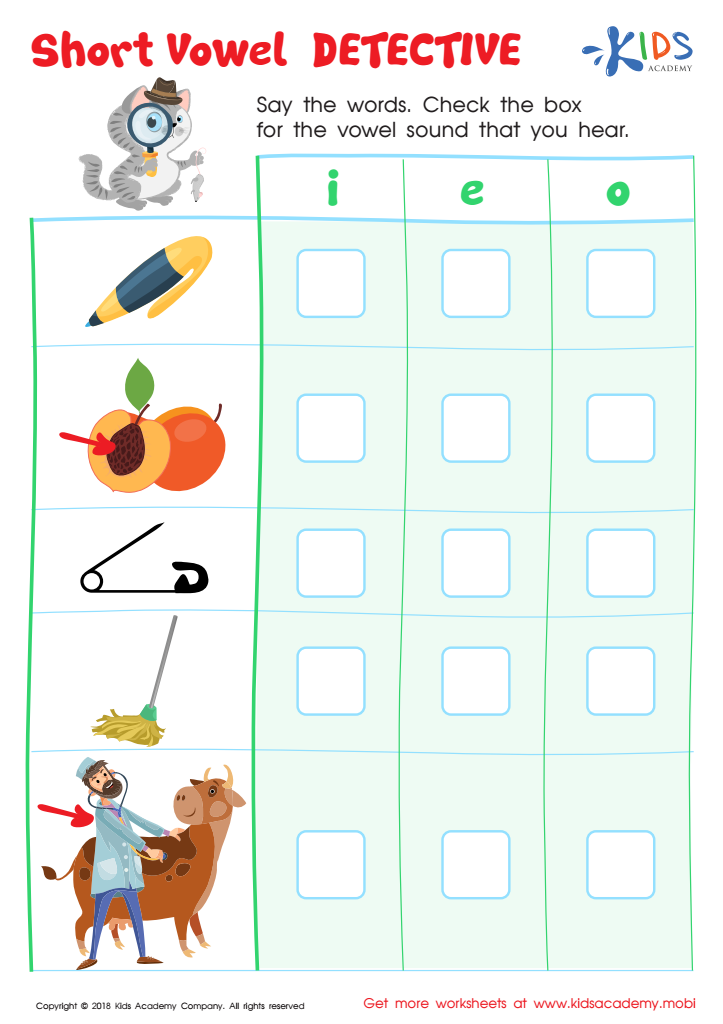
Short Vowel Detective Worksheet
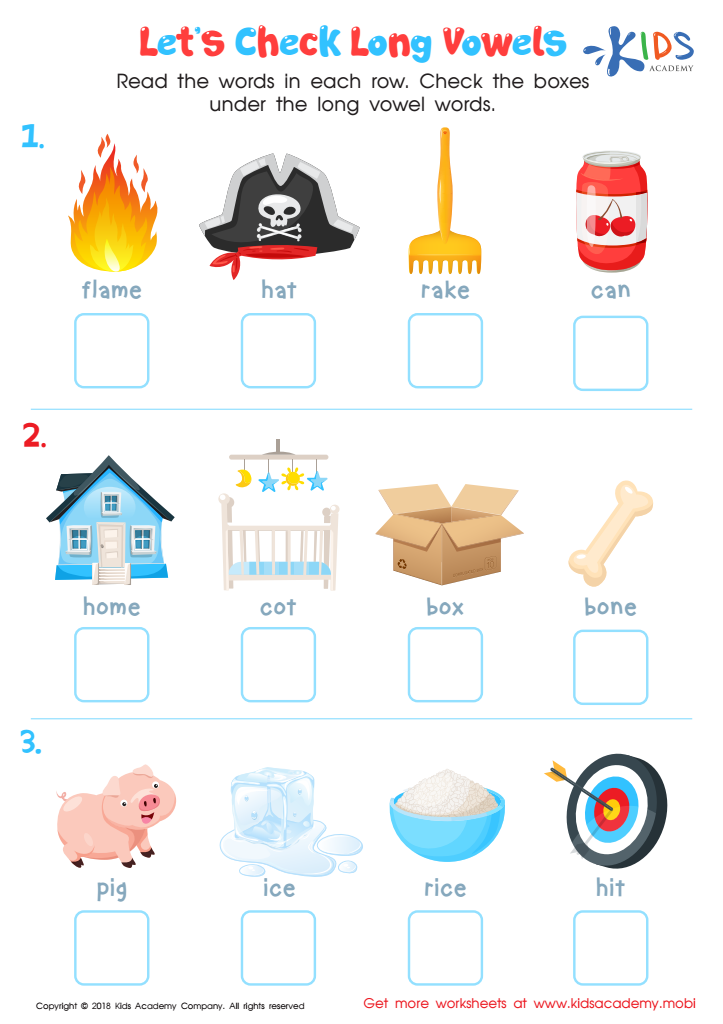
Let's Check Long Vowels: Assessment Worksheet
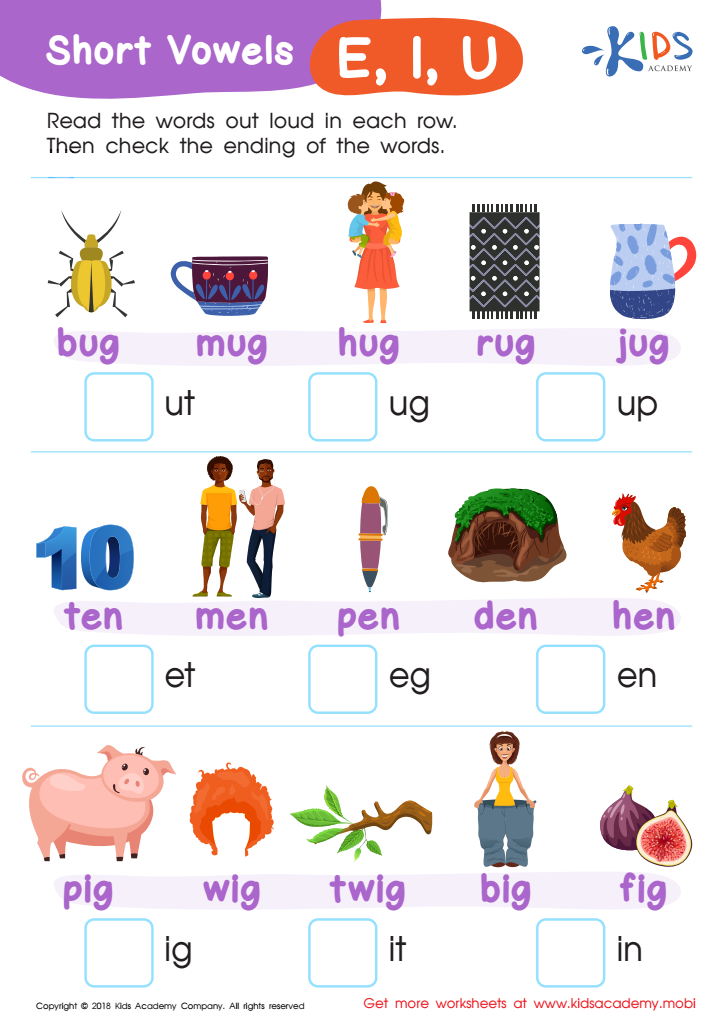
Short Vowels /e/, /i/, and /u/ Worksheet
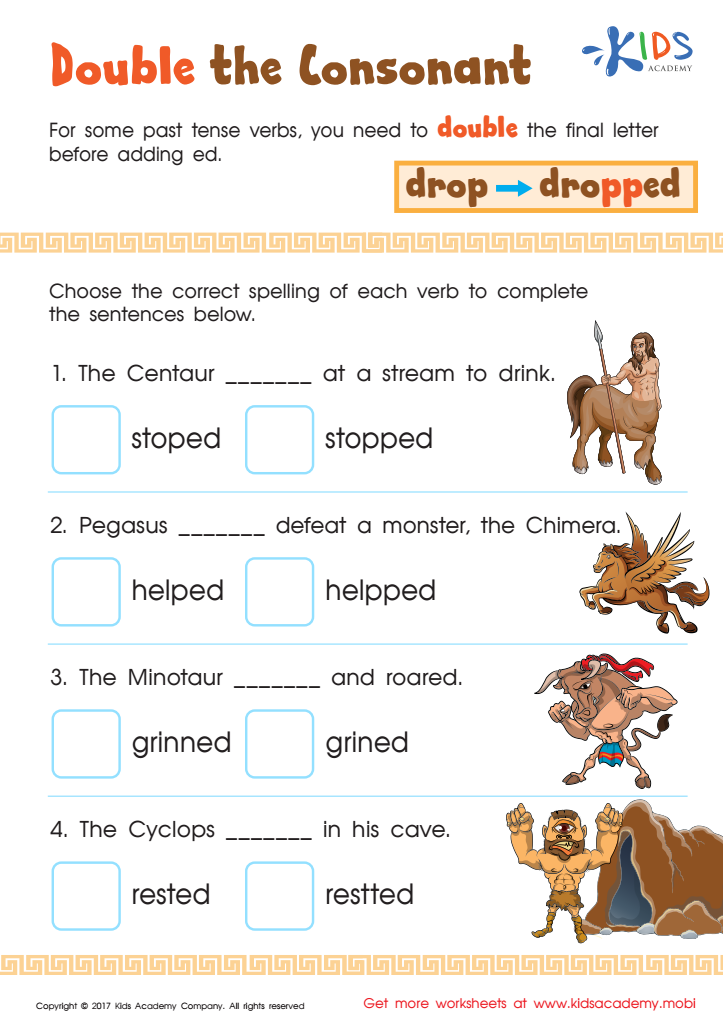
Double Consonant Spelling Worksheet



Vowels and consonants form the critical foundation of early literacy, which is essential for children ages 6-9. Understanding these basic building blocks aids in developing strong reading, writing, and speaking skills, serving as the groundwork for lifelong learning.
At this age, children are rapidly expanding their vocabulary and learning to read more complex sentences. Vowels (A, E, I, O, U) and consonants (all other letters) play crucial roles in phonemic awareness, the ability to hear, identify, and manipulate individual sounds in words. Recognizing these sounds helps children decode new words, improving their reading fluency and comprehension.
For spelling, knowing which letters are vowels and consonants allows young learners to grasp patterns and rules. For instance, they learn how consonant-vowel-consonant (CVC) words like "cat" or "bat" function and the importance of silent vowels in words like "kite".
Moreover, a grasp of vowels and consonants supports clearer communication. Proper pronunciation and enunciation contribute to more effective speaking and listening skills, which are pivotal for overall academic achievement and social interaction.
Parents and teachers should prioritize this learning aspect, using fun and engaging methods like games, songs, and activities, making the process enjoyable and impactful for young learners' educational journeys.







