
Animal identification Science Worksheets for 7-Year-Olds
5 filtered results
Difficulty Level
Grade
Age
-
From - To
Subject
Activity
Standards
Explore the fascinating world of animal identification with our engaging Science Worksheets for 7-year-olds! Designed to enhance learning and stimulate curiosity, these printable worksheets offer a variety of activities that help children recognize different animals, understand their habitats, and note distinguishing features. Perfect for both classroom and home use, our age-appropriate worksheets provide a hands-on approach to learning, utilizing visually appealing images and simple descriptions. Foster your child's scientific skills and ignite their passion for nature with these fun and educational animal identification resources. Give your child the tools to become an enthusiastic young naturalist!
Favorites
With answer key
Interactive
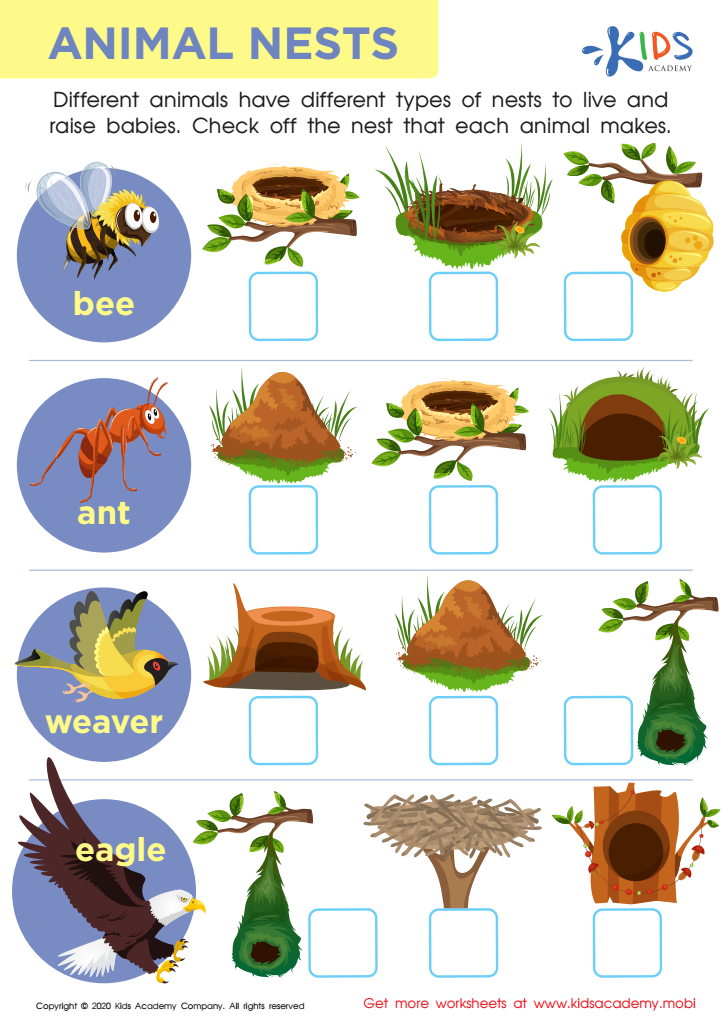
Animal Nests Worksheet
Animals need homes to sleep and stay safe. Look at the animal on the left and examine the nests and hives to the right. Check off the correct one for each animal to complete the worksheet! From birds to bees, it's a great way to show different types of homes animals make!
 Assign to My Students
Animal Nests Worksheet
Worksheet
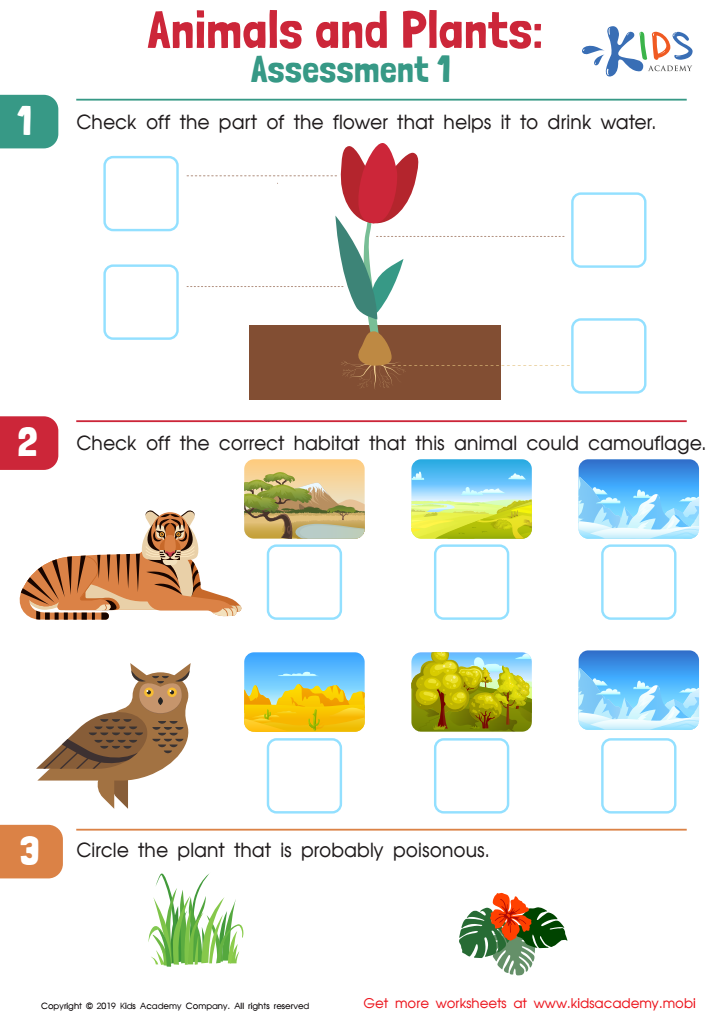
Animals and Plants: Assessment 1 Worksheet
Do you want to easily assess your child's understanding of basic science concepts? This colorful PDF offers a free opportunity for them to test their knowledge about parts of a flower, poisonous plants, animal habitats and more! Bright pictures make it fun and easy for you to see what they know.
Animals and Plants: Assessment 1 Worksheet
Worksheet
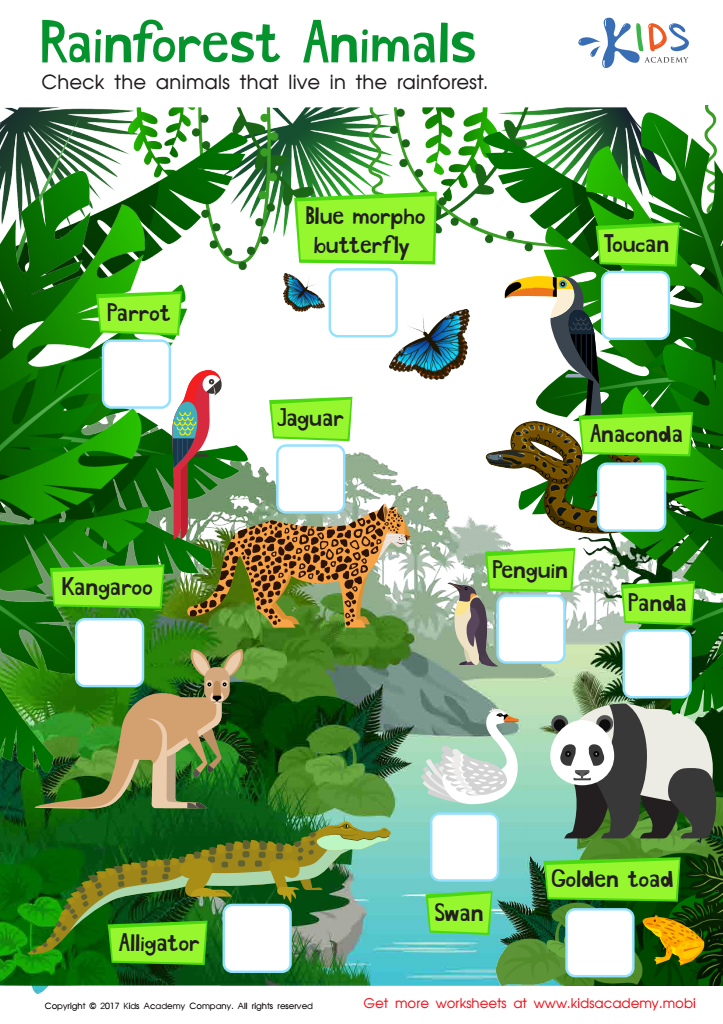
Rainforest Animals Worksheet
Kids love the bright, vivid pics of rainforest animals in this worksheet. It fuels their interest in life science and brings joy to their learning. It encourages them to study these animals in detail.
Rainforest Animals Worksheet
Worksheet
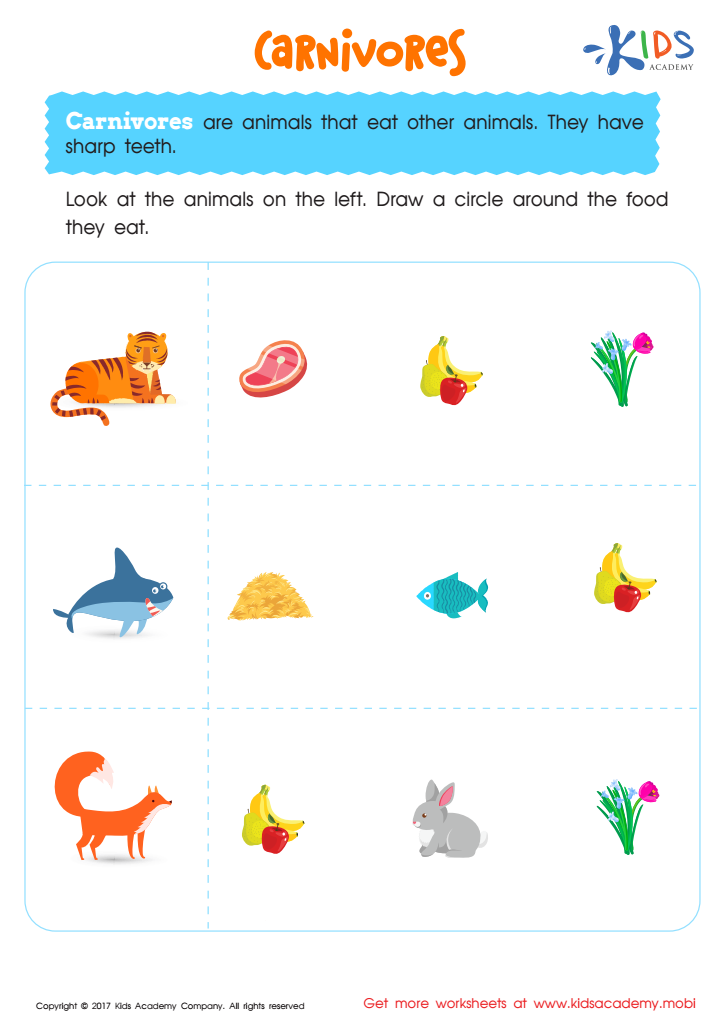
Carnivores Worksheet
Boost their vocabulary and help them explore the incredible world of carnivores.
Carnivores Worksheet
Worksheet
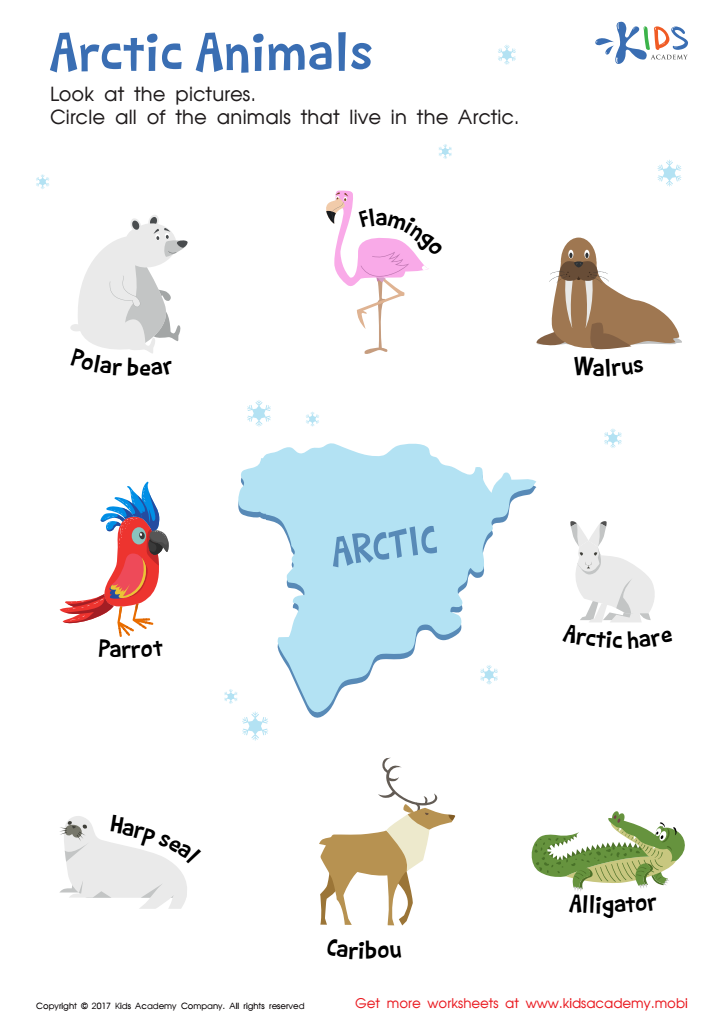
Arctic Animals Worksheet
Kids love animals and this worksheet is a great way to teach them where they live. It reinforces classification skills and introduces new animals, like the Arctic hare. Use it to discuss the Arctic climate and how these animals live, then ask your child where other animals live to keep the conversation going.
Arctic Animals Worksheet
Worksheet
Join Kids Academy for Free
Who is primarily going to use this learning content?








Animal identification science for 7-year-olds is foundational for several important developmental reasons. Firstly, learning to identify animals stimulates children's curiosity and boosts cognitive development. Recognizing different species encourages observational skills and critical thinking, as kids compare and contrast various animal traits.
Second, it fosters a sense of empathy and respect for living creatures. Understanding that animals have unique habitats, behaviors, and needs can instill a sense of responsibility towards nature. This can lead to eco-consciousness, nurturing a generation that values environmental sustainability and is conscious of biodiversity conservation.
Moreover, animal identification can significantly enhance vocabulary and language skills. Describing animals and their characteristics introduces children to specialized terms, broadening their lexical repertoire.
Finally, it can integrate seamlessly with other curriculum areas such as geography, science, and even mathematics, making learning multidisciplinary. For example, counting legs, understanding ecosystems, or mapping animal habitats can offer a more holistic educational experience.
In sum, animal identification isn't just about knowing fauna; it’s about building essential life skills, nurturing eco-stewardship, enriching language, and enhancing cross-curricular learning. This holistic approach to education can yield well-rounded, informed, and empathetic future citizens.







