Easy Fractions of Shapes Worksheets for Ages 3-6
6 filtered results
-
From - To
Discover our collection of Easy Fractions of Shapes Worksheets designed specifically for children aged 3-6! These engaging and colorful worksheets introduce young learners to basic fraction concepts through fun, interactive activities. Kids will enjoy identifying and coloring various shapes while developing essential math skills. Each worksheet is tailored to build understanding of halves, quarters, and more, promoting a solid foundation in fractions. Perfect for both classroom use and at-home learning, our worksheets make math enjoyable and accessible for early learners. Boost your child’s confidence in math as they explore shapes and fractions in an exciting way! Download now and start learning!
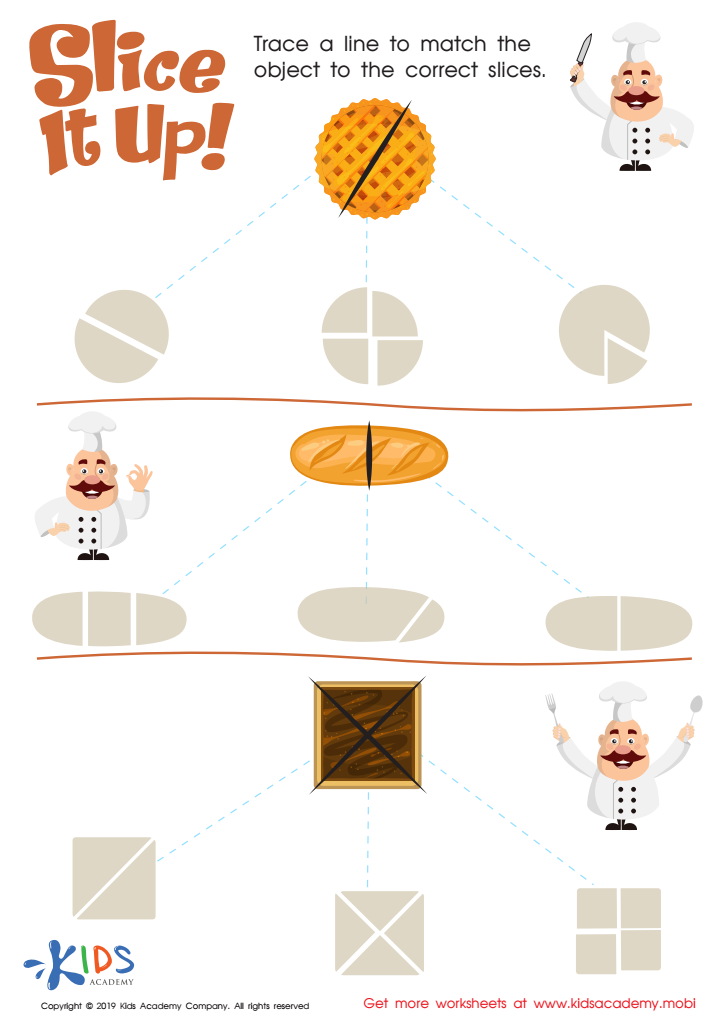
Slice It Up Worksheet
 Assign to My Students
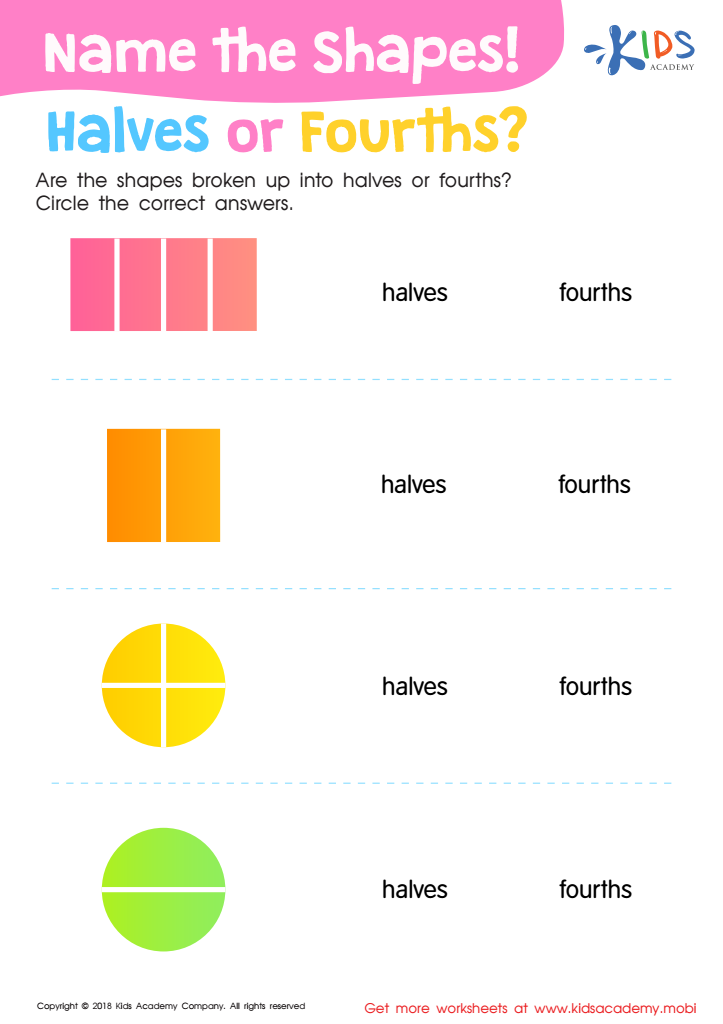
Name the Shapes Halves or Fourths? Worksheet
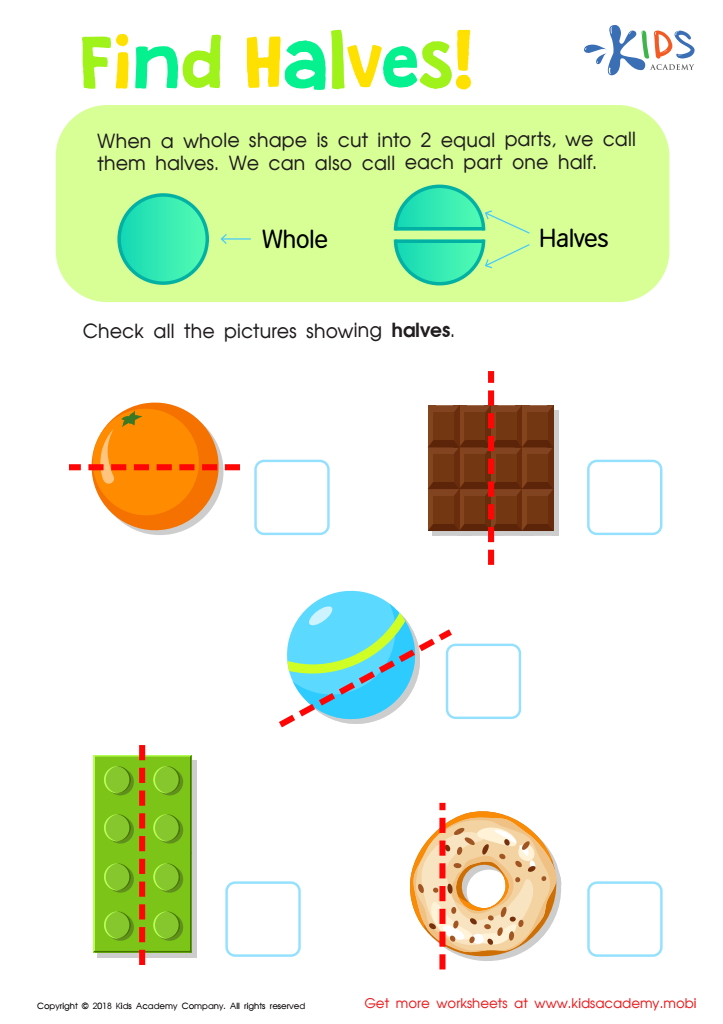
Find Halves Worksheet
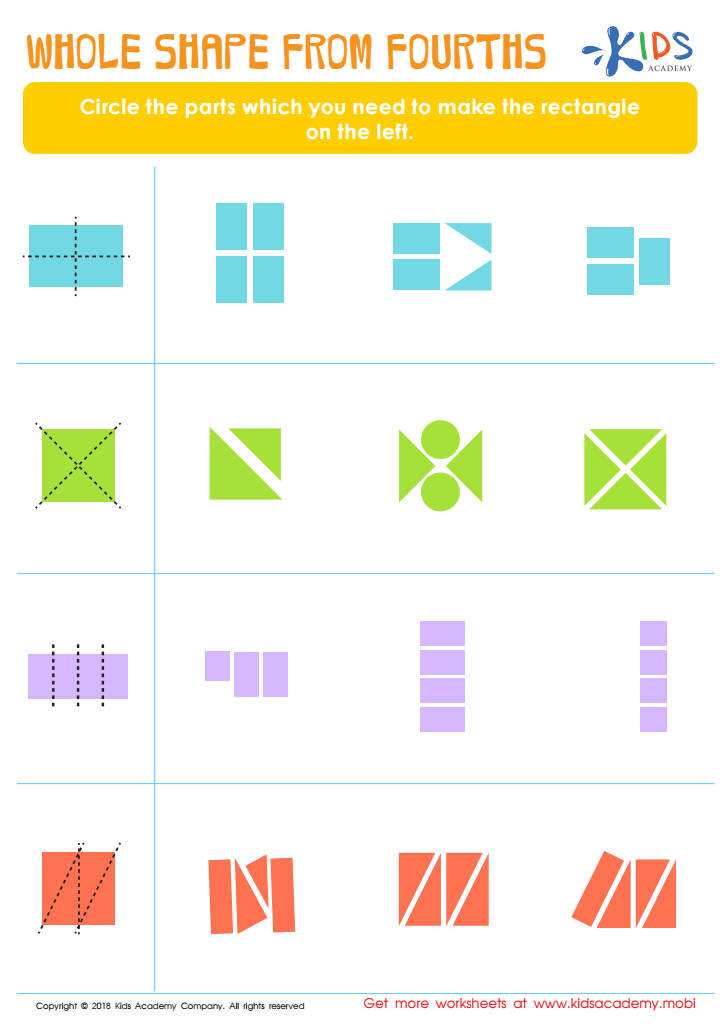
Whole Shape from Fourths Worksheet
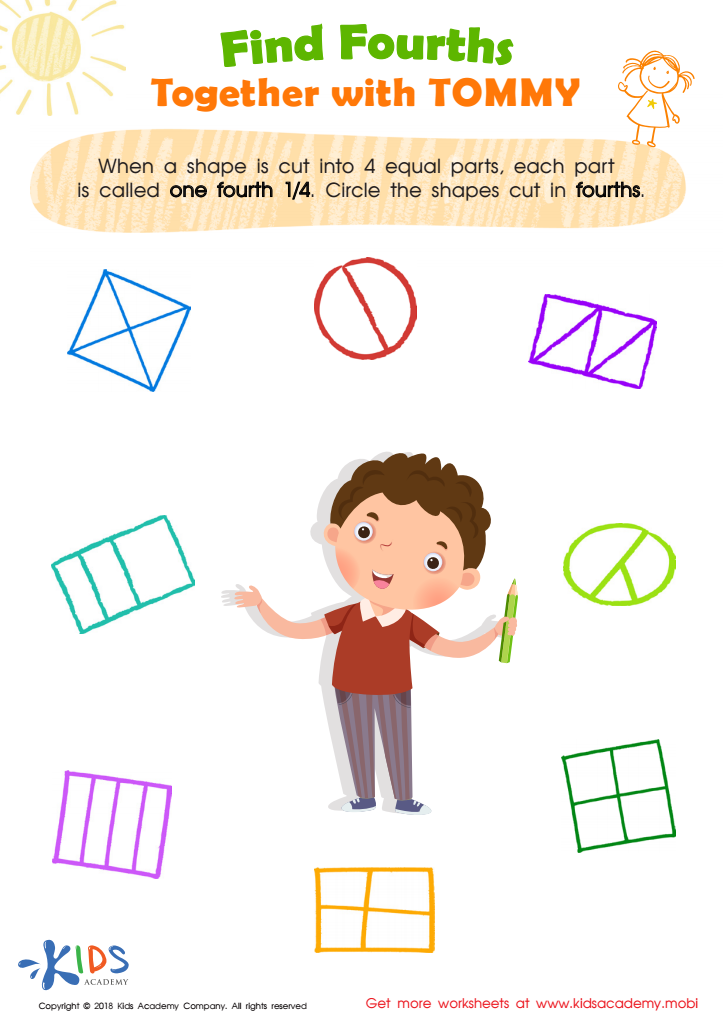
Find Fourths Together with Tommy Worksheet
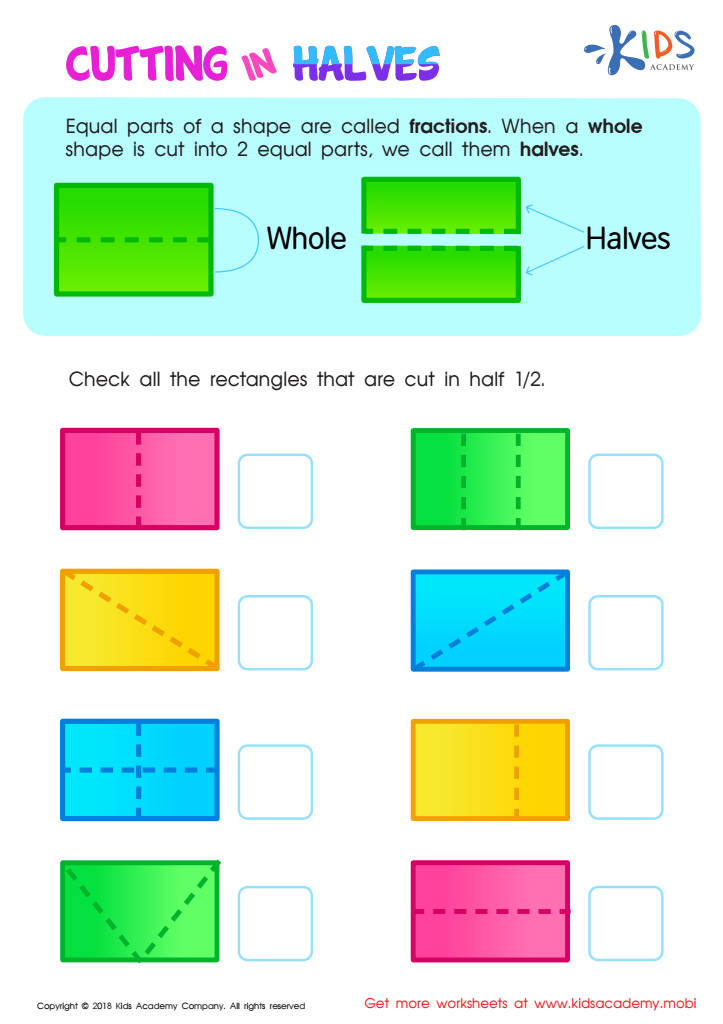
Cutting in Halves Worksheet








Understanding easy fractions of shapes is crucial for children aged 3-6 as it lays the foundation for their mathematical understanding. At this age, children are naturally curious and eager learners, making it an ideal time to introduce basic concepts of fractions in a playful and engaging manner.
First, fractions of shapes help develop spatial awareness. By dividing shapes into equal parts, children learn to recognize and differentiate between sizes and forms, guiding them to understand concepts of symmetry and balance. Engaging with shapes, such as circles and squares, enables them to see patterns and relationships, fostering critical thinking.
Second, these concepts promote early problem-solving skills. When children manipulate and explore shapes — cutting, coloring, and combining parts — they enhance their ability to visualize and reason, skills essential for future math topics and overall cognitive development.
Moreover, introducing fractions through shapes makes learning enjoyable. The use of visual aids and hands-on activities caters to various learning styles, making math less intimidating and more accessible.
Ultimately, embracing easy fractions prepares young learners for more advanced mathematical concepts in their academic journey, instilling confidence and a love for learning from an early age. This lifelong skill transcends basic mathematics, enriching their understanding of the world.