Easy Sorting Worksheets for Ages 3-8
5 filtered results
Difficulty Level
Grade
Age
-
From - To
Subject
Activity
Standards
Discover a fun and engaging way for children aged 3-8 to master sorting skills with our Easy Sorting Worksheets! Designed to enhance early math concepts, these printable resources make learning enjoyable and interactive. Each worksheet features colorful images and relatable themes, allowing young learners to differentiate, categorize, and organize various objects easily. As children explore sorting by attributes like color, shape, or size, they develop critical thinking and problem-solving abilities. Perfect for home or classroom use, our worksheets provide an excellent foundation for future math success. Start your sorting adventure today and watch your child's confidence grow!
Favorites
With answer key
Interactive
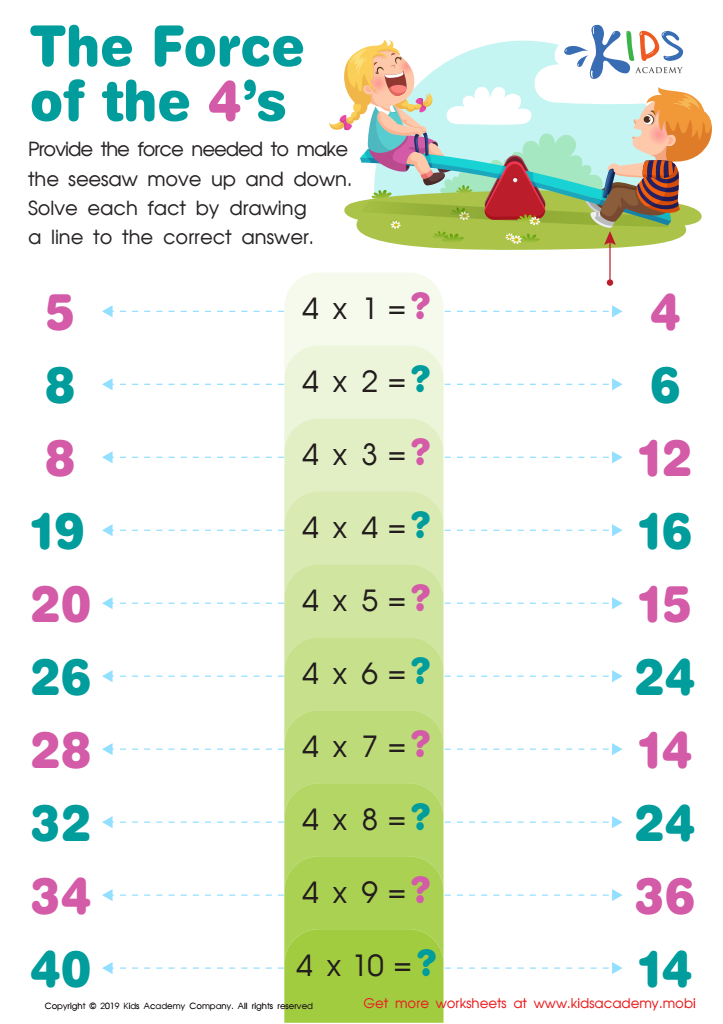
The Force of the 4's Worksheet
Ride a seesaw with your child and explore the physics behind it! Explain how it needs two people and how force makes it go up and down. Use the memories of the pleasurable experience to teach your kid a lesson in force. Show them how to solve the worksheet by drawing a line to the correct answer. This way, they'll learn the force needed for the seesaw to move.
 Assign to My Students
The Force of the 4's Worksheet
Worksheet
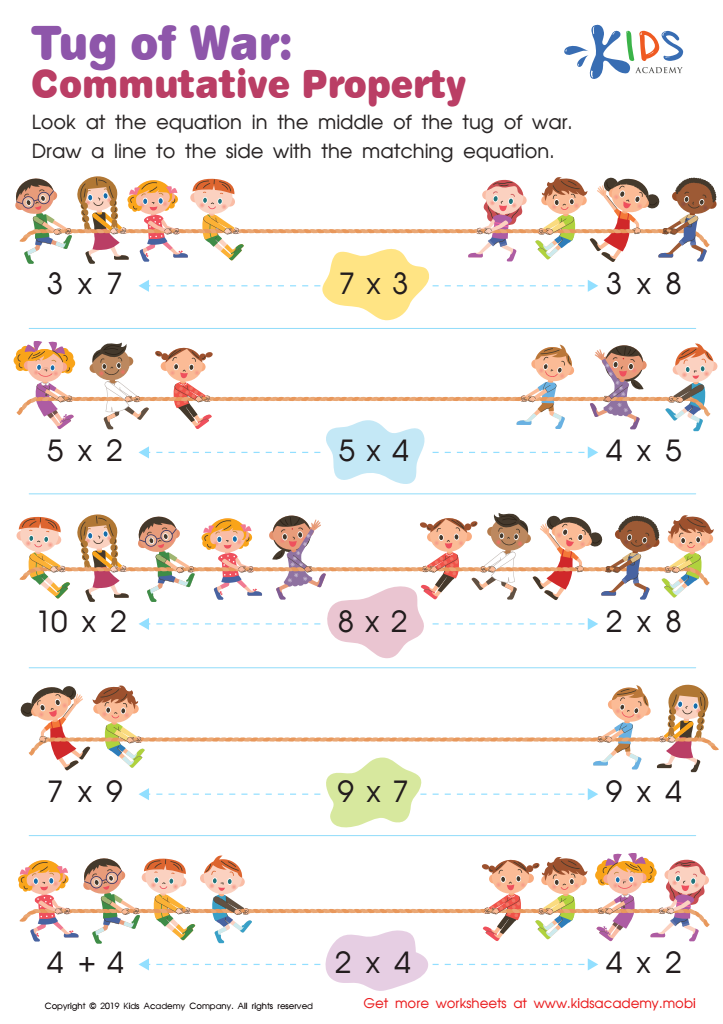
Tug of War: Commutative Property Worksheet
Tug of war is a great game to teach your child simple math. Explain the commutative property--it states that the product remains the same regardless of the order of factors. Use the equations in the middle of the worksheet and have your child draw a line to the corresponding equation. It's a fun and easy way to learn math.
Tug of War: Commutative Property Worksheet
Worksheet
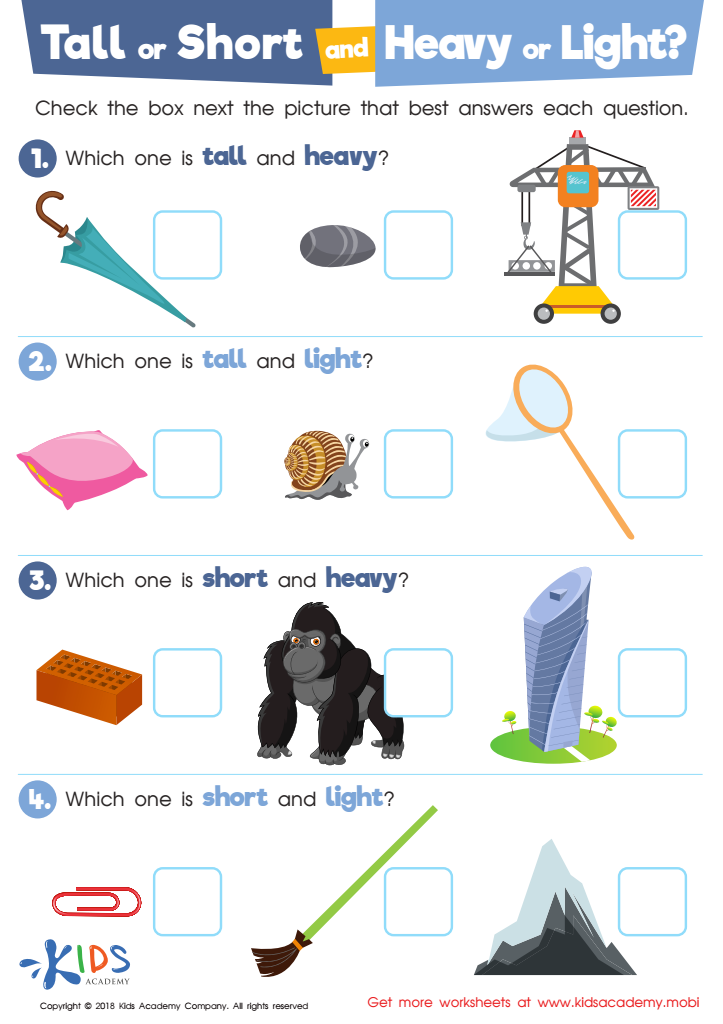
Tall or Short and Heavy or Light? Worksheet
Young children can find basic measurement concepts tricky. This PDF introduces them to the appropriate vocabulary for describing heavy, light, tall and short items, by using familiar pictures. It helps them accurately select which items fit each category.
Tall or Short and Heavy or Light? Worksheet
Worksheet
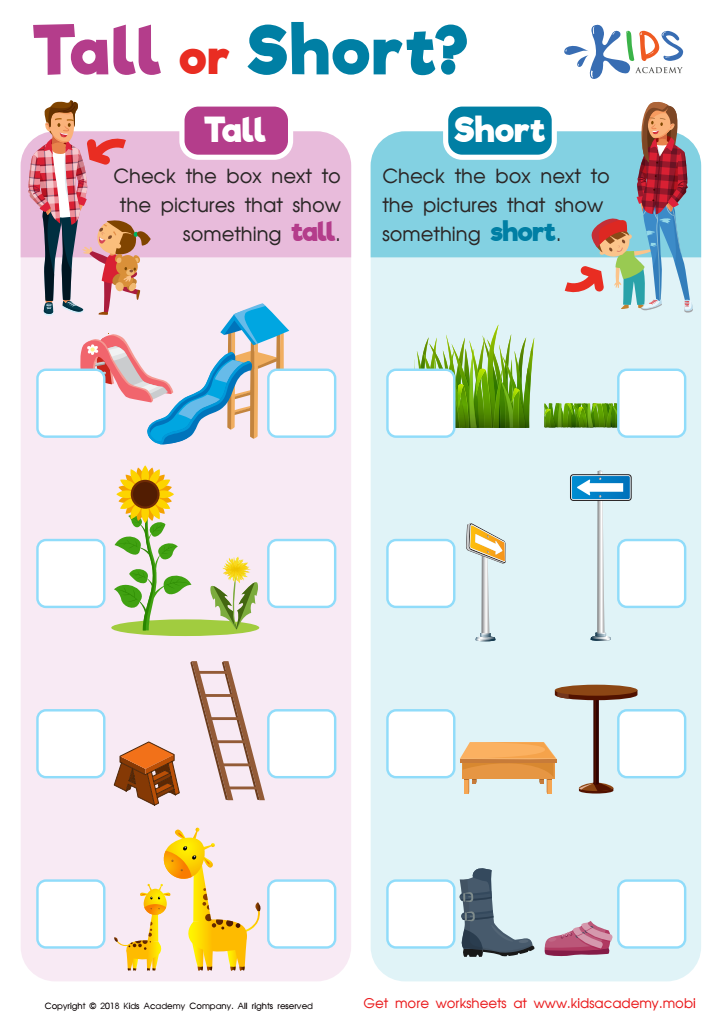
Tall or Short? Worksheet
Comparing tall and short objects is an early math skill. Our free worksheet uses fun colors and pictures to help kids practice. This will give them a head start for higher-level measurement skills, and they'll remember tangible objects for comparison.
Tall or Short? Worksheet
Worksheet
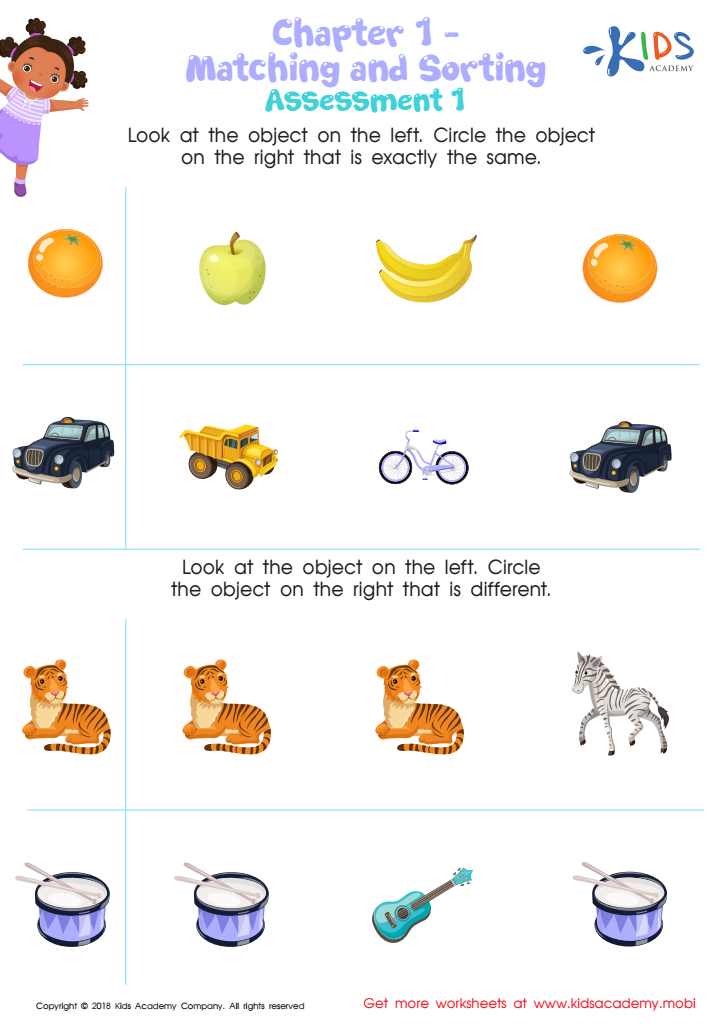
Matching and Sorting for Preschool: Assessment 1 Worksheet
Test your child's matching skills with this worksheet! Ask them to name each of the objects pictured, then circle the ones that are the same. Repeat for the second task. It's a great way to assess their skills and have fun at the same time!
Matching and Sorting for Preschool: Assessment 1 Worksheet
Worksheet
Join Kids Academy for Free
Who is primarily going to use this learning content?








Easy sorting activities are essential for children aged 3-8 as they lay the groundwork for critical cognitive and social skills. Sorting encourages children to categorize items based on attributes such as color, shape, size, or type, which cultivates their analytical thinking. This foundational skill helps them to better understand patterns, sequences, and relationships in the world around them.
Parents and teachers should care about easy sorting because it promotes essential developmental milestones. Engaging in sorting tasks enhances fine motor skills as children manipulate objects, which contributes to their overall hand-eye coordination and dexterity. Furthermore, sorting activities foster language development through vocabulary expansion, as children explain their reasoning and classifications.
Socially, sorting can be executed in pairs or groups, encouraging collaboration, communication, and teamwork among peers. This not only strengthens social bonds but also instills important values such as sharing and cooperation.
Overall, easy sorting is a crucial, hands-on educational experience that supports children's cognitive growth, social interaction, and motor development, making it a valuable practice for parents and educators alike. By incorporating sorting into everyday activities, we can help children develop critical foundational skills they will use throughout their lives.