Easy Beginning Consonants Worksheets for Ages 4-9
3 filtered results
-
From - To
Discover our "Easy Beginning Consonants Worksheets for Ages 4-9," designed to ignite a love for reading and writing in young learners! These engaging worksheets serve as an exciting introduction to consonant sounds, helping children recognize and practice beginning letters with fun activities. Each worksheet features vibrant illustrations and interactive exercises that make learning enjoyable and effective. Ideal for both classroom and home use, the resources cater to different learning styles, ensuring every child can thrive. Support your child's literacy journey today and watch their confidence soar as they master beginning consonants with ease! Perfect for early educators and parents alike!
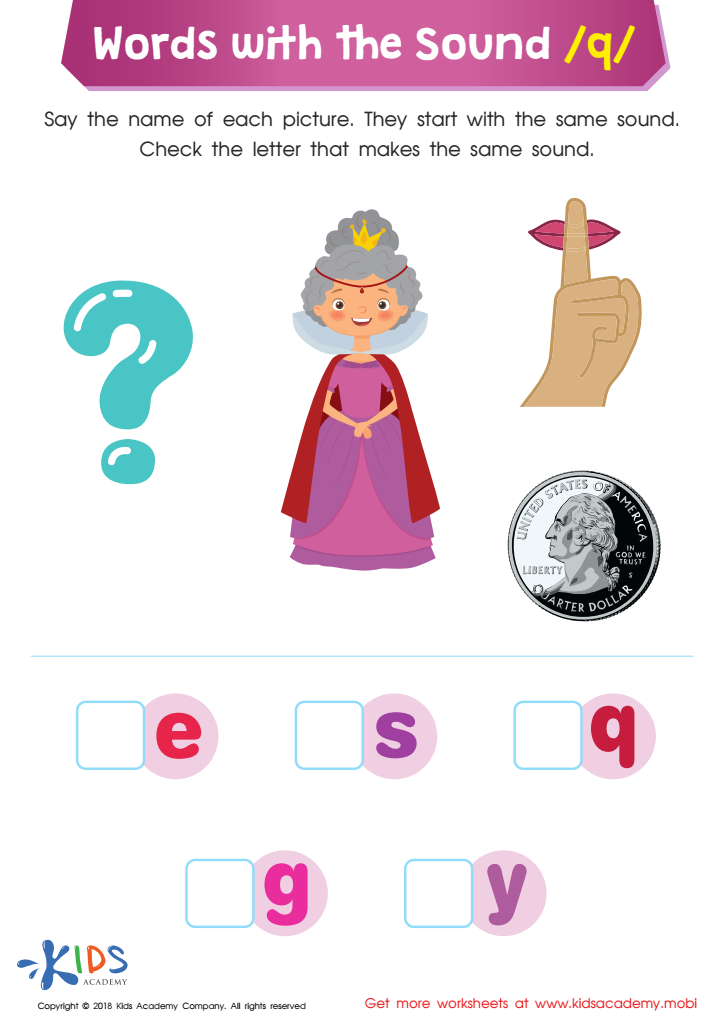
Words with Sound Q Reading Worksheet
 Assign to My Students
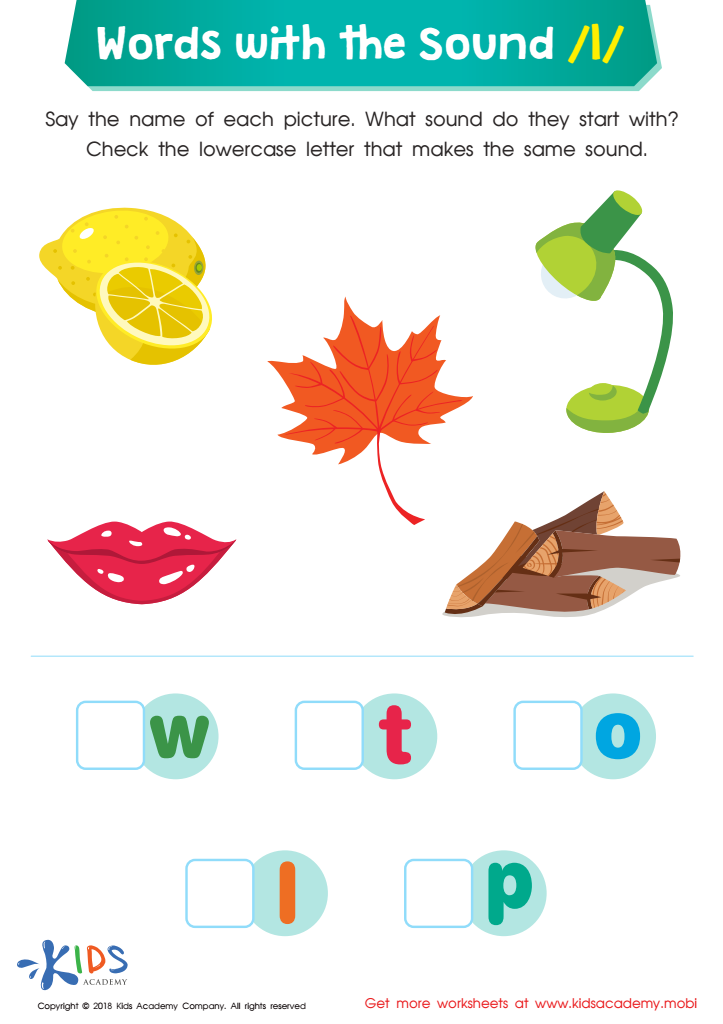
Words with Sound L Reading Worksheet
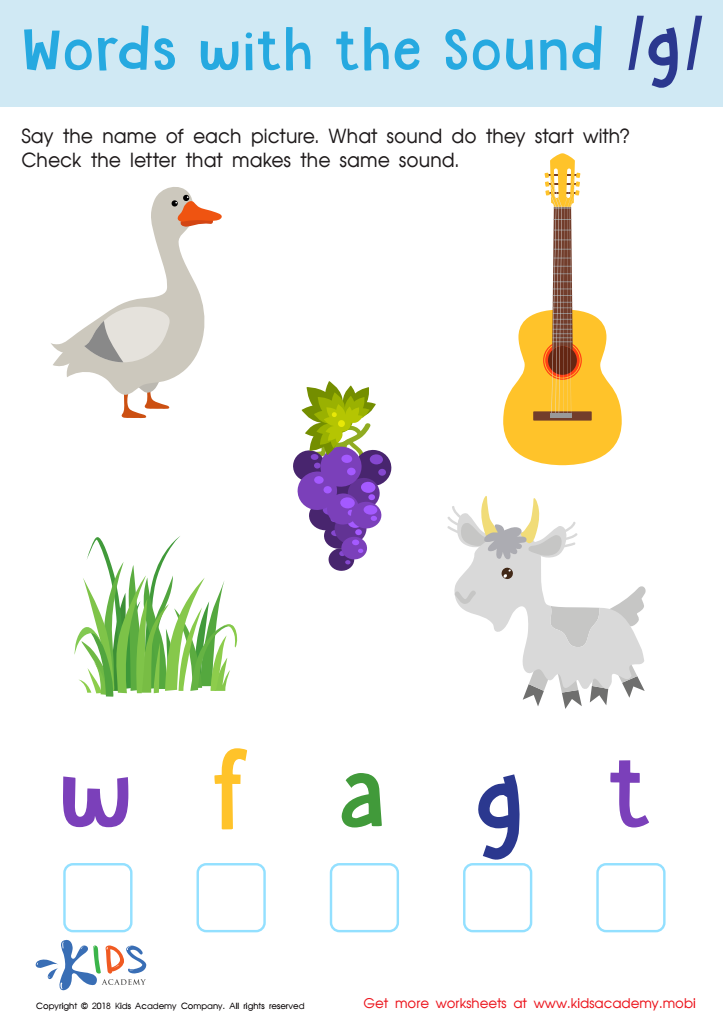
Words with sound g Reading Worksheet


Easy Beginning Consonants are crucial for children's early literacy development, particularly for ages 4-9. Mastering these sounds lays the foundational skills necessary for reading and writing. Early exposure to consonants helps children recognize the sounds associated with letters, which is vital for phonemic awareness—a key component in learning to read. By understanding beginning consonants, children can decode words more effectively, paving the way for improved reading fluency and comprehension.
Moreover, engaging with Easy Beginning Consonants enhances vocabulary acquisition. When children learn to identify and produce consonant sounds, they become more confident in sounding out new words and expanding their language skills. Activities centered around consonant recognition can be both enjoyable and educational, leading to a positive attitude towards learning.
For parents and teachers, focusing on Easy Beginning Consonants means fostering an enriching literacy environment where children feel supported in their educational journey. It promotes interaction through games, songs, and storytelling that captivate young learners while reinforcing critical skills. As they build their phonetic foundation, children not only improve their reading and writing capabilities but also develop essential cognitive and social skills, making it essential for educators and parents to prioritize this early literacy component.








