Easy Comparison Worksheets for Ages 5-6
3 filtered results
-
From - To
Introducing our Easy Comparison Worksheets, meticulously crafted for children Ages 5-6. These engaging and interactive worksheets are designed to spark the joy of learning in young minds, focusing on the foundational concept of comparison in a way that is easy to understand and fun to explore. With a variety of activities tailored to the developmental stage of 5 to 6-year-olds, our Easy Comparison Worksheets encourage critical thinking, problem-solving, and the ability to make simple comparisons – all essential skills for early learning success. Set your child up for a bright academic future with this essential learning tool. Ideal for both classroom and home learning environments.
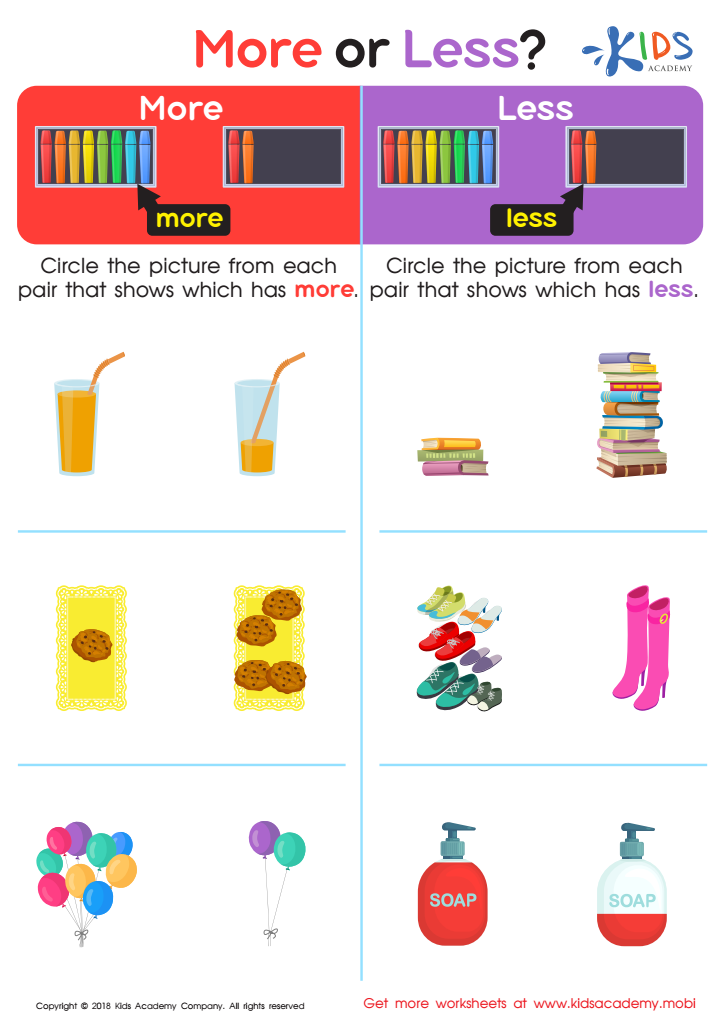
More or Less? Worksheet
 Assign to My Students
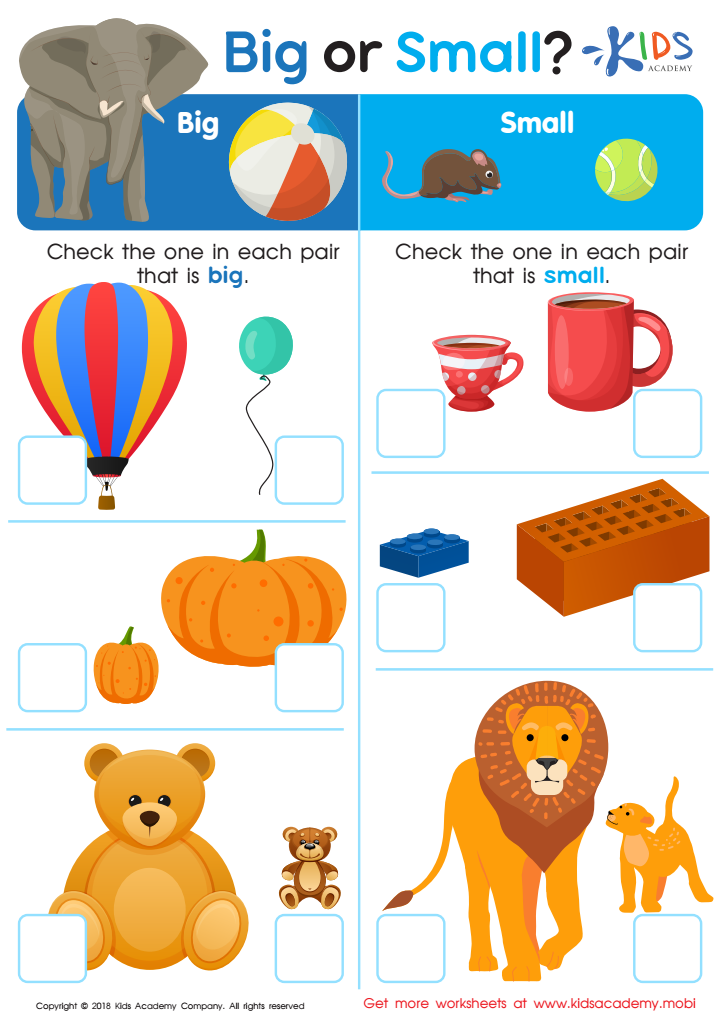
Big or Small? Worksheet
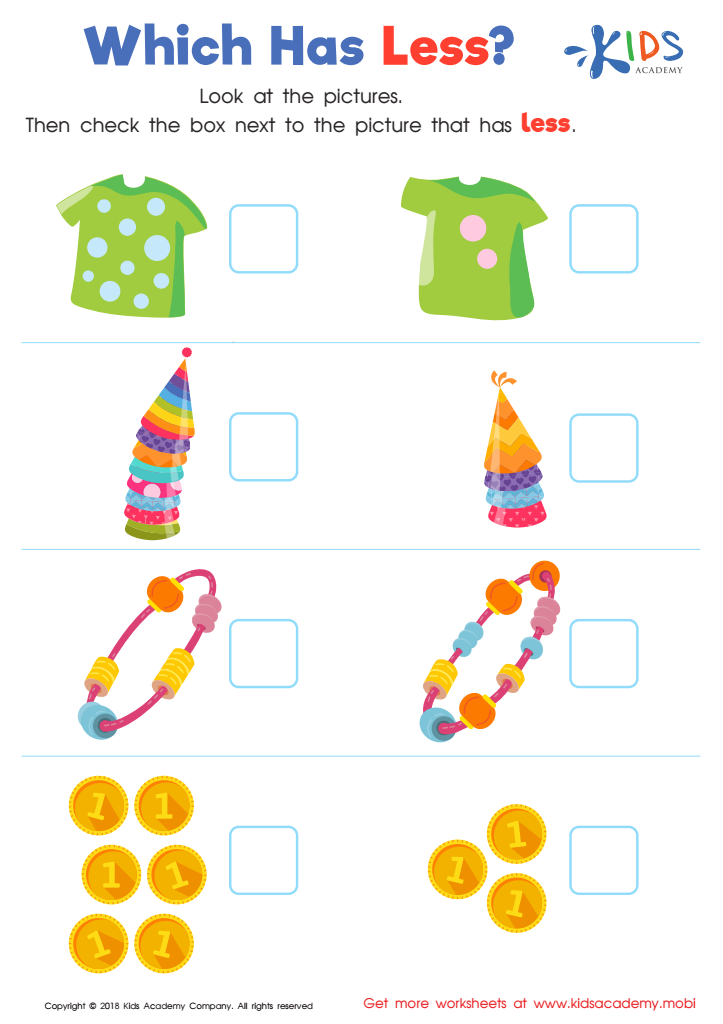
Which Has Less? Worksheet








Easy Comparison Worksheets for Ages 5-6 play a crucial role in the foundational development of mathematical and logical thinking in young learners. At this formative age, children are just beginning to grasp the basic concepts of numbers, quantities, and relationships between objects. These worksheets are designed to be age-appropriate, ensuring that the learning process is not only educational but also engaging and fun for the young minds.
The use of Easy Comparison Worksheets helps children in understanding the fundamental idea of 'more than', 'less than', and 'equal to', which are essential for their future mathematical learning. By presenting these concepts in a straightforward and interactive manner, children can easily relate to and comprehend the comparisons made between different sets of items or numbers.
Furthermore, these worksheets encourage problem-solving and critical thinking skills. As children work through the exercises, they learn to analyze and reason, skills that are invaluable throughout their educational journey and beyond. The simplicity of the Easy Comparison Worksheets for Ages 5-6 ensures that children are not overwhelmed, making the learning experience positive and boosting their confidence in their abilities.
In summary, Easy Comparison Worksheets for Ages 5-6 are a vital educational tool that aids in the cognitive development of young children, laying a strong foundation for more complex mathematical concepts and fostering a love for learning from an early age.








