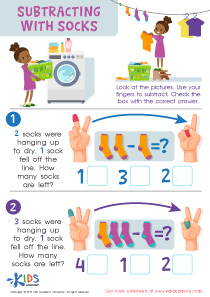
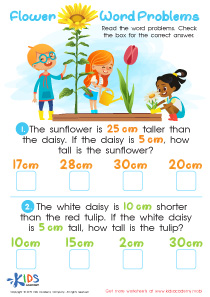
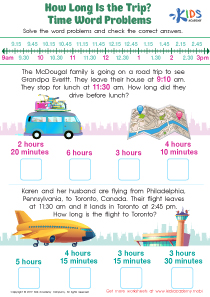
Easy Graph Word Problems Worksheets for Ages 7-8
1 filtered results
-
From - To
Introduce your young learner to the fun world of graph interpretation with our Easy Graph Word Problems worksheets! Designed specifically for children aged 7-8 years, these school downloadable worksheets are perfect for enhancing skills in data analysis and critical thinking. Each worksheet is filled with engaging, age-appropriate problems that make learning enjoyable and accessible. Whether used in the classroom or as a tool for home education, these worksheets help solidify foundational math concepts through practical application. Equip your child with the skills to tackle real-world math problems with ease and confidence!
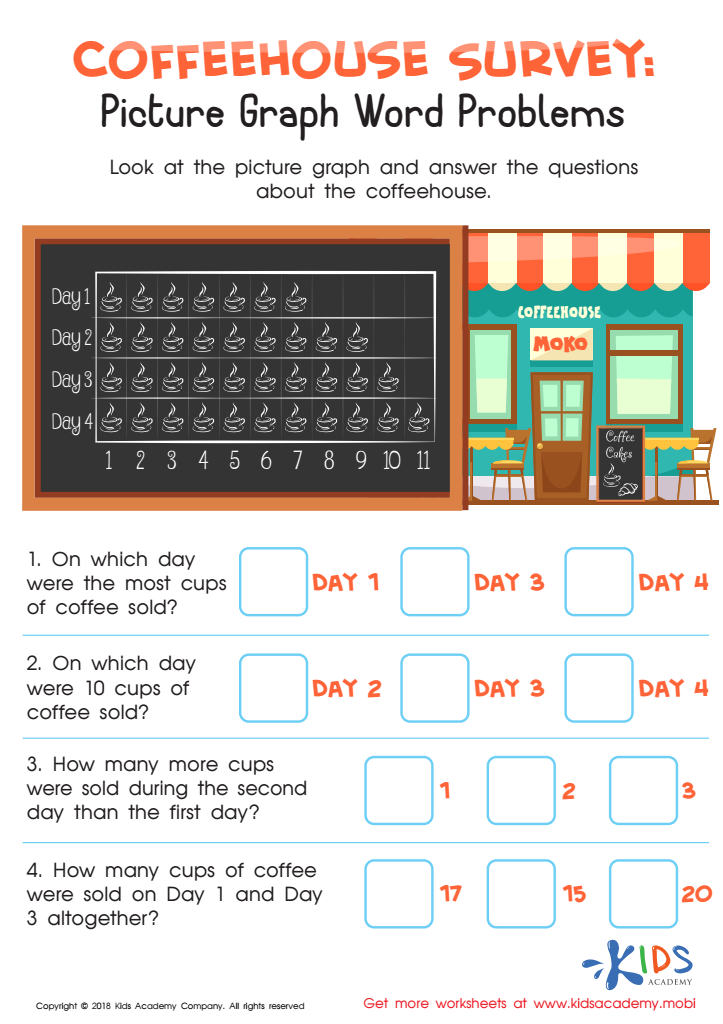
Coffeehouse Survey: Picture Graph Word Problems Worksheet
 Assign to My Students



Easy worksheets on Graph Word Problems are an invaluable tool for young learners, particularly children aged 7-8 years, as they navigate through the foundational stages of mathematics and data interpretation. These worksheets not only align with school homework sheets but also enrich a child’s learning experience by blending fun with education.
Graph word problems are essential because they introduce students to the concept of representing and interpreting data visually. This skill is crucial in a world where data is ubiquitous, from the science used in weather forecasts to the mathematics behind financial decisions. By using easy worksheets tailored to their comprehension level, children can gradually understand complex concepts in a simplified manner.
Firstly, these worksheets serve as an excellent supplement to the traditional school homework sheets. They often come designed with engaging themes and characters that resonate with young children, making the learning process enjoyable rather than a chore. This engagement is crucial at an age where attention spans are developing, and interests are rapidly changing. When children enjoy the learning process, the retention of concepts like scales, axes, and data points improves significantly.
Moreover, graph word problems help sharpen critical thinking and problem-solving skills. As children interpret information from graphs to solve problems, they learn to analyze data, draw conclusions, and make predictions. These are not only key math skills but are also applicable in everyday life. For instance, understanding a simple bar graph about daily temperatures helps them decide what to wear, indirectly setting a practical context to theoretical knowledge.
Additionally, these worksheets are designed to be age-appropriate, which is crucial for building confidence in young learners. By successfully solving these problems, children feel accomplished, which encourages a positive attitude towards more challenging subjects as they advance in their schooling. The confidence gained from mastering easy graph word problems paves the way for tackling more complex data interpretation tasks in the future.
The structure of these worksheets also promotes independent learning. Often, they come with clear instructions and examples that guide the children through the process before they attempt the problems on their own. This gradual release of responsibility from guided to independent practice is fundamental in teaching children how to learn and solve problems on their own, a skill that transcends academic environments.
Furthermore, graph word problems are a stepping stone to interdisciplinary learning. They combine math with reading comprehension, as children must read the problems, interpret the data, and then apply mathematical operations to find solutions. This integration helps in developing a holistic educational foundation, where a child is not learning in subject silos but understanding how different disciplines interact.
In conclusion, easy worksheets on Graph Word Problems are invaluable for children aged 7-8 years as they offer a multifaceted educational approach that is both engaging and educational. These worksheets closely integrate with school homework sheets, providing a seamless blend of classroom-based and at-home learning activities. This continuity is crucial in maintaining a consistent learning curve and aids in reinforcing concepts taught at school.
The use of graph word problems also enhances a child’s ability to communicate mathematically. As they describe and discuss the graphs and their corresponding solutions, both in written and oral forms, they develop essential communication skills. This articulation of mathematical ideas is critical, as it encourages clarity of thought and the ability to convey complex information in understandable terms.
Parents and educators also find these worksheets particularly useful as they can be used to monitor a child’s progress in understanding and applying mathematical concepts. The clear, outcome-based tasks allow adults to easily assess whether a child understands a concept, and if necessary, to identify areas where additional support might be needed. This targeted approach ensures that learning gaps are addressed promptly, thereby preventing any long-term educational setbacks.
Moreover, these graph word problems worksheets often include real-life scenarios, making the math problems more relatable and less abstract. Whether it’s understanding the number of apples sold in a week or comparing the heights of classmates, children learn to connect math with real-world situations. This relevance to everyday life helps demystify mathematics and dispels the common notion among young learners that math is daunting and inaccessible.
Lastly, the design of these worksheets frequently incorporates creative and visual elements that cater to diverse learning styles. Visual learners, for instance, benefit from the graph's graphical representation of information, while those who are more text-oriented gain from the descriptions and questions posed. This inclusivity ensures that every child, regardless of their preferred learning mode, finds something that resonates with them, making the learning experience as inclusive as possible.
In sum, easy worksheets on Graph Word Problems are more than just an extension of school homework sheets; they are a crucial educational tool that fosters not only mathematical skills but also critical thinking, problem-solving, independence, and communication. They prepare children not only for their immediate educational challenges but also equip them with the skills necessary for lifelong learning and success in various spheres of life. By starting young, children develop a strong mathematical foundation, ensuring they are well-prepared to tackle more advanced concepts as they progress academically.