Extra Challenge Missing Vowels Worksheets for Ages 4-5
4 filtered results
-
From - To
Introducing our Extra Challenge Missing Vowels worksheets, specially curated for young learners aged 4-5! Designed to capture the essence of fun while educational, these worksheets are perfect for parents and educators seeking to enhance their child's linguistic skills in an engaging way. Through a series of creatively crafted exercises, kids will learn to identify and fill in missing vowels, boosting their understanding of vowel sounds and word formation. Ideal for both classroom and at-home learning, these worksheets promise to offer an extra layer of challenge that sparks curiosity and encourages critical thinking. Dive into the adventure of vowels with our Extra Challenge Missing Vowels worksheets for Ages 4-5 today!
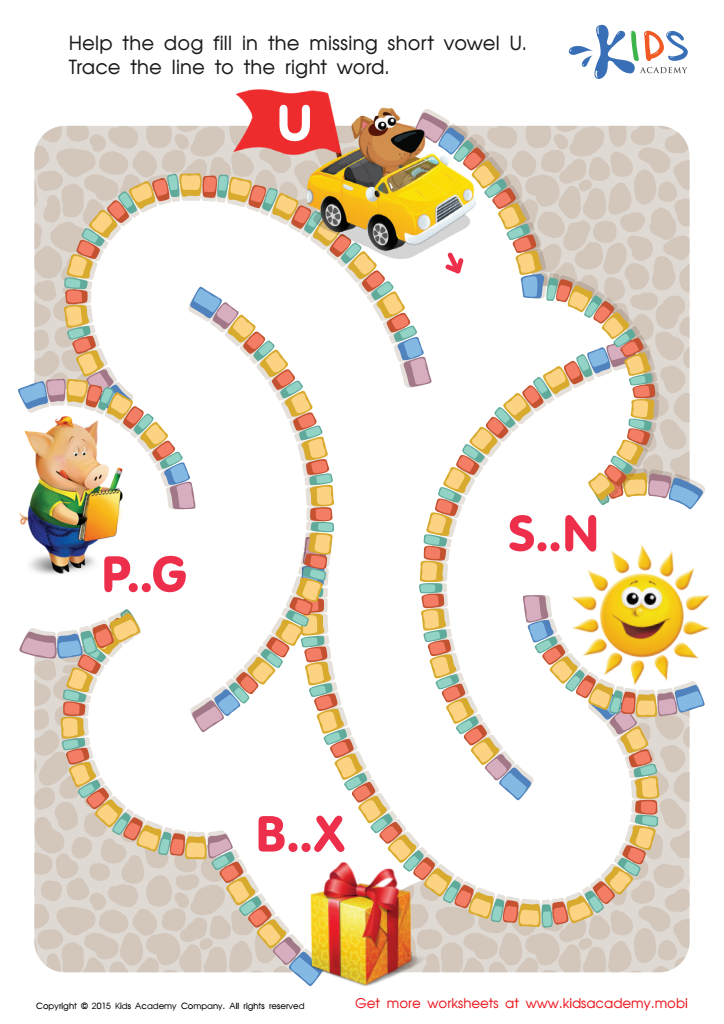
Short Vowel Sound U Worksheet
 Assign to My Students
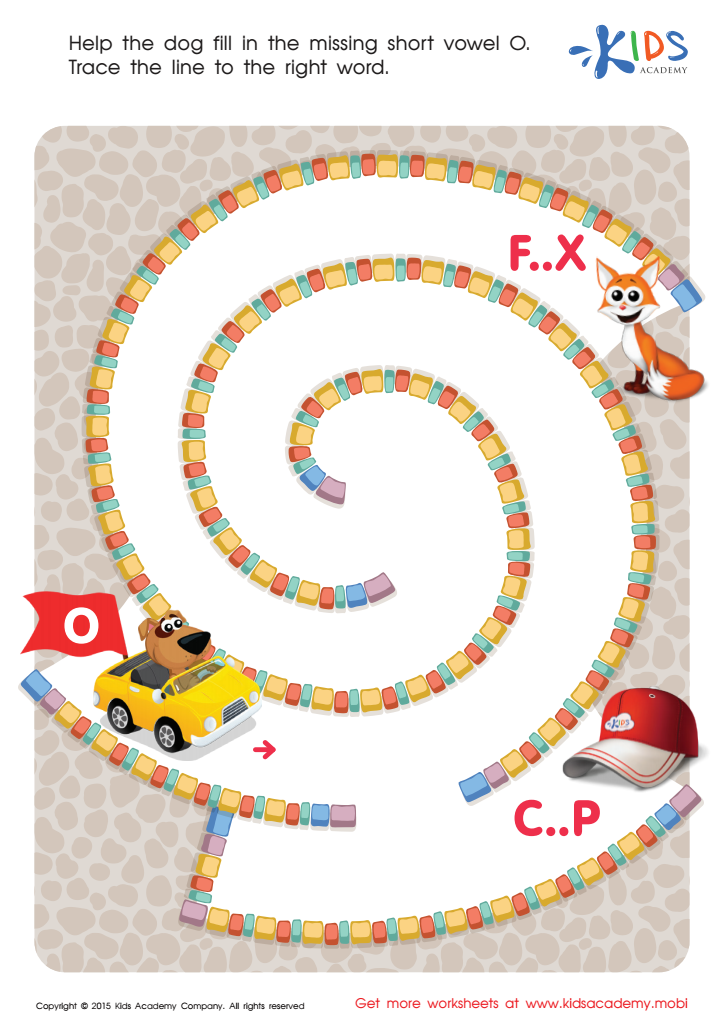
Short Vowel Sound O Worksheet
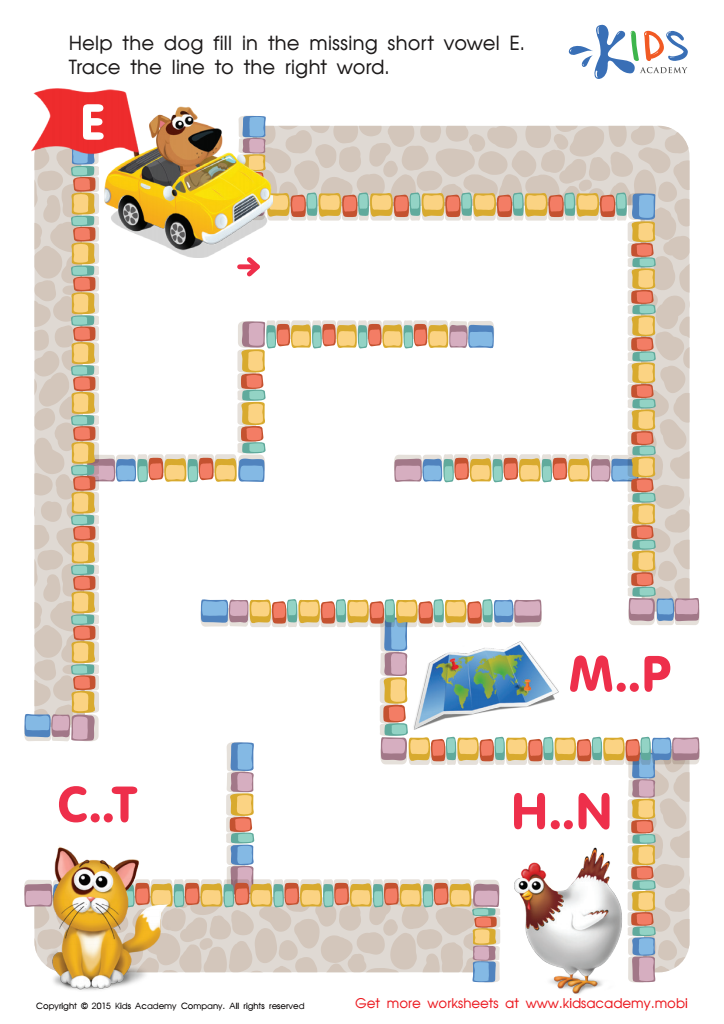
Short Vowel Sound E Worksheet
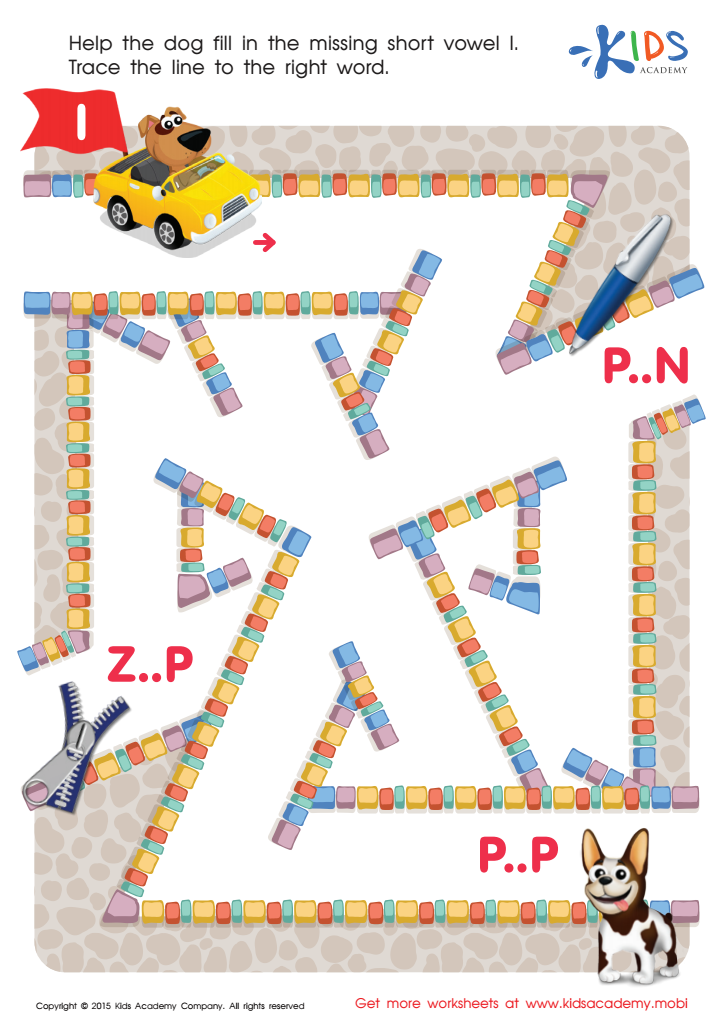
Short Vowel Sound I Worksheet


Extra Challenge Missing Vowels worksheets for Ages 4-5 are an invaluable tool in the early development phase of children. These worksheets are designed to engage young minds in a fun and educational manner, focusing on the crucial skill of vowel identification and usage. For children in the 4-5 age group, mastering vowels is an essential step towards becoming proficient readers and writers.
The Extra Challenge aspect of these worksheets is particularly beneficial. It gently pushes children beyond their comfort zone, fostering a love for learning and an eagerness to overcome academic challenges. By tackling these worksheets, children learn to identify missing vowels, which enhances their ability to decode unfamiliar words, a skill vital for reading fluency and comprehension.
Moreover, the Extra Challenge Missing Vowels worksheets for Ages 4-5 support phonemic awareness — the ability to hear, identify, and manipulate individual sounds in spoken words. This skill is foundational for spelling and phonics learning. Engaging with these worksheets, children become adept at recognizing vowel sounds, a crucial aspect of phonemic awareness that significantly benefits early literacy skills.
In addition to academic growth, completing these challenging worksheets boosts children's confidence and independence in learning. They provide a sense of achievement and prepare young learners for more complex literacy challenges ahead, making them an essential tool for early education.