Enhance your 4-year-old’s critical thinking skills with our "Logical Thinking Extra Challenge Worksheets." These activities are meticulously designed to stimulate young minds and encourage problem-solving abilities through fun, age-appropriate exercises. From sequencing and pattern recognition to basic reasoning, our printable worksheets provide numerous interactive challenges that keep young learners engaged. Perfect for parents and teachers, these resources support early cognitive development while making learning enjoyable. Our worksheets not only bolster essential logical skills but also foster a love for discovering solutions. Set your child on a path to success by integrating these valuable, challenging activities into their learning routine.

Check out this FREE "Logical thinking" Trial Lesson for age 4!

What Is Chess?

Favorites
With answer key
Interactive
  • 4
  • Interactive
  • Logical thinking
  • Extra Challenge
Spider Verbs Worksheet

Spider Verbs Worksheet

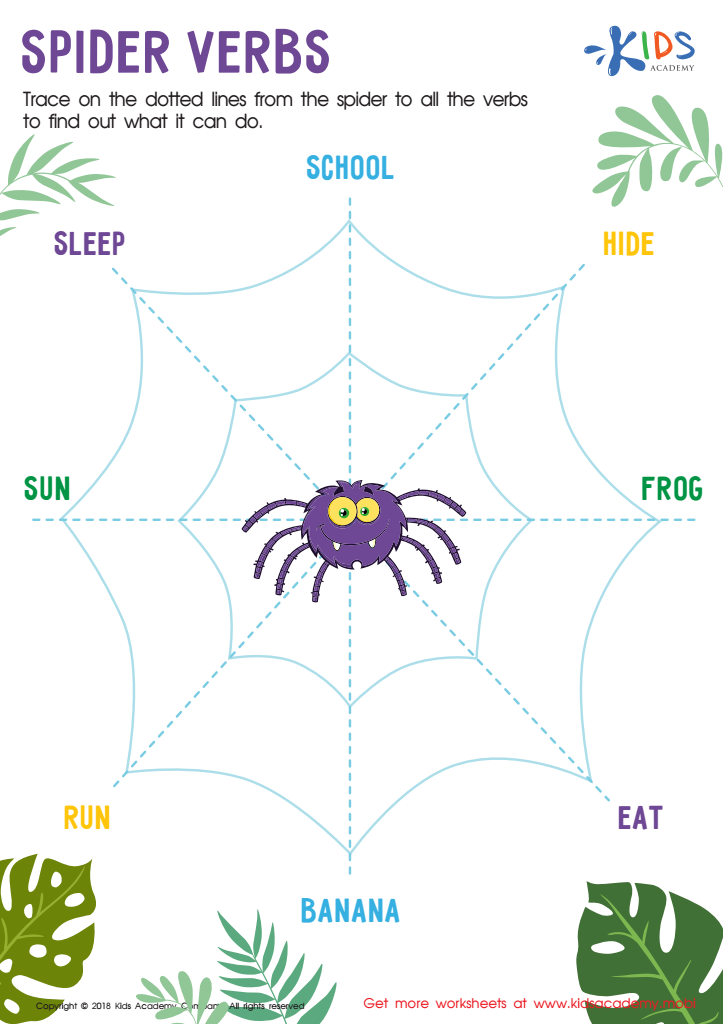
Verbs are action words. Examples: run, play, talk. Show your child this tracing sheet for them to learn about verbs. Ask them to trace the dotted lines from the spider to the words that are verbs. These words are what the spider can do.
Spider Verbs Worksheet
Worksheet
Find Words Mouse Maze Worksheet

Find Words Mouse Maze Worksheet

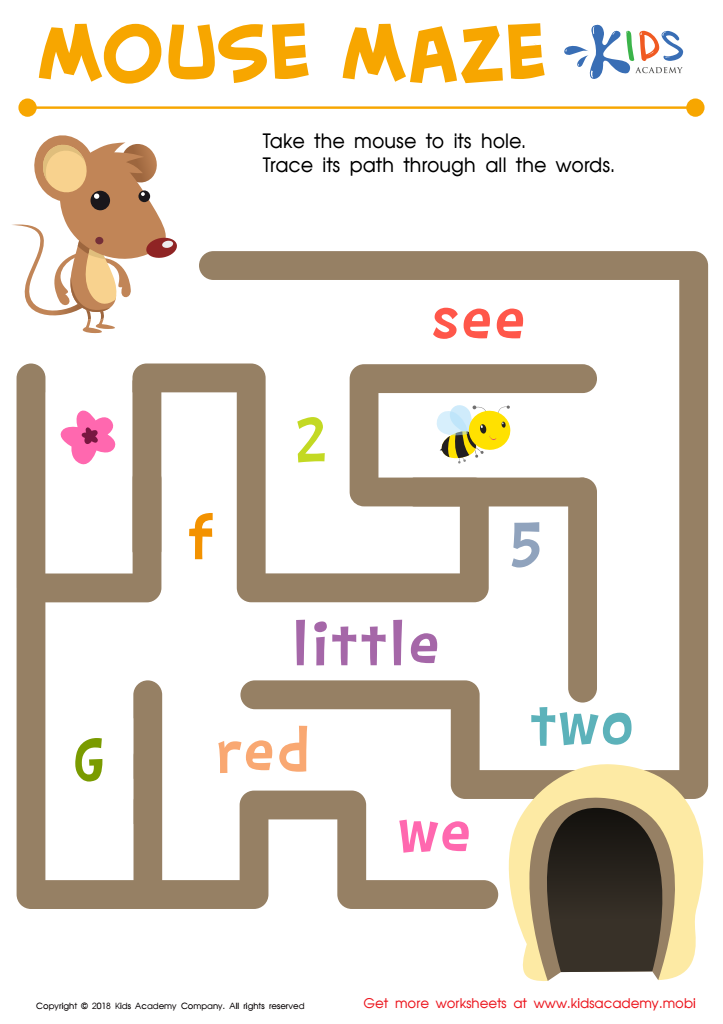
Help your child identify words and guide the mouse home! Ask them to point out the colorful animal on the worksheet, then take their hand and show them how to trace the path, going through all the words in the maze to get the mouse back to its hole.
Find Words Mouse Maze Worksheet
Worksheet
Chess Facts Bingo Worksheet

Chess Facts Bingo Worksheet

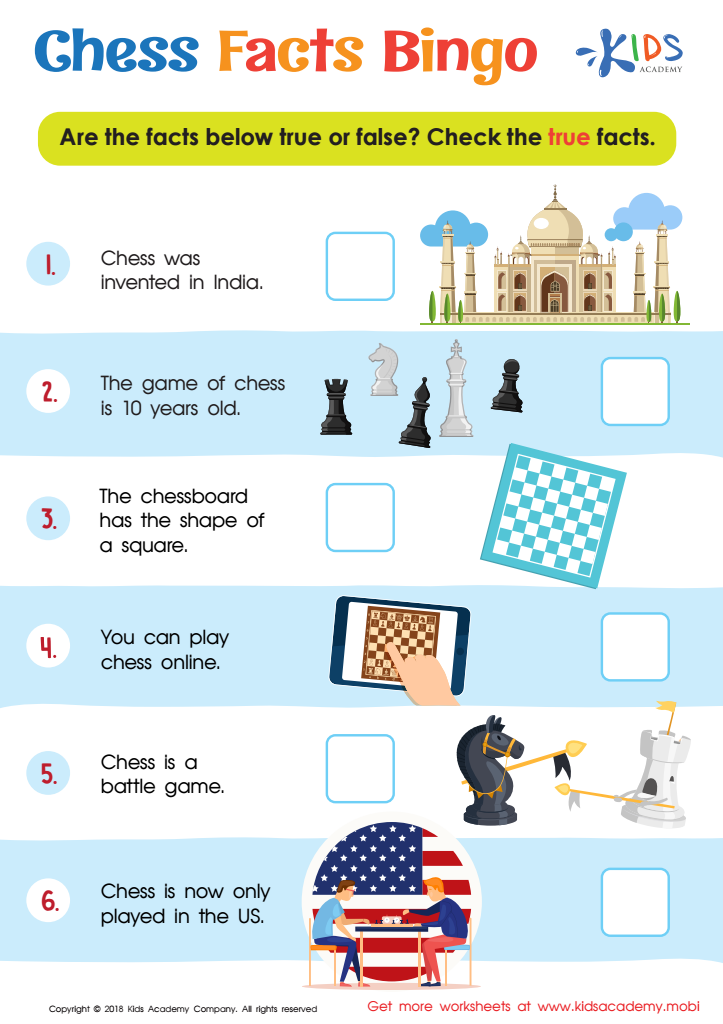
Help your child assess their knowledge of chess with our simple worksheet. It contains six questions; read them to your child and ask them if the statements are true or false. Once they check the boxes for the true statements, you'll have a better understanding of their understanding of the game.
Chess Facts Bingo Worksheet
Worksheet
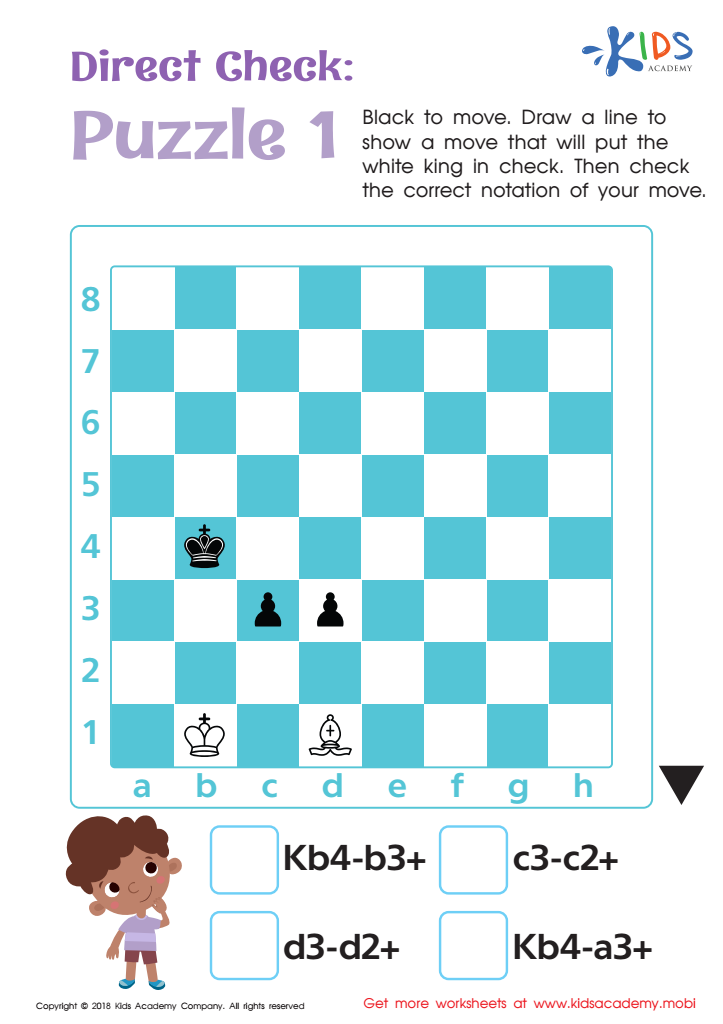
Direct Check: Puzzle 1 Worksheet

Direct Check: Puzzle 1 Worksheet

Your child can test their chess knowledge with this worksheet. If they've been taking lessons or playing regularly, they'll enjoy connecting the dots to put the white king in checkmate, then checking the correct notation. Challenge their chess skills!
Direct Check: Puzzle 1 Worksheet
Worksheet
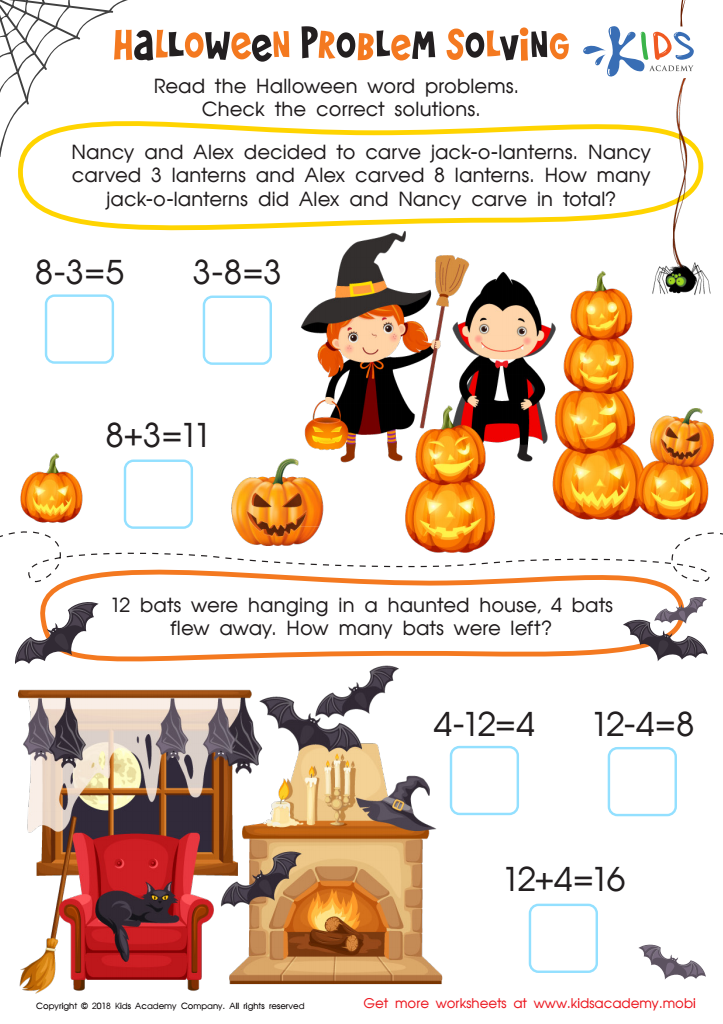
Halloween Problem Solving Worksheet

Halloween Problem Solving Worksheet

Halloween math is here! Get your spooky word problems and frightfully cute images with this free PDF worksheet. Read the problems with your little one and focus on the numbers and key phrases. Then match the equation to its solution to complete the page. Calling all ghosts and goblins - have some math fun this Halloween!
Halloween Problem Solving Worksheet
Worksheet
Pilgrim Printable Maze

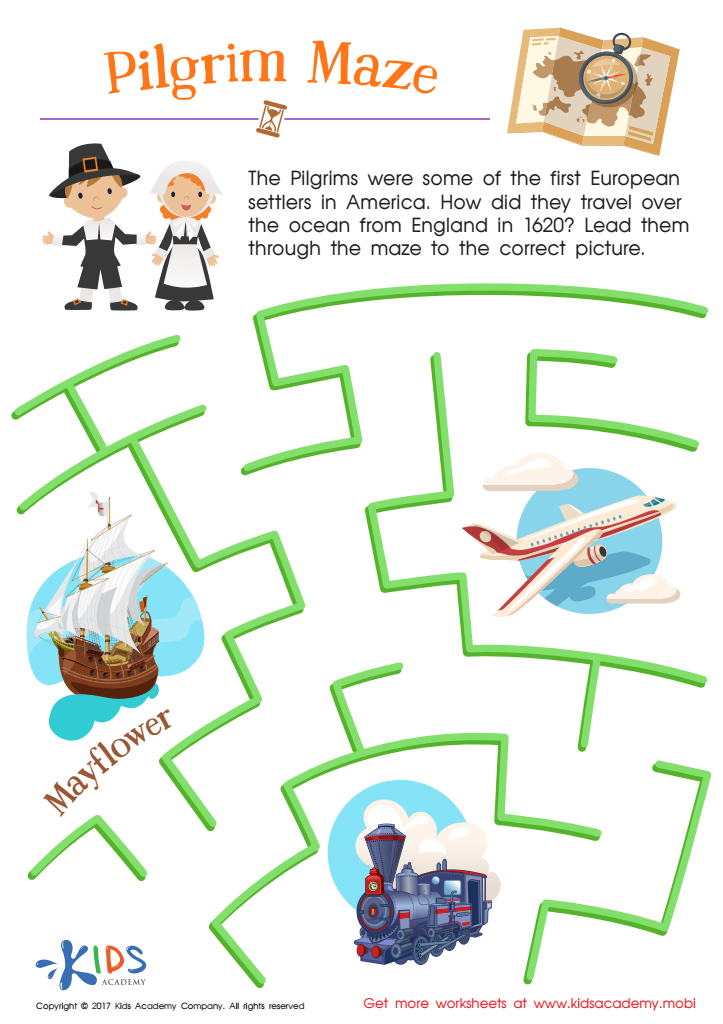
Pilgrim Maze Worksheet

This worksheet is perfect for teaching kids about an important moment in American History! Your child will have a blast solving the maze to recall that the Mayflower brought the pilgrims to the New World in 1620. It reinforces American history facts and develops visual motor and problem solving skills. It also uses modern pictures to make kids think about the right answer. Get this challenging pilgrim printable maze or a full collection of history worksheets for your little learner!
Pilgrim Maze Worksheet
Worksheet
Identifying patterns worksheet pdf

Identifying Patterns Worksheet

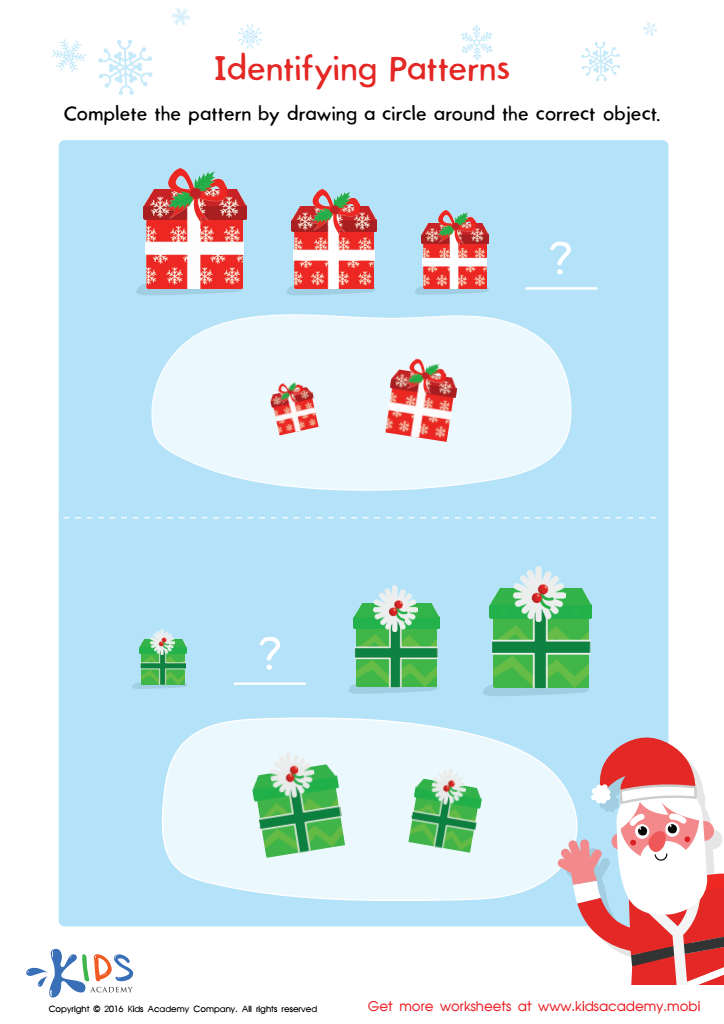
Kids can have fun as they learn with this festive worksheet! They'll practice early math skills while identifying patterns with colorful Christmas presents. Have your child get ready for the holidays by finding out which box comes next in the pattern!
Identifying Patterns Worksheet
Worksheet


Parents and teachers should value logical thinking exercises for 4-year-olds because of the incredible developmental benefits during this formative stage. At this age, children's brains are rapidly developing, and fostering logical thinking can give them a strong cognitive foundation. Engaging in extra challenges helps enhance their problem-solving skills, promote critical thinking, and encourage them to make connections between ideas. Through logical thinking activities, children learn to recognize patterns, follow sequences, and approach problems methodically, which are all crucial skills for academic success.

Moreover, these exercises can improve their ability to communicate ideas clearly and develop their language skills. Asking questions and solving puzzles not only ignite curiosity but also teach persistence despite challenges. Logical thinking games and activities also often involve social interaction, teaching kids valuable lessons in teamwork, cooperation, and respectful debate.

Bringing these challenges into their routine can foster a love of learning and build self-confidence. When children manage to solve problems on their own, it boosts their independence and belief in their abilities. Investing time in developing a 4-year-old's logical thinking isn't just about preparing them for school—it’s about equipping them with lifelong skills that aid in all dimensions of personal and academic growth.