Extra Challenge Numbers 11–20 Worksheets for Ages 6-7
3 filtered results
Difficulty Level
Grade
Age
-
From - To
Subject
Activity
Standards
Discover our "Extra Challenge Numbers 11–20 Worksheets" designed for ages 6-7! These worksheets offer fun and engaging activities that reinforce number recognition, counting, and simple addition and subtraction for numbers 11 through 20. Perfect for young learners ready to tackle more advanced math concepts, our challenges encourage critical thinking and problem-solving skills. Each worksheet is crafted with colorful illustrations and interactive tasks, making learning enjoyable. Help your child build a strong math foundation with these exciting printable resources. Ideal for classroom use or at-home practice, these worksheets are a great way to promote math confidence.
Favorites
With answer key
Interactive
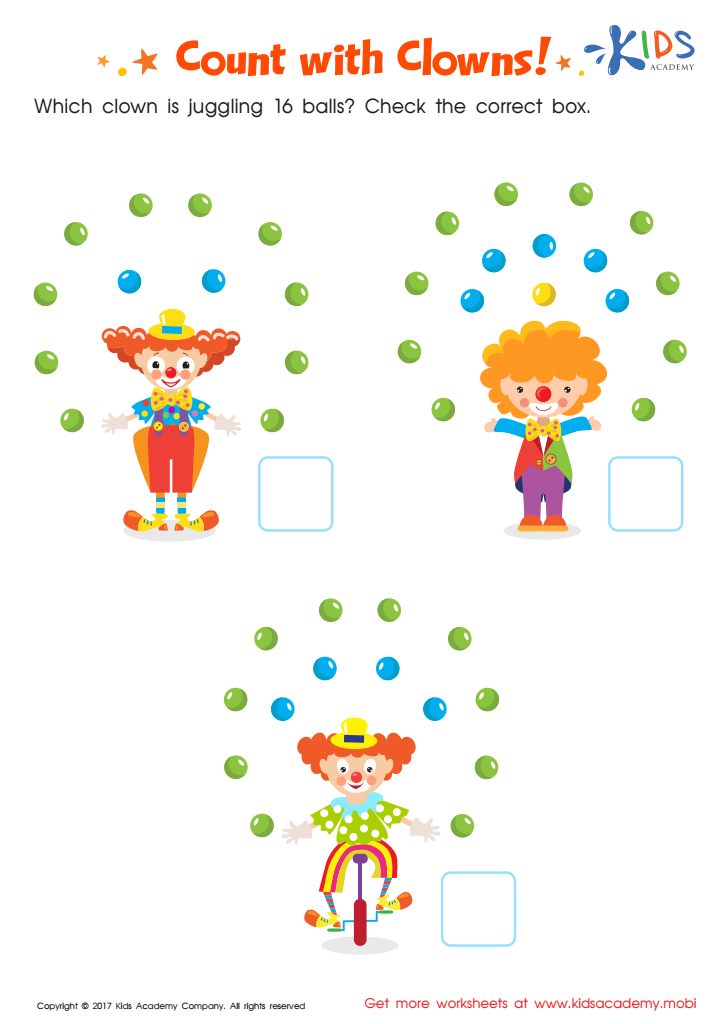
Count with Clowns Worksheet
Math may not be a laughing matter, but this worksheet sure is! Download the PDF and get ready to count balls with the clowns! Your child will have a blast and learn how to count at the same time. It's an easy, fun way to practice math!
 Assign to My Students
Count with Clowns Worksheet
Worksheet
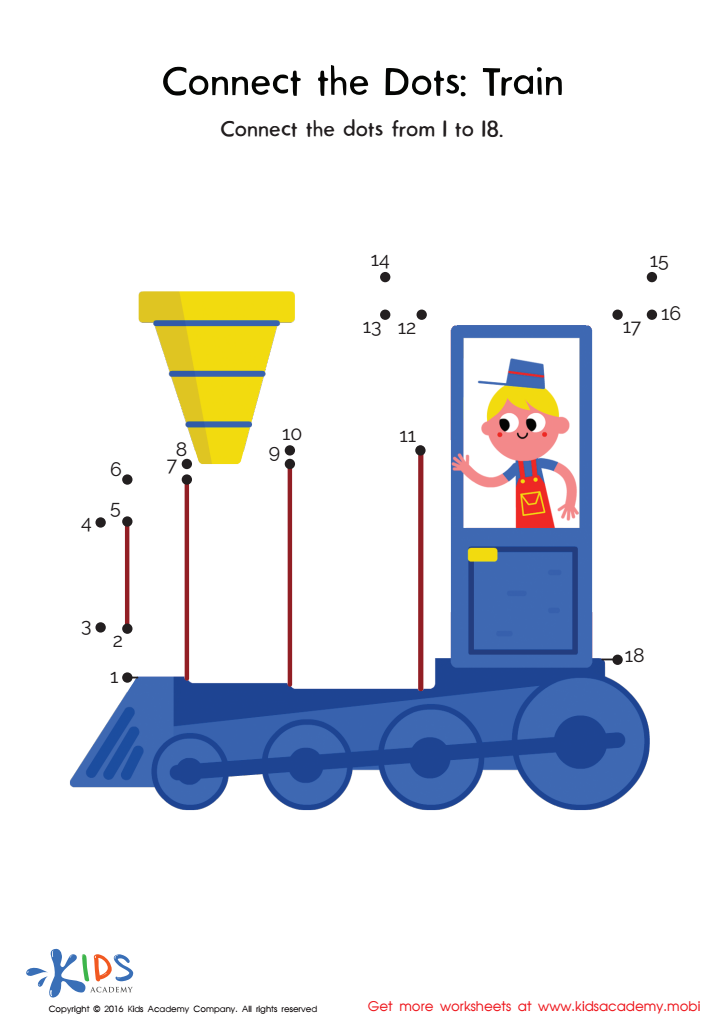
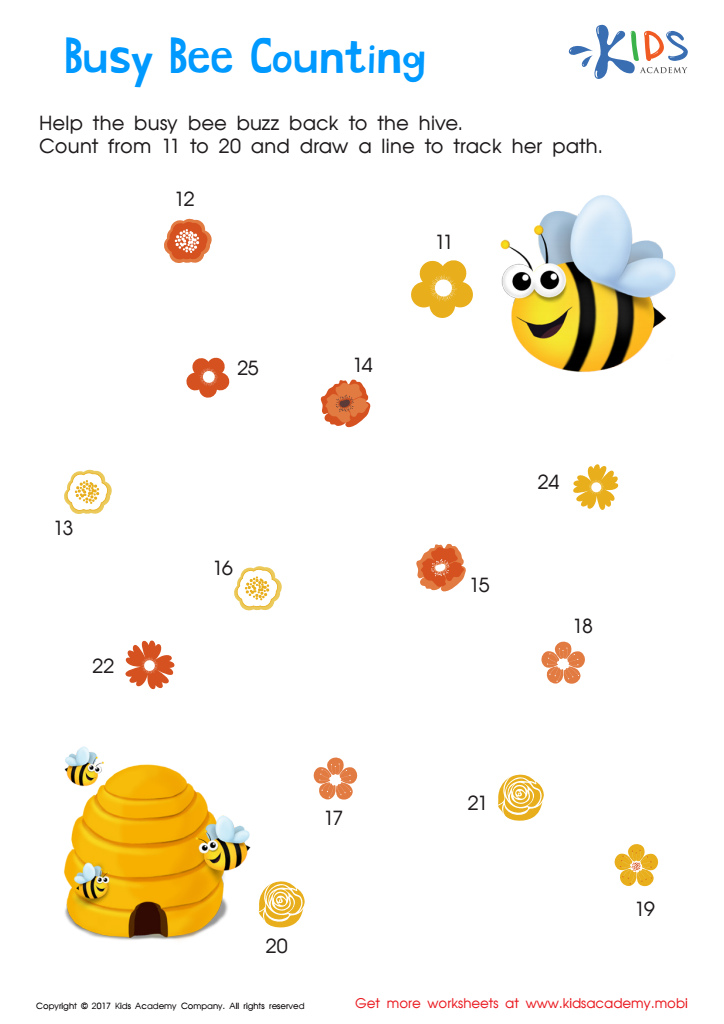
Ordering 11–20: Busy Bee Counting Worksheet
Help your child master counting from 11 to 20 with our connect the dot counting worksheet. Kids will have fun counting, drawing and problem-solving with this vibrant worksheet. With clear directions, adorable pictures and a sense of purpose, your child will develop crucial numeracy skills without even knowing it!
Ordering 11–20: Busy Bee Counting Worksheet
Worksheet
Join Kids Academy for Free
Who is primarily going to use this learning content?



Extra Challenge Numbers 11-20 for ages 6-7 are crucial for several reasons. First, mastering these numbers forms the foundation of a child's mathematical journey. At this age, children transition from recognizing and counting to understanding addition, subtraction, and place value, deeper concepts essential for advanced math skills. Engaging with numbers 11-20 helps solidify number sense, ensuring young learners can comfortably manipulate and understand numbers in various contexts.
Secondly, these numbers introduce children to larger numerical structures. Comprehending teen numbers involves grasping the base-ten system, keys to arithmetic operations, and the number line. It's also when they learn to 'see' numbers within numbers, like recognizing that 15 is made up of ten and five more, an essential skill for effective and swift mental math.
Additionally, tackling Extra Challenge Numbers equips kids with persistence. Math problems challenge children to think critically and reason logically. Persevering through slightly more complex tasks boosts not only their numeracy success but also their confidence, resilience, and problem-solving skills in all areas.
Parents and teachers supporting this developmental stage show care for future academic success, offering invaluable encouragement that shapes children's attitudes toward learning and preparedness for the rigorous educational advancements ahead. Understanding and actively participating in mastering these skills, sets a positive learning trajectory and instills a lifelong love and competency for math.