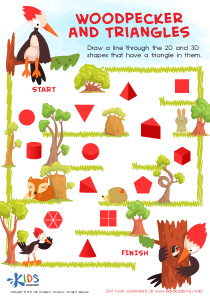
Extra Challenge Fractions of Shapes Worksheets for Ages 6-8
10 filtered results
-
From - To
Discover our "Extra Challenge Fractions of Shapes Worksheets" designed specifically for children aged 6-8! These engaging worksheets create an exciting learning experience, helping young learners grasp the concept of fractions through colorful shapes and interactive activities. By completing these challenges, students will not only enhance their fraction recognition skills but also develop critical thinking and problem-solving abilities. Each worksheet is thoughtfully crafted to encourage exploration and application of fractions in a fun and informative way. Perfect for classroom use or home practice, these worksheets will support your child's mathematical journey while keeping them motivated and inspired. Get started today!
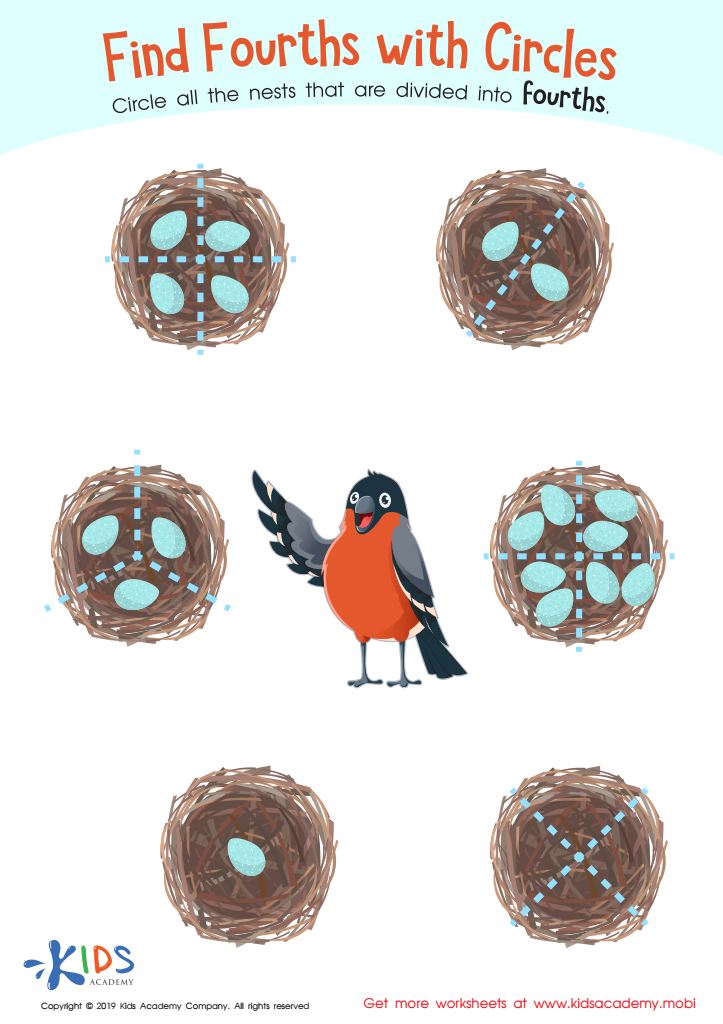
Find Fourths Circles Worksheet
 Assign to My Students
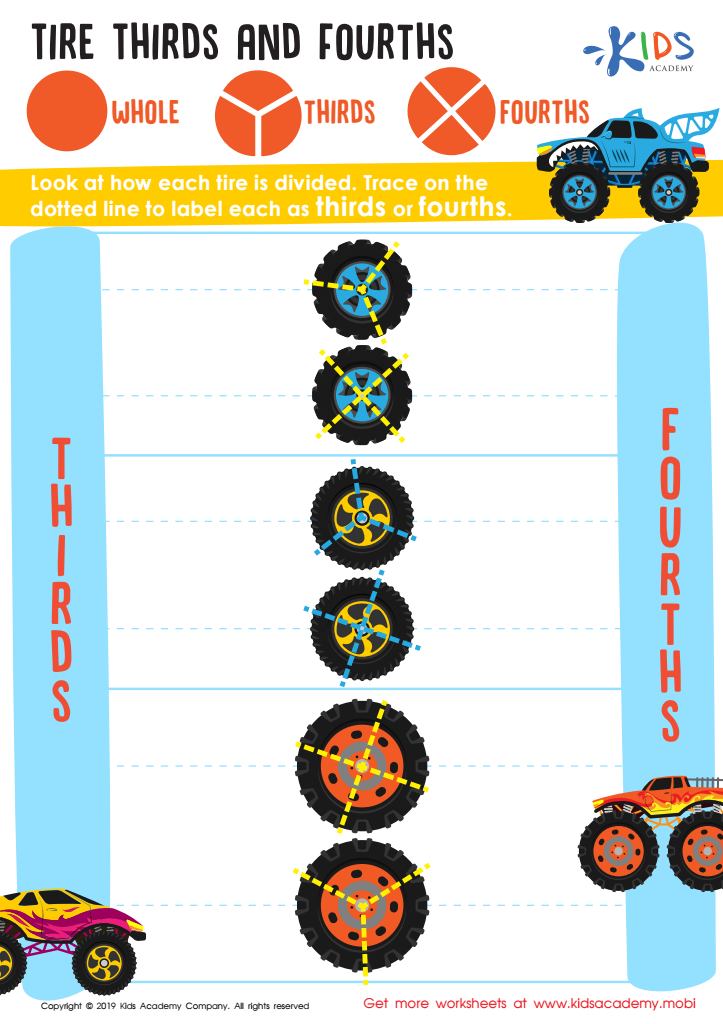
Tire Thirds and Fourths Worksheet
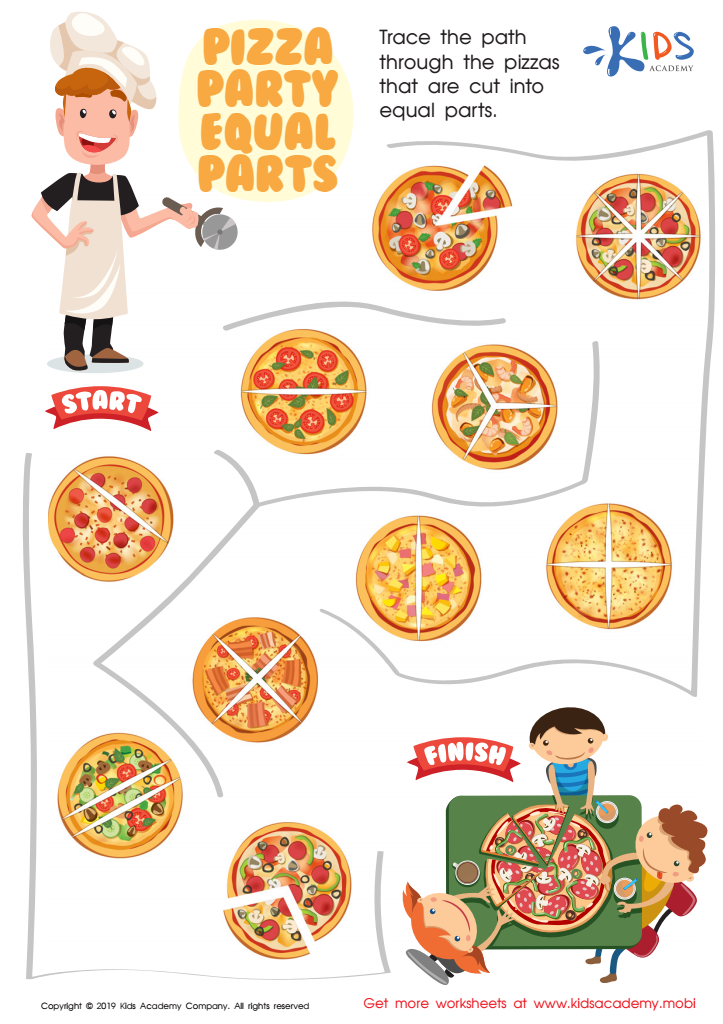
Pizza Party Equal Parts Worksheet
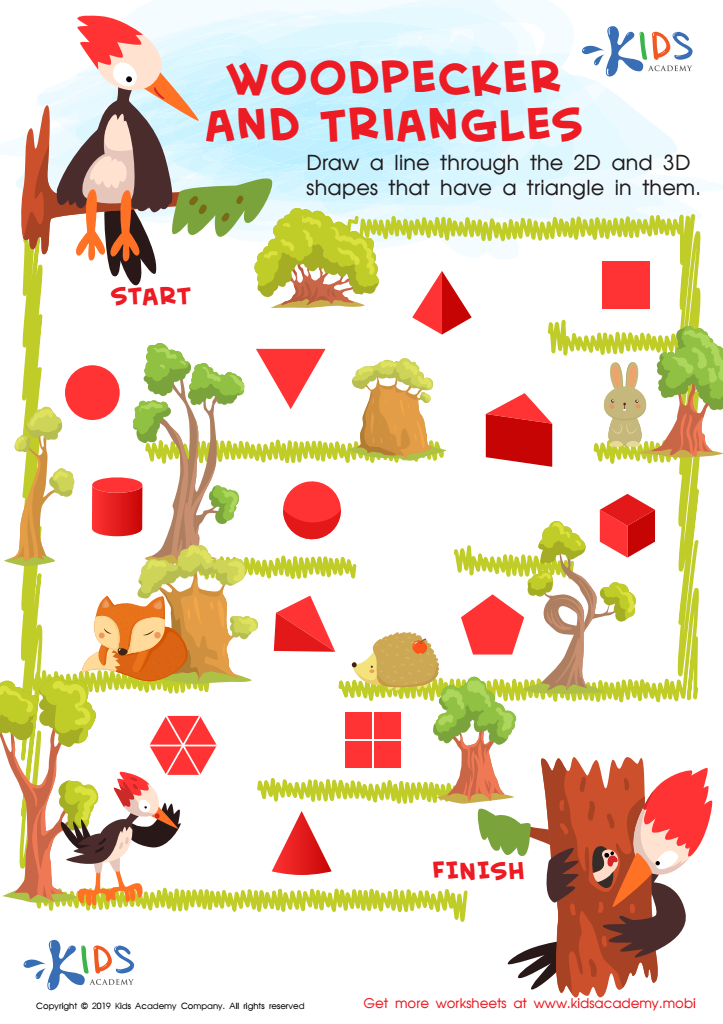
Woodpecker and Triangles Worksheet
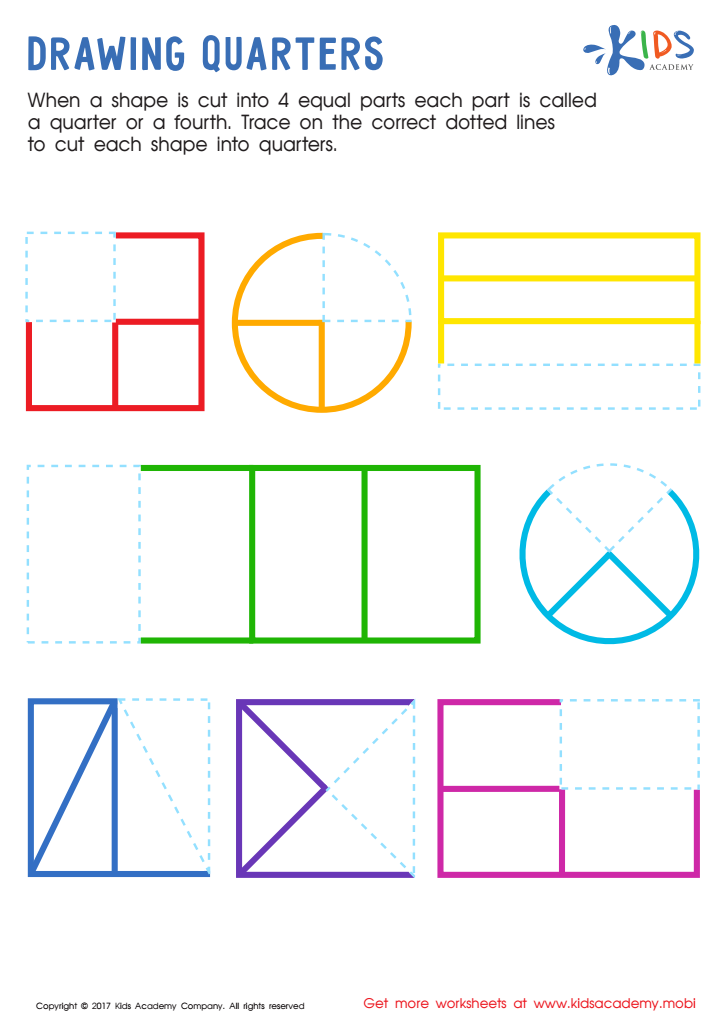
Drawing Quarters Worksheet
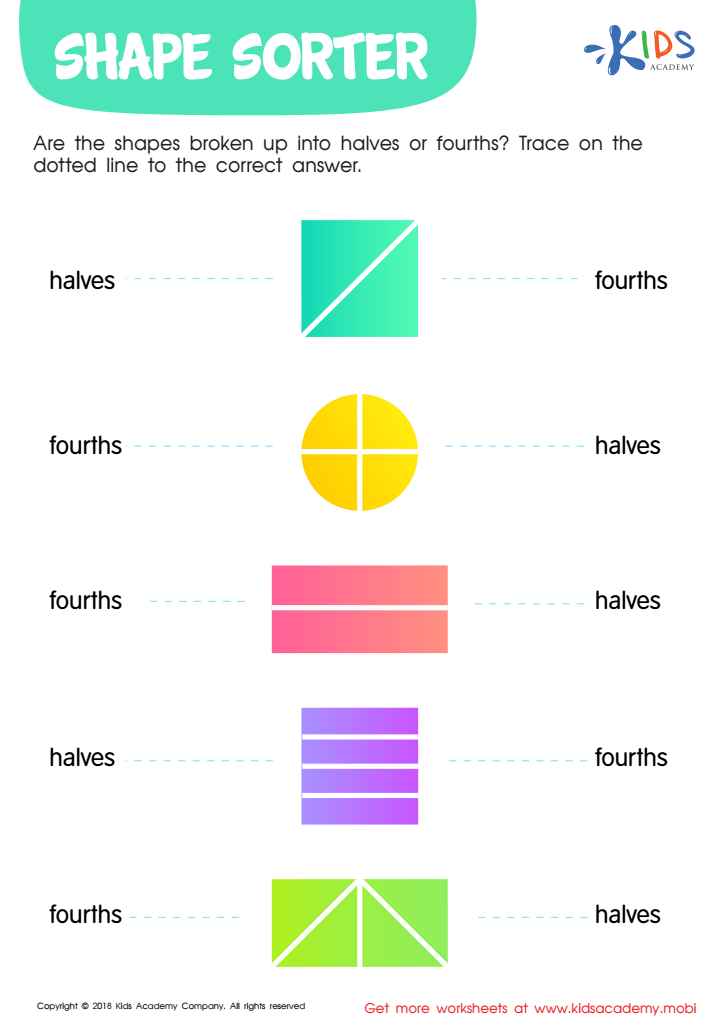
Shape Sorter Worksheet
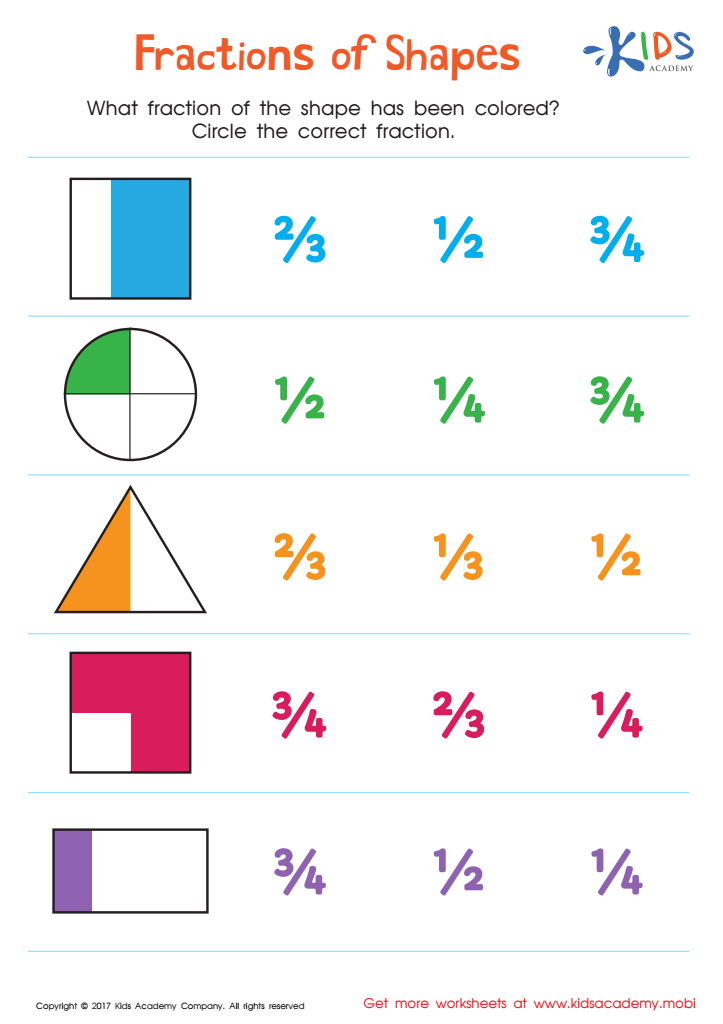
Fractions of Shapes: Math Concept Worksheet
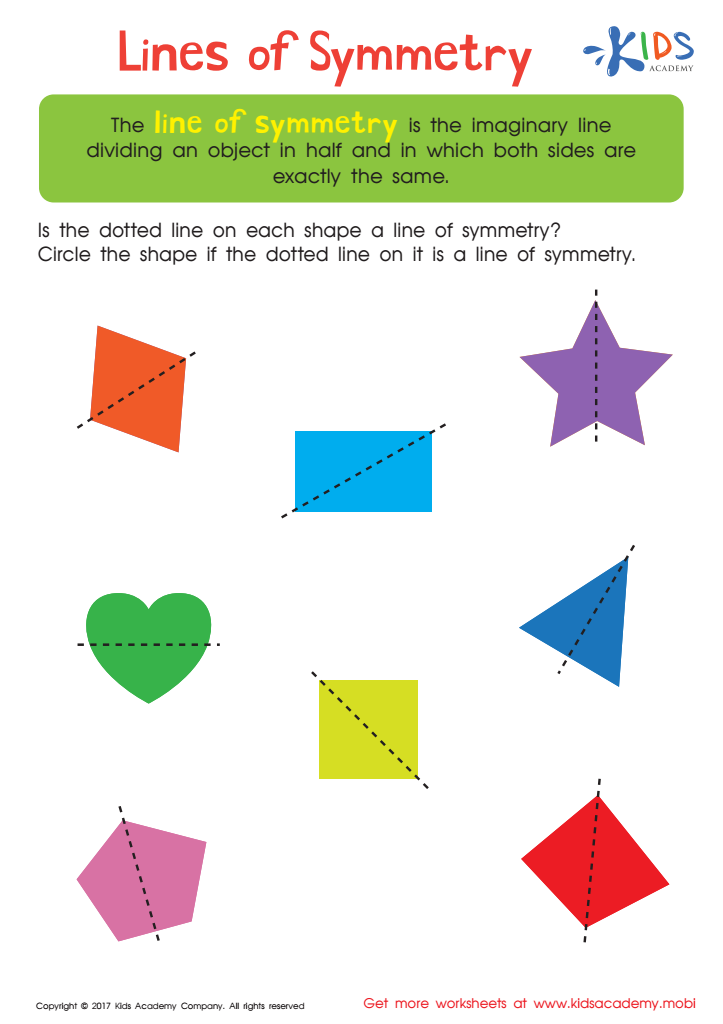
Lines of Symmetry Printable
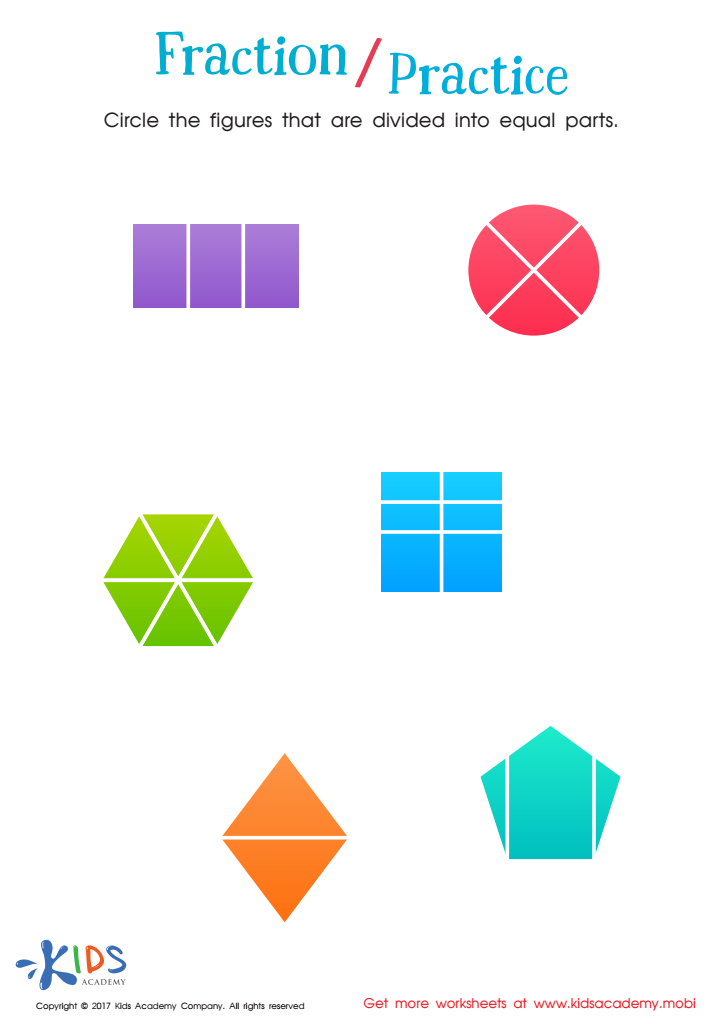
Fractions: Shapes Worksheet
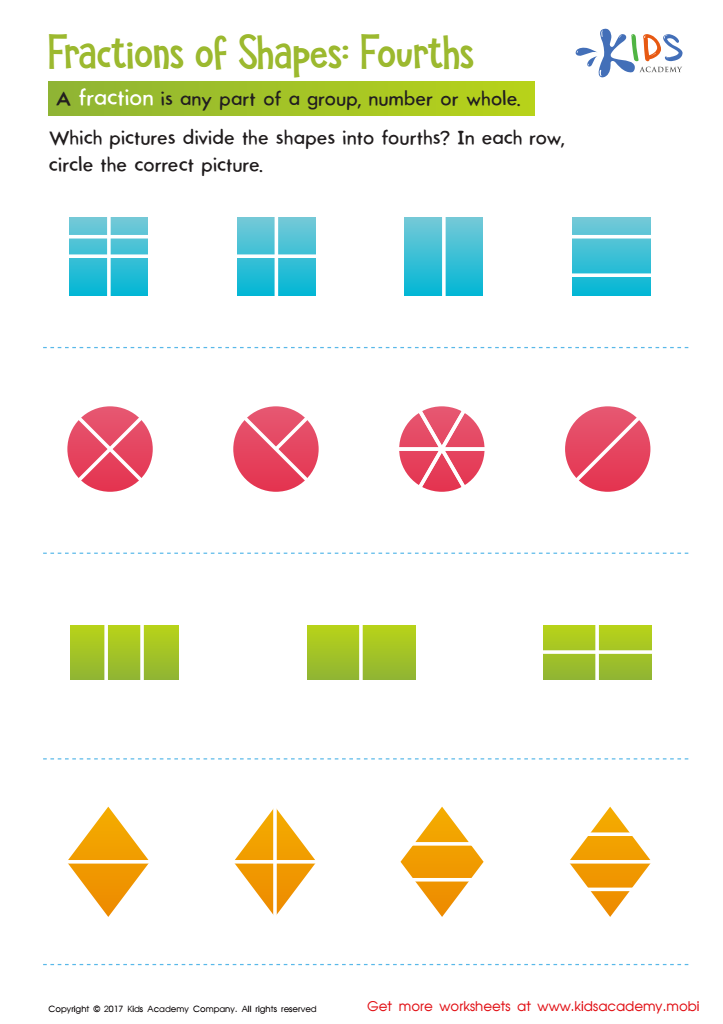
Fractions of Shapes Worksheet








Extrachallenge fractions of shapes play a vital role in the mathematical development of children aged 6 to 8. At this age, children are beginning to harness their understanding of basic math concepts, and working with fractions enhances their ability to visualize and comprehend parts of a whole. When parents or teachers introduce the concept of fractions through shapes, it makes learning tangible and interactive.
This approach fosters critical thinking as children classify and compare different shapes, understanding concepts such as numerators and denominators in a visual context. Engaging with these extra challenges strengthens their problem-solving skills and promotes a growth mindset, encouraging students to approach complex tasks confidently.
Furthermore, grasping fractions at an early age builds a foundation for future mathematical concepts, including ratios and percentages. It promotes spatial awareness and enhances their ability to recognize patterns, which are important skills both in mathematics and real-life applications. By prioritizing extra challenge fractions in educational settings, parents and teachers enrich children's learning experiences, instilling a love for math that can last a lifetime. The support of adults in navigating these challenges can greatly impact a child's self-efficacy and enthusiasm for learning, setting the stage for academically successful futures.