Extra Challenge Graphs Worksheets for 6-Year-Olds
3 filtered results
-
From - To
Unleash your 6-year-old's potential with our Extra Challenge Graphs worksheets! Designed specifically for young learners, this collection pushes the boundaries of their analytical skills, introducing them to the exciting world of graphs in a fun, engaging manner. Tailored to challenge and inspire, these worksheets cover a variety of graph types, encouraging children to explore data visualization and interpretation at an early age. Your child will not only enhance their mathematical intuition but also develop critical thinking skills. The Extra Challenge Graphs for 6-Year-Olds is the perfect tool to spark a lifelong love for learning and discovery in your young scholar.
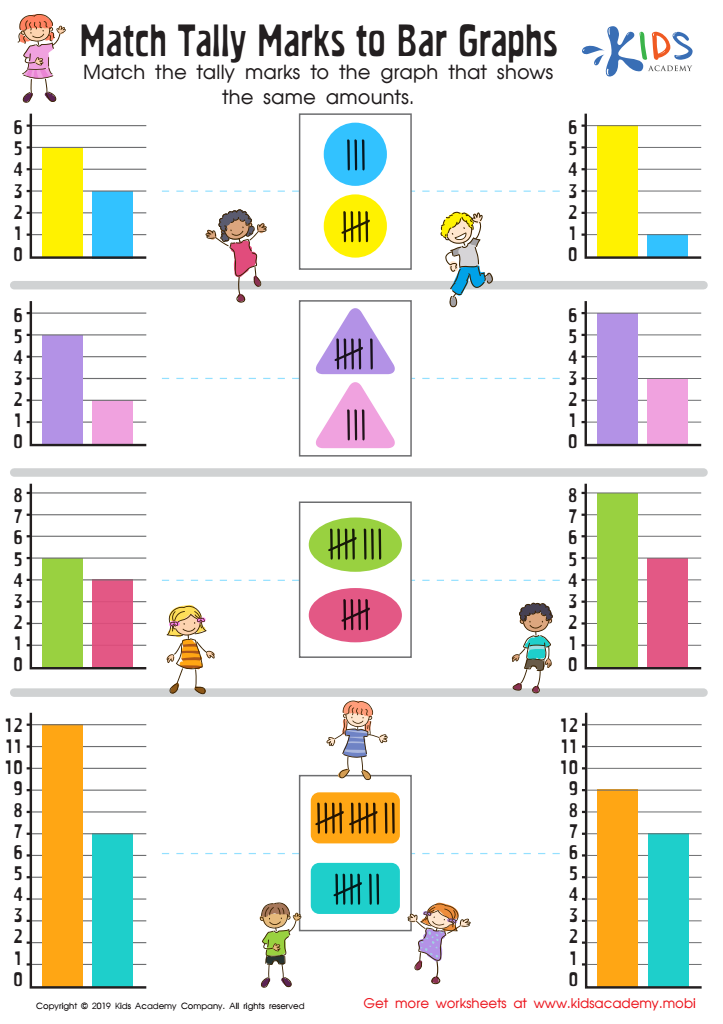
Match Tally Marks to Bar Graphs Worksheet
 Assign to My Students
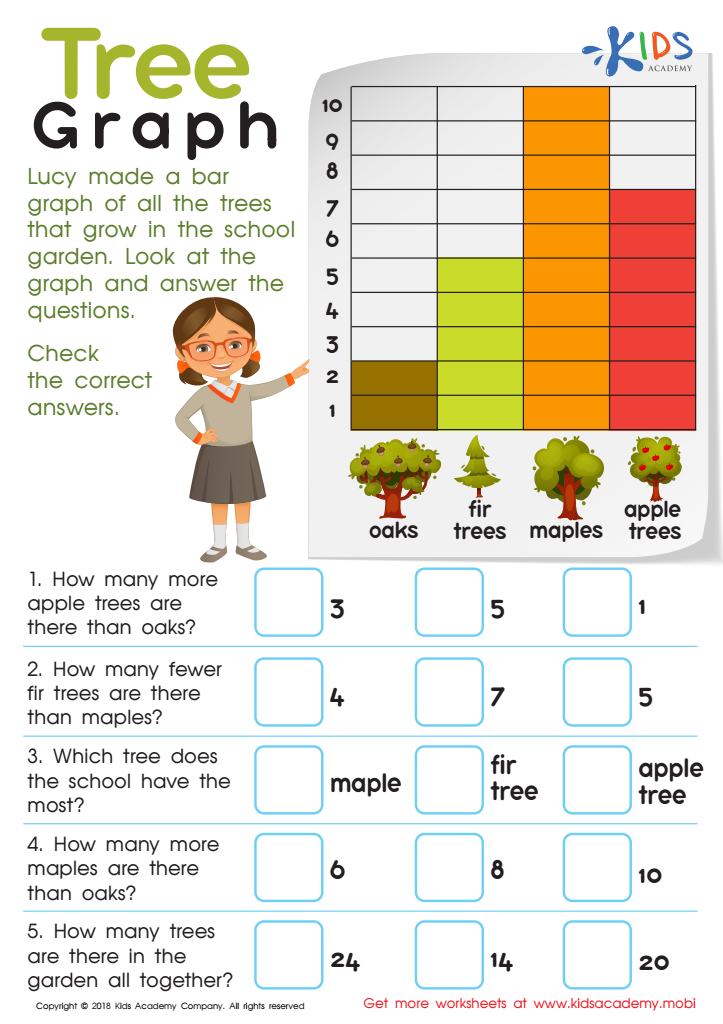
Tree Graph Worksheet
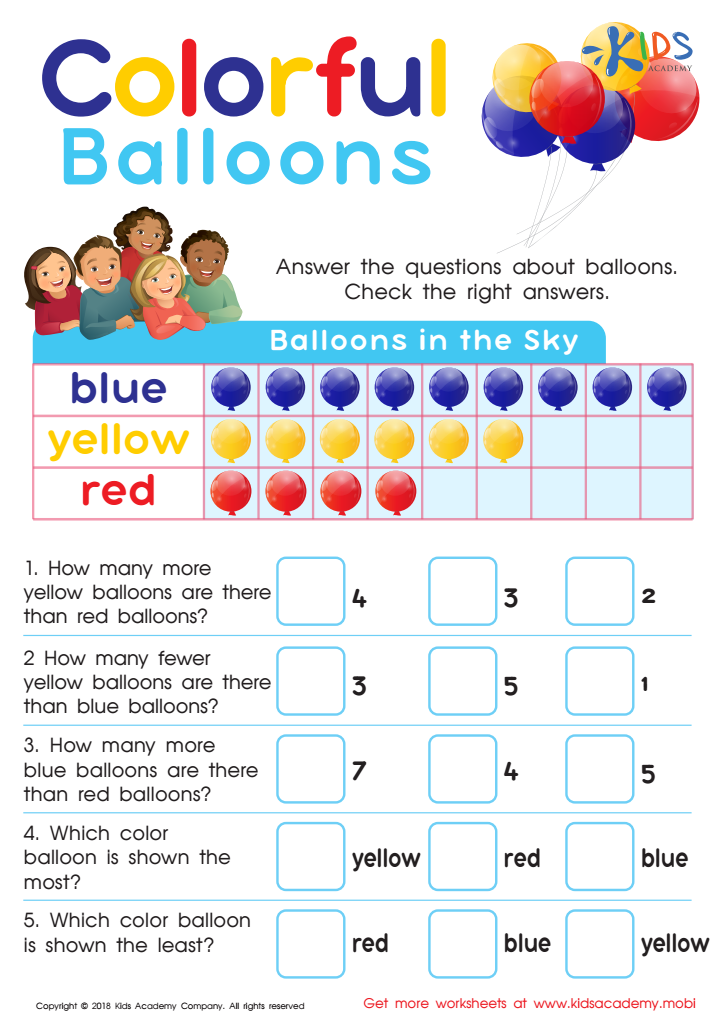
Picture Graphs: Colorful Balloons Worksheet








Extra Challenge Graphs for 6-Year-Olds are an incredibly useful educational tool designed to enhance a child's learning experience in an engaging and interactive way. At the age of 6, children are at a crucial stage of development where they begin to understand concepts of comparison, quantities, and basic numeracy. Incorporating Extra Challenge Graphs into their learning routine offers multiple benefits that can significantly impact their academic growth.
Firstly, these worksheets are tailored specifically for 6-year-olds, ensuring that the challenges are age-appropriate yet stimulating enough to push their boundaries. By engaging with these graphs, children learn to interpret information visually, a skill that is vital in many areas of life and learning. They start recognizing patterns, understanding quantities, and even making predictions based on the data they see, which are foundational skills in math and science.
Moreover, Extra Challenge Graphs for 6-Year-Olds encourage critical thinking and problem-solving. As children analyze different graphs, they learn to ask questions, seek out answers, and formulate their understanding of the information presented. This active engagement fosters a love for learning and curiosity that extends beyond the classroom.
Lastly, these worksheets are designed to be fun and interactive, making learning about graphs an enjoyable experience. By turning education into a game, children are more likely to engage with the material, retain the information, and develop a positive attitude towards learning. In conclusion, Extra Challenge Graphs for 6-Year-Olds are not only an effective tool for learning basic graphing concepts but also for nurturing important life skills in young learners.








