Visual discrimination Matching Worksheets
3 filtered results
-
From - To
Enhance your child's learning with our Visual Discrimination Matching Worksheets from Kids Academy. These expertly designed printables help children sharpen their observation skills by challenging them to discern subtle differences and similarities between objects. With engaging exercises, kids boost essential visual perception skills, vital for academic success, especially in reading and mathematics. Each worksheet is interactive and age-appropriate, making learning enjoyable and effective. Perfect for preschool and early elementary students, these resources are ideal for educators and parents seeking to support their child's development in a fun, structured way. Unlock potential with visual discrimination today!
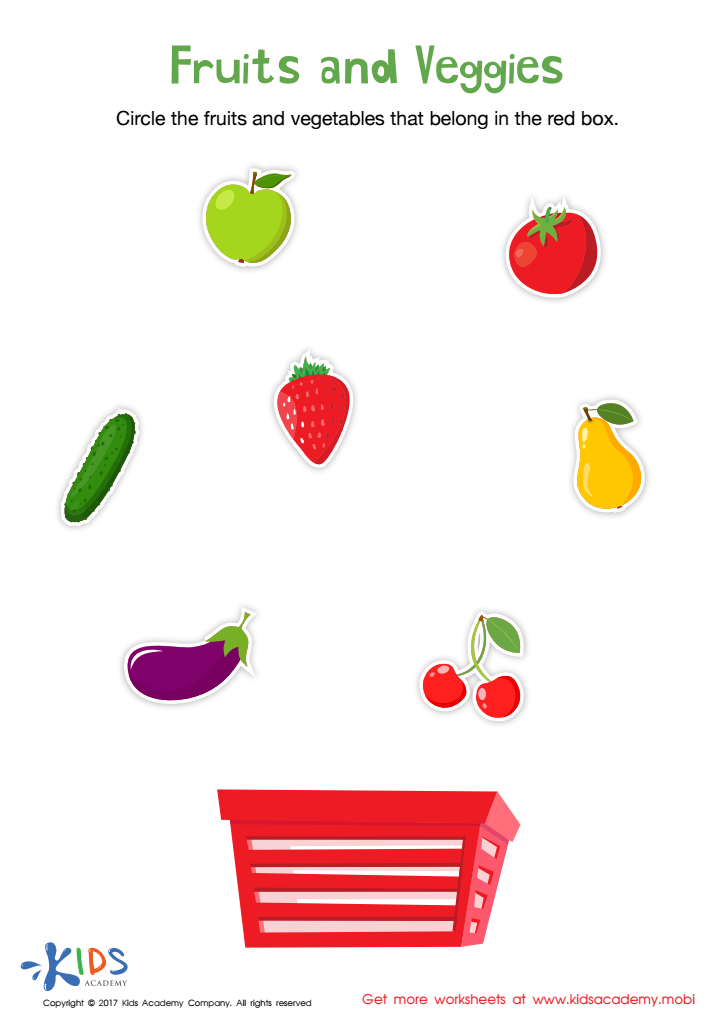
 Assign to My Students
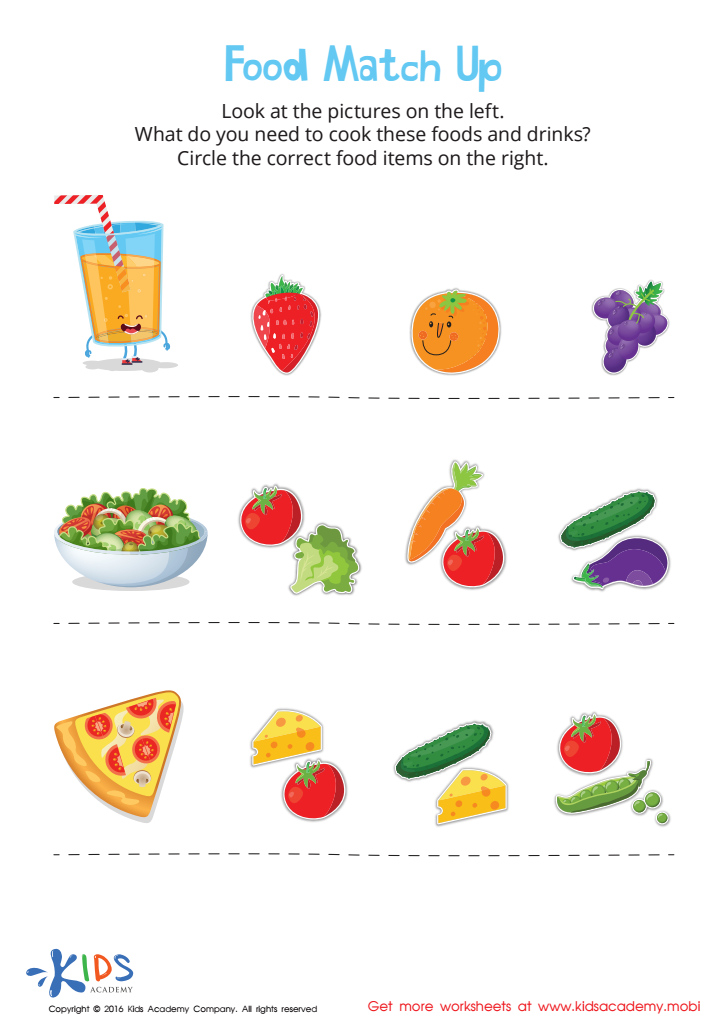
Food Match Up Worksheet
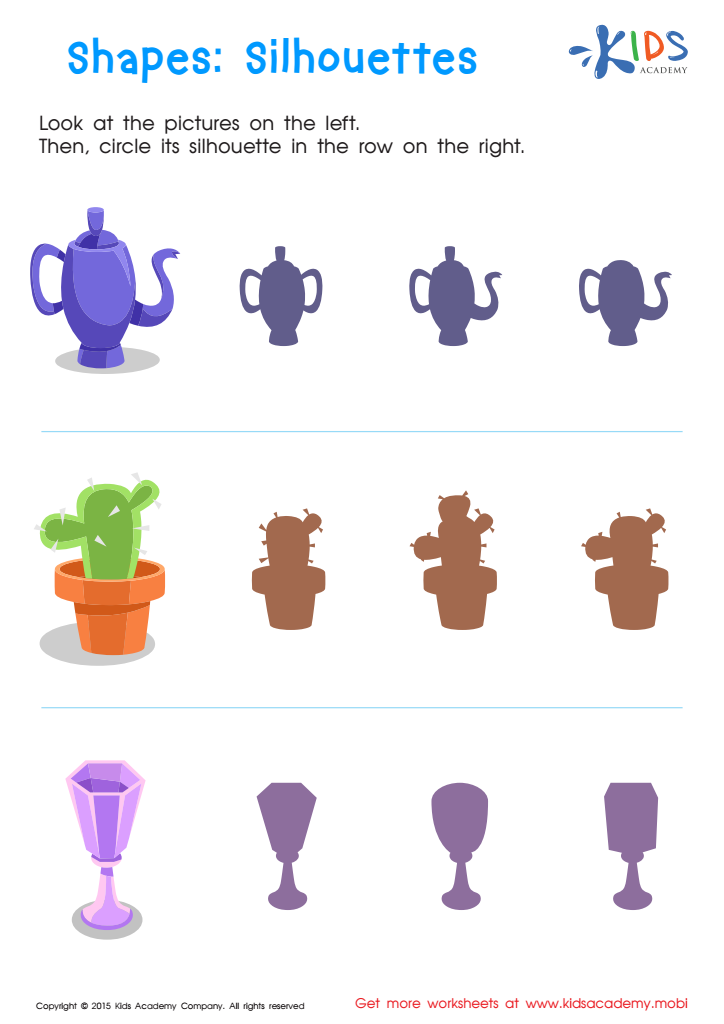
Silhouettes – Shapes Worksheet








Visual discrimination matching is a foundational skill critical for early childhood development and is essential for a child's success not only in academics but also in daily life activities. Parents and teachers need to care about fostering this ability because it helps children differentiate between shapes, colors, sizes, and patterns. Such skills are prerequisites for more advanced learning processes.
For instance, visual discrimination is vital for reading and writing, where children must distinguish between similar letters like 'b' and 'd' or 'p' and 'q.' By enhancing this skill early on, we set a robust groundwork for literacy, which directly impacts a child's academic trajectory. Similarly, in mathematics, children must recognize and differentiate between numbers, shapes, and spatial patterns, all of which are forms of visual discrimination.
Moreover, these skills have practical implications. Strong visual discrimination abilities help children identify objects, navigate their surroundings, and follow visual instructions—all important for their independence and safety.
Through games, activities, and intentional practice, parents and teachers can significantly influence the development of visual discrimination. This effort not only supports academic achievement but also bolsters a child's confidence, alertness, and problem-solving capabilities, ensuring well-rounded, holistic development.








