Normal Short Vowels Worksheets for Ages 3-5
4 filtered results
Difficulty Level
Grade
Age
-
From - To
Subject
Activity
Standards
Discover our engaging Normal Short Vowels Worksheets, designed specifically for children aged 3-5. These worksheets are perfect for young learners to explore and practice short vowel sounds through fun activities and colorful illustrations. Each worksheet focuses on reinforcing vowel recognition and improving phonemic awareness, essential foundations for early literacy. Our resources nurture creativity and curiosity, ensuring that learning is enjoyable and effective. From tracing letters to interactive matching games, these materials are crafted to captivate young minds while enhancing their reading skills. Jumpstart your child's educational journey with our comprehensive collection of short vowel worksheets today!
Favorites
With answer key
Interactive
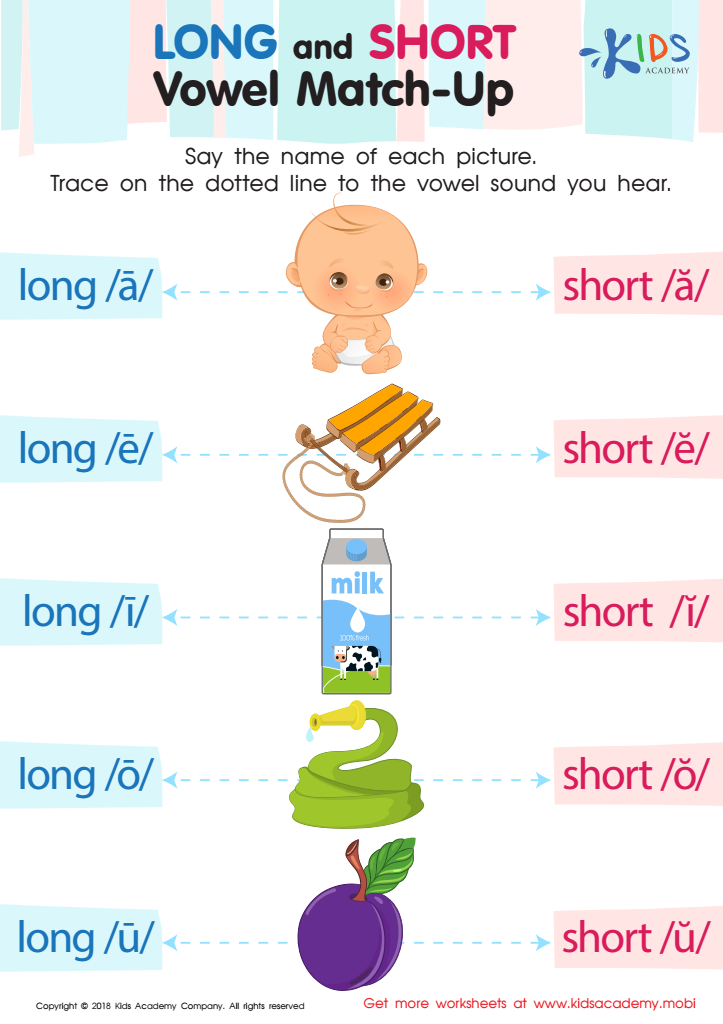
Long and Short Vowel Match up Reading Worksheet
Help your reader build confidence and refine their decoding skills! This worksheet combines long and short vowel recognition with a traceable component to improve fine motor skills. Your learner will name each picture and trace the dotted lines to get to the correct vowel sounds.
 Assign to My Students
Long and Short Vowel Match up Reading Worksheet
Worksheet
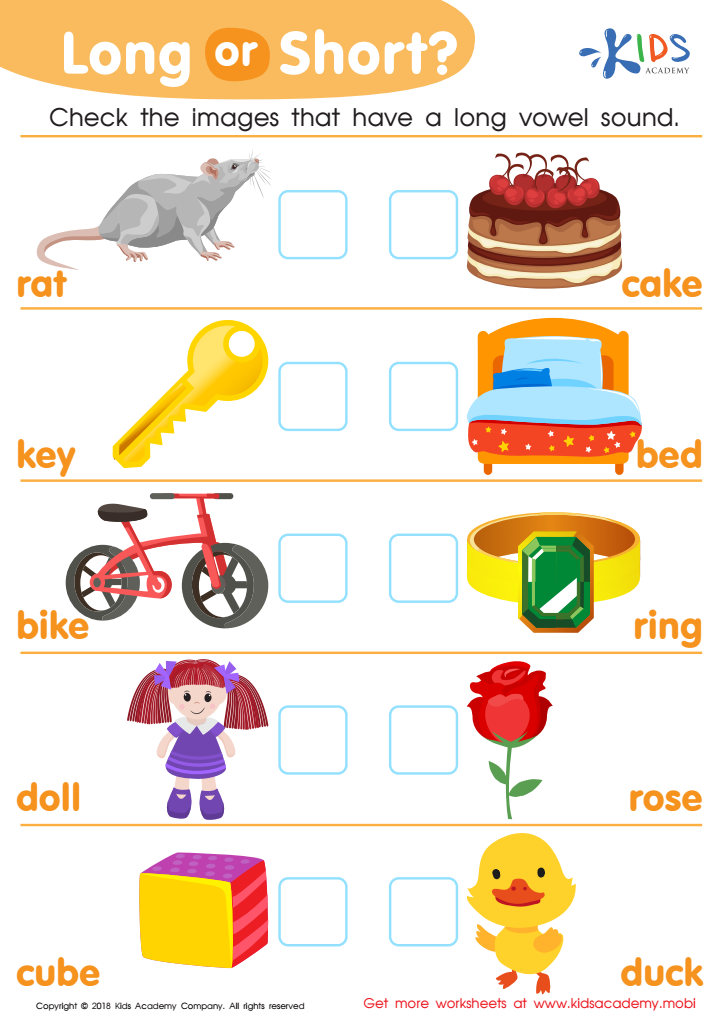
Long or Short Reading Worksheet
Every new reader needs to learn to recognize long and short vowel sounds. This phonics worksheet uses pictures of high-frequency words to help. Kids read the words and then check off images with long vowel sounds. It helps them learn to decode words and improves fine motor skills.
Long or Short Reading Worksheet
Worksheet
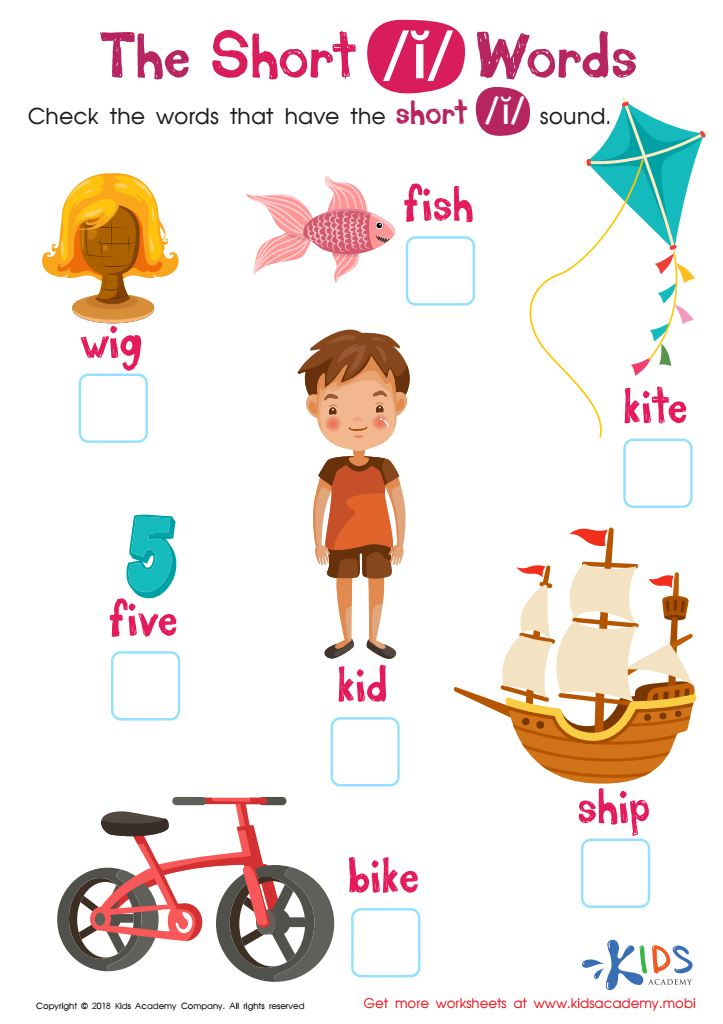
The Short I Words Reading Worksheet
Teach your kindergartner phonics with this printout worksheet! It introduces the short «i» sound and helps them differentiate and articulate sounds and letters of the alphabet. With practice, your child will soon find it easy to classify sounds into long and short vowels.
The Short I Words Reading Worksheet
Worksheet
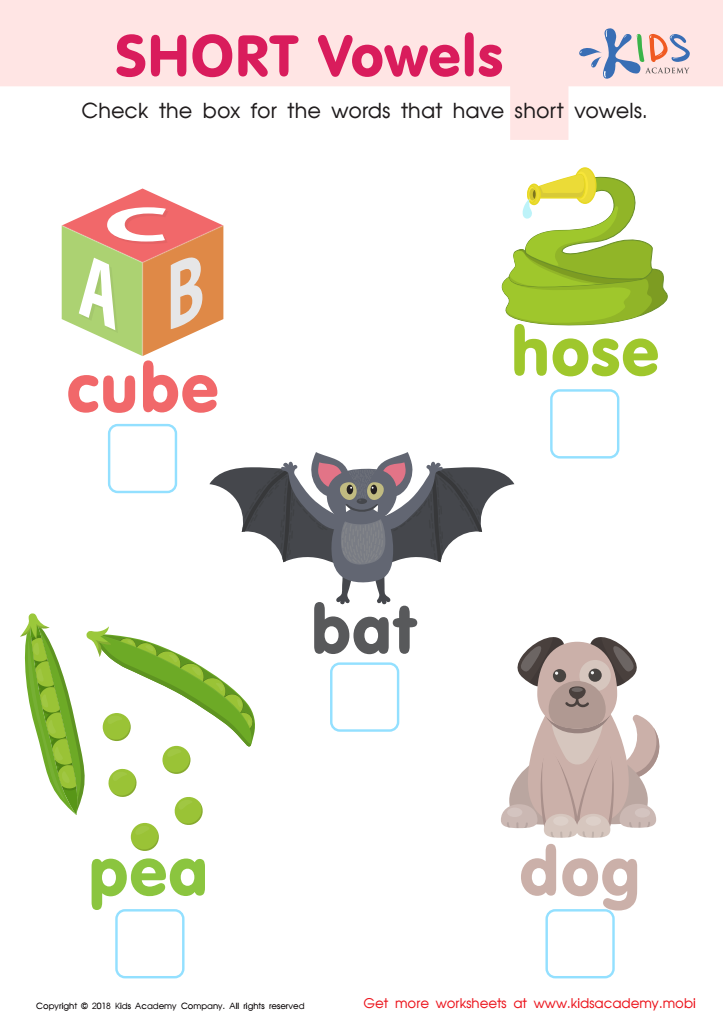
short vowels Worksheet
Say "dog" and notice how long it takes to pronounce the vowel. Is it short or long? Compare it to "pea" and use this worksheet to quickly assess your child's mastery. Have them name each picture and listen for the vowel sounds. Only check the boxes for words with short vowel sounds.
short vowels Worksheet
Worksheet
Join Kids Academy for Free
Who is primarily going to use this learning content?



Parents and teachers should emphasize the importance of normal short vowels for children aged 3-5 because these foundational sounds play a crucial role in early literacy development. Understanding short vowels is essential for young learners as they form the bedrock of phonetics and word formation. Familiarizing children with the sounds of short vowels—represented by letters such as a, e, i, o, and u—helps them develop phonemic awareness, which is critical for decoding words when they begin to read.
Recognizing and producing short vowel sounds enhances spelling proficiency, thereby aiding in writing competence. Moreover, by mastering these vowel sounds, children enhance their overall language skills, expanding their vocabulary and comprehension when listening and speaking. Early instruction in short vowels can mitigate reading difficulties later in school, setting the stage for more complex language and literacy tasks.
Engaging activities such as songs, rhymes, and playful phonics games make learning enjoyable, ensuring children stay motivated and eager to learn. Ultimately, focusing on short vowels provides a solid foundation for literacy, helping young children express themselves more effectively and paving the way for their academic success. Encouraged early, these skills will positively influence their lifelong relationship with reading and writing.