Normal Silent Vowels Worksheets for Ages 3-7
4 filtered results
Difficulty Level
Grade
Age
-
From - To
Subject
Activity
Standards
Discover our engaging "Normal Silent Vowels Worksheets for Ages 3-7," designed to enhance early literacy skills in young learners. These worksheets focus on helping children recognize and understand silent vowels in words, providing a solid foundation for reading and phonics. Featuring colorful illustrations and interactive exercises, kids will enjoy identifying silent vowels while developing critical thinking and language skills. Ideal for home or classroom use, our printable resources make learning fun and effective! Equip your child with essential reading abilities and boost their confidence in language as they explore the fascinating world of silent vowels. Perfect for ages 3 to 7!
Favorites
With answer key
Interactive
Is It Silent? Worksheet
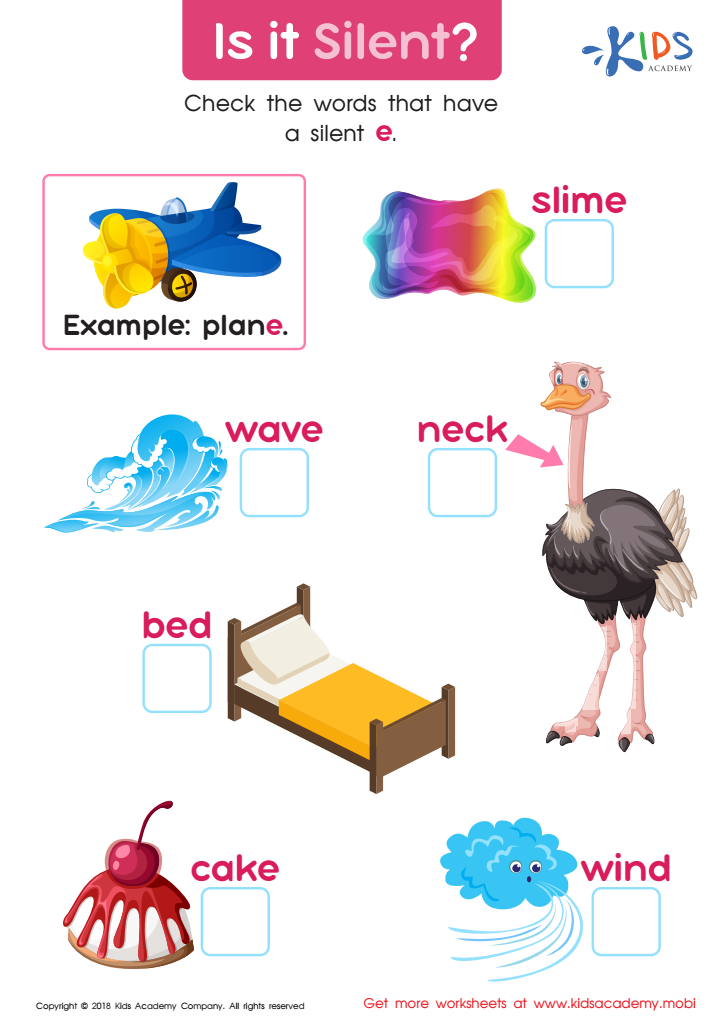
Phonetics can be tricky, like the sound of /e/ in 'egg' vs. the silent /e/ at the end of 'slime'. Ask your students to give more examples. Read out the words in this worksheet with your kids and ask them to identify the silent /e/ ones.
 Assign to My Students
Is It Silent? Worksheet
Worksheet
Silent E Maze Worksheet
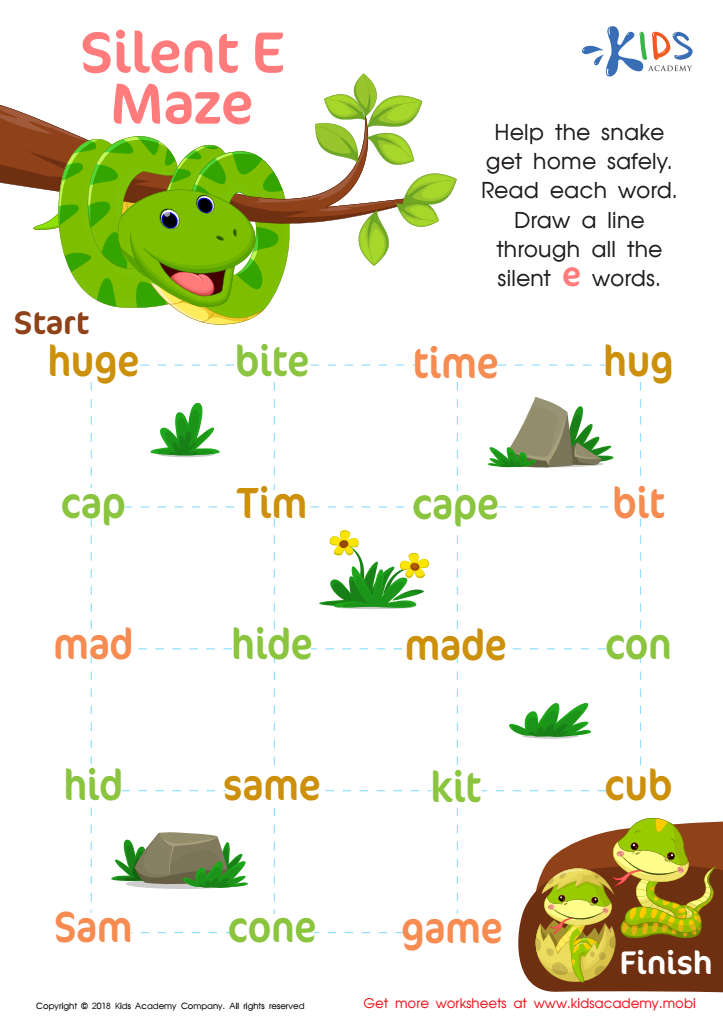
Kids love mazes! This fun printable worksheet lets them help a mama snake get home to her babies, using Silent E words. They'll practice fine motor skills, while they draw lines through words that have Silent E and words with closed syllables that don't. It's a great way to help them recognize Silent E words!
Silent E Maze Worksheet
Worksheet
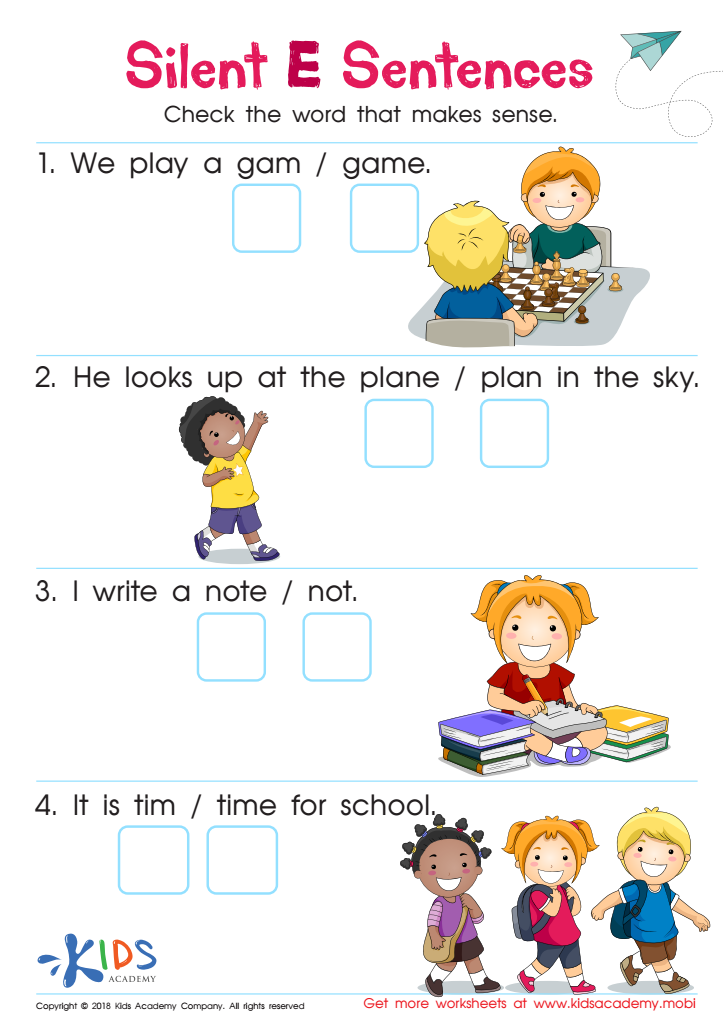
Silent E Sentences Worksheet
Young readers can find learning Silent E tricky, so this helpful worksheet can help! It teaches them to distinguish words that look the same but for the Silent E and choose the right word for sentence blanks. Kids can mark the correct answer and become familiar with closed syllables and words that require the E.
Silent E Sentences Worksheet
Worksheet
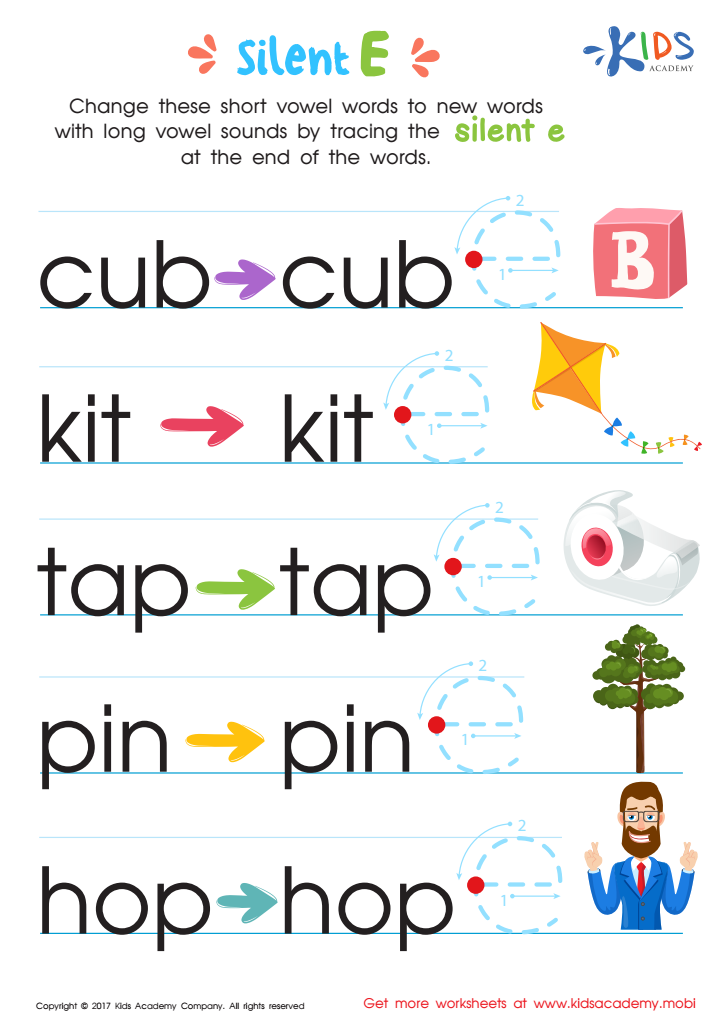
Silent E Words Worksheet
The letter e is amazing - it changes words without making a sound! Boost spelling and phonics with this Silent e worksheet from Kids Academy - fun and colorful!
Silent E Words Worksheet
Worksheet
Join Kids Academy for Free
Who is primarily going to use this learning content?


Normal Silent Vowels, also known as silent letters or silent vowels, are crucial for early language development in children ages 3-7. Understanding these concepts helps young learners grasp the complexities of English phonetics and improves their reading and spelling skills. For instance, in words like "cake" or "walk," the silent vowels play a significant role in pronunciation but are not directly sounded out.
Parents and teachers should care about this because recognizing silent vowels enhances phonemic awareness, which is foundational for literacy. Children who can identify these silent letters are better equipped to decode unfamiliar words, leading to improved reading fluency. Additionally, awareness of silent vowels helps to build their vocabulary as they encounter more complex words over time.
Introducing silent vowels in a playful and engaging manner can create a positive learning experience. By integrating fun activities, rhymes, and games, educators and parents can support children's exploration of language while fostering a love for reading. Overall, focusing on Normal Silent Vowels allows parents and teachers to set a solid groundwork for language arts, aiding children’s future academic success and communication skills. Expanding this skill set opens up new opportunities for enrichment and critical thinking in language learning.