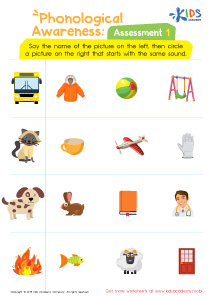
Normal Consonants Worksheets for Ages 3-8 - Page 2
26 filtered results
-
From - To
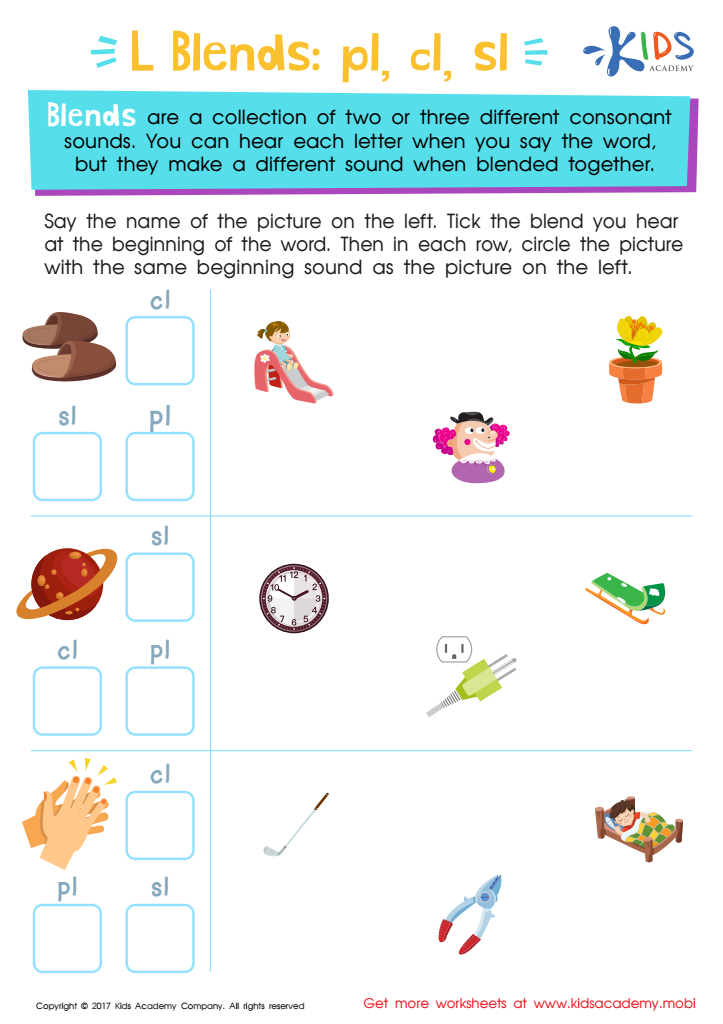
L Blends: "Pl", "Cl" and "Sl" Printable
 Assign to My Students
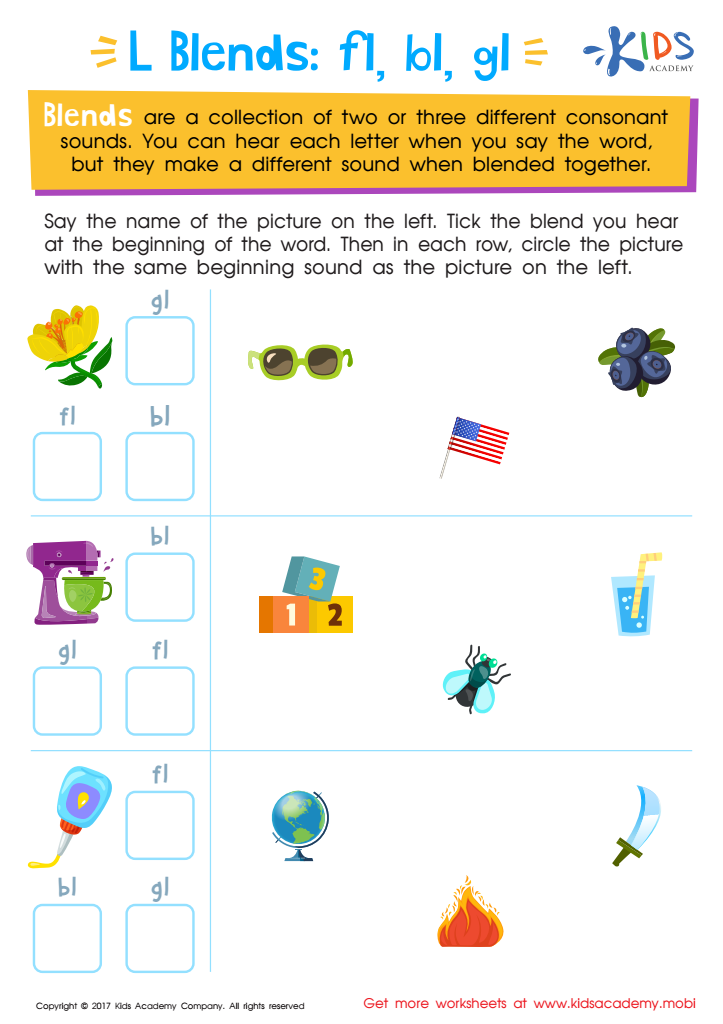
Blending Consonants: "Fl", "Bl" and "Gl" Printable



Parents and teachers should place importance on the development of normal consonant sounds for children ages 3-8, as this period is crucial for language acquisition and communication skills. Mastery of consonants lays the groundwork for clear and effective speech, which is fundamental in conveying thoughts, needs, and emotions. Proper consonant articulation enriches a child's phonemic awareness, which is essential for reading and writing skills that form the basis of academic achievement.
During early childhood, understanding and producing normal consonant sounds helps children interact successfully with peers and adults, facilitating social integration and the development of friendships. This not only builds communication skills but also greatly influences a child's confidence and self-esteem. Early intervention in correcting any consonant misarticulations ensures that children do not develop faulty speech habits, which can be difficult to change later on.
Moreover, strong phonological skills are correlated with better literacy outcomes. Consonant sounds play a key role in decoding words when learning to read. If children struggle with these basic speech sounds, they may face challenges in phonetic decoding and spelling, which can hinder their learning progress.
Paying close attention to a child's use of consonants enables caregivers and educators to provide timely support or speech therapy if required, ensuring every child achieves their full potential in speech and language development.