Normal Vowels Worksheets for Ages 3-8 - Page 4
73 filtered results
-
From - To
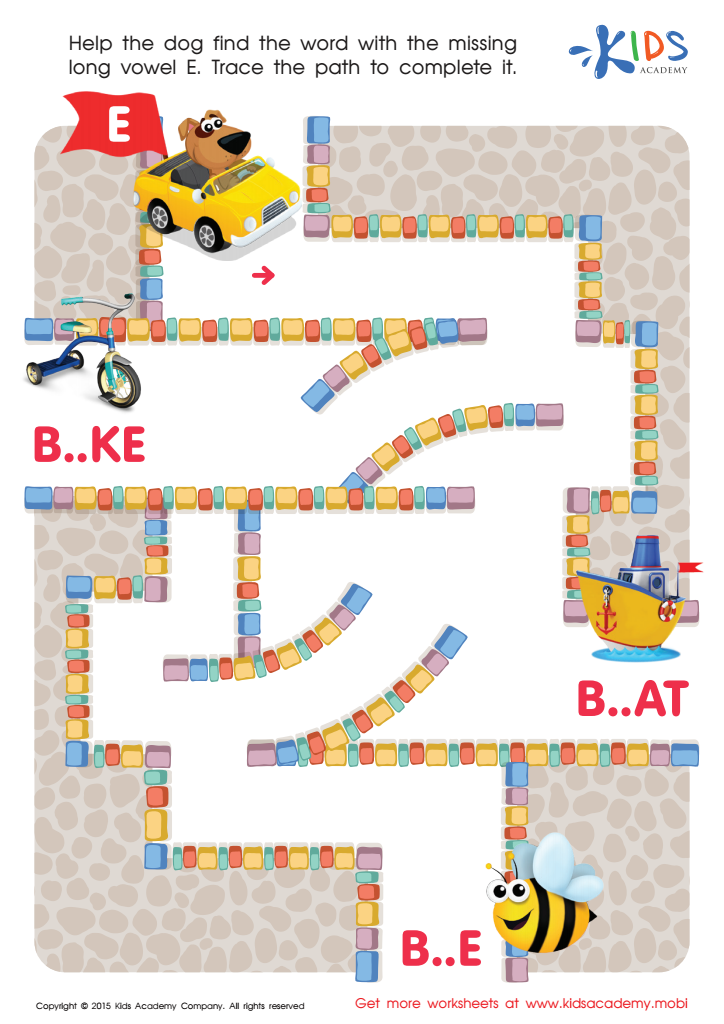
Long Vowel Sound E Worksheet
 Assign to My Students





Fostering an understanding of normal vowels in early learners (ages 3-8) is crucial for their foundational literacy skills. Vowels are the building blocks of language, as they are found in virtually every English word, contributing significantly to word formation and pronunciation. Ensuring that children have a firm grasp on identifying and pronouncing vowels correctly sets the stage for fluent reading and effective communication.
By the ages of 3 to 8, children experience rapid language development. Introducing them to normal vowels— 'a, e, i, o, u' —at this stage helps enhance their phonemic awareness, a critical aspect of reading readiness. Phonemic awareness is the ability to recognize and manipulate individual sounds in spoken words, which is fundamental for decoding words during reading.
For parents and teachers, paying attention to vowels means providing targeted activities and exercises that strengthen this critical skill. This can include reading aloud, playing phonics games, and practicing vowel sounds through songs and rhymes. These engaging activities not only build literacy but also make learning fun, helping children develop a positive attitude toward education.
Ultimately, a strong grasp of normal vowels will bolster a child’s reading, writing, and speaking abilities, setting a strong educational foundation that will benefit them throughout their academic journey.