Normal Animals Worksheets for Ages 3-8 - Page 3
49 filtered results
-
From - To
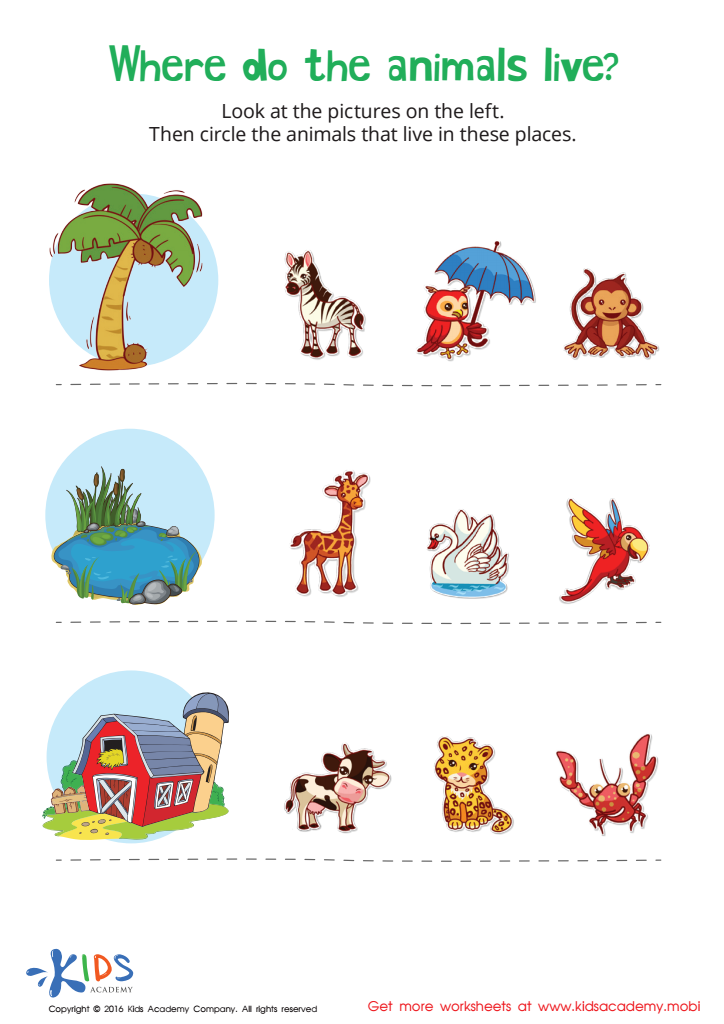
Where Animals Live Worksheet
 Assign to My Students







Parents and teachers should care about introducing Normal Animals to children aged 3-8 for several compelling reasons. First, animals serve as a wonderful gateway to learning. Children are naturally drawn to animals, and engaging with them can spark curiosity about science, biology, and the environment. By teaching them about Normal Animals—those commonly found in our surroundings—adults can foster an early appreciation for nature and promote ecological awareness.
Secondly, learning to identify and understand animals enhances vocabulary and language development. Discussing traits, habitats, and behaviors of these animals allows children to improve their communication skills while adding new words to their lexicon.
Additionally, understanding Normal Animals promotes empathy and emotional intelligence. Sharing stories or experiences involving animals can help children cultivate compassion and responsibility toward living beings. This foundation nurturing empathy can assist them in forming meaningful relationships throughout their lives.
Lastly, including Normal Animals in educational curriculums can support social learning. Group activities and discussions about animals can encourage teamwork, active participation, and a sense of community among young learners.
In summary, introducing Normal Animals not only supports cognitive and emotional development but also fosters a lifelong connection with the natural world.








