
Normal Time Worksheets for Ages 4-6
5 filtered results
Difficulty Level
Grade
Age
-
From - To
Subject
Activity
Standards
Discover engaging Normal Time Worksheets designed specifically for children aged 4-6! These interactive resources help young learners grasp the concept of time in a fun and approachable way. With colorful illustrations and age-appropriate activities, kids will enjoy learning to read analog clocks, understand hour and minute hands, and develop critical time-telling skills. Perfect for homeschooling or supplemental learning, our worksheets aim to boost confidence and promote a strong foundation in math. Parents and educators can easily access and print these materials, ensuring little ones have everything they need to master the basics of time. Start their learning adventure today!
Favorites
With answer key
Interactive
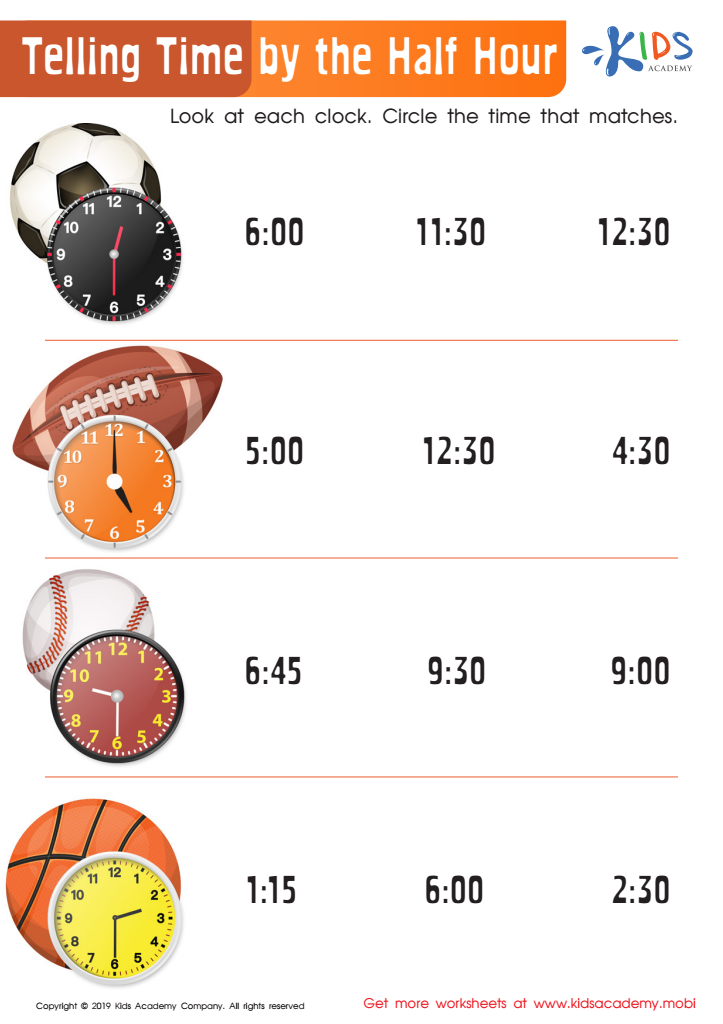
Telling Time by the Half Hour Worksheet
Teach kids to tell time with this worksheet! Four clocks are labeled with different times; help your child circle the right one. It's a great way to teach them to read analog and digital clocks, watches, and written times. Easy and fun learning!
 Assign to My Students
Telling Time by the Half Hour Worksheet
Worksheet
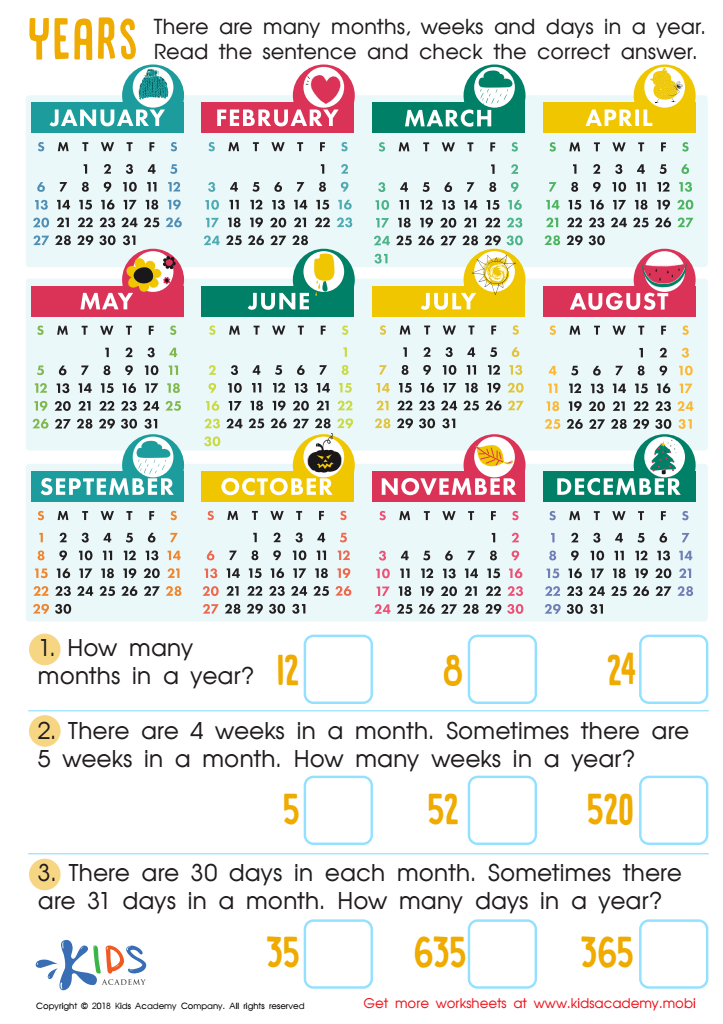
Years Worksheet
This worksheet is a great way to test your children's knowledge of the calendar. Ask them if they can name the days of the week and months in a year. Read and discuss the questions with them and help them find the right answers. Encourage them to check their answers.
Years Worksheet
Worksheet
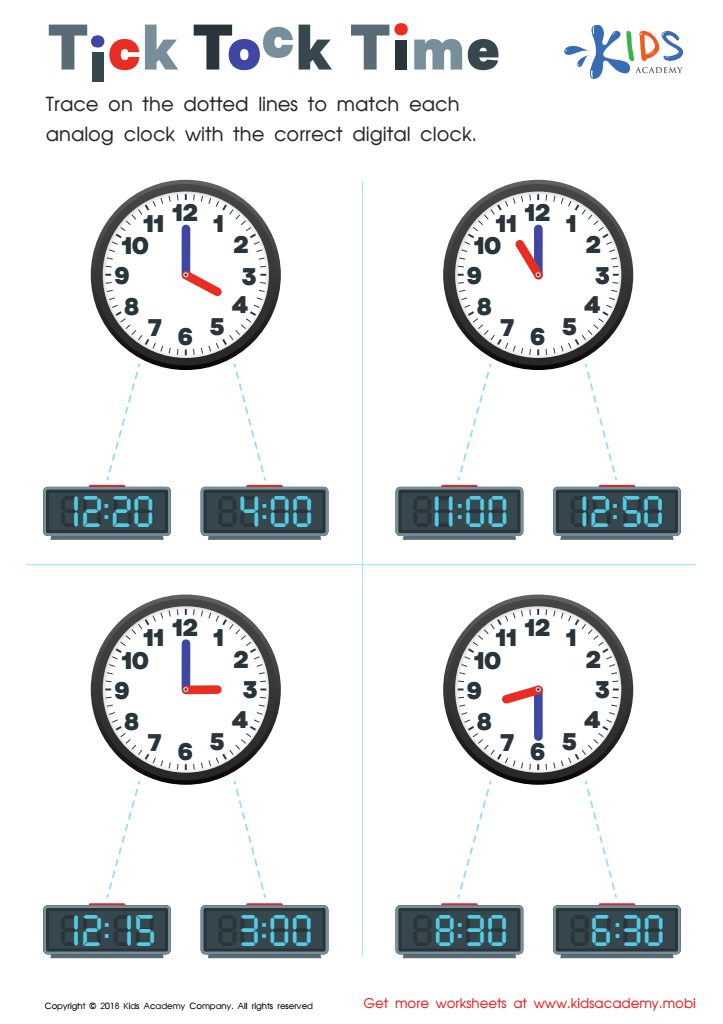
Tick Tock Time Worksheet
Trace the dotted lines on this worksheet to match analog and digital clocks! It's a great way to help your kids learn time-telling. They'll get better at converting analog to digital, and vice versa. Get your children to try it - it's a fun way to practice!
Tick Tock Time Worksheet
Worksheet
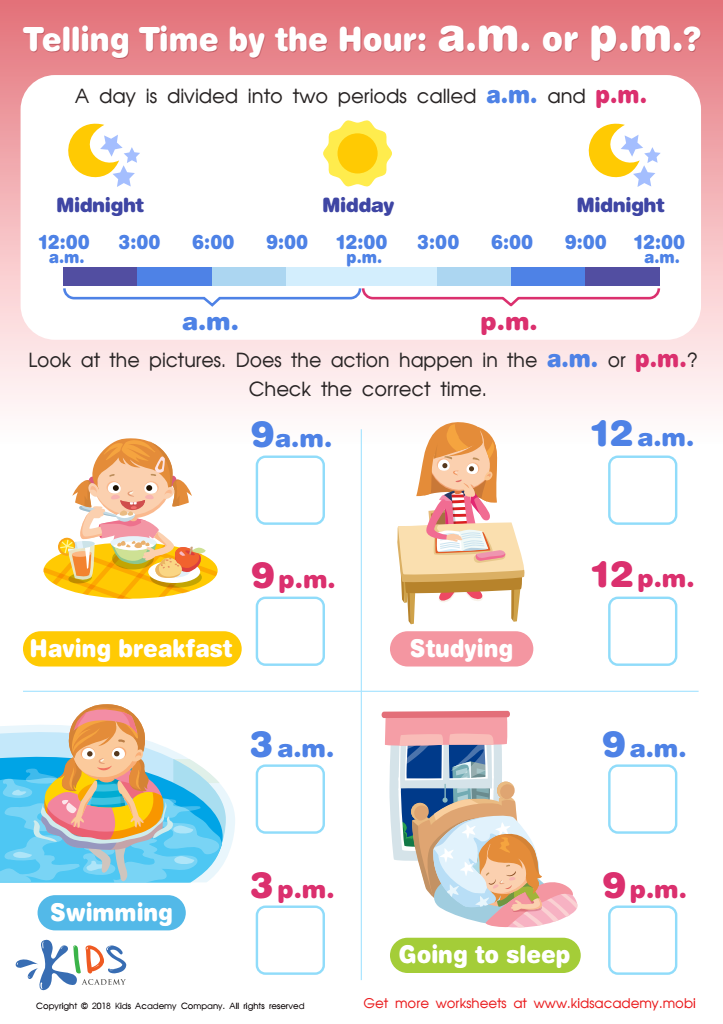
Tilling Time by the Hour: a.m. or p.m.? Worksheet
Can your child tell the time? This worksheet will help them learn. Explain a.m and p.m. and look at the pictures together. Ask your child if the activities happen in the a.m or p.m and help them check the correct time.
Tilling Time by the Hour: a.m. or p.m.? Worksheet
Worksheet
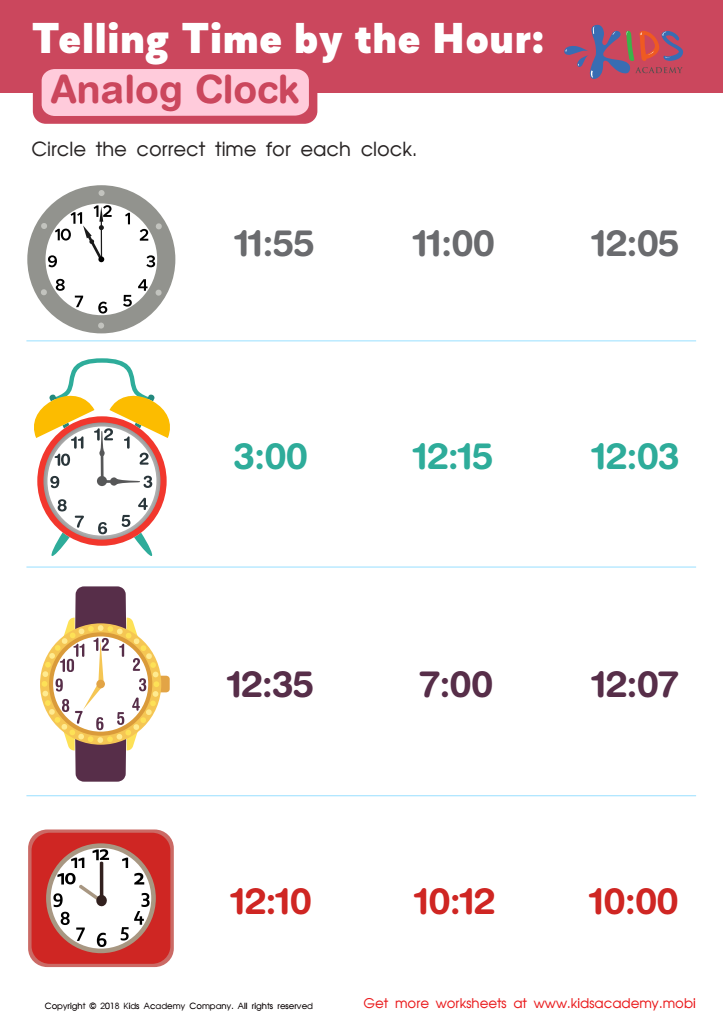
Telling Time by the Hour: Analog Clock Worksheet
Are your kids skilled at telling time? Find out with this worksheet featuring four clocks. Ask your child to identify the type of clock, then circle the correct time from the options. Help your child if needed and get the answers you need.
Telling Time by the Hour: Analog Clock Worksheet
Worksheet
Join Kids Academy for Free
Who is primarily going to use this learning content?








Normal Time activities for children aged 4-6 are crucial for their developmental growth and early learning experience. During this pivotal stage, children are enticed by structured activities that advance their cognitive, social, and emotional skills. Parents and teachers should care about Normal Time because it supports critical aspects of development, such as early literacy and numeracy, while promoting creativity through play.
At this age, children thrive on routine and predictability, which helps them feel secure and fosters a positive learning environment. Engaging in Normal Time activities also enhances their ability to follow directions and remain focused, vital skills for successful lifelong learning. Additionally, these interactions encourage socialization, teaching children how to work collaboratively, develop empathy, and refine communication skills.
Moreover, Normal Time activities cater to varying learning styles and can act as a foundational stepping stone for more complex concepts, preparing children for future educational challenges. By prioritizing Normal Time, parents and teachers create frameworks that encourage exploration and curiosity, pivotal traits that will benefit children in their continued education.
Ultimately, investing in Normal Time is an investment in children’s overall well-being and success, paving the way for a brighter future.








