Normal Sight Words Worksheets for Ages 4-7
10 filtered results
-
From - To
Boost early reading skills with our Normal Sight Words Worksheets designed for children ages 4-7. These engaging and educational resources help young learners recognize and master the most common words they’ll encounter in texts. By introducing kids to sight words, we enhance their reading fluency, comprehension, and confidence. Our printable worksheets provide varied activities, games, and exercises that make learning fun and effective. Perfect for both classroom and at-home learning, these worksheets pave the way for reading success by ensuring foundational vocabulary is solid. Give your child the tools they need to become proficient readers with our expertly crafted worksheets.
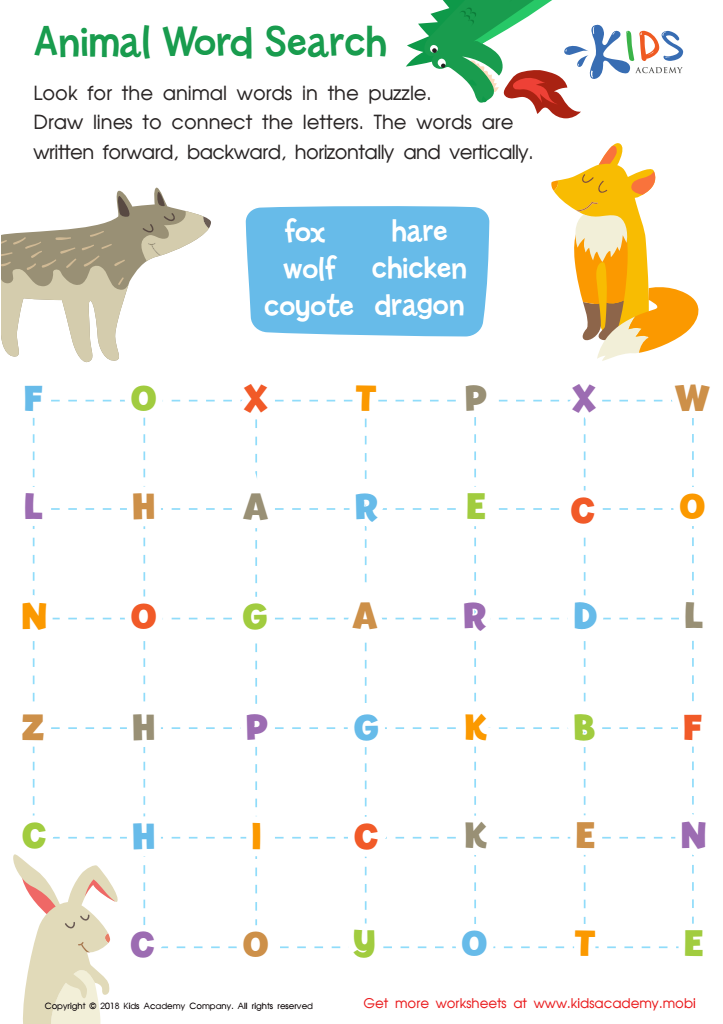
Animal Word Search Worksheet
 Assign to My Students



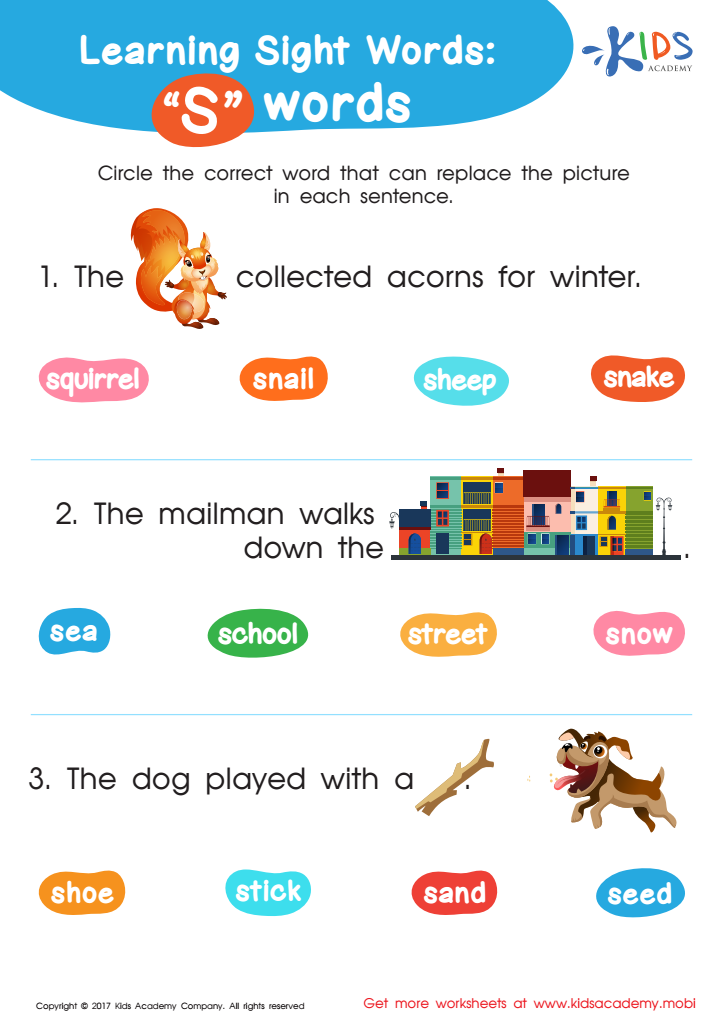
S Words Sight Words Worksheet
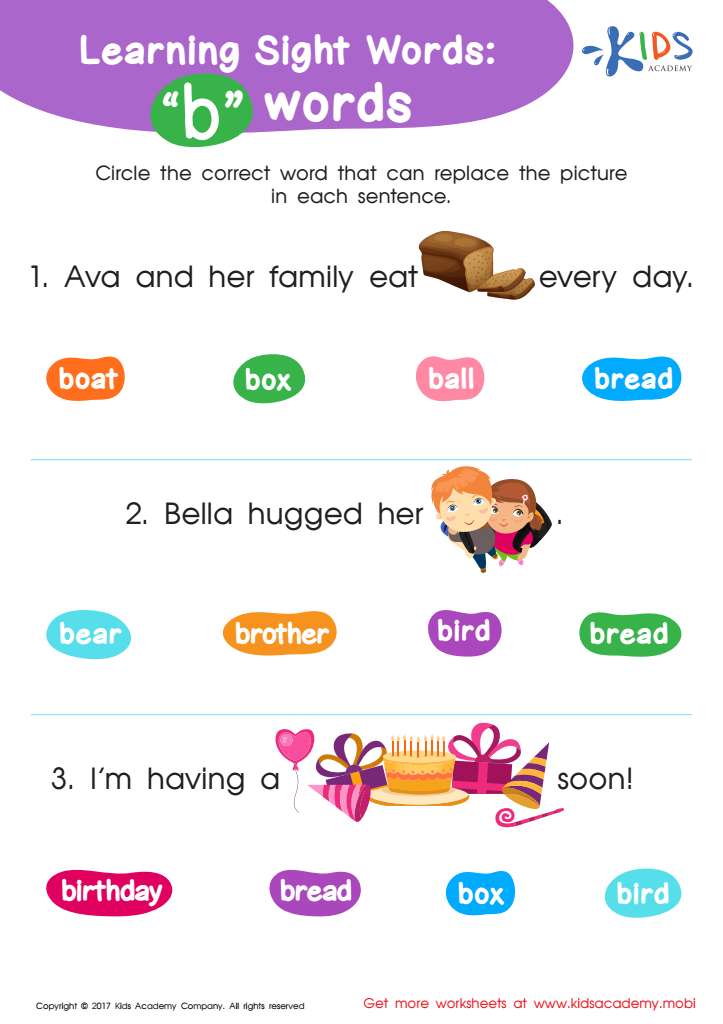
Sight Words Free Worksheet – B Words
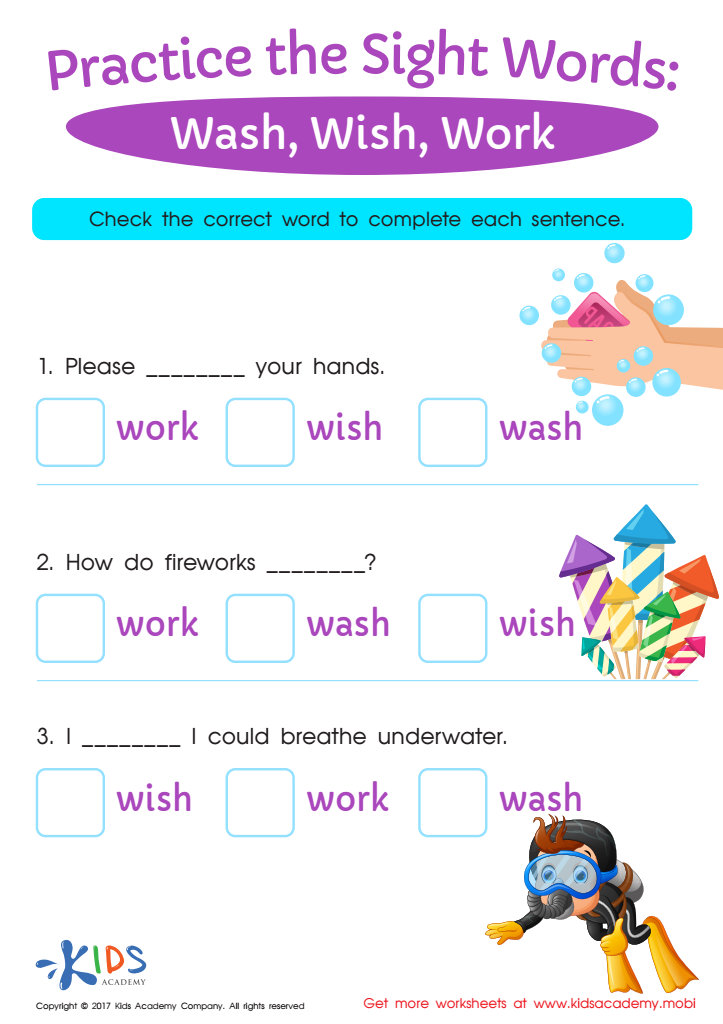
Wash, Wish, Work Sight Words Worksheet
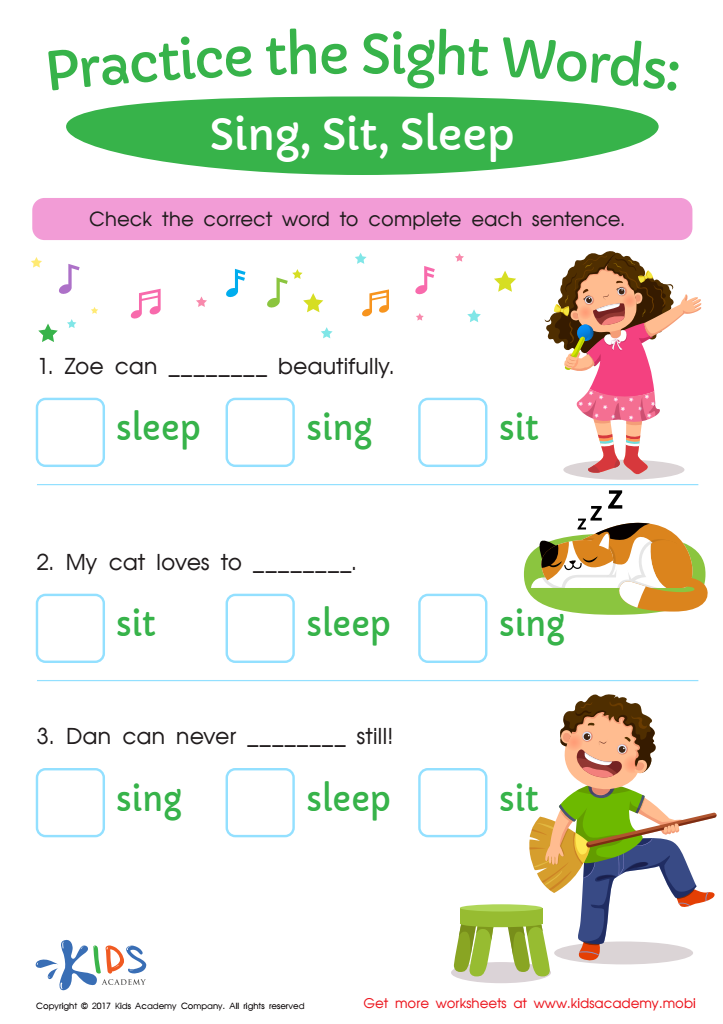
Sing, Sit, Sleep Sight Words Worksheet
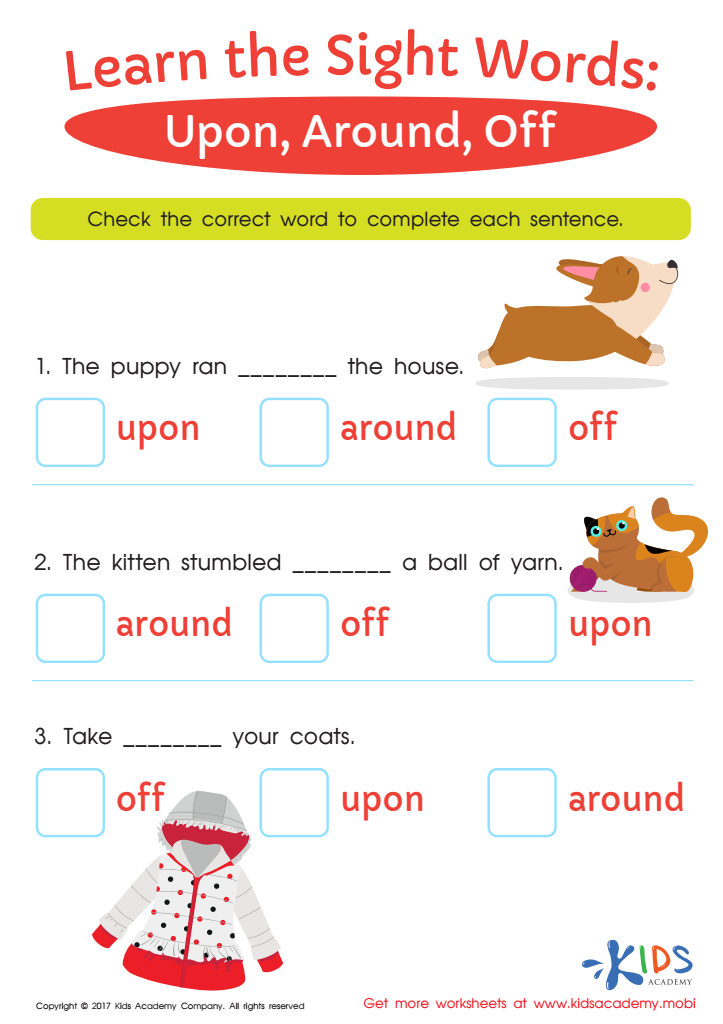
Upon, Around, Off Sight Words Worksheet
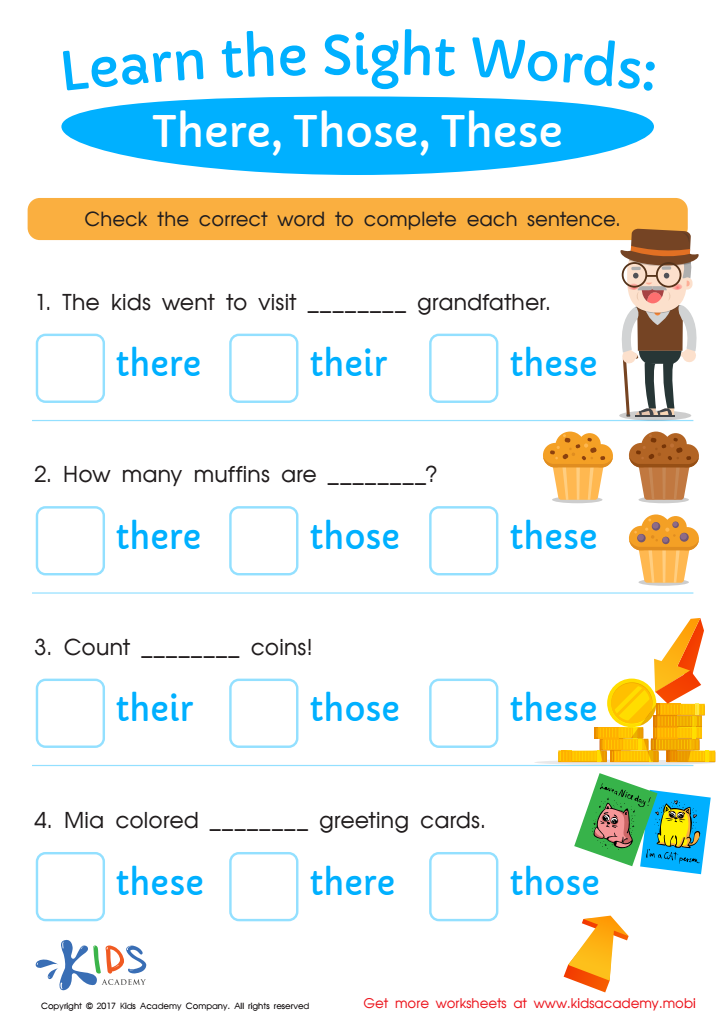
There, Those and These Sight Words Worksheet
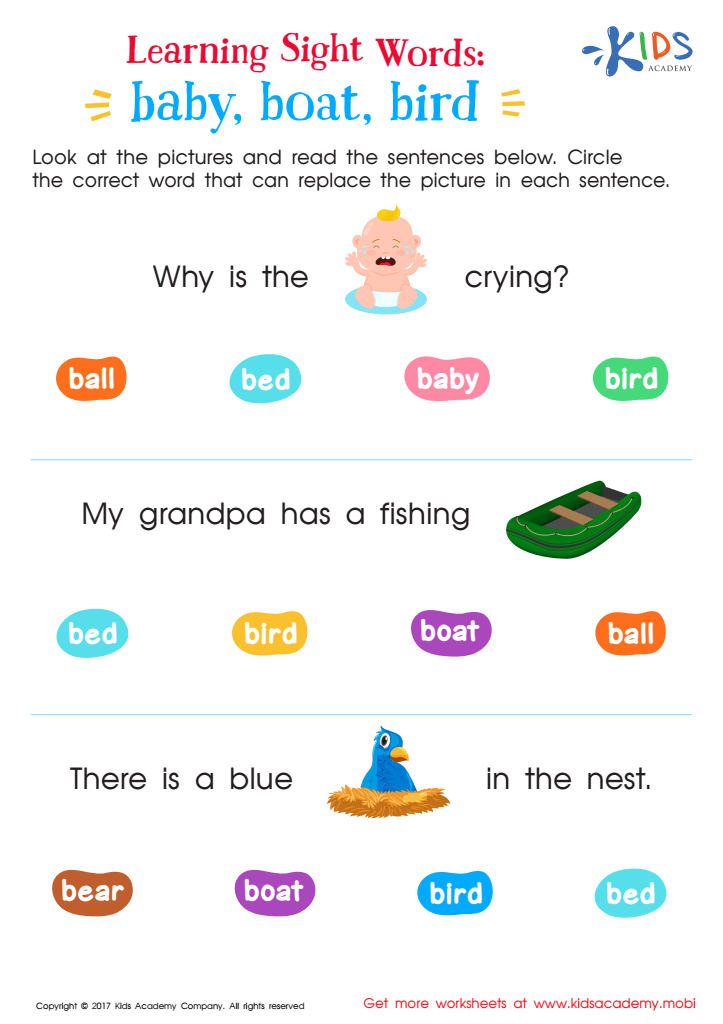
Baby, Boat, Bird Worksheet Sight Words Worksheet
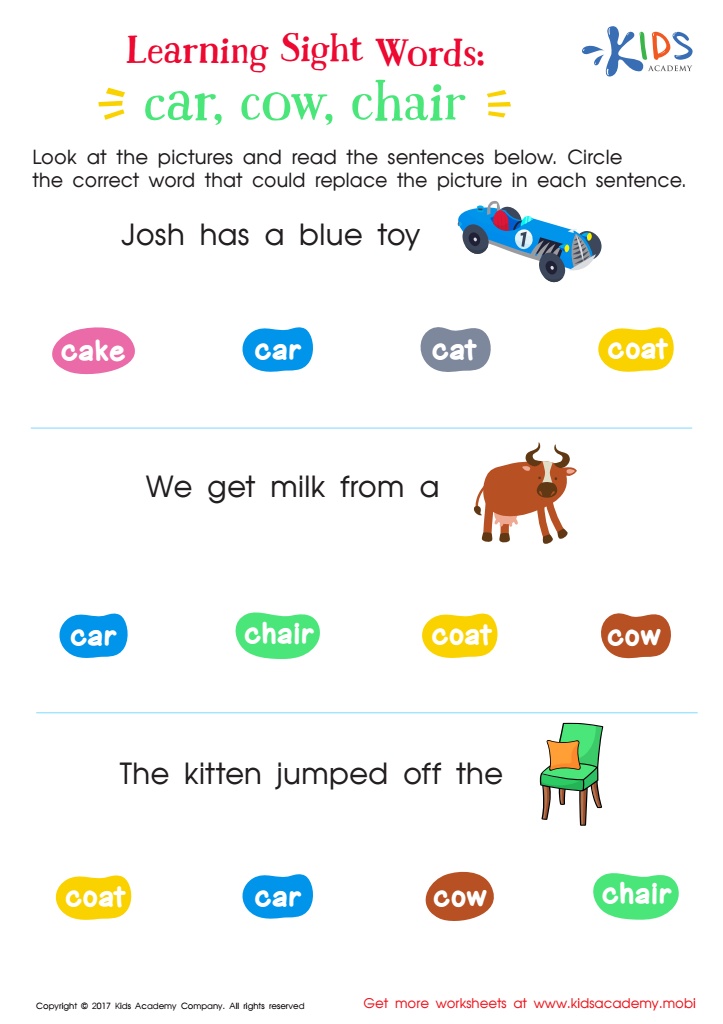
Car, Cow, Chair Worksheet Sight Words Worksheet
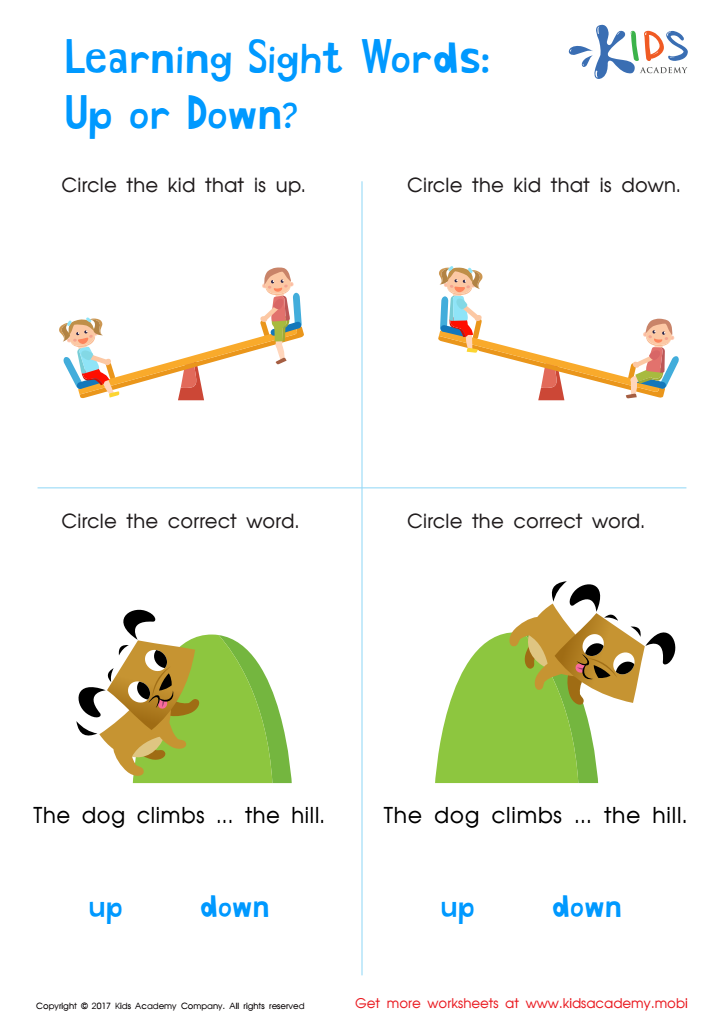
Up or Down Printable Sight Words Worksheet








Normal sight words, also known as high-frequency words, are essential components of early literacy development for children aged 4-7. These words often appear in texts and must be instantly recognizable, without requiring decoding each time. This recognition enables children to read more fluently and comprehend text more efficiently. By mastering sight words, children can allocate cognitive resources towards understanding the context and meaning of what they are reading, rather than getting bogged down by sounding out each individual word.
For parents and teachers, placing emphasis on sight words early on can significantly enhance a child's reading experience. Proficiency in sight words builds a solid foundation for future learning, fostering a positive and confident attitude toward reading. Children who are familiar with common sight words enjoy smoother navigation through sentences, which helps maintain their interest and motivation in reading.
Moreover, recognizing sight words contributes to writing skills, as children begin to use these words correctly and more frequently in their own compositions. Therefore, incorporating activities that reinforce sight word recognition, such as flashcards, repeated reading, and engaging word games, can be beneficial. By actively supporting the development of sight word knowledge, parents and teachers are setting young learners on a successful path toward literacy.