Normal Plants and Animals Worksheets for Ages 4-7 - Page 4
73 filtered results
-
From - To
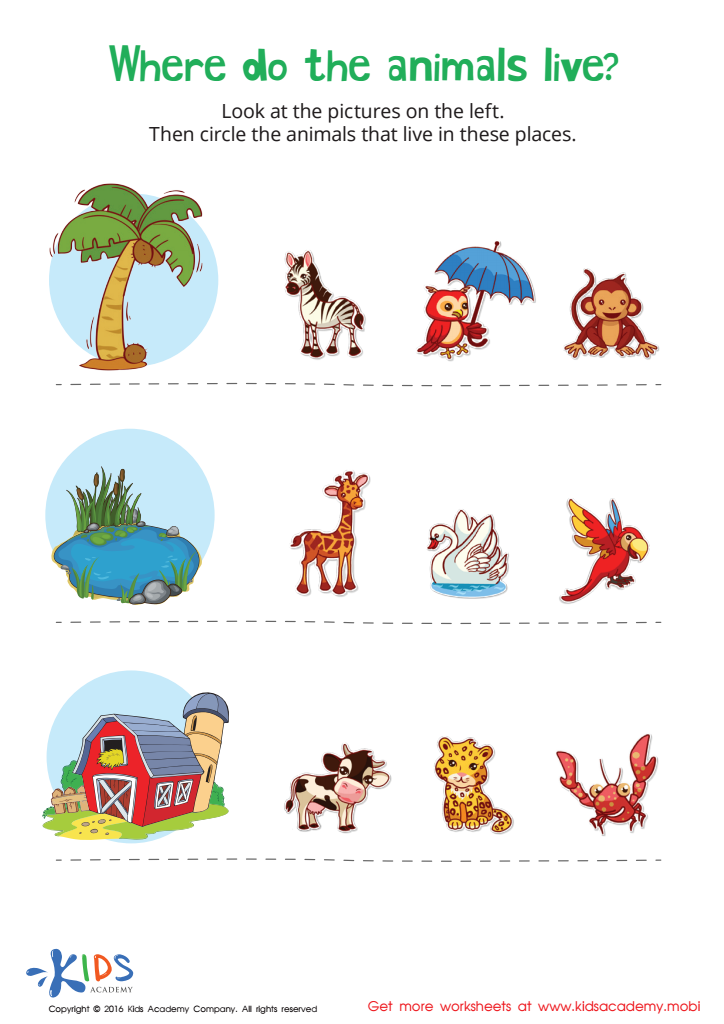
Where Animals Live Worksheet
 Assign to My Students



















Understanding normal plants and animals is essential for children aged 4-7, as it nurtures their curiosity and promotes a connection with nature. At this age, children are incredibly observant and eager to explore their environment. Teaching them about the plants and animals around them encourages scientific inquiry, where they can ask questions like "Why do leaves change color?" or "Where do butterflies come from?"
Engaging with the natural world also fosters critical skills such as observation, classification, and the ability to make connections—functions that form the foundation for lifelong learning. When parents and teachers emphasize normal plants and animals, they empower children with knowledge about ecosystems and the importance of biodiversity. This awareness cultivates empathy towards living organisms and can spark a passion for conservation at an early age.
Moreover, hands-on experiences like gardening or observing wildlife enrich children's emotional development by nurturing responsibility and appreciation for life. Such activities also enhance their cognitive development as they categorize creatures and grow their vocabulary. In essence, caring about normal plants and animals is about instilling an appreciation for nature that benefits children's intellectual, emotional, and social development, while preparing them to be environmentally conscious future citizens.







