Normal Space Worksheets for Ages 4-7 - Page 2
29 filtered results
-
From - To
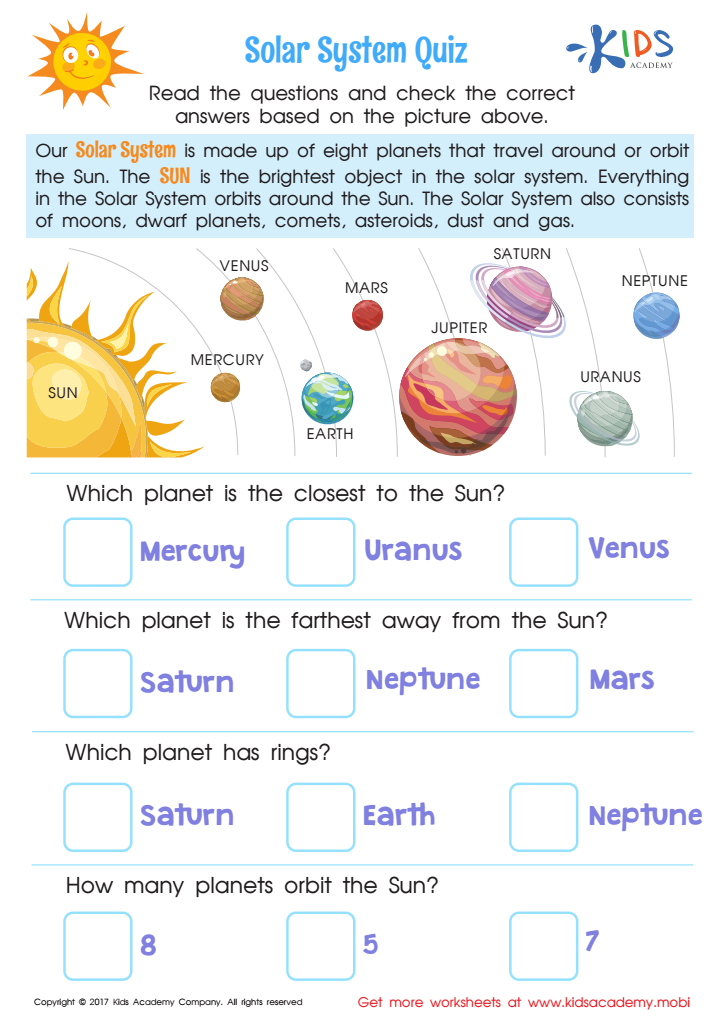
Solar System Quiz Printable
 Assign to My Students
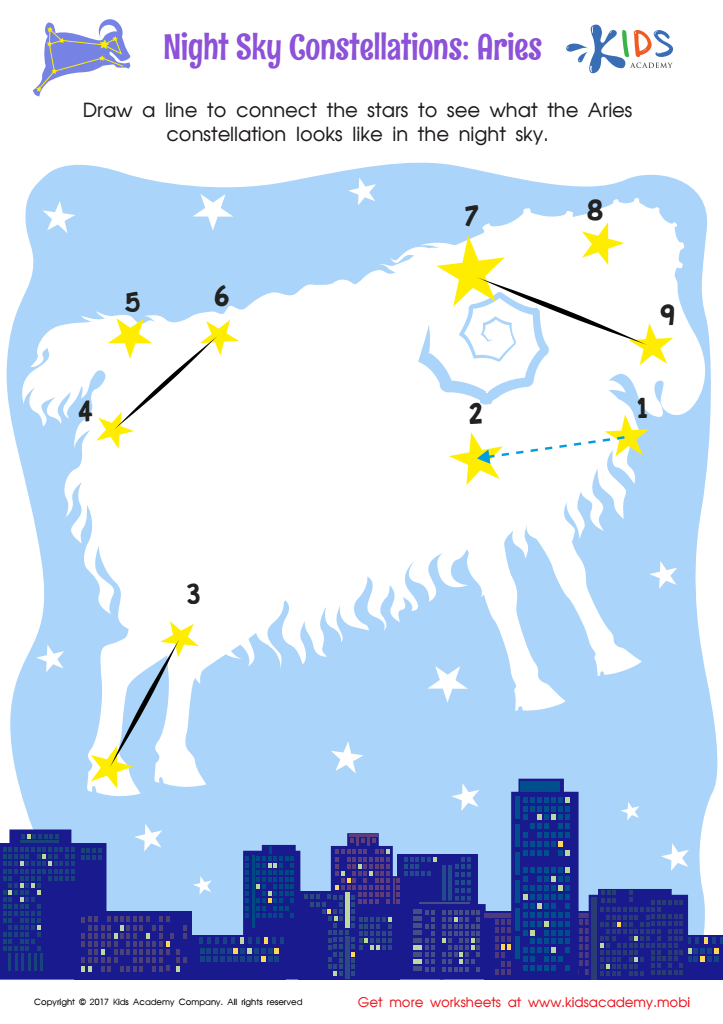
Night Sky Constellations: Aries Worksheet
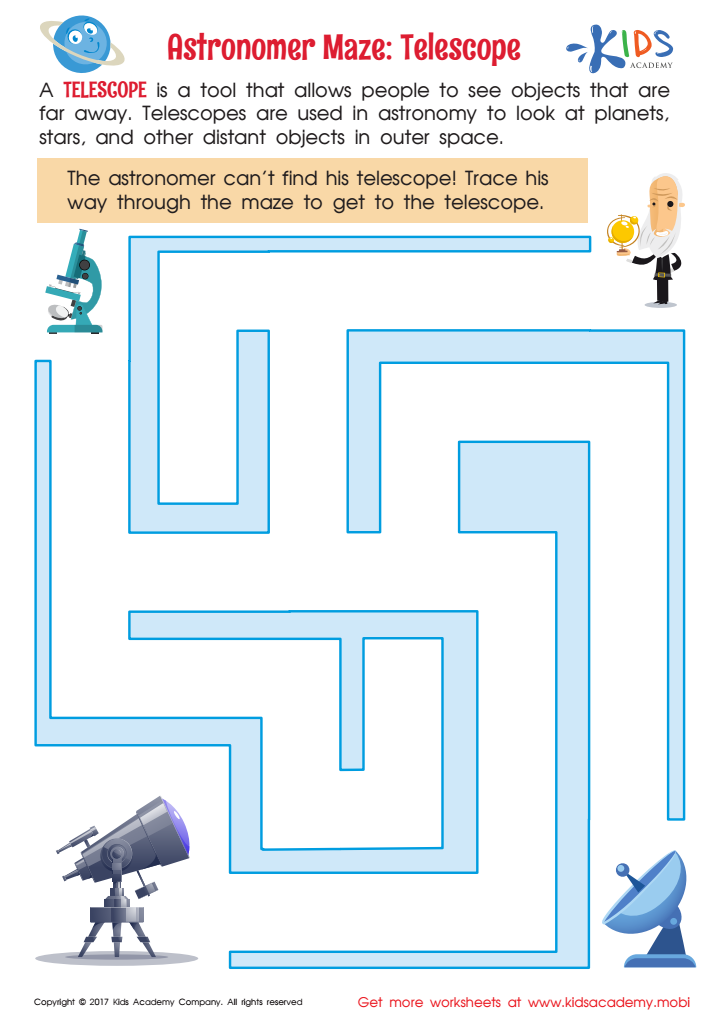
Astronomer Maze: Telescope Worksheet
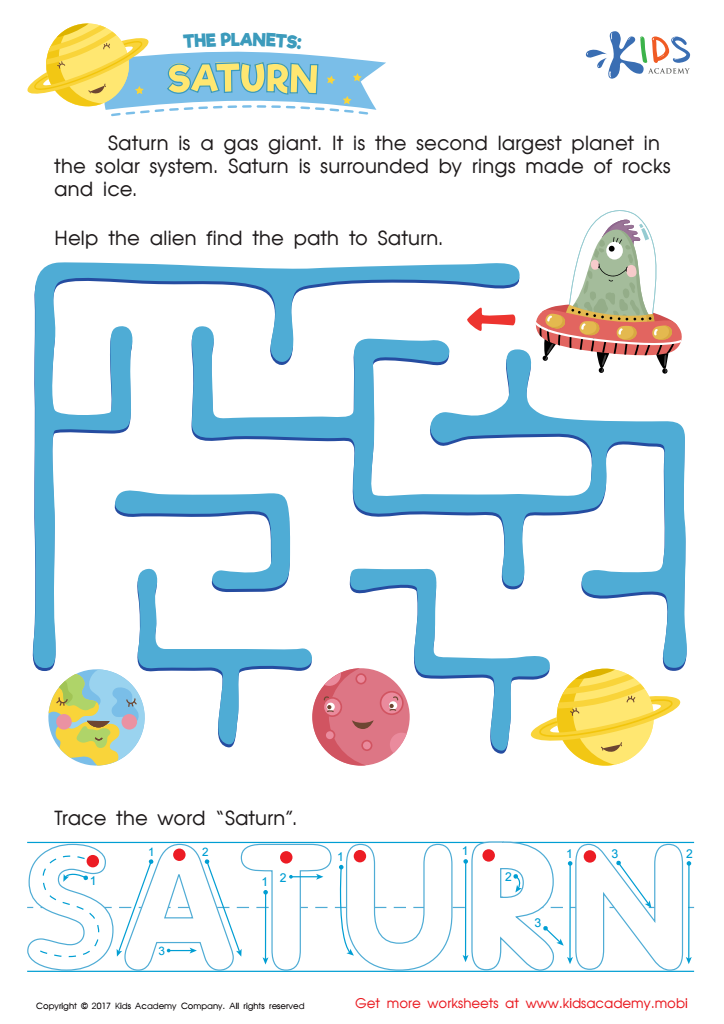
The Planets: Saturn Printable







Normal Space for Ages 4-7 is crucial for young children's development as it provides a nurturing environment where they can explore, learn, and thrive. This foundational stage in a child's life is marked by rapid cognitive, social, and emotional growth. A supportive space encourages curiosity, creativity, and resilience, essential qualities for lifelong learning.
Parents and teachers should care about this concept because Normal Space empowers children to engage with their peers and their environment safely, fostering meaningful relationships. In this space, children can express themselves freely, developing self-confidence and independence while learning essential social skills like sharing, empathy, and cooperation.
Furthermore, Normal Space integrates play-based learning, a highly effective method for young children to absorb new information and develop critical thinking skills. Engaging activities encourage exploration and problem-solving, which are essential components of a well-rounded education.
Lastly, providing a Normal Space acknowledges and supports diversity in children’s needs and learning styles, ensuring every child feels included and valued. Parents and teachers play a vital role in creating these enriching environments, directly impacting the quality of early education and setting the stage for future academic and social success. Prioritizing Normal Space ultimately benefits children and the wider community.







