Normal Numbers 11–20 Worksheets for Ages 4-8
4 filtered results
Difficulty Level
Grade
Age
-
From - To
Subject
Activity
Standards
Introduce your child to the exciting world of numbers 11-20 with our engaging collection of worksheets designed for ages 4-8. These activities are carefully crafted to help young learners develop essential counting, number recognition, and basic arithmetic skills. Bright visuals and fun scenarios make learning both enjoyable and effective. Perfect for teachers and parents alike, our worksheets provide a solid foundation for mathematical confidence, ensuring kids grasp fundamental concepts with ease. Foster your child's love for math and watch them excel with our expertly designed resources tailored to their developmental needs. Start exploring numbers 11-20 today!
Favorites
With answer key
Interactive
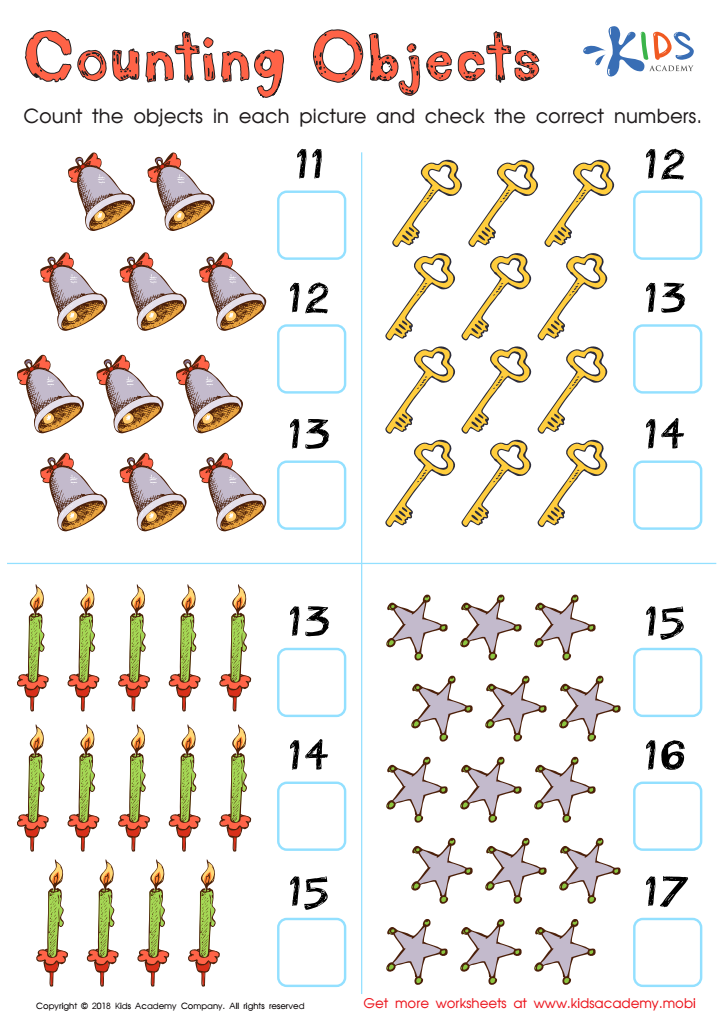
Counting Numbers Worksheet For Kindergarten
This worksheet is a great way to get your child practicing foundational math skills. With bright pictures to count, counting numbers just got a lot more fun! Get them ready for future math success and help them hone their early math skills.
 Assign to My Students
Counting Numbers Worksheet For Kindergarten
Worksheet
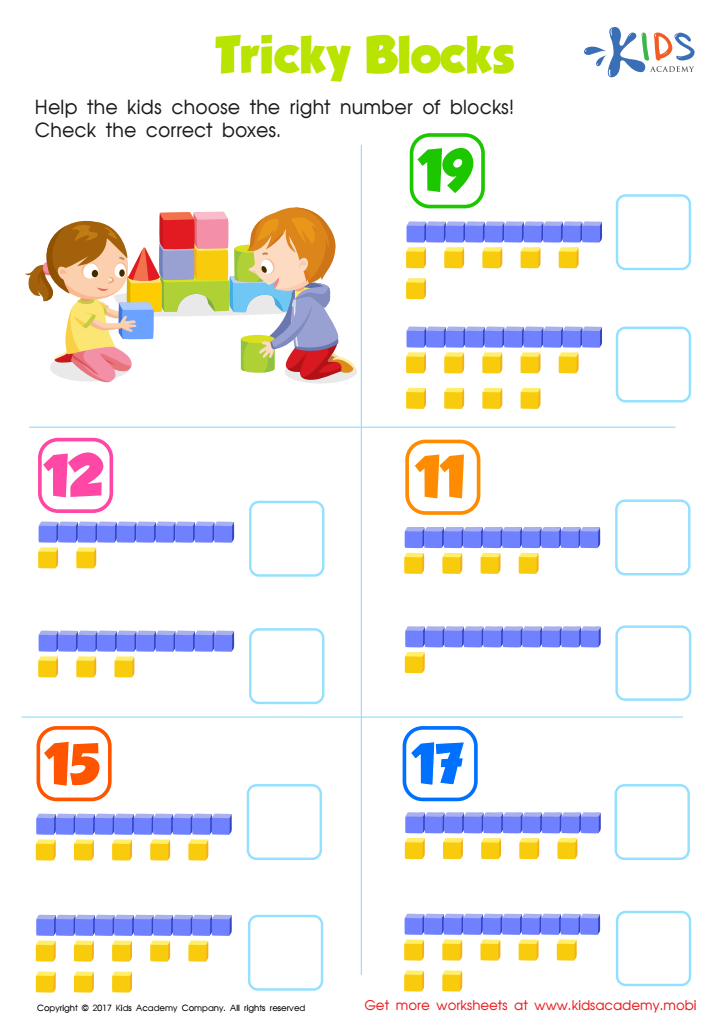
Tricky Blocks Worksheet
Help your child count with this printable worksheet. You'll be able to explain the technicalities of each answer as you work together to count the boxes and choose the correct number in the spaces provided. This will help your child better understand the concept and will go faster than if they do it alone.
Tricky Blocks Worksheet
Worksheet
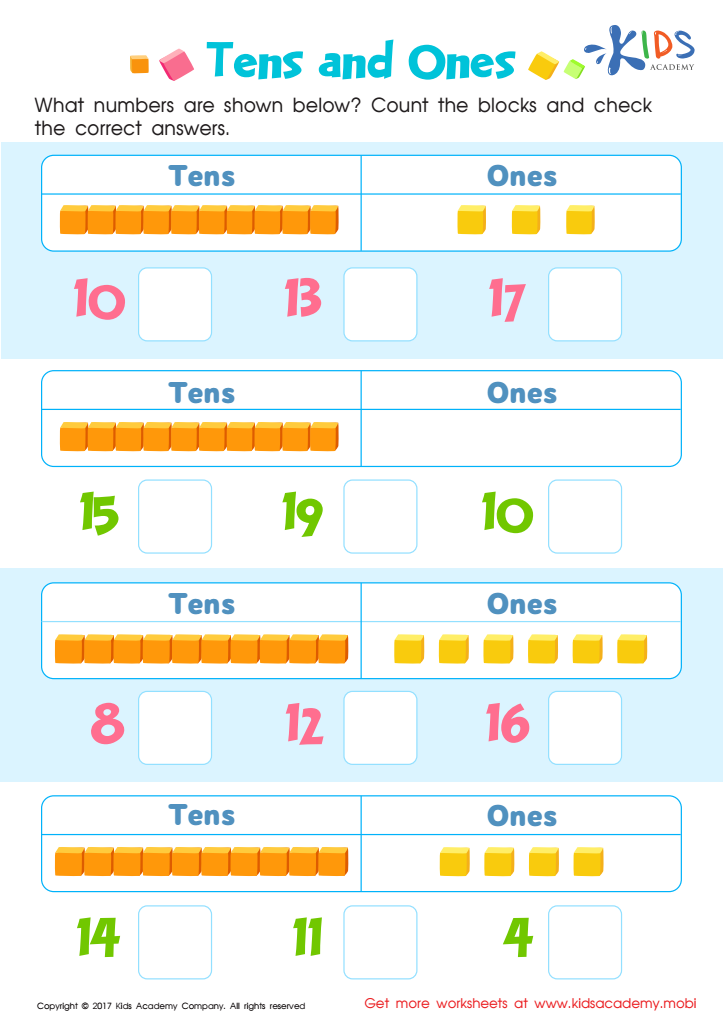
Tens and Ones Worksheet
Help your child make math fun with this worksheet! Count the blocks on both sides and enter the total in the box below the figures. This will help them overcome any math-related anxieties they might have and let them enjoy the learning process.
Tens and Ones Worksheet
Worksheet
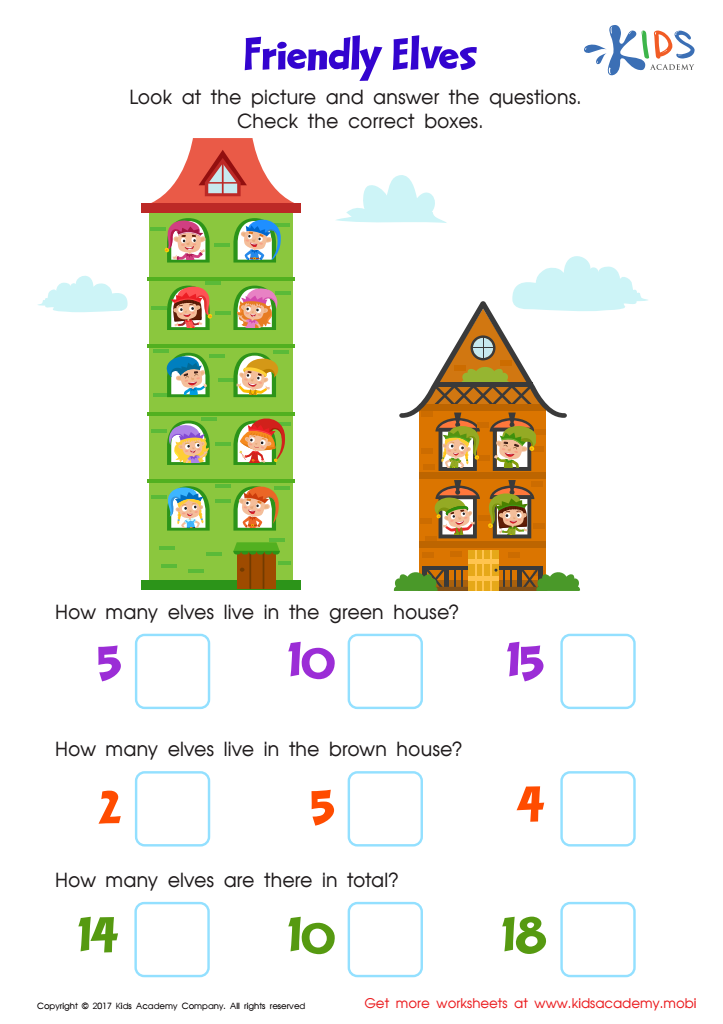
Place Value: Friendly Elves Worksheet
This fun worksheet teaches kids to count elves, answer questions about houses, and practice math! Look at the picture and count the elves in each house. How many are in the green and brown house? Tick the correct answer boxes. Perfect for young learners!
Place Value: Friendly Elves Worksheet
Worksheet
Join Kids Academy for Free
Who is primarily going to use this learning content?



Parents and teachers play a crucial role in nurturing a child's understanding of foundational mathematical concepts. Focusing on normal numbers 11–20 is particularly important for young children ages 4-8, a period known for rapid cognitive development and skill acquisition. Establishing a solid grasp of these numbers sets the stage for future success in more complex mathematical topics.
Firstly, understanding numbers 11–20 helps children recognize patterns and sequences, which are essential cognitive skills not just in math but in everyday problem-solving too. These numbers introduce students to the concept of "teens," helping them learn number composition (like 10+1 for 11) and place value, crucial for understanding larger numbers and arithmetic operations.
Moreover, learning these numbers enhances counting skills and ordinality, key components of number sense. It bridges the transition from counting single digits to thinking in tens and units, facilitating easier comprehension of addition and subtraction.
Finally, engagement with these numbers can incorporate fun, interactive activities that foster a positive attitude toward math. Games and manipulatives can make learning tangible and enjoyable, reducing math anxiety.
Investing time in helping children master numbers 11–20 equips them with the confidence and skills they'll use in the classroom and beyond, fostering a lifelong love for numbers and problem-solving.