Normal Comparing Numbers Worksheets for 4-Year-Olds
4 filtered results
Difficulty Level
Grade
Age
-
From - To
Subject
Activity
Standards
Introducing our captivating "Normal Comparing Numbers for 4-Year-Olds" worksheets, expertly crafted to introduce the foundational concept of number comparison to young learners. These engaging worksheets are designed to captivate the minds of 4-year-olds, making learning both fun and educational. Through a series of thoughtfully constructed activities, children will explore and master the basics of comparing numbers, setting a strong mathematical foundation. Perfect for preschoolers, our worksheets are an excellent resource for parents and educators aiming to nurture a love for numbers in their little ones. Dive into our Normal Comparing Numbers worksheets and watch your child's confidence and skills grow!
Favorites
With answer key
Interactive
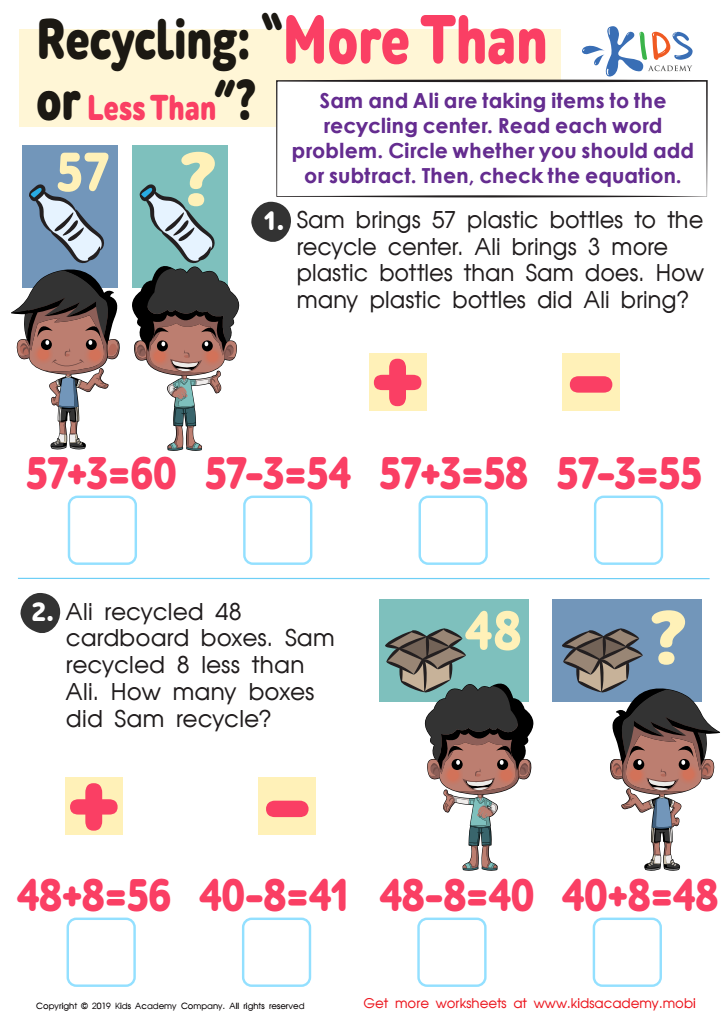
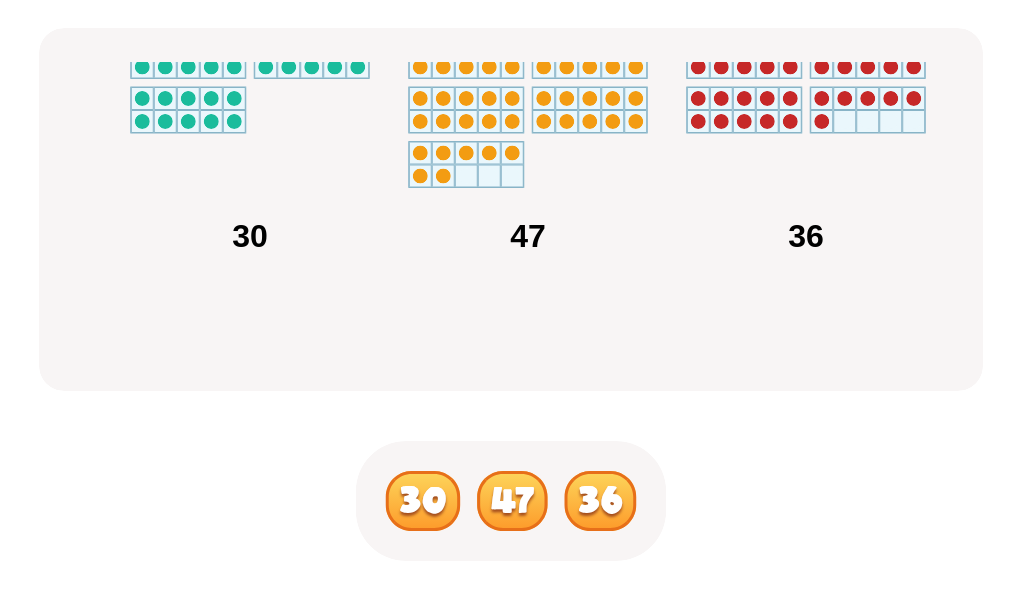
Recycling - More or Less Worksheet
Your child can compare numbers and solve word problems with this free worksheet. Help them understand what's being asked as Sam and Ali take items to the recycling center. They can choose the correct equation to match the word problem and apply their skills in reading and pulling out the appropriate information.
 Assign to My Students
Recycling - More or Less Worksheet
Worksheet
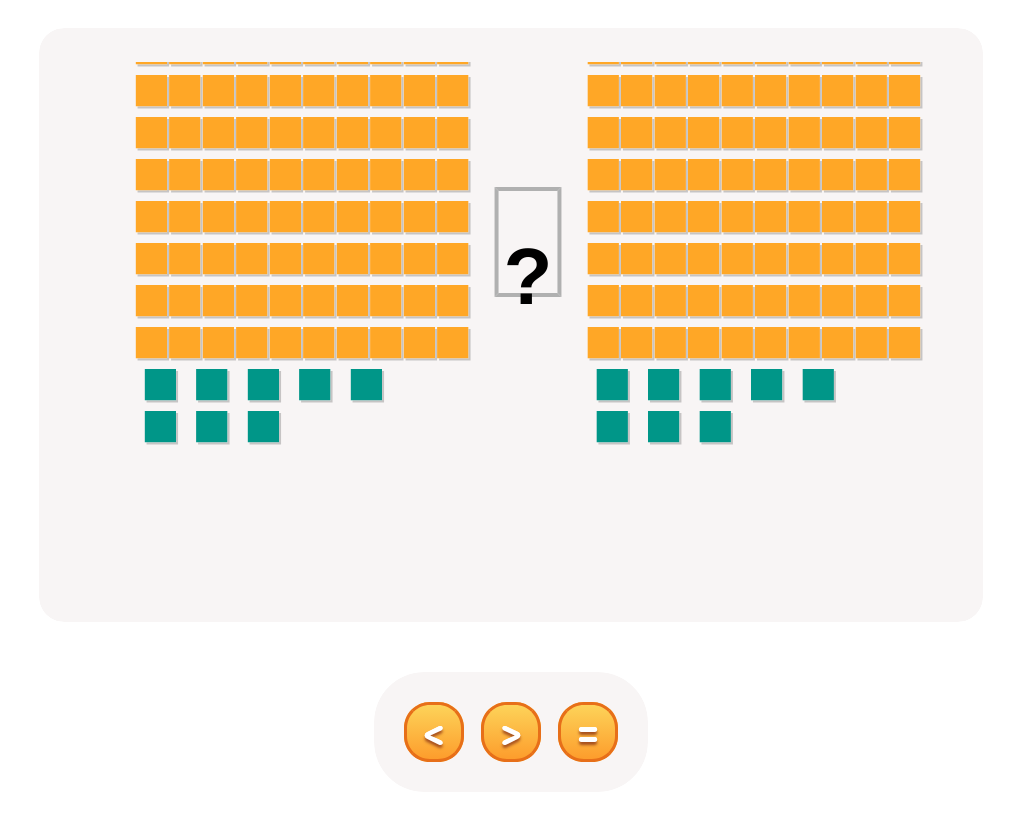

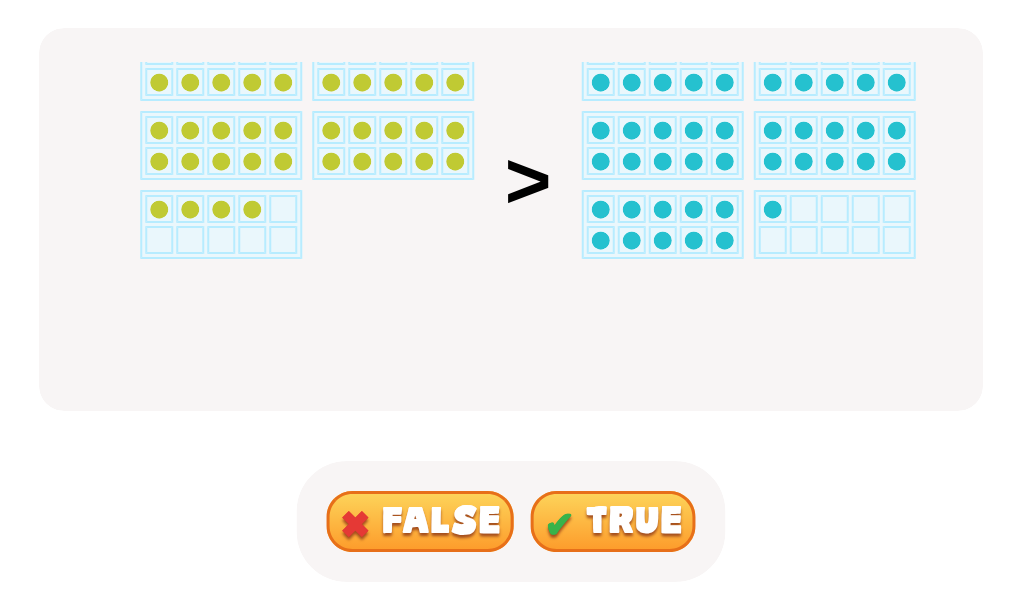
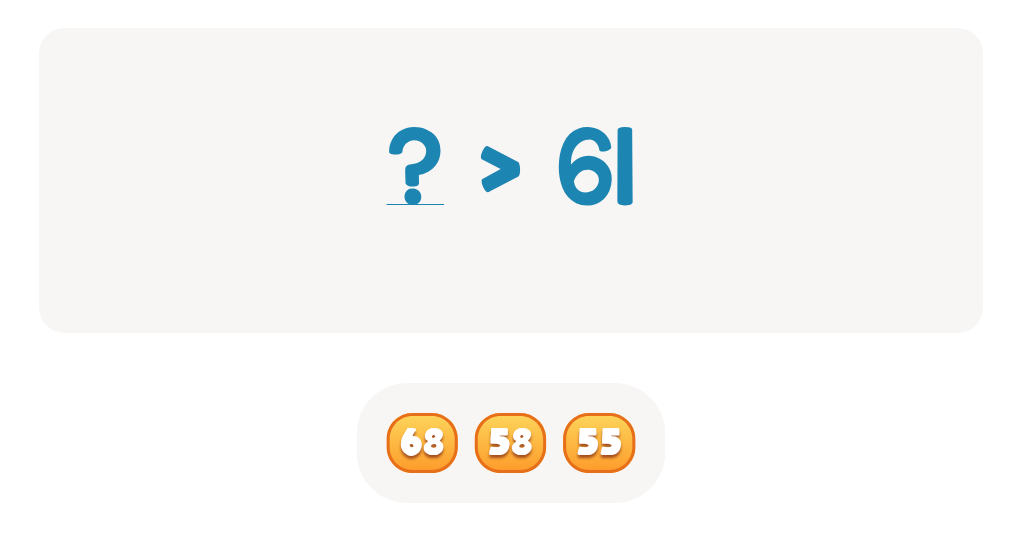
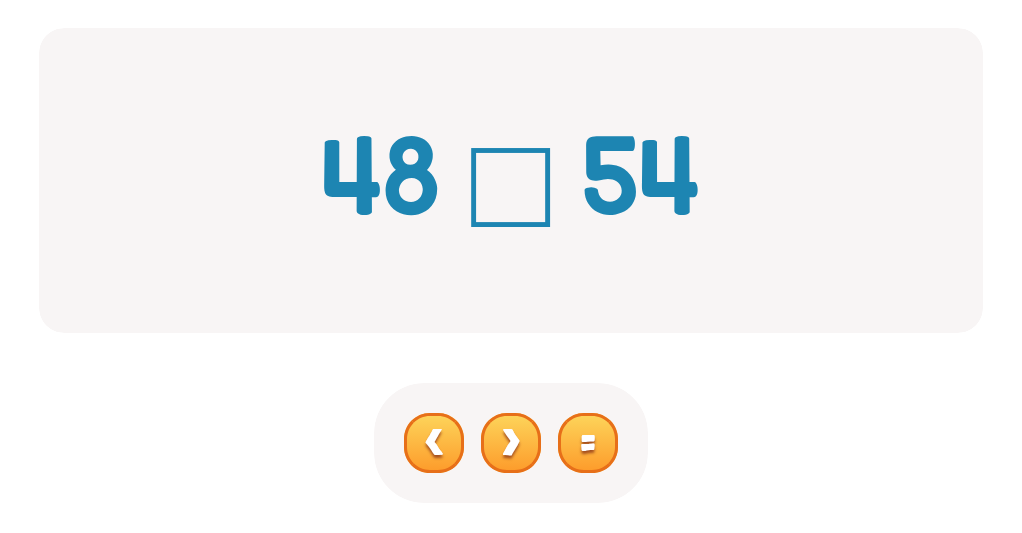
Matching: Classifying Toys by Size Worksheet
.
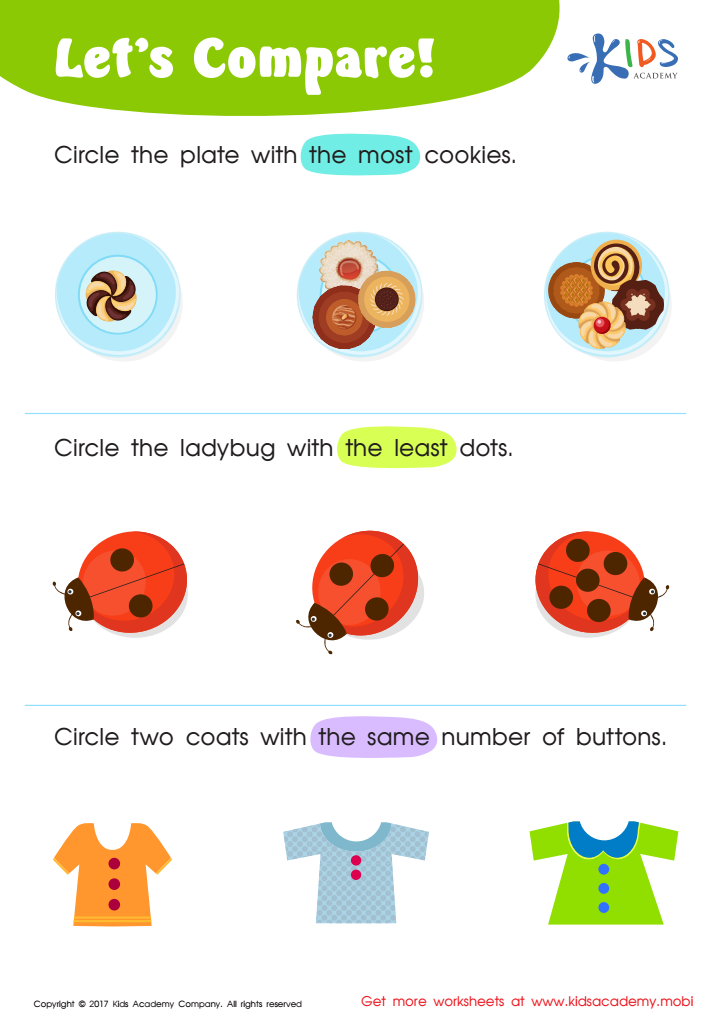
Have your young one's observation and counting skills ready for this worksheet; carefully look through the images and count the objects, then circle the plates with the least, most or equal number of patterns. Pay attention and have good counting abilities to make this task easy.
Matching: Classifying Toys by Size Worksheet
Worksheet
Comparing Numbers 1–10 Worksheet Kindergarten
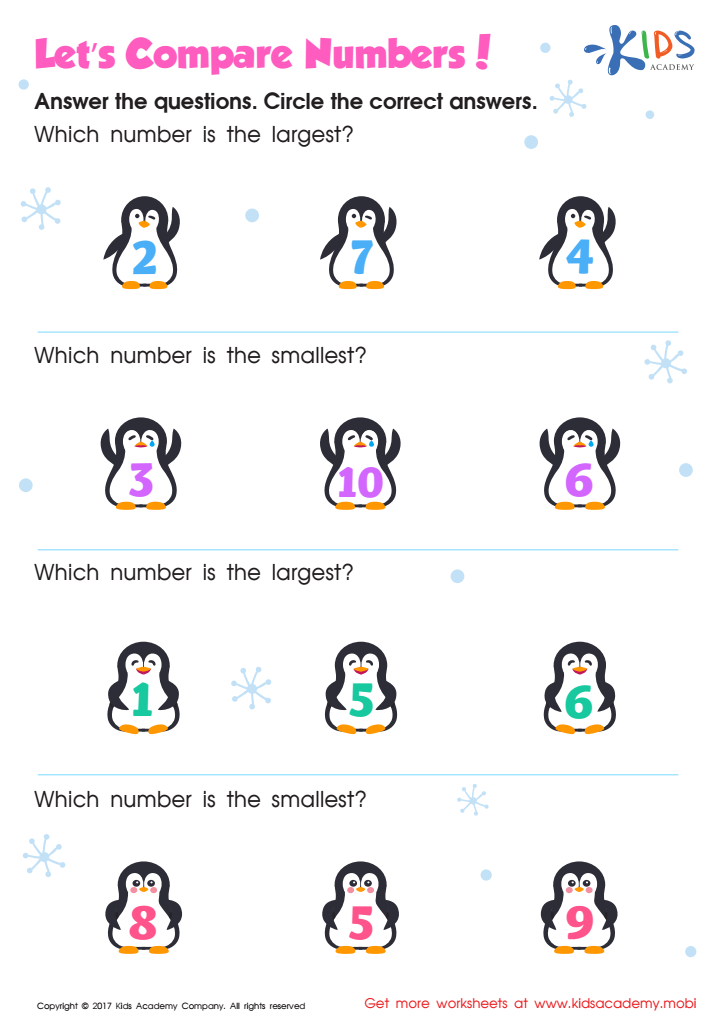
Help your child sort out numbers 1-10 with this fun worksheet! They'll practice comparing numbers and boost their number sense. Plus, it features cute little penguins with numbers on their bellies - they make learning even more exciting!
Comparing Numbers 1–10 Worksheet Kindergarten
Worksheet
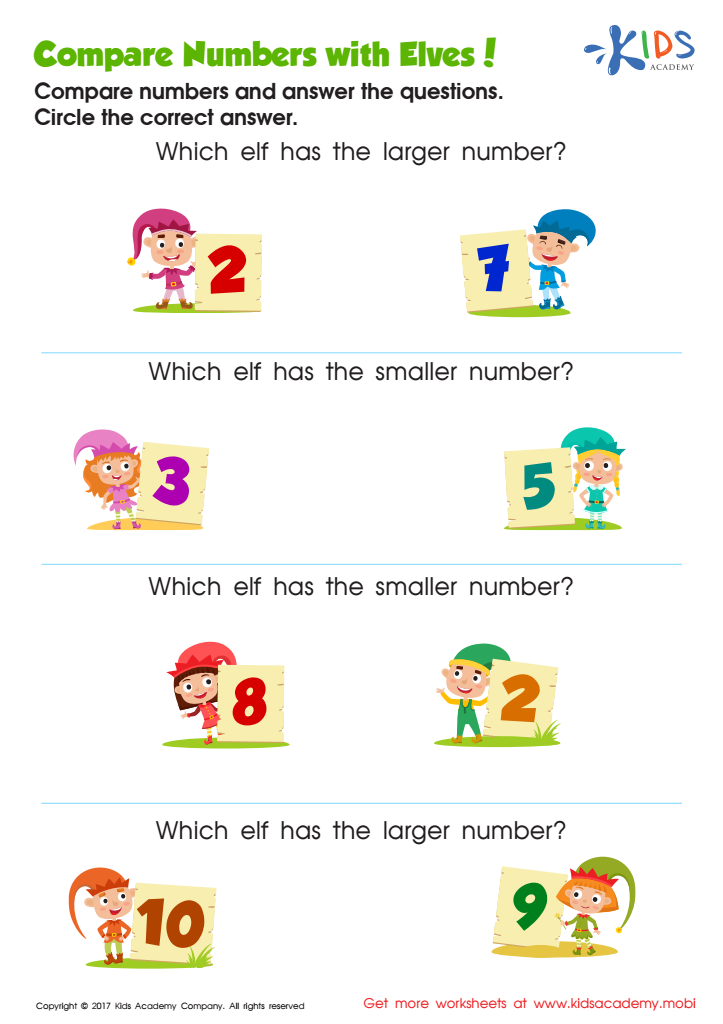
Comparing Numbers Worksheet for Kindergarten
Your child will love helping Santa's elves compare numbers with this fun worksheet for kindergarten! They must determine which number is bigger or smaller then circle the answer. It's a great activity for Christmas or any time!
Comparing Numbers Worksheet for Kindergarten
Worksheet
Join Kids Academy for Free
Who is primarily going to use this learning content?








Normal Comparing Numbers worksheets for 4-Year-Olds serve as an essential tool in introducing young learners to the foundational concept of number comparison. At this tender age, children are just beginning to understand the world around them, and numbers play a significant role in that understanding. These worksheets are designed to cater to their developmental needs, making learning both engaging and effective.
The beauty of Normal Comparing Numbers worksheets for 4-Year-Olds lies in their simplicity and direct approach to teaching. Through various fun and interactive activities, children learn to identify which numbers are bigger or smaller, fostering their analytical skills from an early age. This not only aids in their numerical literacy but also boosts their confidence in handling basic mathematical concepts.
Moreover, these worksheets lay down the groundwork for more complex mathematical operations that children will encounter as they progress in their educational journey. By starting with comparing numbers, they develop a keen eye for detail and a deeper understanding of numerical relationships, which are critical for future learning in mathematics.
In essence, Normal Comparing Numbers worksheets for 4-Year-Olds are a stepping stone towards building a strong numerical foundation. They make learning enjoyable and rewarding, ensuring that young minds are well-prepared to tackle more challenging mathematical concepts in the years to come.