Normal Vowels and Consonants Worksheets for Ages 5-8 - Page 2
26 filtered results
-
From - To
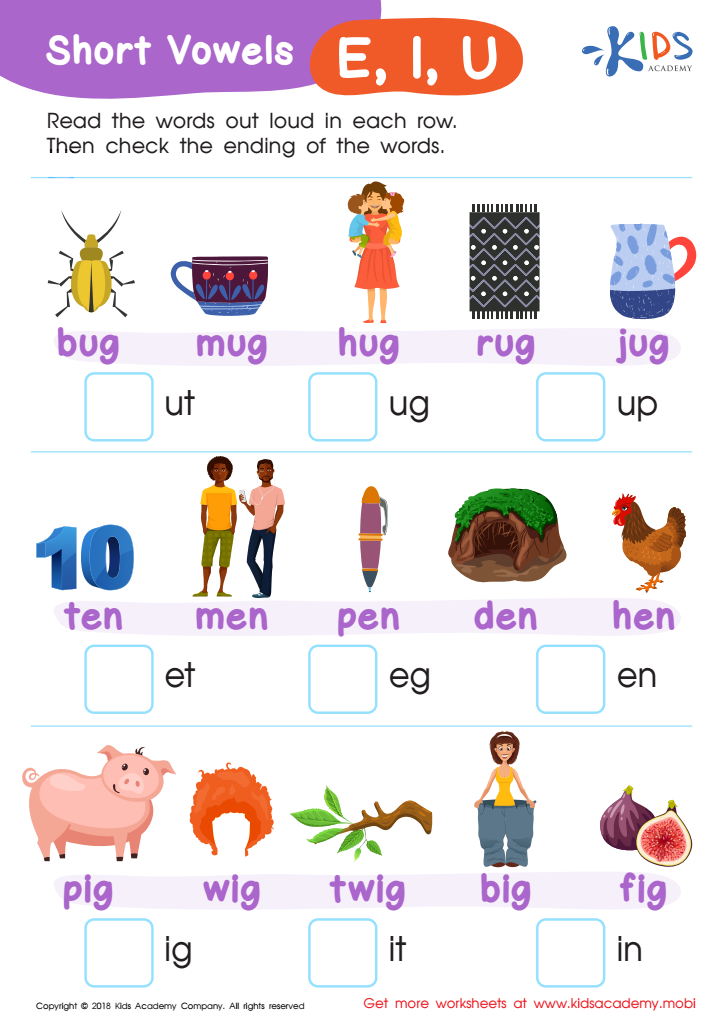
Short Vowels /e/, /i/, and /u/ Worksheet
 Assign to My Students
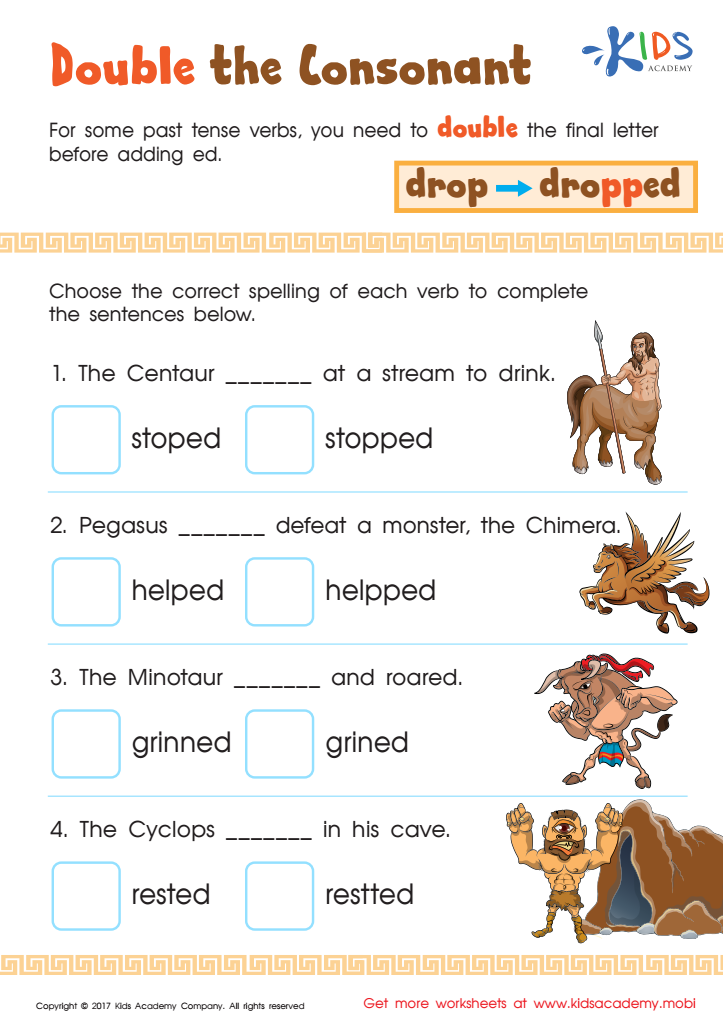
Double Consonant Spelling Worksheet



Understanding normal vowels and consonants is crucial for children aged 5-8, as they serve as the foundational building blocks of language and literacy. For parents and teachers, fostering knowledge of letter sounds enhances a child's phonemic awareness, which is essential for reading development. Children learn to distinguish between different sounds, which aids in decoding words when they begin reading independently.
Learning vowels and consonants also supports spelling abilities. A solid grasp of these letters equips children to form words, recognizing patterns and rules in young readers’ interaction with written language. This knowledge boosts their confidence and motivates them as they navigate early textual experiences.
Moreover, engaging with vowels and consonants fosters critical cognitive skills. It helps promote memory, sequencing, and auditory discrimination—all vital for overall academic success. With interactive games, songs, and storytime focused on these letters, children can learn in a fun and meaningful way.
In short, a solid comprehension of normal vowels and consonants gives children indispensable communication skills, and parents and teachers who prioritize this early literacy aspect play a pivotal role in shaping their lifelong relationship with reading and writing. Encouraging mastery at this stage promotes gradual progression toward fluency and academic achievement.