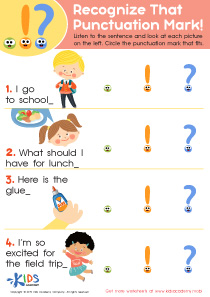
Normal Capitalization Worksheets for Ages 5-8
4 filtered results
-
From - To
Enhance your child's writing skills with our Normal Capitalization Worksheets for Ages 5-8, exclusively from Kids Academy! These engaging and educational worksheets help young learners understand the fundamental rules of capitalization. Through fun exercises and age-appropriate activities, children will practice capitalizing the first word in a sentence, proper nouns, days of the week, and more. Perfect for young writers, our worksheets foster confidence and improve grammar skills, setting a strong foundation for future writing success. Visit Kids Academy today to access a wide range of printable worksheets that make learning capitalization enjoyable and effective!
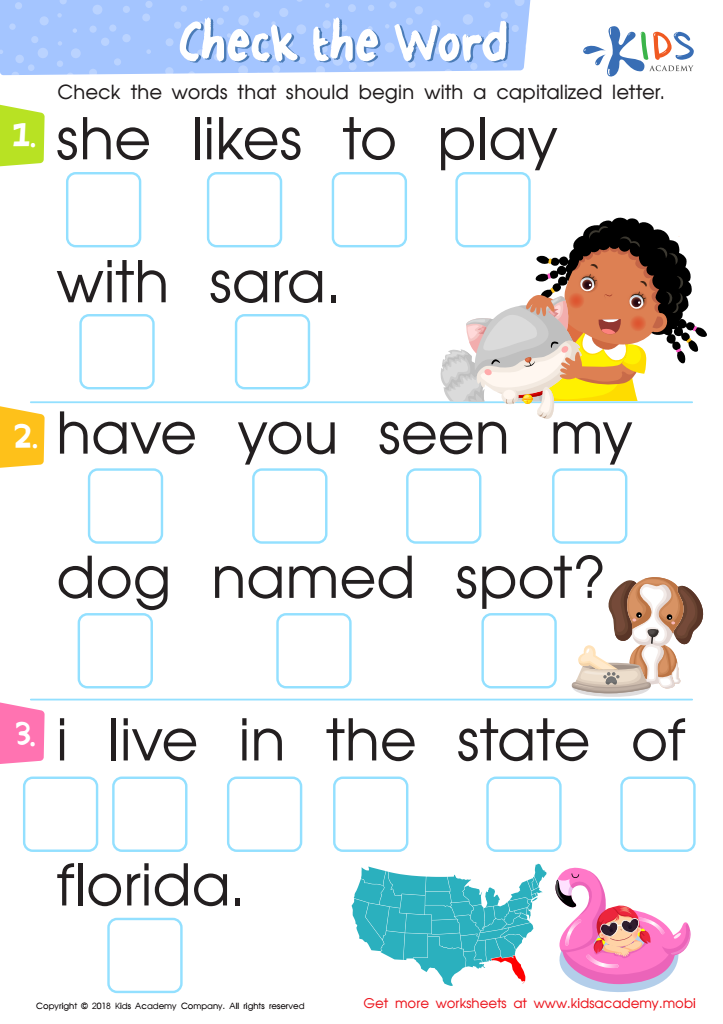
Check the Word Worksheet
 Assign to My Students
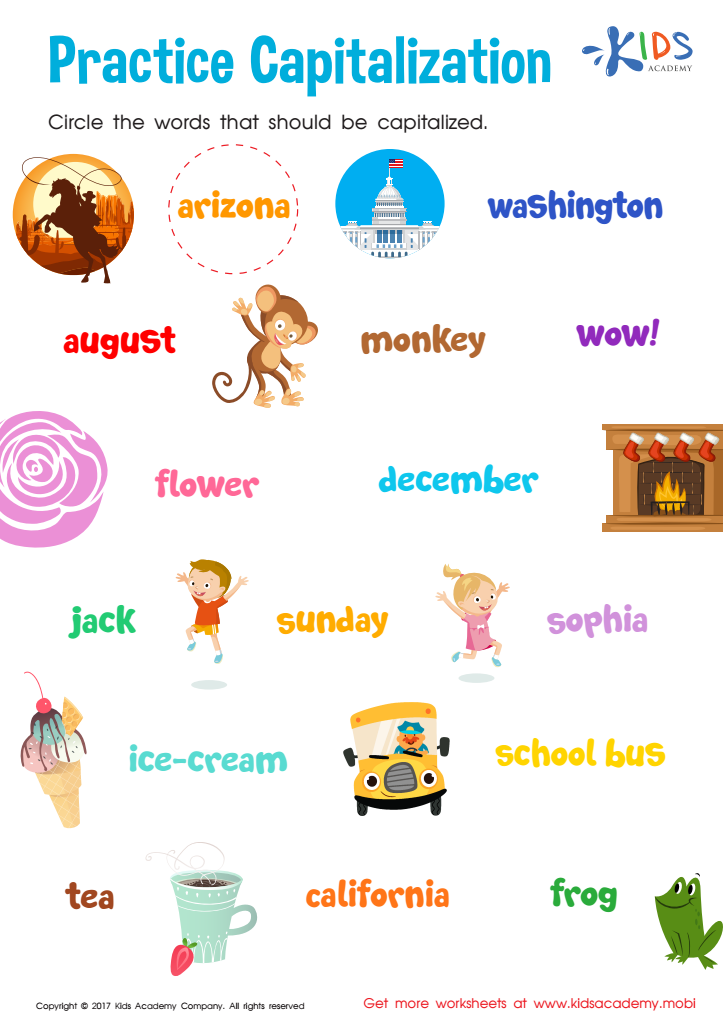
Practice Capitalization Printable
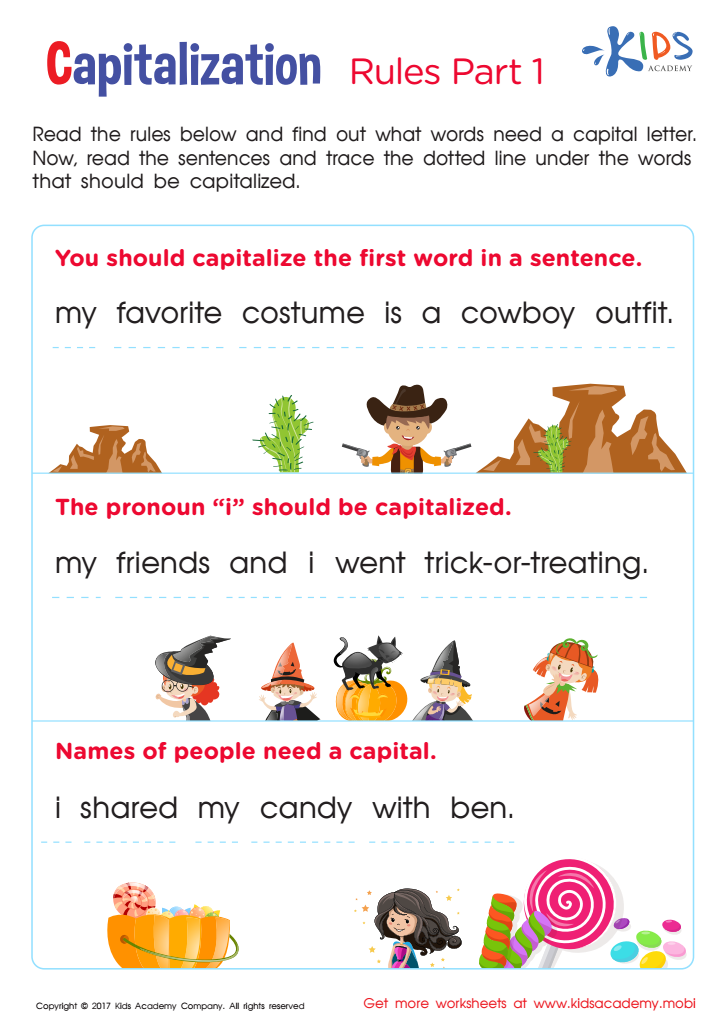
Capitalization Rules: Part 1 Worksheet
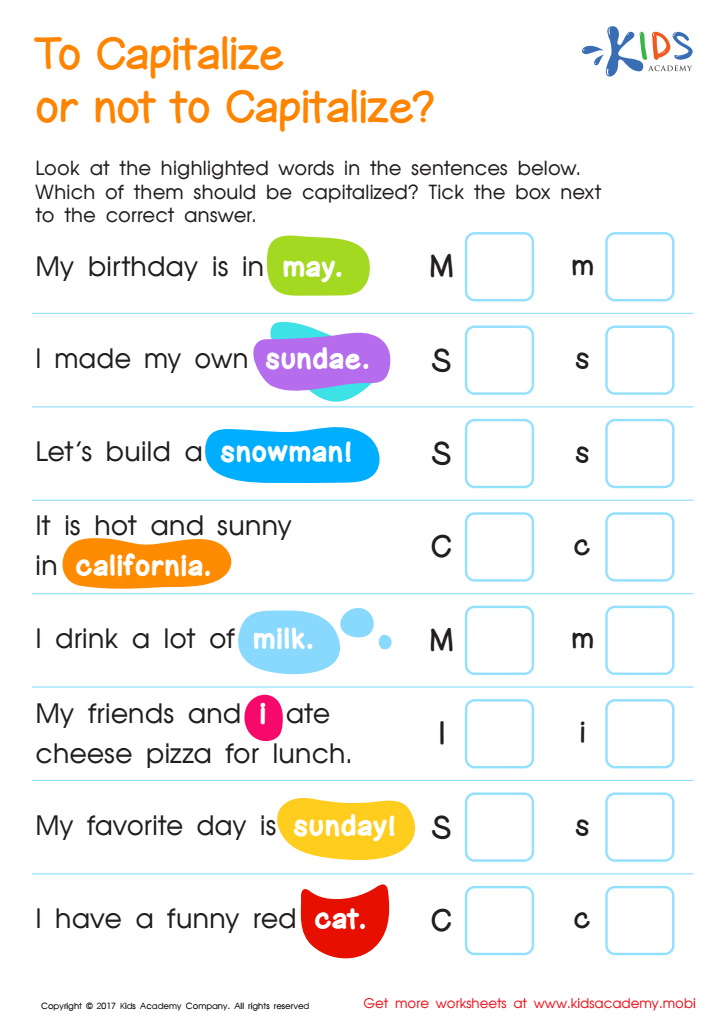
Capitalization: To Capitalize or Not? Printable








Parents and teachers should invest effort in teaching normal capitalization to children aged 5-8 because it's foundational for later literacy skills. At this developmental stage, children are rapidly acquiring language proficiency and learning the rules of written communication. Normal capitalization -- using uppercase letters at the beginning of sentences, for proper nouns, and for the pronoun "I" -- is a crucial component of grammar and helps children better understand the structure and conventions of written English.
Grasping these rules early helps kids recognize sentence boundaries and identify important words, enhancing both their reading comprehension and writing clarity. This foundational knowledge also supports children in their academic success as they progress through school, where clear and proper communication is essential.
Moreover, instilling good capitalization habits fosters disciplined thinking and attention to detail, qualities that extend beyond literacy to other areas of learning. Effective written communication skills are vital in our society; starting with basic capitalization can lead to better writing skills overall and, thus, more effective communication.
In summary, teaching normal capitalization at an early age sets children up for better academic performance, promotes clear and effective communication, and instills essential attention to detail, providing benefits that extend into their future educational pursuits and daily interactions.