Normal Road Signs Worksheets for Ages 5-8
3 filtered results
Difficulty Level
Grade
Age
-
From - To
Subject
Activity
Standards
Our engaging "Normal Road Signs Worksheets" for ages 5-8 help young learners recognize and understand essential road signs. Each worksheet is designed to introduce children to different road signs in a fun, interactive way, ensuring safety awareness from a young age. Ideal for classroom use or at home, these printable activities encourage kids to color, match, and identify various signs, building foundational knowledge crucial for their future. With colorful illustrations and friendly instructions, our worksheets make learning about road safety both exciting and educational. Download now to support your child's journey towards becoming a road-smart citizen!
Favorites
With answer key
Interactive
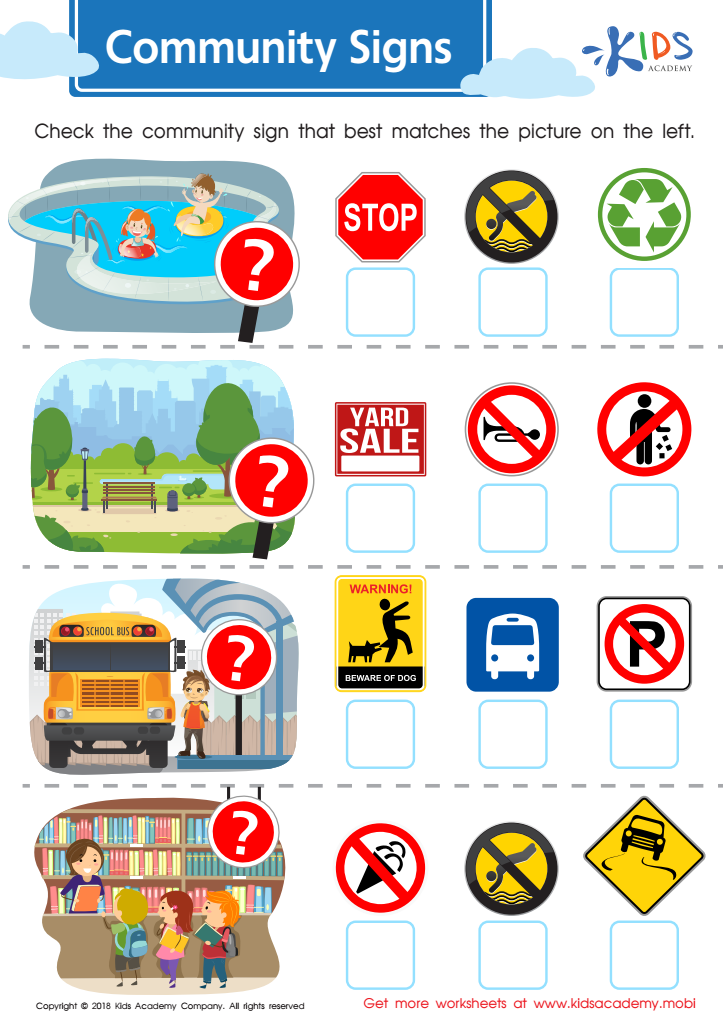
Community Signs Worksheet
To stay safe, our kids need to know community signs. Ask them to name signs at the pool, park, etc. Then, have them check the worksheet for the picture that matches the community signs.
 Assign to My Students
Community Signs Worksheet
Worksheet
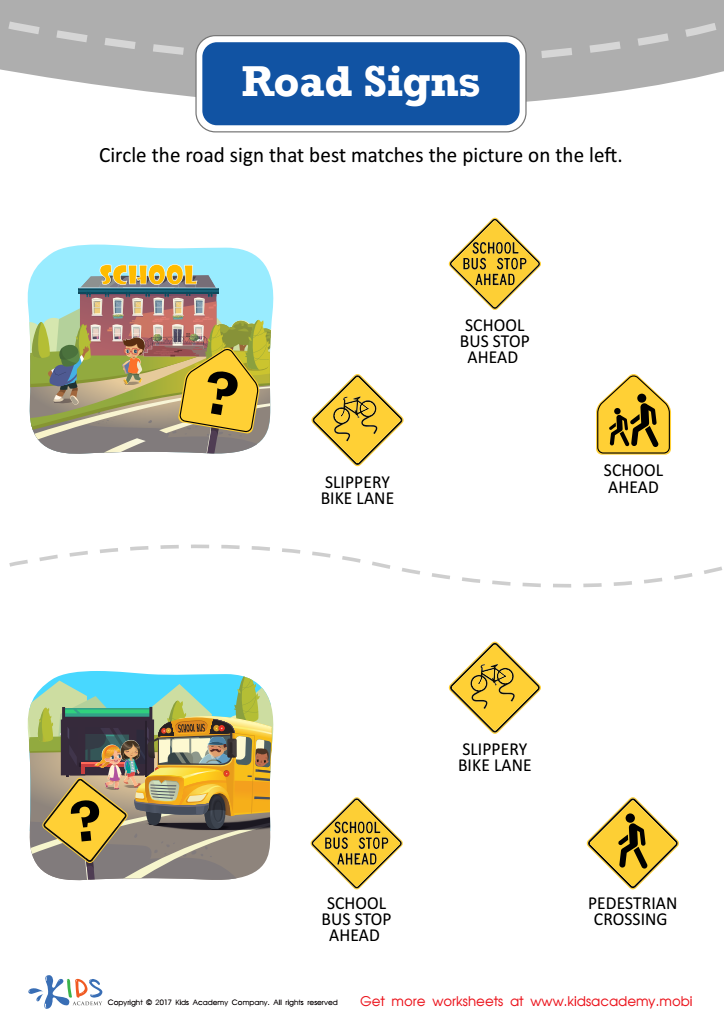
Road Signs (Part 1) Worksheet
Kids are exposed to danger near roads, so help them recognize traffic signs with this printable. It'll foster their reading comprehension and symbol recognition, while keeping them safe.
Road Signs (Part 1) Worksheet
Worksheet
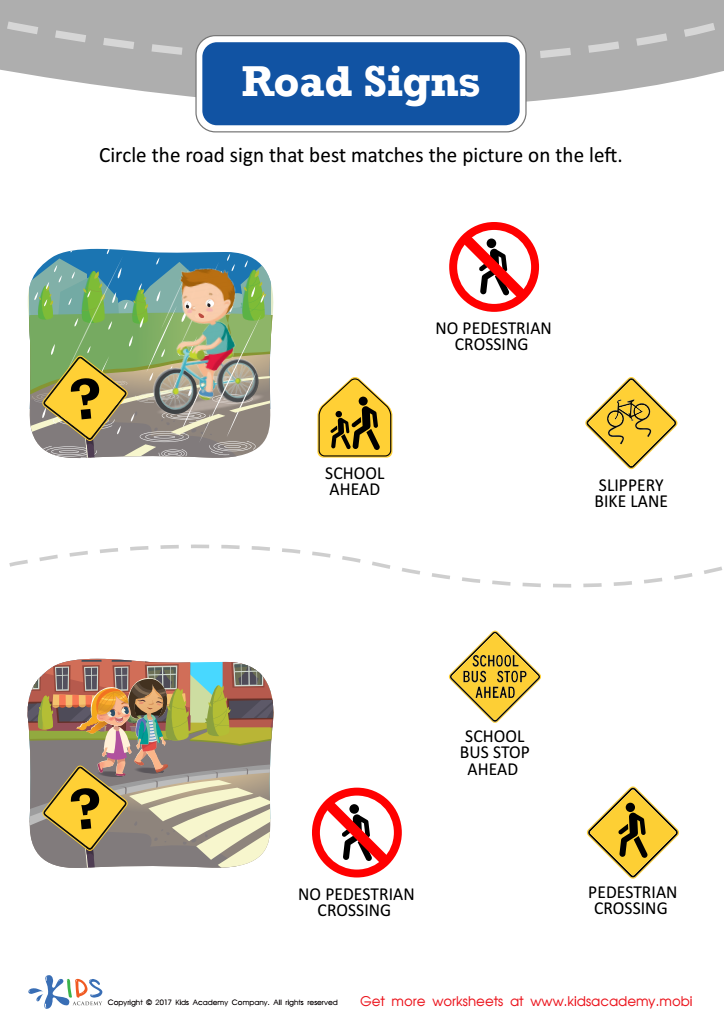
Road Signs (Part 2) Printable
Help your child stay safe with road sign worksheets! These worksheets help kids recognize common traffic signs, boost comprehension and symbol recognition, and know when to stay safe near or on roads. Use the sheets to start a conversation, and take your child out to spot signs near home or school.
Road Signs (Part 2) Printable
Worksheet
Join Kids Academy for Free
Who is primarily going to use this learning content?


Understanding normal road signs is crucial for children aged 5-8 for several reasons that matter to both parents and teachers. Safety is the foremost concern. When children recognize basic road signs such as "Stop," "Yield," and pedestrian crossing signals, they can navigate their environment more safely, whether they are walking to school, riding a bike, or playing near roadways. This foundational knowledge helps prevent accidents by instilling important caution around traffic and understanding about right-of-way.
Additionally, teaching road signs at an early age sets the stage for responsible behavior as future drivers. It improves their overall situational awareness, making them more adept at recognizing and respecting rules both in transit and other areas of life. Furthermore, learning road signs can enhance cognitive skills, such as memory and attention to detail. It engages children in meaningful learning through observation and real-world application, rather than through abstract classroom instruction alone.
Moreover, introducing road safety discussions helps to foster communication between children and adults about daily experiences. Drawing road signs, for instance, can be an exciting, hands-on educational activity that also strengthens fine motor skills. In essence, instilling awareness of road signs in children aged 5-8 contributes to their overall safety, responsibility, and cognitive development.